Saudi Arabia vs Uruguay: World Cup 2026 Opener Analysis
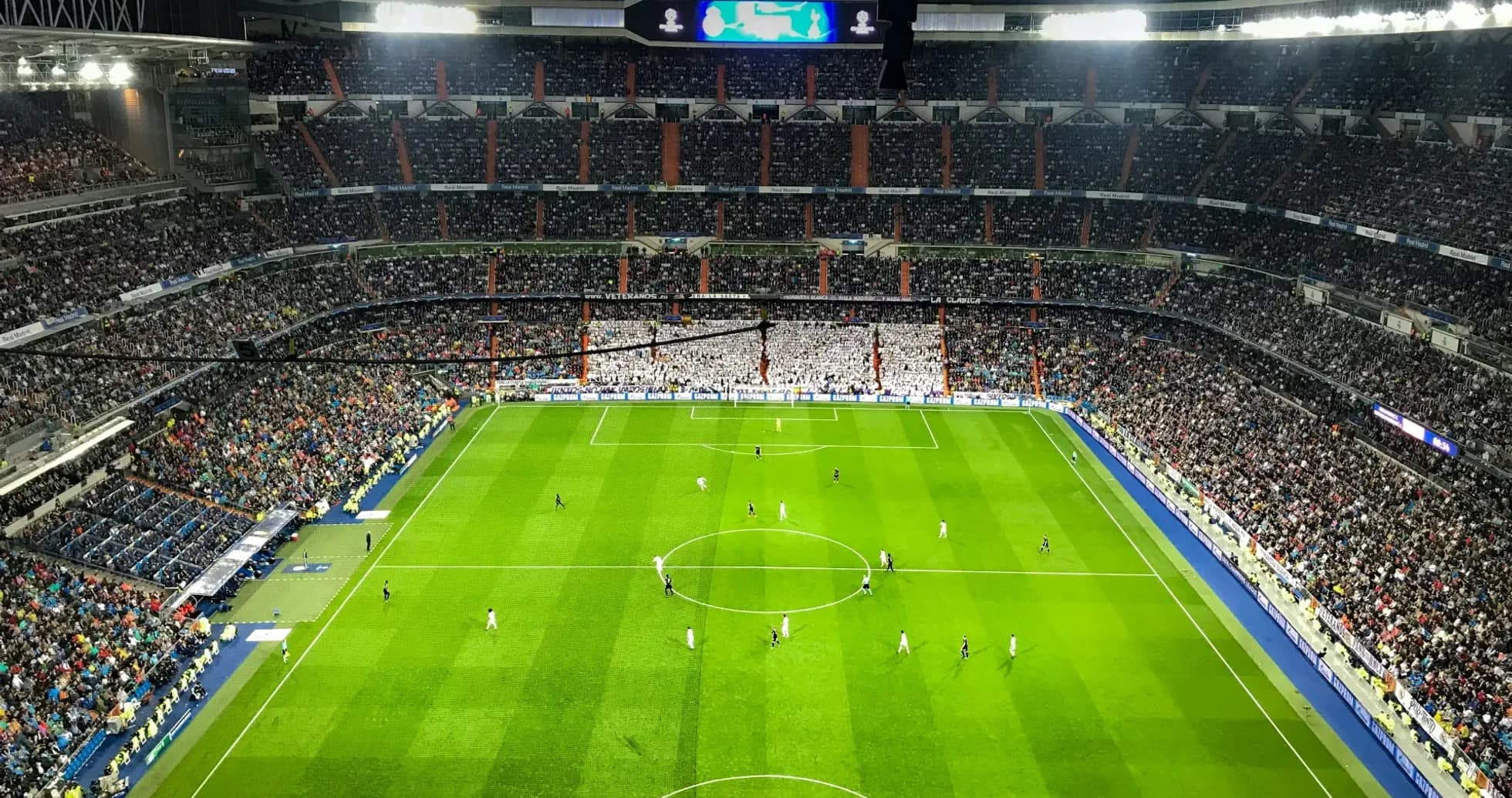
Under the Miami night at Hard Rock Stadium, Saudi Arabia and Uruguay opened their World Cup 2026 journeys with a 1-1 draw that felt less like a stalemate and more like an opening chapter. Following this result in Group H, Uruguay sit 1st and Saudi Arabia 2nd, both on 1 point, both with a goal difference of 0 after scoring 1 and conceding 1 in total. The numbers say parity; the patterns beneath hint at two very different footballing identities taking shape.
I. The Big Picture – Two Blueprints Revealed
Saudi Arabia arrived with a clear structural conviction: a 4-4-2 under Georgios Donis that leans on collective discipline and vertical transitions. Their World Cup campaign so far is defined entirely by this match: in total this campaign they have played 1 fixture, at home, drawing 1-1. At home they average 1.0 goal scored and 1.0 conceded, a statistical mirror that underlines their balance but also their fragility.
Uruguay, nominally the away side, stepped into Marcelo Bielsa’s 4-2-3-1 – a shape that promises chaos through structure, pressing through geometry. On their travels they have also played 1 game, drawing 1-1, averaging 1.0 goal for and 1.0 against away. The symmetry of the scoreline hides the asymmetry of intent: Uruguay’s system is built to dominate territory, Saudi Arabia’s to bend without breaking.
On the pitch, the tactical story began with Saudi Arabia’s back four: M. Al Owais behind a line of S. Abdulhamid, A. Al Amri, H. Tambakti and M. Al Harbi. Ahead, a compact midfield band of M. Abu Al Shamat, M. Kanno, A. Al Khaibari and the talismanic S. Al Dawsari supported a front two of F. Al Buraikan and M. Al Juwayr. The distances between these lines were the real Saudi playmaker; they compressed space, forcing Uruguay to play in front of them.
Uruguay’s structure, by contrast, was layered: F. Muslera in goal, a back four of G. Varela, S. Caceres, M. Olivera and M. Vina; a double pivot of M. Ugarte and R. Bentancur; and an aggressive attacking quartet of F. Valverde, F. Vinas, M. Araujo and lone striker D. Nunez. On paper, it is a 4-2-3-1; in practice, it morphs into a 2-3-5 in possession, full-backs high, Valverde and Nunez attacking the half-spaces.
II. Tactical Voids – Discipline, Risk and the Edges of Control
In a group-stage opener, risk management often trumps romanticism. The disciplinary data tells us Saudi Arabia walked that line more precariously. In total this campaign they have received 1 yellow card, and it arrived in the 31-45 minute window, meaning 100.00% of their bookings so far have come just before the interval. That late-first-half edge is revealing: as legs tire and concentration dips, their aggression can spill into risk.
Uruguay, by contrast, have no yellow or red cards in total this campaign. For a Bielsa side, that hints at a pressing scheme that is well-timed and collectively drilled rather than reckless. They hunted, but they hunted in synchrony.
There were no suspensions or confirmed absences in the data, which meant both coaches had full tactical toolboxes. Donis packed his bench with defensive alternatives like A. Lajami, A. Majrashi, H. Kadesh and N. Boushal, alongside attacking options such as S. Al Shehri, S. Mandash, K. Al Ghannam and A. Al Hamdan. Bielsa’s bench was equally varied: J. Gimenez and S. Bueno as defensive insurance, N. de la Cruz, E. Martinez, R. Zalazar and J. Sanabria as creative or controlling midfield options, and forwards like B. Rodriguez, R. Aguirre and A. Canobbio to change the front line’s profile.
The absence of penalties for both sides – 0 taken, 0 scored, 0 missed in total – underlines that neither team has yet tested their nerve from the spot. This will matter later in the group, where small margins and dead-ball ruthlessness often decide progression.
III. Key Matchups – Hunter vs Shield, Engine Room vs Engine Room
Hunter vs Shield
For Saudi Arabia, the “hunter” is more collective than individual. F. Al Buraikan and M. Al Juwayr operate as complementary forwards: one can drop into pockets, the other threaten depth, especially when S. Al Dawsari drives inside from the left. With Saudi Arabia averaging 1.0 goal at home and 1.0 in total, their front line is not prolific yet, but it is efficient enough when the structure behind them holds.
The “shield” they face is Uruguay’s back four and double pivot. S. Caceres and M. Olivera, flanked by G. Varela and M. Vina, are protected by M. Ugarte and R. Bentancur. Uruguay’s defensive record on their travels – 1.0 goal conceded away and in total – suggests they can be breached, but usually only after sustained pressure or a broken structure. Saudi Arabia’s challenge in future group games will be to reproduce the sharpness of their 1 goal from relatively limited possession, without overextending their back line.
On the other side, D. Nunez is Uruguay’s spearhead. His movement, constantly testing the offside line and attacking the channels, is designed to pull centre-backs into uncomfortable spaces. Against a Saudi central pairing of A. Al Amri and H. Tambakti, this matchup becomes pivotal: if they step out too aggressively, Uruguay’s second line – Valverde surging from the right half-space, M. Araujo between the lines, F. Vinas knitting play – can exploit the vacated lanes.
Engine Room – Kanno vs Ugarte/Bentancur
The heart of Saudi Arabia’s structure is M. Kanno and A. Al Khaibari. Kanno, in particular, is the hinge: dropping to assist the build-up, then stepping into midfield to connect with S. Al Dawsari and the forwards. Their task is to keep Saudi Arabia’s lines compact while offering an outlet when they win the ball.
Uruguay’s engine room is more obviously star-studded. M. Ugarte screens, anticipates and recycles; R. Bentancur glides between phases, connecting defence and attack. Ahead of them, F. Valverde is the vertical accelerator, a midfielder on the teamsheet but a second striker in the moments that matter. The battle between Kanno’s composure and Ugarte’s ball-winning shapes the tempo: if Saudi Arabia’s double pivot can slow the game, they drag Uruguay into a more methodical contest; if Ugarte and Bentancur dictate, the match becomes stretched, exposing Saudi Arabia’s flanks and full-backs.
IV. Statistical Prognosis – xG Shadows and Defensive Solids
We do not have explicit xG numbers, but the scaffolding is clear. Both teams, in total this campaign, have:
- Played 1 match
- Scored 1 goal (Saudi Arabia at home; Uruguay away)
- Conceded 1 goal
- Goal difference of 0 (1 scored minus 1 conceded)
This symmetry points to an expected goals landscape where both sides are creating and conceding in similar volumes. Uruguay’s away profile – 1.0 goal for and 1.0 against – hints at an open, chance-heavy style, typical of Bielsa’s sides. Saudi Arabia’s identical 1.0 for and 1.0 against at home suggests that when they do open up to score, they also accept a degree of defensive risk.
Defensive solidity, for now, is relative. Neither team has kept a clean sheet in total this campaign; both have also failed to keep the opposition from scoring in their only match. The absence of any clean sheets and the lack of penalty events suggest that most danger is arriving from open play and structured attacks rather than chaotic set-piece sequences.
Projecting forward in Group H, the numbers and tactical shapes converge on a similar verdict: both Saudi Arabia and Uruguay are built to score, but not yet built to suffocate. Expect future fixtures to lean towards balanced scorelines rather than sterile 0-0s, with Uruguay’s pressing and Saudi Arabia’s compact 4-4-2 producing matches that live in the 1-1 and 2-1 corridors.
Following this result, the group remains wide open. Uruguay, top on goal difference only by tiebreak nuances, will feel they have more gears to find in attack. Saudi Arabia, 2nd with the same record, will quietly believe that their structure can carry them into the Round of 32 if they add just a fraction more cutting edge in the final third while keeping their discipline in that volatile 31-45 minute window.