Qatar vs Switzerland: World Cup Group B Draw Analysis
The World Cup opened for Group B under the California sun at Levi’s Stadium, but the football felt distinctly European in its structure and South Asian in its emotion. Qatar and Switzerland traded control, mistakes and, ultimately, goals in a 1–1 draw that leaves both sides on 1 point and with identical goal differences of 0 following this result.
For Qatar, this was a statement of intent as hosts-turned-travelers on neutral soil. Their season profile in this World Cup is still embryonic: 1 match played at home in the record books, 1 draw, 1.0 goals for and 1.0 goals against at home, no clean sheets, and no matches yet recorded away. The identity, though, is already clear. Julen Lopetegui has locked in a 4-3-3 – it has been used in 100% of their lineups so far – with a technical midfield and wide forwards who play more as creators than pure finishers.
Switzerland arrive with their own 4-3-3 template under Murat Yakin, but with a different flavor. Their World Cup campaign to date has come entirely on their travels: 1 away match played, 1 draw, 1.0 away goals for and 1.0 away goals against, no clean sheets, and a penalty success rate of 100.00% from 1 attempt. The Swiss are accustomed to this tournament rhythm: patient possession, a disciplined back four, and a front line that punishes lapses rather than overwhelming opponents.
At Levi’s Stadium, the opening act belonged to Switzerland’s structure. With Ricardo Rodriguez and Denis Zakaria flanking the back line, and Manuel Akanji and Nico Elvedi patrolling centrally, the Swiss 4-3-3 morphed into a secure 2-3-5 in possession. Granit Xhaka, Remo Freuler and Michel Aebischer formed a tight triangle in midfield, with Xhaka orchestrating the tempo and Aebischer offering vertical runs beyond the Qatari lines.
Qatar’s response was to compress the middle. Jassem Gaber, Abdulaziz Hatem’s nominal heir in this setup, anchored the midfield as a shuttler, while Assim Madibo and I. Laye tried to screen passing lanes into Breel Embolo. The cost of that compactness was space behind the full-backs, particularly around A. Al Oui and Pedro Miguel, where Dan Ndoye and Ruben Vargas repeatedly tested the defensive line.
The game’s narrative turned on discipline and timing. Qatar’s season card profile already hinted at a risk: 100.00% of their yellow cards heading into this game had come in the 16–30 minute window. That pattern repeated in spirit, if not in exact timestamps. Gaber, who would later be substituted after 60 minutes, played on a disciplinary tightrope. His World Cup numbers underline it: 2 fouls committed, 1 yellow card, and a place in both the top yellow and top red card statistical tables despite not actually seeing red. Mahmud Abunada, the goalkeeper, joined him on the caution list, picking up a yellow and committing the foul that led to Switzerland’s penalty.
On the Swiss side, Zakaria’s yellow card aligned with their own trend: 100.00% of their yellows so far have come in the 31–45 minute band. The defender’s aggression is double-edged – he committed 1 foul, but also made 3 tackles and 2 interceptions, winning 6 of 10 duels. In a tight group, his ability to step out and break lines will be vital, but his card profile suggests opponents may target his flank to draw further cautions.
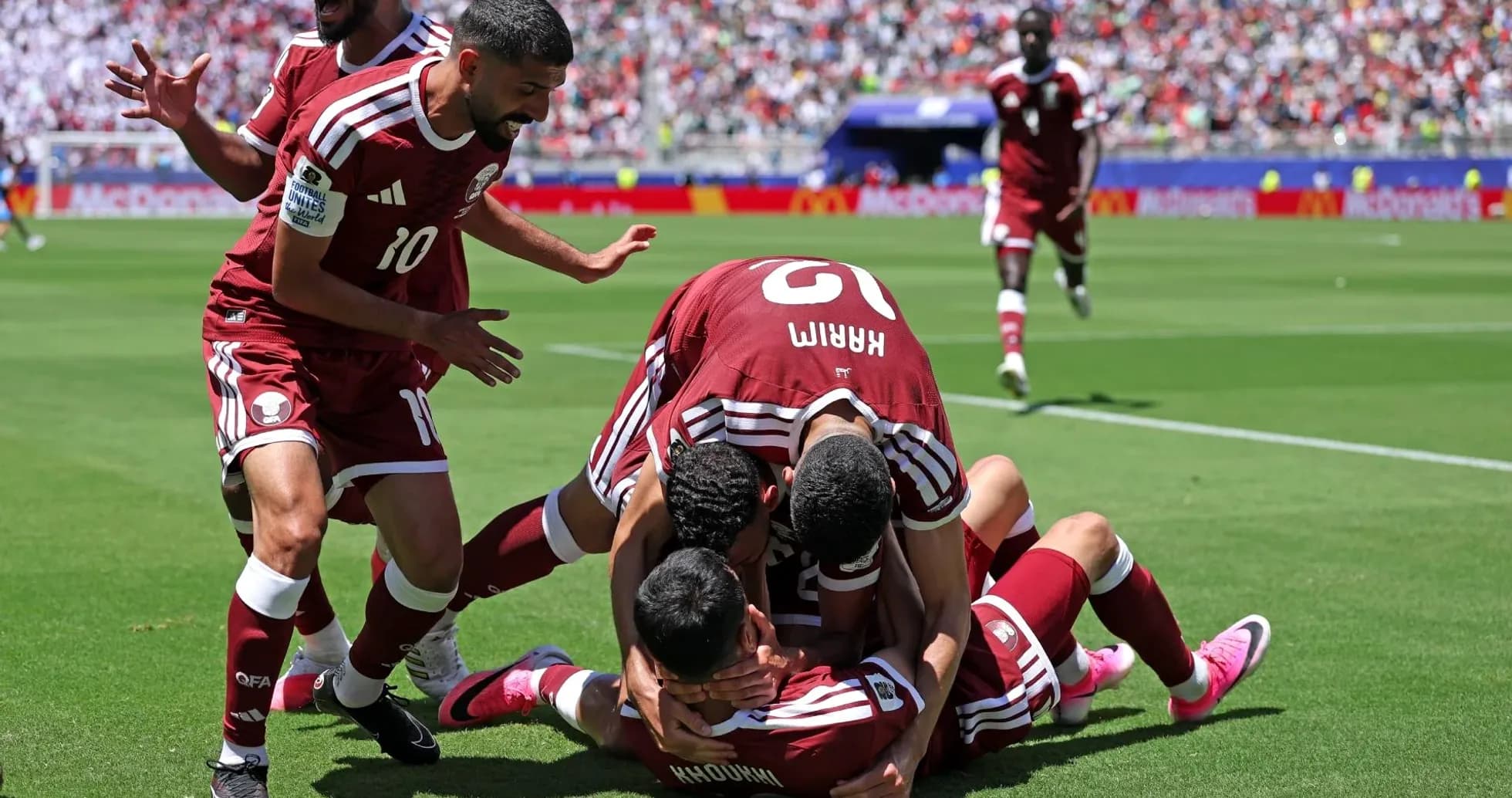
The “Hunter vs Shield” duel of the night was perfectly cast. For Qatar, the unexpected hunter was Boualem Khoukhi. Listed as a defender, he has become their leading scorer in this World Cup with 1 goal from 1 shot on target, complementing 34 passes and a defensive line that he anchored with calm. His goal not only salvaged a point but also defined his dual role: organiser at the back, opportunist in the box. On the Swiss side, Embolo is the clear spearhead. With 1 goal, 1 penalty scored from 1 attempt, 2 shots (1 on target) and 5 key passes, he operated as both finisher and facilitator. His capacity to drop off the line and combine with Vargas and Ndoye pulled Khoukhi and Bassam Al Rawi’s replacement partner B. Khoukhi into awkward zones.
Behind them, the “Engine Room” battle was as much about control as creativity. Xhaka, with his metronomic presence, dictated Switzerland’s rhythm, while Freuler provided the cover that allowed Zakaria to surge. For Qatar, Gaber’s 8 duels (3 won), 2 blocks and 1 tackle told of a midfielder asked to do the dirty work. He blocked 2 shots, a crucial detail in a match where marginal interventions mattered. Yet his limited passing volume – just 5 passes – underscored how Qatar struggled to build through him under pressure, instead relying on the direct outlets of Akram Afif and Edmilson Junior.
Tactically, both coaches leaned into their 4-3-3 identities without major in-game systemic shifts. Lopetegui’s front three – Afif, Y. Abdurisag and Edmilson Junior – looked to isolate Swiss full-backs 1v1, but Switzerland’s back four rarely broke shape. Zakaria’s 56 passes at 96% accuracy, combined with Rodriguez’s steady left-footed distribution, allowed the Swiss to recycle possession and avoid getting dragged into Qatar’s preferred transitional chaos.
From a statistical prognosis standpoint, this draw feels almost mathematically inevitable. Both teams now sit on identical overall records: 1 match played, 0 wins, 1 draw, 0 losses, 1 goal scored, 1 conceded, and a goal difference of 0. Qatar’s home average of 1.0 goals for and 1.0 against mirrors Switzerland’s away average of 1.0 for and 1.0 against. Neither side has yet kept a clean sheet, and both have failed to shut down the opposition’s main threat: Khoukhi for Qatar, Embolo for Switzerland.
The penalty subplot will matter going forward. Switzerland’s 100.00% conversion from 1 penalty contrasts with Qatar’s more chaotic relationship with spot-kicks: Abunada has already committed 1 penalty, and while Qatar have yet to take one in this tournament, the psychological edge in shootouts or late-game decisions currently sits with the Swiss.
Projecting ahead in the group, the margins look razor-thin. Without xG numbers, the eye test and current data suggest Switzerland possess the more stable defensive platform – anchored by Akanji, Elvedi and the disciplined wide work of Ndoye and Vargas – while Qatar have the higher volatility: no clean sheets, concentrated yellow cards early in matches, and a reliance on moments from Khoukhi and Afif.
If these trends hold, Switzerland’s blend of penalty composure, structured buildup and Embolo’s dual threat should edge them toward the Round of 32. Qatar, however, have shown enough resilience, tactical clarity in their 4-3-3, and set-piece danger through Khoukhi to suggest they will remain in the qualification conversation deep into the group stage.