Mexico Dominates South Africa in World Cup Opener
Under the thin evening air of Mexico City, the Estadio Azteca watched Mexico open their 2026 World Cup with a statement of control rather than chaos. In a Group Stage – 1 fixture that felt heavier than its billing, Javier Aguirre’s side beat South Africa 2–0, a scoreline that mirrored the emerging geometry of this group: Mexico top of Group A with 3 points, South Africa bottom with none, the goal differences a mirror image at +2 and -2.
I. The Big Picture – Structure and Intent
On paper it was 4-1-4-1 versus 5-3-2, but on the grass it was a territorial argument. Mexico’s 4-1-4-1, anchored by Érik Lira at the base, was designed to suffocate transitions and keep the ball in South Africa’s half. The visitors, under Hugo Broos, came in with a back five of K. Mudau, N. Sibisi, I. Okon, M. Mbokazi and A. Modiba, protecting R. Williams and hoping that the front two of I. Rayners and L. Foster could profit from the rare counter.
Following this result, the numbers tell a clean story. Mexico’s overall record in this World Cup is now 1 win from 1, with 2 goals for and 0 against. Their average goals scored overall sits at 2.0, with an average of 0.0 conceded – a home performance in everything but name, despite the standings listing no specific home or away splits yet. South Africa, by contrast, have played 1 match on their travels, losing 2–0, with an overall goals-against average of 2.0 and no goals scored.
This was not a knockout tie, but it carried the psychological weight of one. The World Cup can slip away quickly in three group matches; Mexico played as if this were already an elimination game.
II. Tactical Voids – Discipline and Hidden Costs
There were no official absences listed heading into this game, so both managers could lean fully into their preferred shapes. The real voids emerged not from injuries, but from cards.
Mexico’s disciplinary profile across the tournament so far is paradoxical. Their season statistics show 1 yellow card in the 16–30 minute window, accounting for 100.00% of their cautions, and a red card in the 91–105 minute band, also 100.00% of their dismissals. That late red, attributed to C. Montes in the red-card tables, is a shadow over an otherwise controlled evening: a centre-back who completed 65 passes at 92% accuracy and still left his side a man down at the death. It did not change the result, but it complicates Aguirre’s plans for the next group match.
South Africa’s issues are more severe. Their card distribution is scattered and destabilising: yellow cards in the 16–30 and 61–75 ranges (each 50.00% of their total), but, more critically, red cards in both the 46–60 and 76–90 windows, each accounting for 50.00% of their dismissals. Themba Zwane and S. Sithole both appear in the red-card leaders, each sent off despite limited minutes. For a side already defending deep, losing midfielders to indiscipline rips holes in the block and forces the back five to become a back line of desperation rather than structure.
III. Key Matchups – Hunter vs Shield, Engine Room vs Enforcer
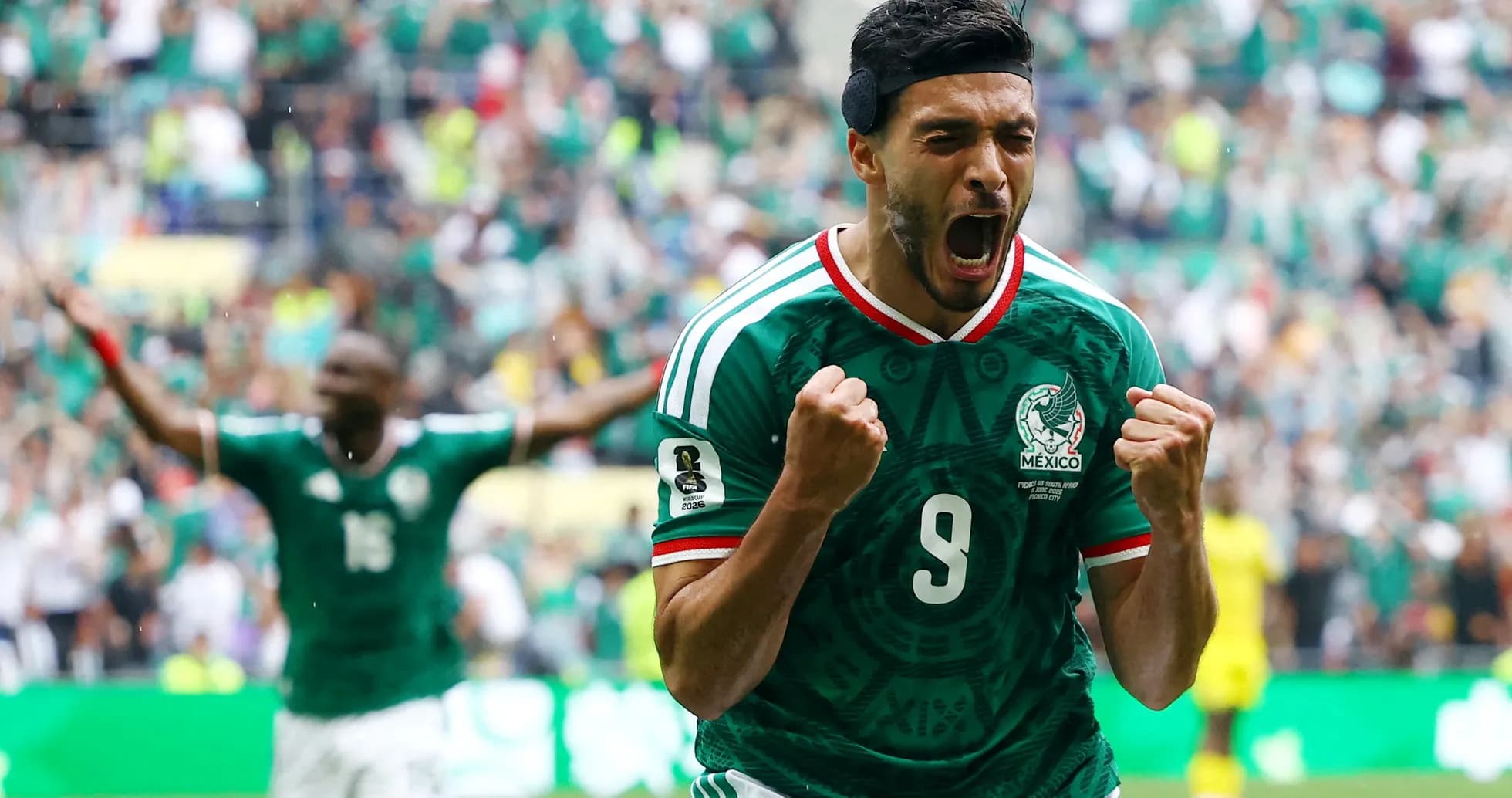
The “Hunter vs Shield” duel was embodied by Raúl Jiménez against N. Sibisi and the South African defensive line. Jiménez, already among the top scorers, finished with 1 goal from 3 shots, 2 on target, and 19 passes with 2 key passes at 78% accuracy. His movement was the problem South Africa never solved: dropping between the lines to combine, then arriving late in the box. For a defender like Sibisi, who completed 50 passes at 82% but registered just 1 interception and ended with a yellow card, it was a night of constant reactive defending. The 2–0 scoreline overall – Mexico’s biggest win so far – is as much about Jiménez’s presence as his finishing.
Alongside him, J. Quiñones and R. Alvarado turned Mexico’s left side into a recurring nightmare. Quiñones, with 1 goal, 4 shots (2 on target), 33 passes at 84% and 6 dribbles attempted with 5 completed, played as a hybrid winger–forward, attacking the inside-left channel. Alvarado, on the opposite flank or tucking inside, contributed 1 assist, 35 passes at 91% accuracy, 2 key passes and 2 successful dribbles, while also winning 8 of 13 duels and making 4–5 tackles depending on dataset. Together, they stretched South Africa’s back five horizontally, forcing wing-backs Mudau and Modiba into impossible decisions: step to the ball and leave space behind, or sit and concede territory.
In the engine room, Érik Lira against Teboho Mokoena and Y. Sithole defined the tempo. Lira’s line reads like a metronome: 45 passes at 93% accuracy, 1 key pass, 1 assist, 4 duels all won, plus tackles and an interception. He was the pivot that allowed Mexico’s 4-1-4-1 to become a 2-3-5 in possession, sliding between centre-backs when needed and stepping into midfield to overload when South Africa’s three tried to press.
Mokoena, for South Africa, had a respectable technical outing – 42 passes at 92%, 1 key pass, 2 interceptions, 7 duels with 4 won – but his influence was mostly defensive. Sithole, meanwhile, embodied the team’s chaos: 19 passes at 89%, 2 successful blocks and 1 interception, but 3 fouls committed and a red card that turned a difficult match into a near-impossible one. The “Enforcer” role tipped from controlled aggression into self-sabotage.
IV. Statistical Prognosis – What This Win Really Says
Following this result, the statistical arc is clear. Mexico’s overall goals-for average of 2.0 and goals-against average of 0.0, coupled with a 100% clean-sheet rate, position them as the early control side in Group A. Their failed-to-score count is 0 in total; their biggest overall win is already 2–0. The structure is stable: one formation used (4-1-4-1), one win, and key creative hubs already defined in Quiñones, Alvarado and Lira.
South Africa, by contrast, have failed to score overall, with 0 goals for and 2 conceded, their clean-sheet tally at 0 and their only recorded defeat on their travels a 2–0. The defensive numbers are not catastrophic in isolation, but when combined with the disciplinary record – multiple reds across the 46–90 minute span – they point to a team whose tactical plan is being undercut by emotional volatility.
If we project forward in xG terms, even without explicit xG values, the shot and chance creation patterns suggest Mexico will consistently generate higher-quality opportunities than they concede, especially with Lira’s passing accuracy at 93% and Alvarado and Quiñones both producing key passes and dribbles at volume. South Africa’s reliance on late cameos from players like Evidence Makgopa and Oswin Appollis – who between them offered energy, duels won and a hint of verticality – is not yet enough to offset a system that spends too long in its own third and too often finishes with fewer than eleven men.
The tactical verdict: Mexico leave the Azteca not just with 3 points, but with a clear identity – a possession-heavy, wing-driven side whose spine (R. Rangel, C. Montes, Lira, Jiménez) looks coherent. South Africa leave with questions about balance and discipline. Unless Broos can tighten the emotional screws in midfield and reduce the self-inflicted damage, their 5-3-2 will remain less a shield and more a fragile shell, one that better-organised attacks like Mexico’s will continue to crack.