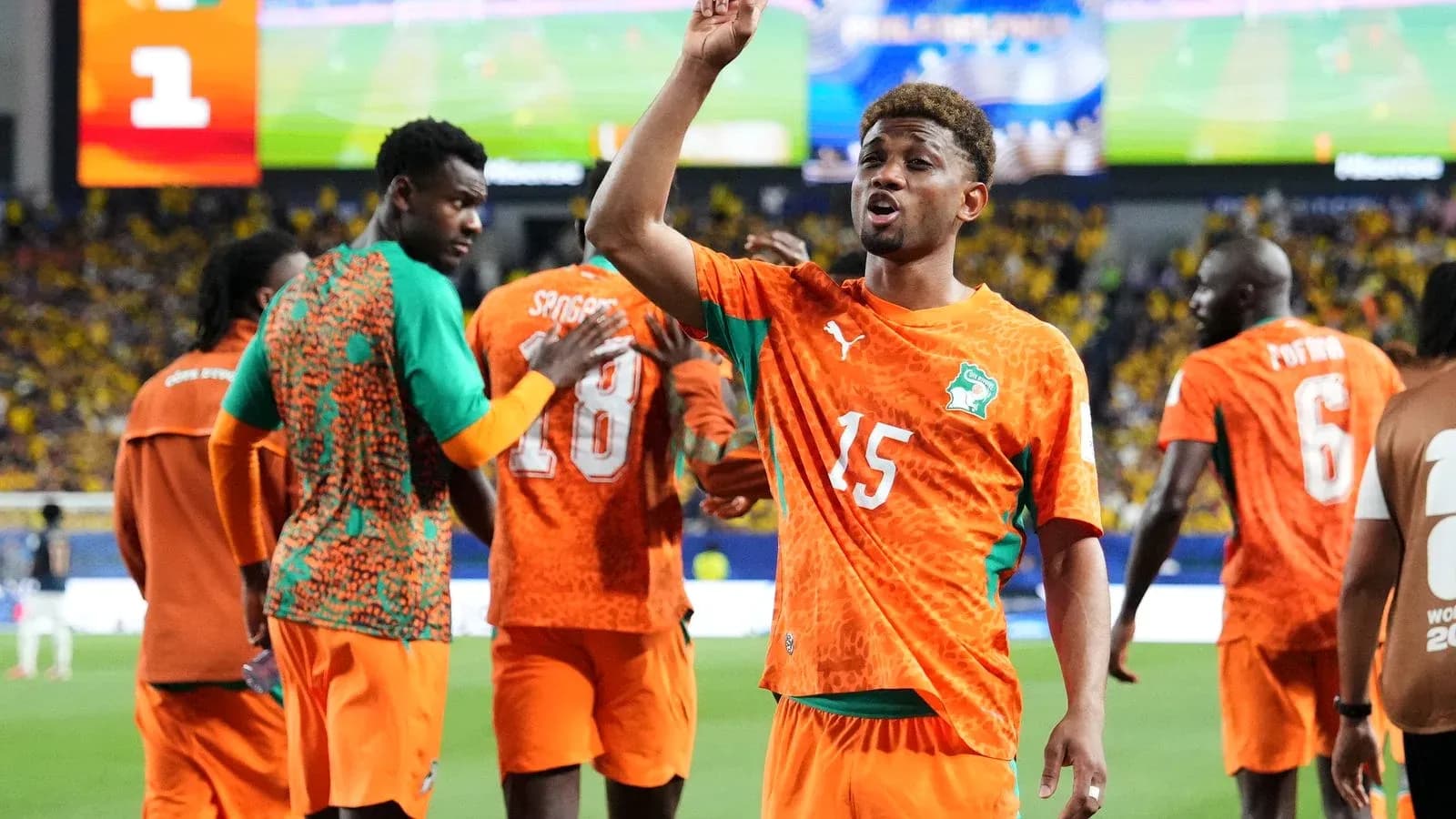
Ivory Coast Defeats Ecuador 1-0 in World Cup 2026 Opener
Under the lights of Lincoln Financial Field in Philadelphia, Ivory Coast and Ecuador opened their World Cup 2026 journeys with a contest that felt less like a group-stage curtain-raiser and more like an early knockout rehearsal. Following this result, the 1-0 win pushes Ivory Coast into 2nd place in Group E on 3 points with a goal difference of +1 (1 scored, 0 conceded overall), while Ecuador sit 3rd with 0 points and a goal difference of -1 (0 scored, 1 conceded overall). Both coaches leaned into symmetry, mirroring each other in a 4-4-2, but the similarities ended there; the game’s tactical story was written in how differently those shapes behaved.
Team Formations
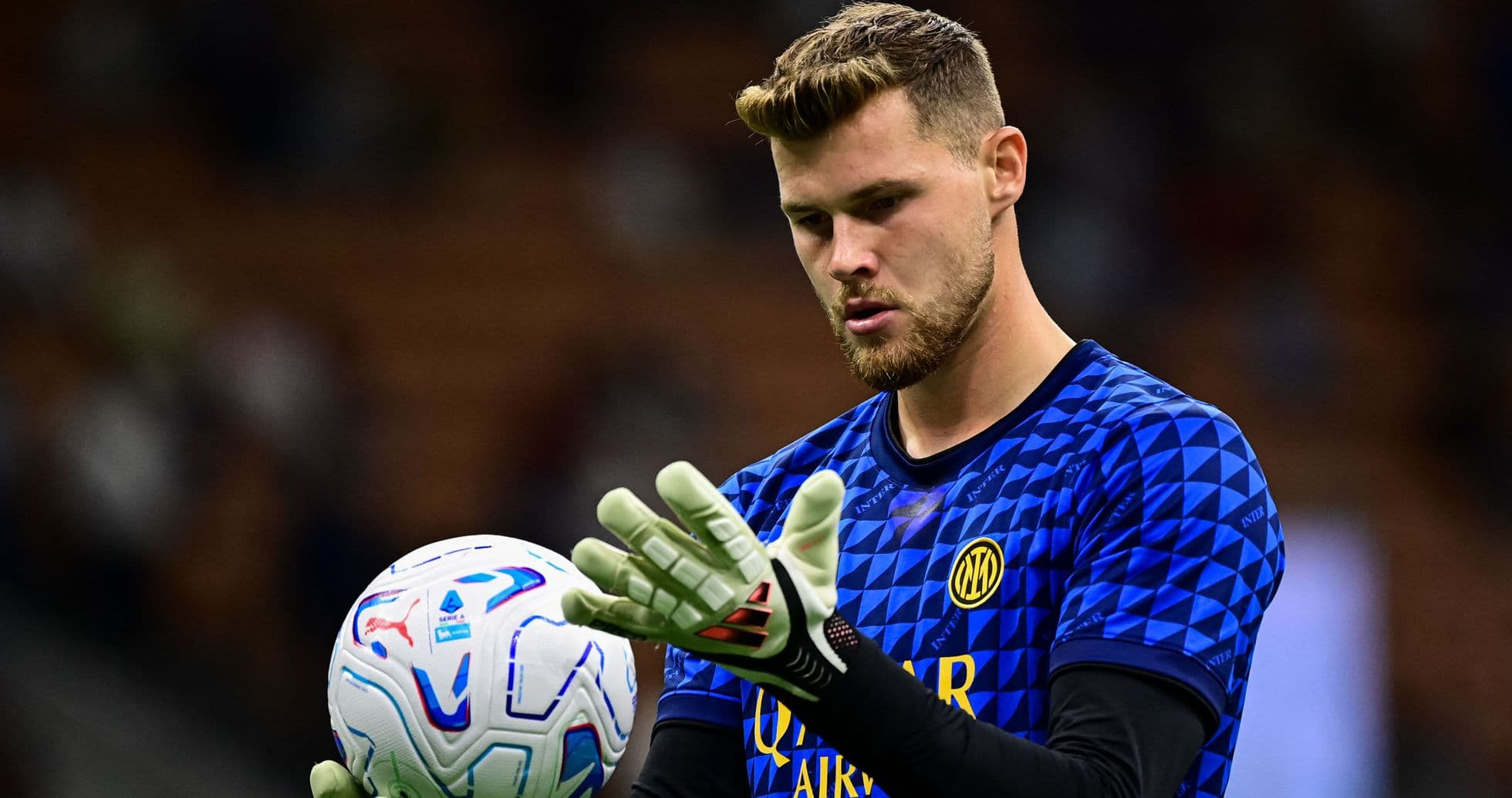
Emerse Fae’s Ivory Coast lined up in a classic, almost old-school 4-4-2, but the personnel gave it a modern edge. Y. Fofana in goal sat behind a back four of G. Konan and G. Doue as adventurous full-backs, with W. Singo and E. Agbadou as the central pairing. Ahead of them, a robust midfield line of B. Toure, S. Fofana, F. Kessie and Y. Diomande was built for both duels and progression, while N. Pepe and E. Wahi led the line.
On the opposite side, Sebastian Beccacece also opted for 4-4-2, but with a more fluid, hybrid feel. P. Hincapie and A. Franco flanked the central duo of W. Pacho and J. Ordonez, while the midfield four of A. Minda, P. Vite, M. Caicedo and J. Yeboah were asked to compress space and spring transitions. Up front, G. Plata and E. Valencia carried the attacking burden.
Tactical Observations
The tactical voids in this match were not about absentees—there is no reported list of missing or questionable players—but about what each side lacked structurally at different phases. Ivory Coast, for all their control, still revealed a dependence on individual brilliance to break lines. Ecuador, conversely, lacked a consistent outlet once their first pressing wave was beaten.
Discipline told its own story. Heading into this game, Ivory Coast’s yellow card distribution showed a sharp spike before the interval: 33.33% of their cautions in the 16-30 minute window and 66.67% between 31-45 minutes, underlining a tendency to get dragged into physical battles as the first half wore on. Ecuador’s season snapshot revealed a different rhythm: 100.00% of their yellows arriving between 61-75 minutes, a late-third surge that hints at frustration or fatigue once the game stretches.
That pattern played out in microcosm. S. Fofana, already prominent in the disciplinary charts, again walked the tightrope in midfield. His profile this tournament—1 yellow card, 1 successful blocked shot and 2 interceptions—captures his dual nature: a disruptor who lives on the edge of control. For Ecuador, J. Porozo’s disciplinary record (1 yellow card, 2 fouls committed in 28 minutes) underlines the cost of late, aggressive defending when chasing a game.
Key Duels
The “Hunter vs Shield” duel was embodied by Ivory Coast’s forward line against an Ecuador back four that, heading into this match, had conceded 1 goal on their travels with an average of 1.0 goals against away and 1.0 overall. Ivory Coast’s attack, by contrast, had scored 1 goal at home with an average of 1.0 goals for at home and 1.0 overall. On paper, it was a finely balanced contest: a functional, not yet explosive, Ivorian front two against a defence that had been breached but not collapsed.
Yet the real hunter emerged from the bench. A. Diallo, already among the top scorers of the competition, came into this World Cup with 1 goal from 1 appearance, having needed just 34 minutes to leave his mark. His numbers are those of a high-impact, high-efficiency weapon: 2 shots, both on target; 17 passes at 82% accuracy; 1 key pass; and a dribbling profile of 6 attempts with 5 successes. This is not volume playmaking; this is surgical incision. When he steps into a game, the entire tempo of Ivory Coast’s attack changes—from measured probing to vertical aggression.
Ecuador’s “Shield” was meant to be the Caicedo–Vite axis in the engine room. M. Caicedo’s role as enforcer and distributor was to smother transitions and feed the front two early. But with Ecuador having failed to score on their travels and overall so far this tournament, and with 0 clean sheets away and 0 overall, the Shield never fully transformed into a launchpad. Too often, their 4-4-2 compressed into a 4-5-1 or even 4-1-4-1 out of possession, leaving E. Valencia isolated and G. Plata forced to drop deeper than ideal.
Engine Room Battle
In the “Engine Room” battle, Ivory Coast held the edge. F. Kessie’s positional discipline allowed S. Fofana to step higher, while Y. Diomande and B. Toure tucked in to form temporary three-man chains in buildup. That gave the Ivorians a stable platform to pin Ecuador back and, crucially, to sustain pressure after turnovers. When Ecuador did break, it was usually via M. Caicedo’s first pass and A. Minda’s carries, but the sequences lacked the numbers to truly unsettle W. Singo and E. Agbadou.
Statistical Prognosis
From a statistical prognosis standpoint, both teams arrive at the next group fixtures with sharply defined identities. Ivory Coast have played 1 home match, winning it 1-0, with 1.0 goals scored at home on average and 0.0 conceded at home and overall. They have 1 clean sheet overall and have not yet failed to score. Ecuador, by contrast, have played 1 match on their travels, lost 1-0, with 0.0 goals for away and overall, and 1.0 goals against away and overall. They have 0 clean sheets and have failed to score in that away fixture and overall.
Even without explicit xG numbers, the shot and chance profiles hint at a clear trend: Ivory Coast generate fewer but higher-quality moments, often through players like A. Diallo who can beat defenders one-on-one, while Ecuador rely more on volume and set-piece or transition moments that have yet to materialise into goals.
Tactical Verdict
Following this result, the tactical verdict is stark. Ivory Coast look built for knockout football: compact at the back, 4-4-2 bedded in (used in 1 of 1 matches), and armed with a bench that can tilt games late. Ecuador’s 4-4-2 has structure but not yet a cutting edge. Unless Beccacece finds a way to better connect M. Caicedo with his forwards and manage that risky 61-75 minute disciplinary spike, Ecuador will remain a side that defends in numbers but struggles to turn resistance into threat.
For now, the story of Group E is that Ivory Coast have found a way to win tight matches, while Ecuador are still searching for a way to score them.