Iran and New Zealand Draw in World Cup Group G Clash
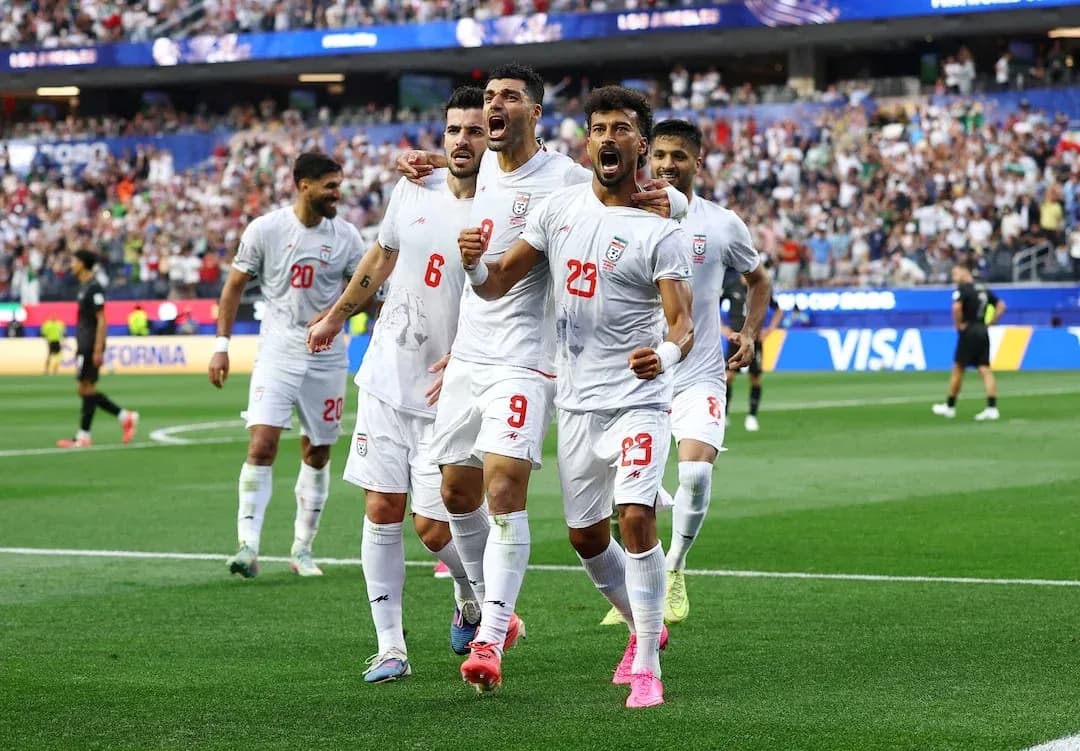
SoFi Stadium’s vast bowl had barely emptied when the table told its first story of Group G: Iran and New Zealand locked together on one point, a 2–2 draw that felt less like a stalemate and more like an opening statement from two sides intent on upsetting the World Cup hierarchy.
I. The Big Picture – Two Identities, One Shared Nerve
Following this result, New Zealand sit 1st in Group G, Iran 2nd, separated only by tie‑break nuance rather than performance. Overall this campaign, both have played 1 match, drawn 1, and share an identical goal profile: 2 goals for and 2 against, a goal difference of 0 for each. The symmetry is striking, but the routes to that balance could hardly be more different.
At home in this tournament, Iran’s numbers are blunt and revealing: 1 match, 2 goals scored, 2 conceded, an average of 2.0 goals both for and against. They have yet to keep a clean sheet, yet to fail to score, and their only card so far – a yellow shown in the 76–90' window – hints at a team that becomes more desperate and combative as the finish line approaches.
On their travels, New Zealand mirror the same 2.0 average goals for and 2.0 against, also without a clean sheet and without failing to score. But where Iran’s identity is wrapped in the familiar 4‑4‑2, New Zealand’s 4‑2‑3‑1 is more fluid, a shape designed to orbit around one towering reference point: Chris Wood.
II. Tactical Voids – Discipline, Risk, and the Edges of Control
There are no listed injuries or suspensions in the data, so the tactical voids here are less about absences and more about structural risk.
For Iran, Amir Ghalenoei’s 4‑4‑2 is built on a clear spine. Alireza Beiranvand anchors the back, with a defensive line of Milad Mohammadi, Ali Nemati, Shoja Khalilzadeh, and the standout figure of Ramin Rezaeian. Ahead of them, a flat but flexible midfield quartet – Aria Yousefi, Saeid Ezatolahi, Saman Ghoddos, and Mohammad Mohebi – must both feed and protect a front two of Shahriar Moghanlou and Mehdi Taremi.
The disciplinary flashpoint is Ehsan Hajsafi. Used from the bench, Hajsafi played 25 minutes, received 1 yellow card, and sits already among the leading carded players in the competition. His caution, arriving in a match where Iran’s only yellow falls in the 76–90' band, underlines a pattern: when Iran chase or protect a result late, their aggression spikes. It is a strength in terms of intensity, but a looming risk in a group phase where suspensions can accumulate quickly.
New Zealand’s disciplinary slate is clean so far: no yellows, no reds recorded in their statistical profile. That suggests a side that defended largely within the lines of the law, even while conceding twice. The void for them is not in personnel but in control – a double‑edged 4‑2‑3‑1 where the attacking band of Callum McCowatt, Sarpreet Singh, Elijah Just, and Wood can leave Joe Bell and Marko Stamenic exposed if possession is lost in transition.
III. Key Matchups – Hunter vs Shield, Engine Room vs Enforcer
Hunter vs Shield
The most compelling duel in this fixture was played on the flanks and in the half‑spaces rather than purely through the middle. For Iran, the unexpected “hunter” was a defender: Ramin Rezaeian. In total this campaign, Rezaeian has 1 goal and 1 assist from right‑back, with 41 passes (3 key passes) and a rating of 9.3. He is not just overlapping; he is orchestrating, stepping into midfield pockets and delivering the final ball.
Across from him, New Zealand’s “shield” is not a single player but a collective structure: the left side of Liberato Cacace and the nearest pivot, usually Stamenic. Yet that shield was repeatedly pierced by another hunter in white and black: Elijah Just. Overall, Just has 2 goals from 2 shots on target, a rating of 9, and 26 passes at 84% accuracy. Operating nominally from the left but drifting inside, he targeted the spaces around Iran’s full‑backs, especially when Rezaeian surged forward.
The duel is almost mirrored: Rezaeian, a defender playing like a winger; Just, a winger finishing like a striker. Each side’s attacking peak is born from exploiting the other’s adventurous full‑back. Iran’s late‑game yellow concentration in the 76–90' range suggests that as legs tire and lines stretch, those wide channels become even more vulnerable to runners like Just.
Engine Room – Playmaker vs Enforcer
In the middle, the “engine room” battle was subtle but decisive. For Iran, Ezatolahi and Ghoddos provided the metronome and the vertical pass. Ghoddos, stationed higher, connected midfield to Taremi and Moghanlou, while Ezatolahi tried to screen the back four.
New Zealand countered with Bell and Stamenic as a double pivot. Their task was twofold: compress the spaces Ghoddos loves to receive in, and launch quick vertical passes into Singh, McCowatt, and Just. Wood, despite not scoring, was the fulcrum: in total this campaign he has 2 assists, 4 key passes, and 3 shots, 2 of them on target. His ability to drop off the front line and play others in turned Iran’s centre‑backs, especially when their full‑backs were high.
The key here is attrition. As the match wore on, Iran turned to the bench: Hajsafi [IN] replaced one of the starters, adding bite and experience on the flank or at full‑back. His 3 duels, 2 won, plus that single yellow card, embodied Iran’s late push. New Zealand, with a deeper list of unused options like Ben Waine and Kosta Barbarouses, held more theoretical variety, but the data suggests they trusted their starting structure for the full 90.
IV. Statistical Prognosis – Two Sides on a Knife‑Edge
With no xG data provided, the prognosis leans on patterns rather than probabilities. Overall, both teams average 2.0 goals scored and 2.0 conceded per match, with zero clean sheets and zero blanks in front of goal. This is the profile of two sides whose offensive structures are ahead of their defensive cohesion.
Iran’s 4‑4‑2, with Rezaeian as an auxiliary playmaker and Taremi as the penalty‑box reference, will continue to generate chances, particularly if Mohebi and Ghoddos can pin opposition full‑backs deep. But their tendency to collect cards late – 100.00% of their yellow cards so far arriving in the 76–90' band – hints at potential future suspensions and vulnerable closing phases.
New Zealand’s 4‑2‑3‑1, powered by Just’s end‑product and Wood’s creative gravity, is already delivering: 2 goals on their travels, 2 assists for Wood, and a midfield that can both circulate and break lines. Their clean disciplinary record gives coach flexibility in rotation and tactical fouling zones later in the group.
Following this result, the tactical balance of Group G tilts towards volatility. Iran and New Zealand have shown they can hurt anyone; they have also shown they can be hurt. The intersection of Iran’s late‑game aggression and New Zealand’s fluid attacking band sets the stage for a group where no lead will feel safe, and where the final 15 minutes may decide who survives beyond the Round of 32 pathway both are currently projected towards.