Germany Dominates Curaçao 7–1 in World Cup Opener
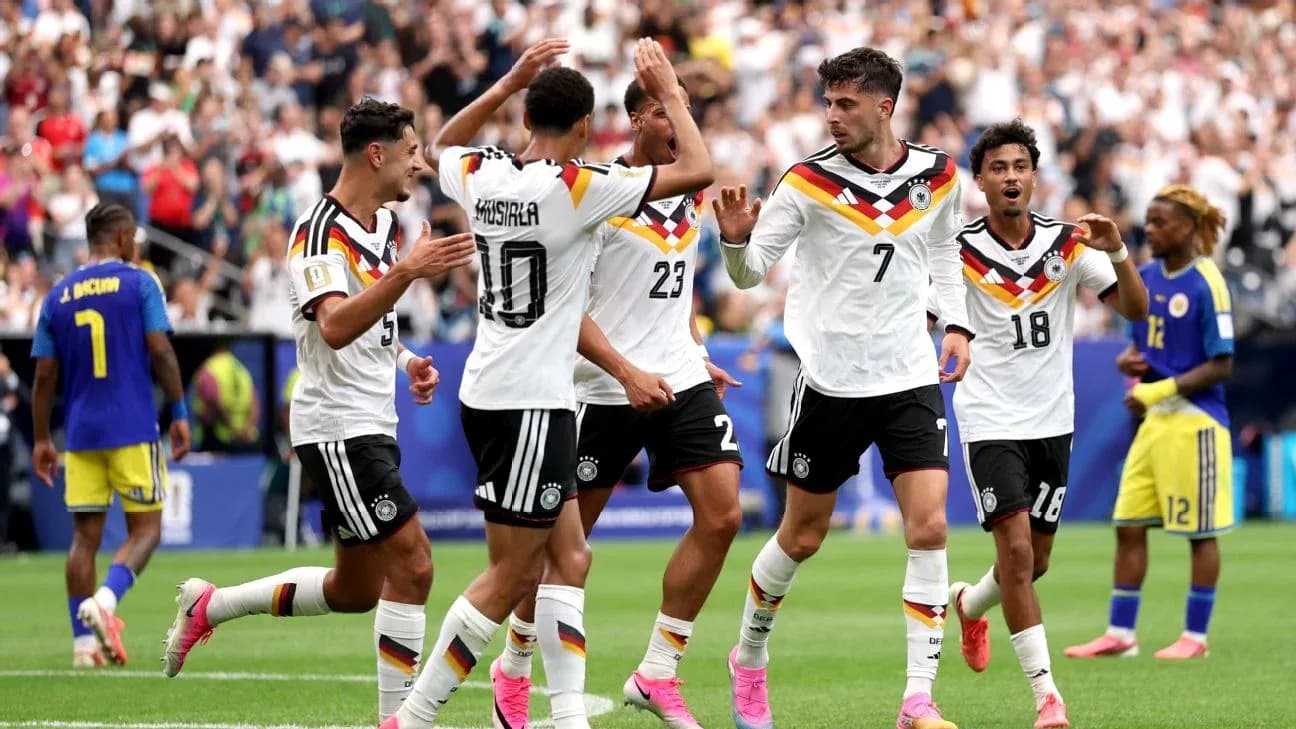
Under the closed roof of NRG Stadium in Houston, Germany opened their 2026 World Cup campaign with a ruthless 7–1 dismantling of Curaçao, a result that instantly reshaped Group E’s landscape. Heading into this game, there was curiosity more than jeopardy: a new‑look Germany under Julian Nagelsmann, a debutant Curaçao side coached by the wily Dick Advocaat, and a tactical clash between a heavyweight 4‑2‑3‑1 and a brave 4‑3‑1‑2.
Following this result, Germany sit 1st in Group E with 3 points and a goal difference of +6, having scored 7 and conceded 1 overall. Curaçao drop to 4th, with 0 points and a goal difference of -6, their 1 goal a faint consolation against 7 conceded. The statistics paint a brutal contrast: Germany have 7.0 goals for on average at home and 1.0 goals against at home, while Curaçao’s only outing on their travels has produced an average of 1.0 goal scored and 7.0 conceded away.
Germany’s seasonal DNA, even from this single match, is clear: high‑octane attacking, no clean sheet yet, but overwhelming firepower. Curaçao’s is more fragile: a side trying to play, not merely survive, but exposed whenever the game stretches.
Tactical voids and discipline
Injury and suspension lists offered no pre‑match alibi for either coach; the squads were full, and the story was written entirely by tactical choices and execution.
Nagelsmann’s 4‑2‑3‑1 was aggressively tilted forward. Manuel Neuer sat behind a back four of Joshua Kimmich, Jonathan Tah, Nico Schlotterbeck and Nathaniel Brown. Ahead of them, a double pivot of F. Nmecha and Aleksandar Pavlovic was tasked with both circulation and counterpressing, freeing the trio of Leroy Sané, Jamal Musiala and Florian Wirtz to roam behind Kai Havertz.
Advocaat’s 4‑3‑1‑2 tried to compress the middle. Eloy Room was shielded by Shurandy Floranus, Riechedly Bazoer, Armando Obispo and D. Fonville. The midfield trio of L. Comenencia, Leandro Bacuna and Juninho Bacuna sat beneath Tahith Chong as the link to the front two, Jürgen Locadia and S. Hansen. On paper, the box and diamond zones were crowded; in practice, Germany’s rotations pulled them apart.
Disciplinary data for this World Cup snapshot is thin: no recorded yellow or red cards across any time range for either side. That absence of bookings fits the visual pattern of the match: Germany controlled without needing cynical fouls, while Curaçao were too often chasing shadows to foul in dangerous zones. For future fixtures, the lack of cards is a small but important upside: no looming suspensions, full tactical flexibility.
Key matchups – hunter vs shield, engine room battles
Hunter vs shield
Germany’s leading edge is already sharp. Havertz, listed among the top scorers with 2 goals in 90 minutes and a rating of 8.2, finished with clinical economy: 2 shots, both on target, both goals. He also converted Germany’s only penalty of the tournament so far, maintaining a perfect 100.00% team record from the spot (1 scored, 0 missed).
Curaçao’s “shield” – their defensive unit on their travels – has bent and broken. On their travels they have conceded 7.0 goals on average, with a biggest away loss of 7–1. Bazoer and Obispo tried to step out to engage Musiala and Wirtz between the lines, but every step forward opened a seam for Havertz to run across their blind side. With Kimmich delivering 73 passes at 89% accuracy and 5 key passes, the German right‑back repeatedly threaded balls into the half‑spaces Curaçao could not close.
The next layer of threat comes from the bench. Deniz Undav, already top of the assists chart with 2 and credited with 1 goal in just 26 minutes, gives Germany a different type of hunter: more penalty‑box instinct, sharp combinations, and late runs. Against a defence that has already conceded 7 away, his introduction tilted the closing stages from comfortable to cruel.
Engine room – playmaker vs enforcer
In the engine room, Germany’s creative axis is unusually wide. Musiala, rated 8.2, scored once from his only shot on target and completed 4 of 5 dribbles, winning 9 of 14 duels. He destabilised Curaçao’s midfield triangle almost single‑handedly, forcing L. Bacuna and J. Bacuna to constantly decide between tracking him or closing the passing lane to Wirtz.
Behind them, Kimmich functioned as both full‑back and deep playmaker. His 2 assists and 5 key passes underline how often he stepped into central pockets to overload the Curaçao midfield, while his 1 interception ensured Germany rarely suffered in transition.
Curaçao’s engine room, with Bacuna and Bacuna flanking Comenencia, was tasked with compressing space and springing Chong between the lines. The structure was logical: three workers and one connector. But once Germany’s press locked onto their first pass out, Chong became isolated, and the front two were left chasing long diagonals.
One of the more intriguing stories is Nathaniel Brown. Nominally a defender, he delivered 1 goal and 1 assist, with 36 passes at 88% accuracy and 3 key passes. His high, aggressive positioning turned Germany’s back four into a situational back three in possession, with Brown effectively operating as an auxiliary playmaker down the left. For Curaçao, Floranus and Comenencia never solved that overload, leaving their right flank as a recurring leak.
Statistical prognosis – what this result projects
Following this result, the raw numbers are extreme, but they still carry predictive weight. Germany’s overall average of 7.0 goals for and 1.0 against will obviously normalize, yet the pattern is clear: this is a side whose attacking ceiling is among the highest in the tournament. Their penalty record (1 total, 1 scored, 0 missed) suggests composure in decisive moments, and their lack of clean sheets hints at a small vulnerability in defensive concentration rather than structural collapse.
Curaçao’s overall figures – 1.0 goal for and 7.0 against, a goal difference of -6 derived directly from 1 scored and 7 conceded – warn of a group stage spent under siege. But there are green shoots: they did score against a top seed, and their 4‑3‑1‑2 showed intent to connect midfield and attack rather than parking deep.
In xG terms, a 7–1 is almost never a pure accident; even without explicit expected goals data, the shot volume, chance quality implied by multiple goals from open play and a converted penalty, and Germany’s key passing numbers point to a dominant xG edge. Defensively, conceding once while pushing full‑backs high suggests Germany’s structure can survive sustained pressure against weaker sides, though better opponents will test the space behind Brown and Kimmich.
The prognosis, then: Germany emerge from Houston not just with points, but with a statement of tactical identity – fluid 4‑2‑3‑1, full‑backs as playmakers, and a bench that adds rather than merely replaces. Curaçao, bloodied but not broken, must now pivot from damage control to targeted pragmatism, tightening their away defensive block while preserving enough ambition to let Chong and Locadia turn rare transitions into meaningful chances.