Germany Dominates Curaçao in 7-1 Victory
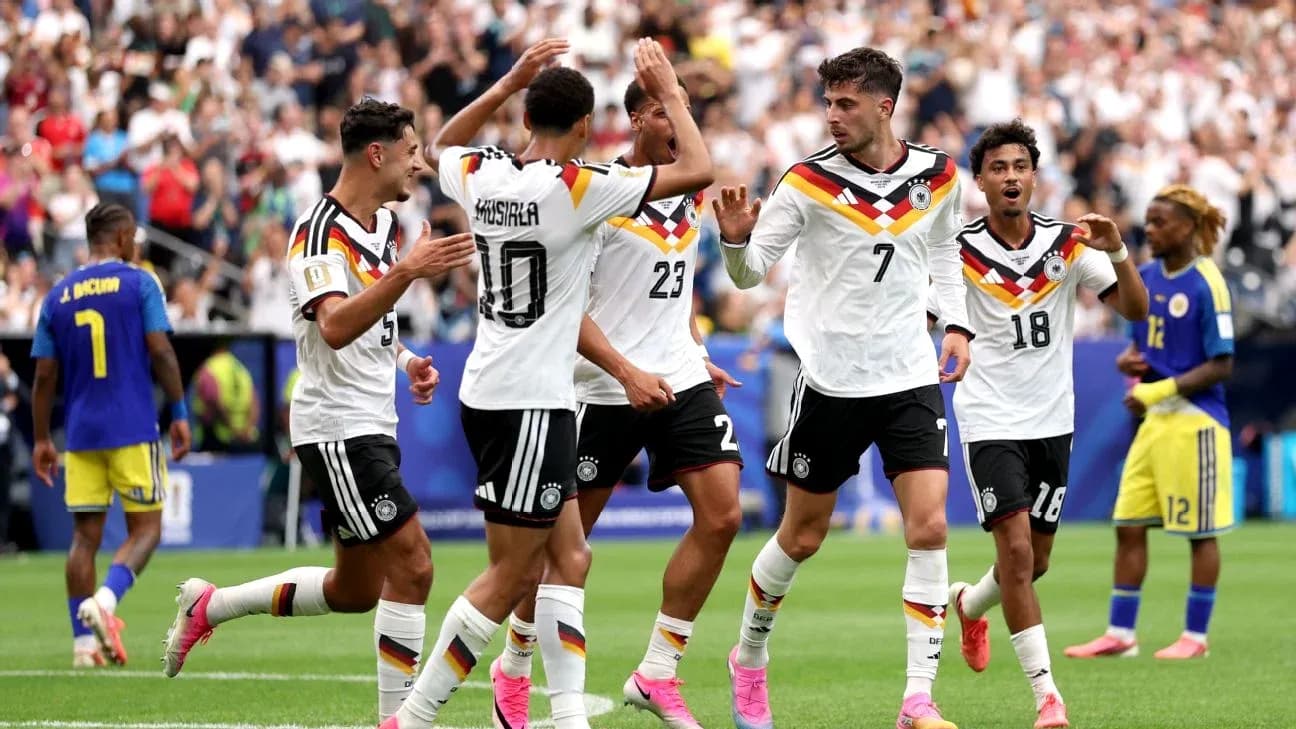
Germany’s 7-1 win over Curaçao at NRG Stadium was a structural mismatch built on territorial dominance, aggressive counter-pressing, and a relentless occupation of the final third. Julian Nagelsmann’s 4-2-3-1 pinned Dick Advocaat’s 4-3-1-2 deep for long stretches, with Germany converting sustained pressure (65% possession, 27 total shots) into a steady escalation of chances that eventually overwhelmed Curaçao’s compact block.
From the outset, Germany’s rest-defense and spacing in build-up framed the game. The back four of Joshua Kimmich, Jonathan Tah, Nico Schlotterbeck and Nathaniel Brown formed a wide platform, with Felix Nmecha and Aleksandar Pavlović as a double pivot. Both pivots operated high and narrow, often stepping beyond the first line of pressure to lock Curaçao in. With 633 total passes and 550 accurate (87%), Germany circulated the ball with control, using short combinations rather than direct play to progress.
The attacking structure revolved around the central box of Nmecha–Pavlović beneath Jamal Musiala, flanked by Leroy Sané and Florian Wirtz behind Kai Havertz. Musiala and Wirtz constantly drifted into the right and left half-spaces respectively, creating overloads against Curaçao’s midfield trio of Livano Comenencia, Leandro Bacuna and Juninho Bacuna. This positional play produced 22 shots inside the box, underlining how often Germany managed to break the last line rather than relying on low-percentage efforts from distance.
Curaçao’s 4-3-1-2 out of possession was designed to clog the middle, with Tahith Chong as the advanced midfielder linking to Sontje Hansen and Jürgen Locadia. However, Germany’s width and rotation repeatedly pulled the visitors’ narrow shape apart. Full-backs Kimmich and Brown pushed high and wide, pinning Sherel Constancio Floranus and Deveron Fonville, while Schlotterbeck frequently stepped into midfield with the ball to create a spare man. This forced Curaçao’s forwards to defend deep, collapsing their counter-attacking threat and leaving only sporadic transitions.
The statistical profile shows how tilted the game became. Germany’s xG of 3.91 versus Curaçao’s 0.4 captures a contest where Germany not only created in volume but also from high-quality zones. The 12 shots on goal from Germany against only 2 from Curaçao, and 8 blocked shots by the hosts, indicate that Germany smothered most Curaçao attempts at source while continuously testing the visiting back line. Curaçao’s 8 total shots were split evenly inside and outside the box, but they rarely managed to generate clear central looks.
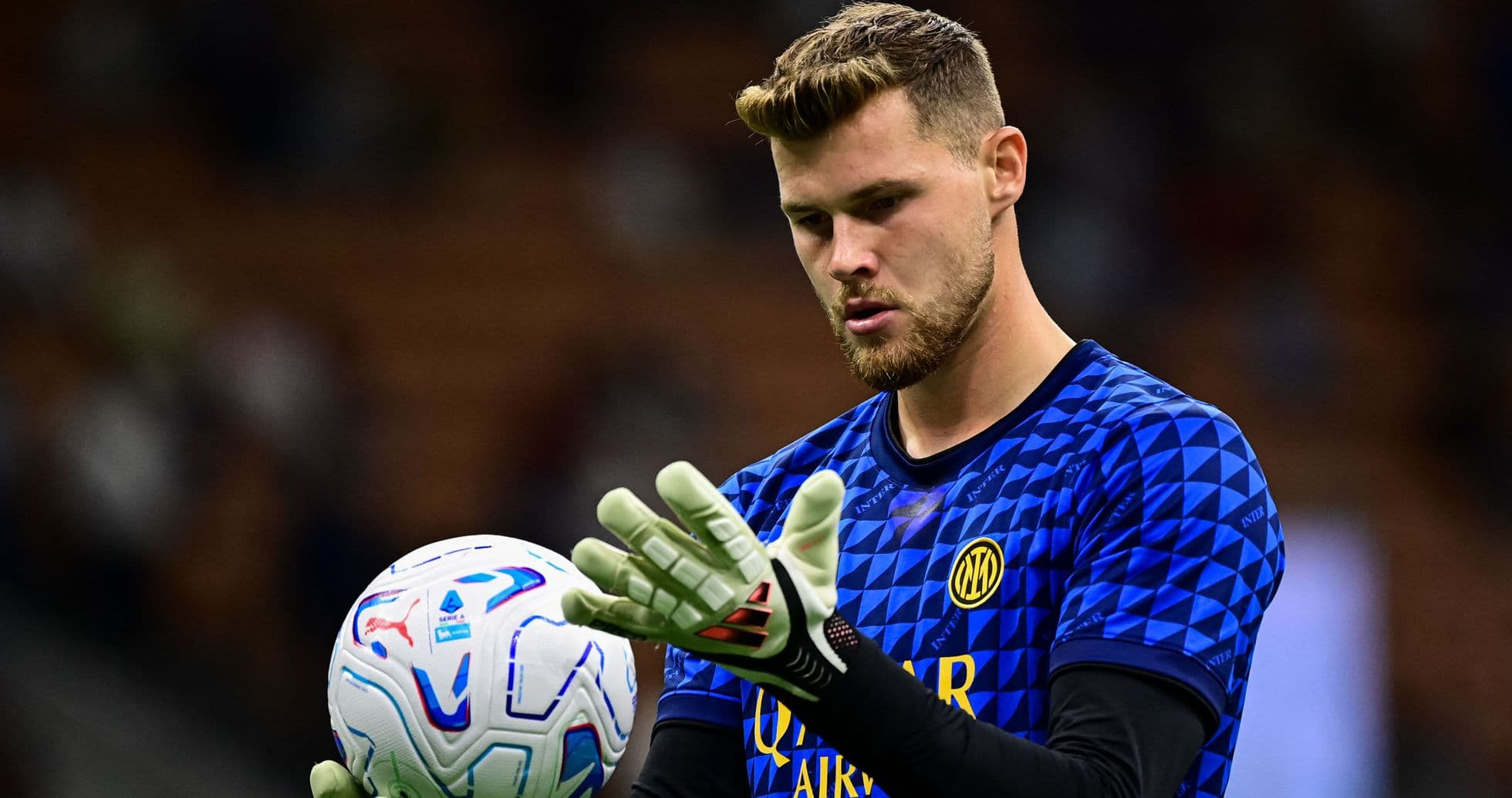
In goal, Manuel Neuer (Germany) had a quiet but telling afternoon. Germany’s defensive structure restricted Curaçao to 2 shots on goal, with Neuer making 1 save according to the statistics. The low save count is less a reflection of underperformance and more of the defensive control in front of him: Germany’s line squeezed up, the double pivot screened central lanes, and counter-pressing after turnovers limited Curaçao’s ability to run at space. On the other side, Eloy Room (Curaçao) made 4 saves, but the underlying numbers underline how exposed he was. With Curaçao’s goals prevented at -2.47, the model suggests Germany finished well above expectation and that Room was left facing a volume and quality of chances that would overwhelm most keepers.
The penalty area occupation was the decisive tactical theme. Germany’s front four constantly rotated: Havertz dropped off the line to link play, drawing Riechedly Bazoer and Armando Obispo out, while Sané and Wirtz attacked the vacated channels. Musiala’s late runs into the box, combined with Nmecha’s willingness to step beyond the midfield line, ensured that Germany often had three or four bodies between the posts when crosses or cutbacks were delivered. That density is reflected in the 22 shots inside the box and the final 7-1 scoreline.
Curaçao’s attempt to build from the back was sporadically neat—336 passes with 276 accurate (82%) is respectable under heavy pressure—but they struggled to convert possession phases into territory. With only 1 corner and 11 fouls, they neither sustained pressure in Germany’s half nor consistently disrupted Germany’s rhythm. Advocaat’s side were forced into a reactive game: trying to stay compact, then breaking through Chong and the Bacuna brothers when possible, but Germany’s counter-press frequently killed these moves before they crossed halfway.
Substitutions from Nagelsmann reinforced the tactical superiority rather than altering it. Deniz Undav (IN) came on for Jamal Musiala (OUT), adding a more direct penalty-box presence while maintaining the same structural ideas. David Raum (IN) for Nathaniel Brown (OUT), Antonio Rüdiger (IN) for Jonathan Tah (OUT), Felix Nmecha (OUT) replaced by Leon Goretzka (IN), and later Waldemar Anton (IN) for Joshua Kimmich (OUT) allowed Germany to refresh legs without sacrificing the 4-2-3-1’s integrity. The pattern of dominance remained intact deep into the second half.
On Curaçao’s side, Jeremy Antonisse (IN) for Sontje Hansen (OUT), Jearl Margaritha (IN) for Jürgen Locadia (OUT) and Gervane Kastaneer (IN) for Tahith Chong (OUT) were attempts to inject pace and new reference points up front, but by then Germany’s control of space and tempo was entrenched.
The statistical verdict underlines a comprehensive performance. Germany’s 65% possession, 27 total shots, 8 corner kicks and high passing accuracy reflect a side that imposed its game relentlessly. The xG of 3.91, combined with 7 actual goals, shows clinical finishing layered on top of a high-volume chance creation model. Curaçao’s 35% possession, 8 shots and 0.4 xG highlight an uphill battle in both territory and quality. Both teams recorded 0 offsides for Germany and 1 for Curaçao, a small detail that reinforces how often Germany were able to time their runs cleanly against a stretched back line.
Defensively, Germany’s 18 fouls versus Curaçao’s 11 suggest an assertive, sometimes aggressive counter-press, but with no cards recorded in the data, game management remained under control. Taken together, the numbers and the tactical patterns describe a one-sided group-stage fixture in which Germany’s structure, rotations and technical superiority translated almost perfectly into the scoreboard.