Canada vs Bosnia & Herzegovina: Tactical Analysis of World Cup 2026 Draw
Canada and Bosnia & Herzegovina opened their World Cup 2026 campaigns at BMO Field with a tactically tight 1-1 draw that showcased contrasting interpretations of the same base system. Both Jesse Marsch and Sergej Barbarez set their sides up in a 4-4-2, but the game quickly evolved into a duel between Canada’s high-possession, wing-driven aggression and Bosnia & Herzegovina’s compact, foul-heavy defensive block and direct counter-attacks. The numbers underline the clash of ideas: Canada dominated the ball with 61% possession, produced 13 shots and 1.25 xG, yet needed a second-half intervention from the bench to cancel out an early Bosnia & Herzegovina lead built on efficiency and resilience.
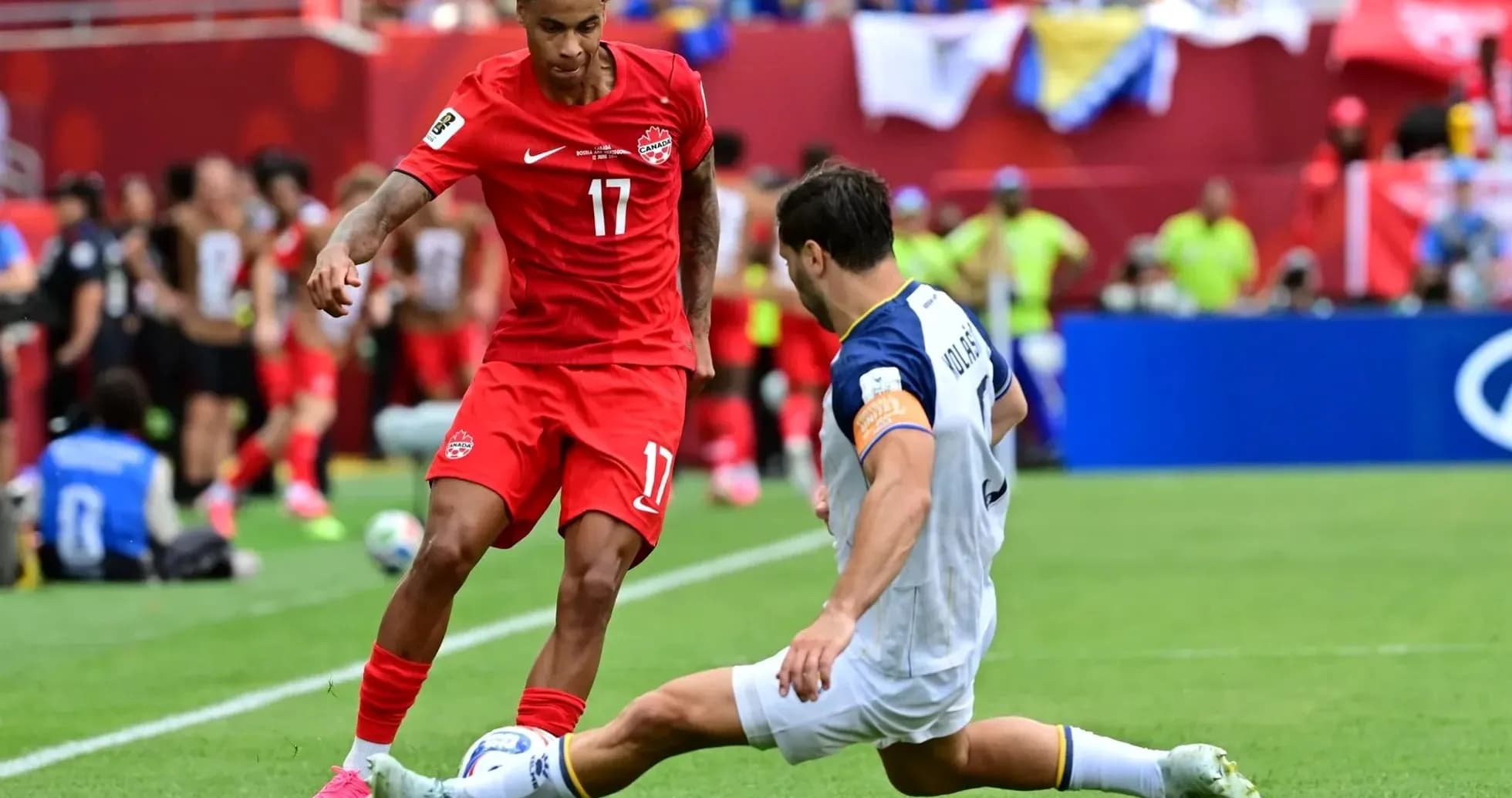
The scoring opened in the 21st minute when Bosnia & Herzegovina executed the clearest expression of their plan. From a structured 4-4-2 base, they broke Canada’s first line and progressed down the left, where Sead Kolašinac advanced aggressively from full-back. His delivery found Jovo Lukić, who finished to make it 0-1. That move encapsulated Barbarez’s approach: full-backs stepping high selectively, with the front two ready to attack early service before Canada’s back four could reset.
Canada’s response was territorial rather than immediately incisive. Their 4-4-2 morphed into a 2-4-4 in possession, with full-backs Alistair Johnston and Richie Laryea pushing high and wide, while Stephen Eustaquio and Ismael Koné tried to dictate from central zones. The volume of Canada’s attacking play is clear in the metrics: 13 total shots, 10 from inside the box, and 9 corners. However, the lack of clear early penetration is reflected in only 4 shots on goal and a modest 1.25 xG despite long spells of pressure.
Bosnia & Herzegovina, by contrast, accepted a low block for long stretches, finishing with just 39% possession and 8 total shots (5 inside the box). Their focus was on compressing central lanes, forcing Canada wide, and then contesting every cross and second ball with an aggressive defensive line. The foul count — 20 for Bosnia & Herzegovina against 10 for Canada — underlines their readiness to disrupt rhythm. Three Bosnian yellow cards, all for “Foul”, show a calculated trade-off: accept disciplinary risk to break up Canada’s tempo and prevent clean progression through the middle.
The disciplinary timeline also maps onto the tactical intensity. Canada’s early yellow for Alistair Johnston at 11' for “Foul” reflected their initial high pressing and counter-pressing intent, with the right-back stepping into duels to lock Bosnia & Herzegovina in. Bosnia & Herzegovina’s first booking, to Ermedin Demirović at 44' for “Foul”, came as they increasingly resorted to stopping Canadian transitions at source once the home side started to win more second balls in midfield. Lukić’s booking at 45+1' for “Foul” further illustrated the physical edge in the Bosnian front line’s pressing and defensive work.
The second half swung decisively on Marsch’s triple substitution at 61'. Promise David (IN) came on for Jonathan David (OUT), Ali Ahmed (IN) for Tajon Buchanan (OUT), and Jacob Shaffelburg (IN) for Liam Millar (OUT). This changed not just personnel but the nature of Canada’s front line. Promise David offered more direct running and depth, Shaffelburg brought left-sided dynamism and 1v1 threat, and Ahmed added verticality from midfield. The effect was to stretch Bosnia & Herzegovina’s back four horizontally and vertically, forcing them to defend more space and loosening the previously rigid block.
Barbarez responded almost immediately, with Samed Baždar (IN) replacing Jovo Lukić (OUT) and Armin Gigović (IN) replacing Ivan Bašić (OUT) at 62'. These changes aimed to refresh the press and add legs in midfield to cope with Canada’s increased tempo. Later, Kerim Alajbegović (IN) for Amar Memić (OUT) and Ivan Šunjić (IN) for Esmir Bajraktarević (OUT) at 74' further tilted Bosnia & Herzegovina towards a more defensive, workmanlike midfield unit, sacrificing some of the earlier creative balance to protect the lead.
The breakthrough for Canada came in the 78th minute and was a direct validation of Marsch’s substitutions. Cyle Larin, who had entered at 76' with Tani Oluwaseyi (OUT) making way, became the reference point up front. The equaliser was crafted by Promise David, whose assist found Larin in a central area; Larin finished to bring the score to 1-1. The goal was emblematic of the reconfigured Canadian attack: fresh legs, more direct movement, and better exploitation of the half-spaces between Bosnia & Herzegovina’s centre-backs and midfield line.
From that point, the pattern was clear. Canada continued to push, reflected in their 9 corners to Bosnia & Herzegovina’s 4, while Bosnia & Herzegovina sank even deeper. The late yellow card for Nikola Katić at 90+3' for “Foul” was consistent with a side under sustained pressure, forced into last-ditch interventions. Canada’s second booking, for Luc De Fougerolles at 53' for “Foul”, had earlier underlined the risk in their aggressive defensive line when exposed to Bosnia & Herzegovina’s more sporadic counters.
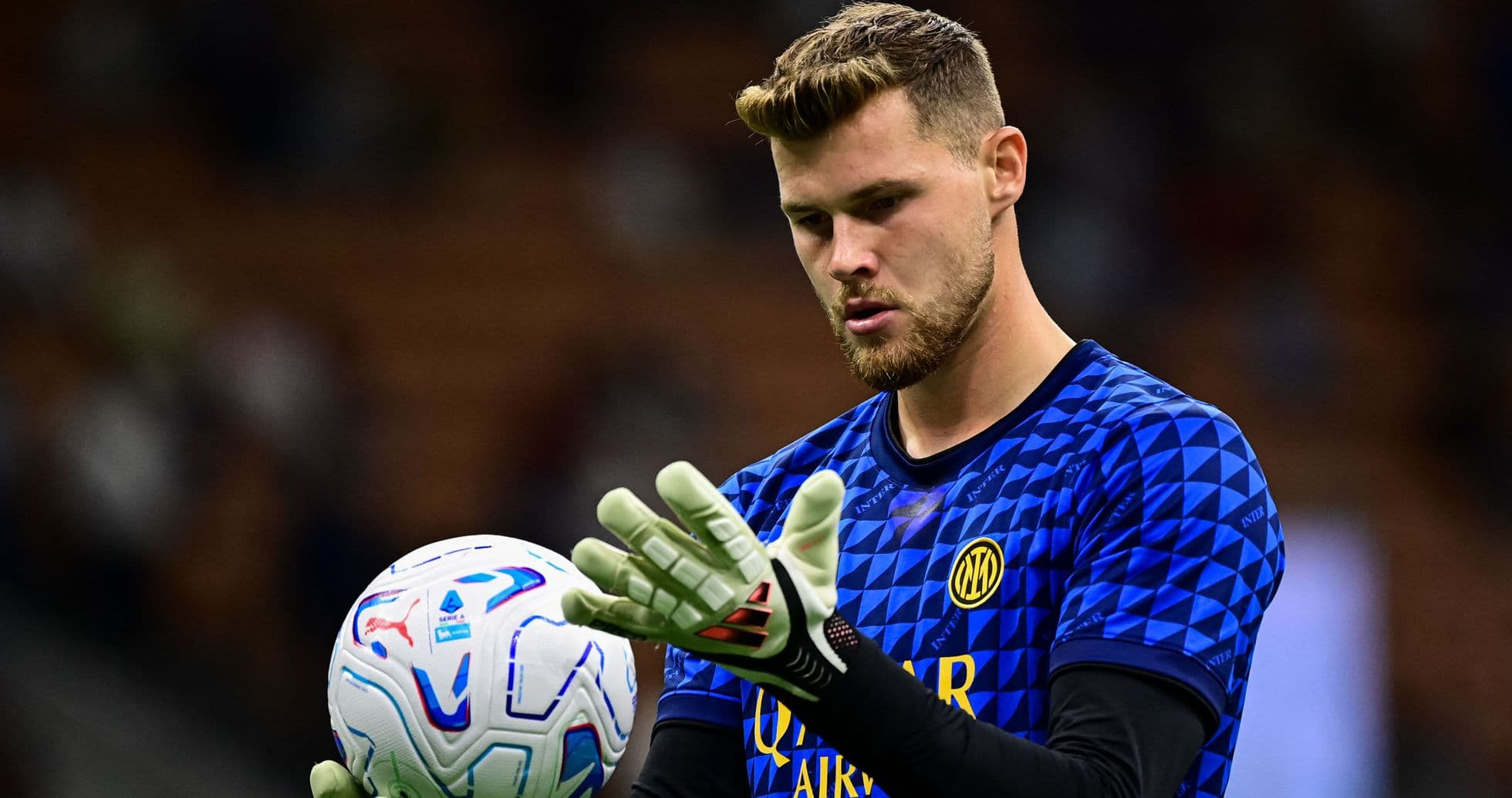
In goal, Maxime Crépeau (Canada) was statistically underworked, registering 2 goalkeeper saves. This aligns with Bosnia & Herzegovina’s limited shot volume (3 shots on goal from 8 attempts), suggesting that while their attacks were efficient in producing the opener, they rarely sustained pressure. Nikola Vasilj (Bosnia & Herzegovina), with 1 save against 4 Canadian shots on goal, benefited from the defensive block in front of him, which limited Canada to many contested or blocked efforts — Canada had 4 blocked shots — rather than a flurry of clear one-on-ones.
The passing and possession data reinforce the stylistic divide. Canada completed 415 total passes, 310 accurate, at 75%, using the ball to probe and recycle, especially through Eustaquio and Koné, and to bring their full-backs and wingers into advanced positions. Bosnia & Herzegovina, with 270 passes and 172 accurate (64%), were more direct and selective, preferring to play forward quickly once possession was gained rather than building patiently.
From an xG perspective, Canada’s 1.25 versus Bosnia & Herzegovina’s 0.98 suggests the draw was broadly in line with chance quality, with a slight edge to the hosts in sustained threat. The negative goals prevented value of -0.26 for both sides hints that each goalkeeper conceded slightly more than the underlying shot quality might have predicted, reinforcing the sense that this was a match where the finishing on both goals outstripped the average expectation.
Overall, this 1-1 at BMO Field reads as a meeting of two coherent but contrasting game plans. Canada’s 4-4-2 under Marsch prioritised ball dominance, width, and high-tempo pressing, but required bench interventions to translate control into a result. Bosnia & Herzegovina’s 4-4-2 under Barbarez leaned on compactness, physicality, and set patterns for the front two, achieving an early breakthrough but ultimately unable to withstand Canada’s second-half surge. The tactical story is one of Canada’s adjustments and depth salvaging a point against a disciplined, disruptive opponent.