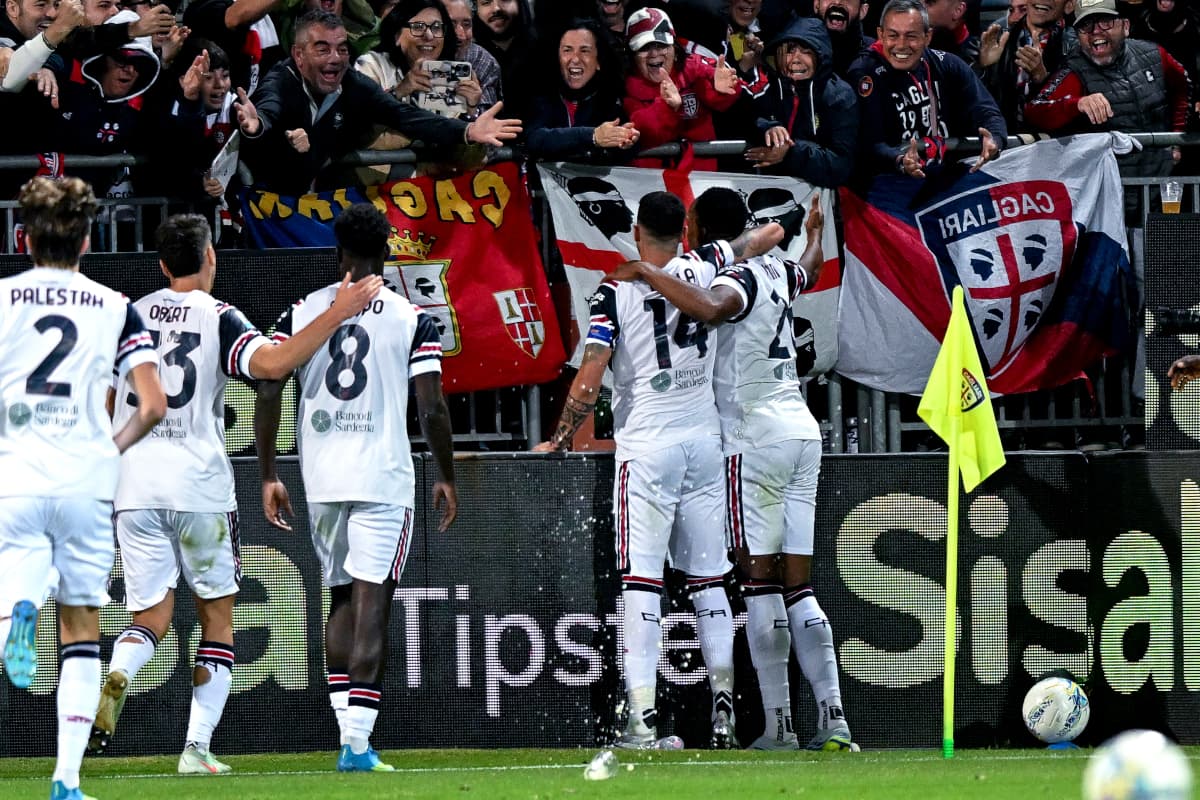
Cagliari Triumphs Over Torino 2–1 in Serie A Clash
Under the late spring lights of Unipol Domus, Cagliari and Torino closed out their Serie A evening with a 2–1 home win for the Sardinians, a result that ripples through the lower half of the table as the regular season edges towards its finish. Following this result, Cagliari sit 16th on 40 points with a goal difference of -14 (38 scored, 52 conceded overall), while Torino remain 12th on 44 points and a goal difference of -19 (42 for, 61 against overall). It was a meeting between two flawed but combative sides: one fighting to stay clear of the drop, the other stuck in mid-table limbo yet still dangerous.
Fabio Pisacane’s selection told its own story. Cagliari lined up in a 4-3-2-1, a departure from the three-at-the-back systems they have used most often this season (their most common formation overall has been 3-5-2, played 17 times). Here, Pisacane went with a flatter back four of G. Zappa, Y. Mina, A. Dossena and A. Obert in front of E. Caprile, trusting a compact, physically strong defensive line to cope with Torino’s aerial threat and direct running.
Ahead of them, the midfield triangle of M. Adopo, G. Gaetano and A. Deiola was built for graft and balance more than pure creativity. The real invention was pushed higher: S. Esposito and M. Palestra operated as dual attacking midfielders behind lone forward P. Mendy, giving Cagliari pockets between Torino’s lines to exploit rather than relying on a traditional strike partnership.
Leonardo Colucci, by contrast, stayed true to Torino’s season-long identity. The visitors set up in a 3-4-2-1, consistent with a campaign in which back-three systems have dominated (3-5-2 has been their primary shape overall, with 3-4-1-2 and 3-4-2-1 also prominent). A. Paleari started in goal behind a trio of L. Marianucci, S. Coco and E. Ebosse. The wing-backs, M. Pedersen and R. Obrador, were asked to provide width and tempo, flanking a central duo of E. Ilkhan and M. Prati. High up, G. Simeone and N. Vlasic floated off D. Zapata, forming a front three designed to pin Cagliari’s back four and create isolation duels in the channels.
The tactical context of this game was shaped by absences. Cagliari were without a whole layer of alternative attacking and creative options: M. Felici, R. Idrissi, J. Liteta, L. Mazzitelli and L. Pavoletti all missed out, while J. Pedro was suspended due to yellow cards. That stripped Pisacane of both an experienced penalty-box striker and a key second-line scorer, pushing more responsibility onto Esposito, Gaetano and Mendy to carry the threat.
Torino had their own voids to patch. Z. Aboukhlal and A. Ismajli were sidelined by muscle injuries, F. Anjorin by a hip problem, and G. Gineitis was suspended for yellow cards. The loss of Gineitis in particular reduced Colucci’s options for adding steel and vertical running in midfield, forcing Ilkhan and Prati to shoulder a heavy two-way load.
Discipline was always likely to be a sub-plot. Heading into this game, Cagliari’s season card profile showed a clear late-game spike: 27.85% of their yellow cards arriving between 76–90 minutes, and all their red cards concentrated in that same 76–90 window (100.00% in that range). Torino, by contrast, have a more spread yellow distribution but also tend to pick up cards as games stretch, with 20.00% of their yellows between 76–90 and a notable 21.43% between 91–105. Over 90 minutes in Cagliari, that underlying tendency framed a contest that always threatened to become scrappy as legs tired and spaces opened.
Within that structure, several individual matchups defined the evening.
In the “Hunter vs Shield” axis, Torino’s main weapon was clear: G. Simeone, the club’s leading scorer this Serie A season with 11 goals in total, carrying the form and volume of an attacker who has taken 58 shots (28 on target) and thrives on aggressive movement. He attacked a Cagliari defence that, heading into this game, had conceded 52 goals overall at an average of 1.4 per match, with 1.2 at home. The home back line has not been watertight, but it has been functional enough at Unipol Domus, with six clean sheets at home and a biggest home win of 4–0. Here, Mina’s physical duels and Obert’s reading of the game were essential in limiting Simeone’s touches in prime areas.
Obert, in particular, embodies Cagliari’s defensive edge. Across the season he has accumulated 9 yellow cards and 1 yellow-red, while contributing 65 tackles, 18 blocked shots and 40 interceptions. Against a front three that looks to overload half-spaces, his positioning and willingness to step out of the line were crucial. Each time Simeone or Vlasic tried to drift inside to combine with Zapata, Obert’s timing in the challenge and ability to block shooting lanes helped Cagliari absorb pressure without collapsing deep into their own box.
The “Engine Room” battle, meanwhile, revolved around S. Esposito’s influence. As one of Serie A’s leading creators this season, Esposito arrived in this fixture with 5 assists and 7 goals in total, underpinned by 954 passes, 67 key passes and a 75% accuracy rate. Operating as one of the two attacking midfielders in the 4-3-2-1, he constantly looked to receive between Torino’s midfield and defence, forcing Ilkhan and Prati into awkward decisions: step up and leave space behind, or hold and allow him to turn.
Torino’s midfield duo, already stretched by Cagliari’s three-man central line, had to act as enforcers as much as distributors. Ilkhan’s job was to disrupt Esposito’s rhythm, while Prati tried to link to the front three under pressure. The absence of Gineitis meant less rotation and fewer fresh legs to chase Esposito late on, a dangerous prospect against a player who also draws fouls at a high rate (52 fouls drawn overall this season).
From a statistical perspective, the match-up always leaned towards a tight, attritional affair decided in the boxes. Heading into this game, Cagliari’s attack had produced 38 goals overall at an average of 1.0 per match (1.2 at home), while Torino’s forward line had generated 42 goals overall at 1.1 per match (0.9 away). Both sides have struggled for consistent scoring away from their comfort zones: Cagliari have failed to score in 14 matches overall, Torino in 11.
Defensively, Torino arrived with the more fragile record: 61 goals conceded overall at an average of 1.6 per match, including 34 on their travels at 1.8 per away game. Cagliari, by contrast, had conceded 23 at home at 1.2 per match. Overlay that with Torino’s capacity for heavy defeats (a biggest away loss of 6–0) and Cagliari’s ability to occasionally explode at home (that 4–0 win), and a narrow but real edge for the hosts emerges once they can control territory.
In xG terms, this was the kind of contest where marginal gains – set pieces, second balls, and the quality of the final pass – were always likely to tilt the balance. Cagliari’s structure, with Esposito and Palestra supplying Mendy and late runners from midfield, was built to create a handful of high-quality chances rather than a barrage of low-value shots. Torino’s model, funnelling attacks through Simeone and Vlasic around Zapata, relies on volume and positioning in the box but is undermined by a defence that allows too many good looks the other way.
The 2–1 scoreline reflects that underlying dynamic: Cagliari’s slightly sturdier defensive platform at home, combined with the individual quality of Esposito and the defensive authority of Obert, was just enough to outstrip a Torino side whose attacking threat could not fully compensate for their structural leaks at the back.