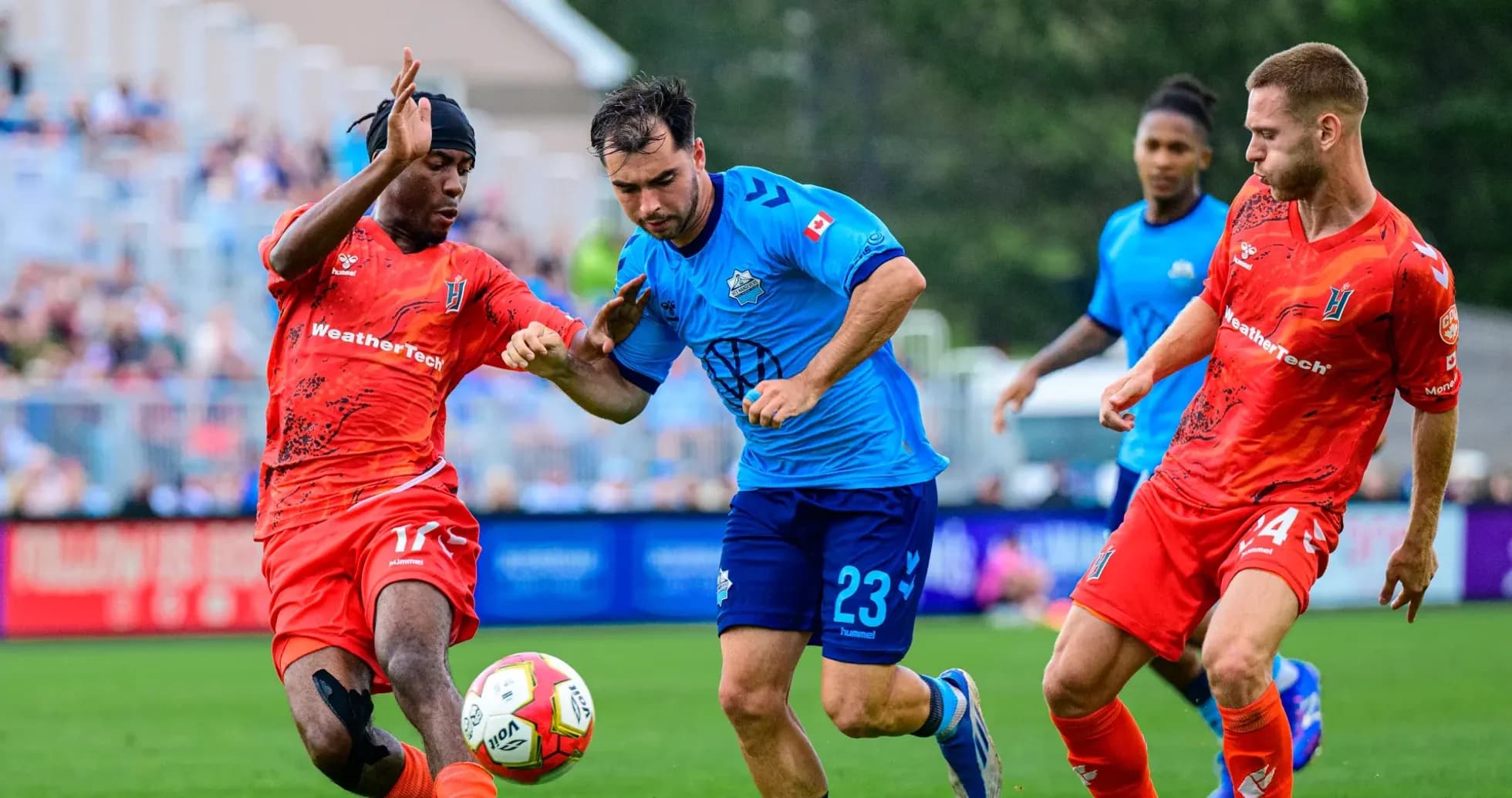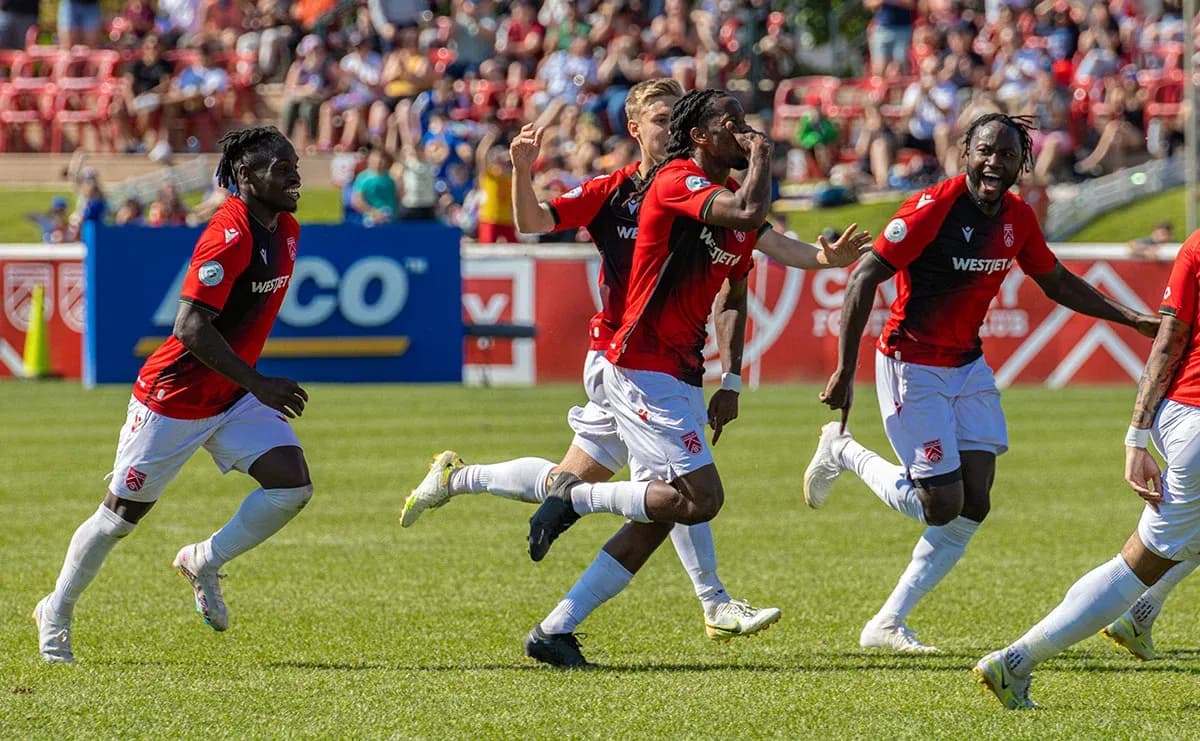
Cavalry FC Dominates Vancouver FC 2–0 in Canadian Premier League Showdown
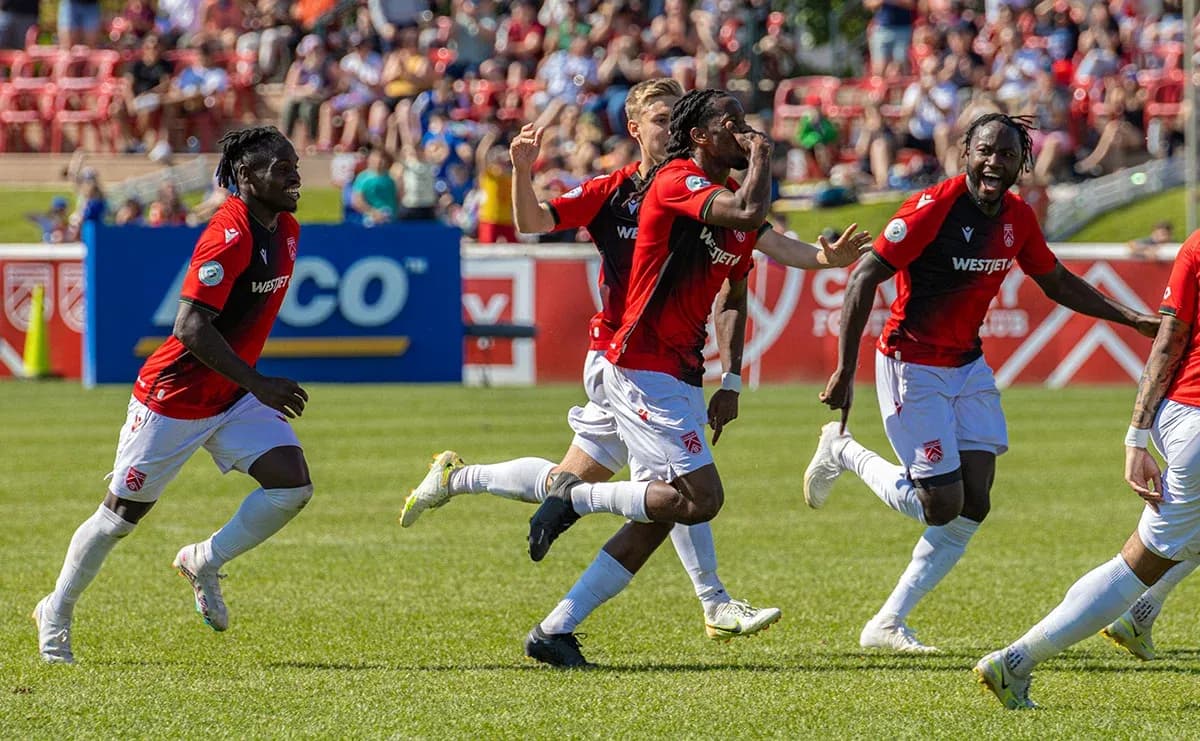
Under the Willoughby Community Park Stadium lights, this Canadian Premier League group-stage meeting told a familiar story: Cavalry FC, heading into this game as an unbeaten, well-drilled contender, calmly dismantled a fragile Vancouver FC side 2–0 on their own turf. Following this result, the table snapshot underlines the gap between the clubs. Vancouver sit 7th with 4 points from 6 matches, a goal difference of -3 (4 scored, 7 conceded). Cavalry, by contrast, are 2nd with 14 points from 6, and a goal difference of +6 (9 scored, 3 conceded).
The seasonal DNA of both sides was already clearly drawn before kick-off. Vancouver’s campaign has been defined by blunt attacking edges at home: in total this season they have scored 4 league goals, but at home they have yet to find the net, with 0 goals for and 4 against across 3 home fixtures. Their total goals-for average stands at 0.7, but at home it is 0.0. They have failed to score in 3 home matches and 4 overall, and they are still searching for a first clean sheet. Cavalry arrived with the profile of an away specialist: on their travels they are unbeaten, with 3 wins and 1 draw, 5 goals for and just 1 against, an away scoring average of 1.3 and an away goals-against average of 0.3.
I. The Big Picture: Structures and Identities
Vancouver’s lineup, under Martin Nash, carried the hallmarks of a side trying to blend solidity with a spark in transition. The presence of C. Irving in goal behind a back line including M. Doner, M. Campagna and T. Field suggested a familiar spine. Doner, one of the league’s standout full-backs, arrived in this match with a league rating of 7.6, 83 completed passes and 7 key passes, plus 22 duels contested and 15 won. His two-way influence is one of Vancouver’s few consistent weapons.
Ahead of them, the midfield axis of I. Ssewankambo and M. Polisi was tasked with shielding and circulating. Polisi, a high-volume, combative midfielder, came in as one of the league’s top yellow-card collectors with 3 bookings and a 7.05 rating, having made 4 tackles, 1 block and 1 interception, and committed 2 fouls. His disciplinary edge is both an asset and a risk. Further forward, creativity and end-product were meant to flow from N. Mezquida and A. Traore, while the main attacking burden again fell on M. Amissi and T. Campbell.
Amissi is Vancouver’s leading scorer with 1 goal from 5 shots (4 on target) and 6 dribble attempts, half of them successful. Yet his production mirrors the team’s overall struggle: flashes of promise, but too often isolated and starved of service, especially at home where the side’s goals-for column remains stubbornly at zero.
Cavalry, guided by Tommy Wheeldon, set up with the authority of a side that knows exactly what it is. N. Ingham in goal anchored a defensive unit featuring A. Pearlman, D. Klomp and A. Didic. Klomp, with a 7.5 rating, 166 completed passes at 92% accuracy, 4 tackles, 1 block and 1 interception, is the prototype of Cavalry’s ball-playing stopper: calm in possession, aggressive in duels (15 contested, 11 won), and rarely flustered.
In midfield, S. Camargo and E. Kobza provided the connective tissue, with Camargo’s 93 passes and 3 interceptions underscoring his role as a tempo-setter who can also press and foul intelligently (2 yellow cards, 1 foul committed). Ahead of them, the attacking quartet of A. Musse, G. Ntignee, C. Elva and centre-forward T. Warschewski carried Cavalry’s threat. Warschewski entered as a classic “9” who does more than just finish: 9 shots, 6 on target, 5 key passes and 43 duels contested, plus a successfully converted penalty this season.
II. Tactical Voids and Discipline
Injury and suspension lists offered no explicit absentees, so the tactical voids were structural rather than personnel-driven. For Vancouver, the glaring gap remains between midfield ball-winners and the front line. Their season-long failure to score at home, combined with a total attacking average of just 0.7 goals per game, speaks to a lack of coordinated patterns rather than individual talent.
Disciplinary profiles added an undercurrent to this fixture. Vancouver’s yellow-card distribution shows a late-game spike: 23.08% of their cautions arrive between 76–90 minutes, with steady 15.38% bands across most other intervals. They are a side that tires and fouls under pressure, especially late. Cavalry, by contrast, cluster 30.77% of their yellows between 61–75 minutes, reflecting an aggressive middle-third press once the game opens up. Players like Polisi and Amissi for Vancouver, and Pearlman, Camargo and H. Paton for Cavalry, all came in with multiple bookings, making the midfield battle a card risk zone.
III. Key Matchups
Hunter vs Shield
For Vancouver, the “hunter” is Amissi, their lone league scorer and primary outlet. Yet he was always running into Cavalry’s “shield” – a defence that, heading into this game, had conceded just 3 goals in total and only 1 on their travels, with 3 clean sheets overall and 3 away. With Klomp’s aerial dominance and Pearlman’s physicality (26 duels, 15 won; 9 tackles), the channels Amissi prefers were consistently shut down.
On the flip side, Warschewski represented Cavalry’s spearhead against a Vancouver back line that, in total, concedes 1.2 goals per match and 1.3 at home, with 0 clean sheets. The matchup tilted heavily in Cavalry’s favour: an aggressive, duel-hungry striker supported by Musse’s creativity (7 key passes, 1 assist) against a defence that often bends late and lacks the psychological cushion of clean-sheet experience.
The Engine Room
The midfield clash was always going to be decisive. Polisi and Ssewankambo were tasked with disrupting Camargo and Paton. Paton, one of the league’s standout all-action midfielders, arrived with 1 goal, 4 key passes, 10 tackles and 39 duels contested (20 won), plus 2 yellow cards and 8 fouls committed. He is Cavalry’s enforcer and metronome rolled into one.
Vancouver needed Polisi’s bite and passing range (88 passes at 87% accuracy) to tilt the centre of the pitch in their favour, but Cavalry’s structure gave Paton and Kobza clear passing lanes into the half-spaces where Musse and Elva could receive. Once Cavalry established that platform, Vancouver’s midfield was forced into reactive defending, increasing the likelihood of late fouls and bookings in exactly the periods where their yellow-card data already spikes.
IV. Statistical Prognosis and Tactical Verdict
Even without explicit xG values, the underlying numbers frame this 2–0 away win as the logical outcome of contrasting trajectories. Vancouver’s home attack, averaging 0.0 goals for and 1.3 against, simply does not generate enough sustained threat to trouble an away unit that concedes 0.3 goals per game and has already delivered 3 clean sheets on the road.
Cavalry’s total scoring rate of 1.5 goals per match, combined with their defensive solidity (0.5 goals conceded in total per game), points to a side that habitually wins the xG battle through control and shot quality rather than volume alone. With creators like Musse and Camargo feeding a physically dominant focal point in Warschewski, and a back line marshalled by Klomp and Pearlman, the balance of probabilities always leaned toward an efficient Cavalry victory.
Following this result, Vancouver’s tactical challenge is stark: reconnect their midfield to Amissi and Campbell, find a way to convert Doner’s progressive passing into actual home goals, and curb the late-game disciplinary dips that repeatedly hand momentum to opponents. Cavalry, meanwhile, leave Willoughby Community Park Stadium exactly as their season data predicted: organised, ruthless, and looking every inch a side built for the sharp end of the Canadian Premier League.