Boston Legacy W vs Seattle Reign FC W: Match Analysis and Insights
Under the lights at Centreville Bank Stadium in Pawtucket, Boston Legacy W and Seattle Reign FC W delivered a Group Stage contest that felt like a miniature play-off tie. The NWSL Women table framed the narrative sharply: Boston came in 14th, with only 9 points from 11 matches and a goal difference of -7 (11 scored, 18 conceded in total), trying to claw their way out of the basement. Seattle arrived in 8th on 14 points from 10 games, their overall goal difference at -2 (9 for, 11 against), clinging to the final play-off lane.
Following this result, the 2-1 away win for Seattle underlined the contrast in seasonal DNA. Boston’s campaign has been defined by fragility without the ball: heading into this game they were conceding 1.6 goals per match in total, with 1.6 at home, and still searching for their first clean sheet anywhere. They had managed 1.3 goals for at home but only 1.0 overall, a side living on the margins.
Seattle, by contrast, have been pragmatic travelers. On their travels they were scoring 1.0 and conceding 1.0 per game, with two away wins already in four. Their overall scoring rate of 0.9 suggests a team that doesn’t overwhelm, but their defensive average of 1.1 against in total is good enough to keep them in most contests. This match fit that template: economical in attack, disciplined in structure, and just clinical enough.
Tactical Voids and Discipline
Neither side had a published injury list, so the absences were more structural than personnel-based. Boston stuck to the 3-5-2 that has appeared in their season data, trusting the same high-risk, high-traffic midfield to cover a back three that has been repeatedly exposed. The selection of Casey Murphy behind a trio of Jorelyn Carabalí, Laurel Ansbrow and Emerson Elgin signaled a willingness to build from deep but also a gamble: Boston’s season numbers show 18 goals conceded in total without a single clean sheet, so every turnover is dangerous.
The wing lanes were handed to Nichelle Prince and Samantha Rose Smith, with Alba Caño, Annie Karich and Josefine Hasbo forming the central engine. Up front, the responsibility for end product fell on Barbara Olivieri and Aissata Traore, the latter coming in as Boston’s top scorer in the league with 3 goals and 1 assist in total.
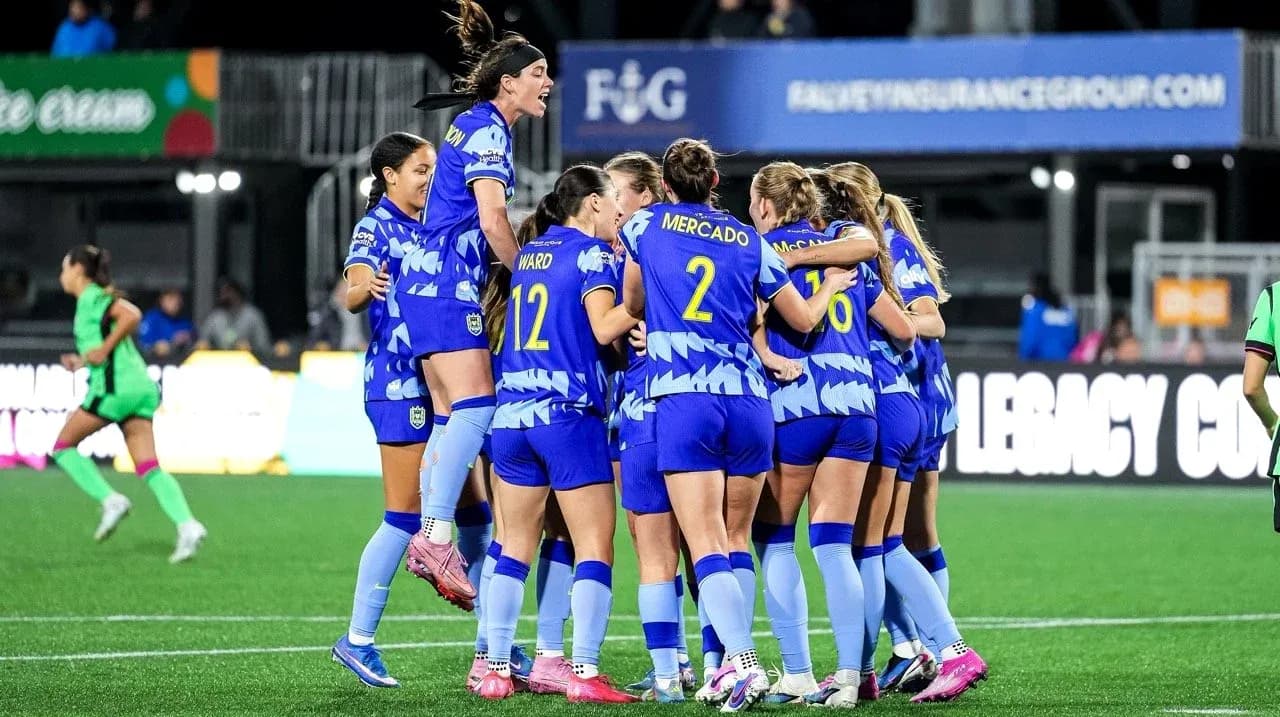
Seattle’s 4-2-3-1, a formation they have used in 7 matches this season, was about control and vertical threat. Claudia Dickey anchored a back four of Madison Curry, Jordyn Bugg, Phoebe McClernon and Sofia Huerta. Ahead of them, the double pivot of Angharad James-Turner and Ainsley McCammon was clearly tasked with closing the central channels where Caño and Karich like to operate. The attacking three of Holly Ward, Sally Marie Menti and Maddie Dahlien, supporting Maddie Mercado, gave Seattle width and second-line runners to attack the spaces behind Boston’s wingbacks.
Discipline was always going to be a subplot. Boston’s season card profile shows yellow peaks between 16-30 minutes and 76-90 minutes, each window accounting for 21.74% of their cautions. They also carry a red-card edge: one dismissal in the 31-45 range and another in 76-90, a clear sign that emotional control around half-time and late in games has been an issue. Seattle, meanwhile, spread their yellows more evenly, but 25.00% of their cautions arrive in 76-90 and another 25.00% in 91-105, hinting at late-game scrappiness.
In a tight 2-1, those disciplinary patterns mattered: Boston again walked the line in the high-stress periods, while Seattle’s ability to stay just this side of chaos in the closing stretch helped them see the game out.
Key Matchups
Hunter vs Shield
For Boston, the “Hunter” was clearly Aissata Traore. Across the season she has produced 3 goals from 19 shots (9 on target), with 9 key passes and 23 fouls drawn. She is not just a finisher but a magnet for contact, winning one penalty already this campaign. Her duel volume – 96 total, with 45 won – underlines how often she is the focal point of direct balls and counters.
Seattle’s “Shield” was a collective more than an individual, but the numbers gave them confidence. On their travels they had conceded only 4 goals in 4 matches, an away average of 1.0 against. The back four’s job was to deny Traore the channels she thrives on, particularly when Boston look to spring her early from Caño’s and Smith’s passes.
In this match, Traore still found pockets, but Seattle’s compact 4-2-3-1 restricted her to half-chances and forced her to receive with her back to goal. McClernon and Bugg stepped in aggressively, while James-Turner’s screening meant Boston’s direct route into their top scorer was often blocked at source.
Engine Room
The central battle was a fascinating “Engine Room” duel: Annie Karich and Alba Caño against Angharad James-Turner and Ainsley McCammon. Karich’s season profile is that of a tempo-setter and ball-winner: 548 passes at 84% accuracy, 28 tackles, 2 blocked shots and 12 interceptions in total. Caño adds more verticality – 2 goals, 12 key passes, 32 tackles and 83 duels contested – a true two-way midfielder.
Seattle’s answer was control through positioning. James-Turner and McCammon were less about headline stats and more about denying time. By compressing the central lane, they forced Boston’s midfield to circulate sideways, pushing Smith and Prince wide and away from the most dangerous zones. That meant Karich’s passing angles into Olivieri and Traore were narrower, and Caño had to drop deeper to receive, reducing her ability to arrive in the box.
Statistical Prognosis and xG Shape
Even without explicit xG values, the season data and the 2-1 scoreline sketch a clear expected-goals story. Seattle’s profile – 9 goals from 10 games overall, 4 away goals in 4 away matches – suggests they typically generate a modest xG but finish efficiently when ahead. Boston’s 11 goals from 11 matches, with 9 of those at home, point to an attack that can create but often from lower-quality looks, especially when chasing.
Following this result, the underlying patterns feel reinforced rather than overturned. Boston again scored once at home, roughly in line with their 1.3 home goals-for average, but conceded twice, slightly above their 1.6 home goals-against figure. The absence of clean sheets in total remains the defining flaw of their season; even when their front unit sparks, the defensive platform cannot carry a one-goal margin.
Seattle, meanwhile, delivered almost exactly what their away numbers predict: 2 goals scored on their travels, 2 conceded in away play so far in the season but only 1 here, tightening up in a high-leverage environment. Their defensive solidity – 1.1 goals against in total, 1.0 away – translates into a low xG conceded profile. Against a Boston side that relies on individual sparks from Traore, Caño and Smith rather than sustained territorial dominance, that edge was decisive.
From a tactical and statistical lens, the prognosis going forward is stark. Boston’s 3-5-2 offers attacking promise but leaves their vulnerable back line exposed; without a shift in defensive structure or a surge in individual defending from anchors like Carabalí and Ansbrow, their negative goal difference is likely to persist.
Seattle, on the other hand, look built for tight knockout-style football. A stable 4-2-3-1, a disciplined double pivot, and a defense that rarely collapses suggest that in xG terms they will continue to live in low-scoring, controllable matches. On nights like this one in Pawtucket, that blend of structure and opportunism is enough to tilt the margins their way.