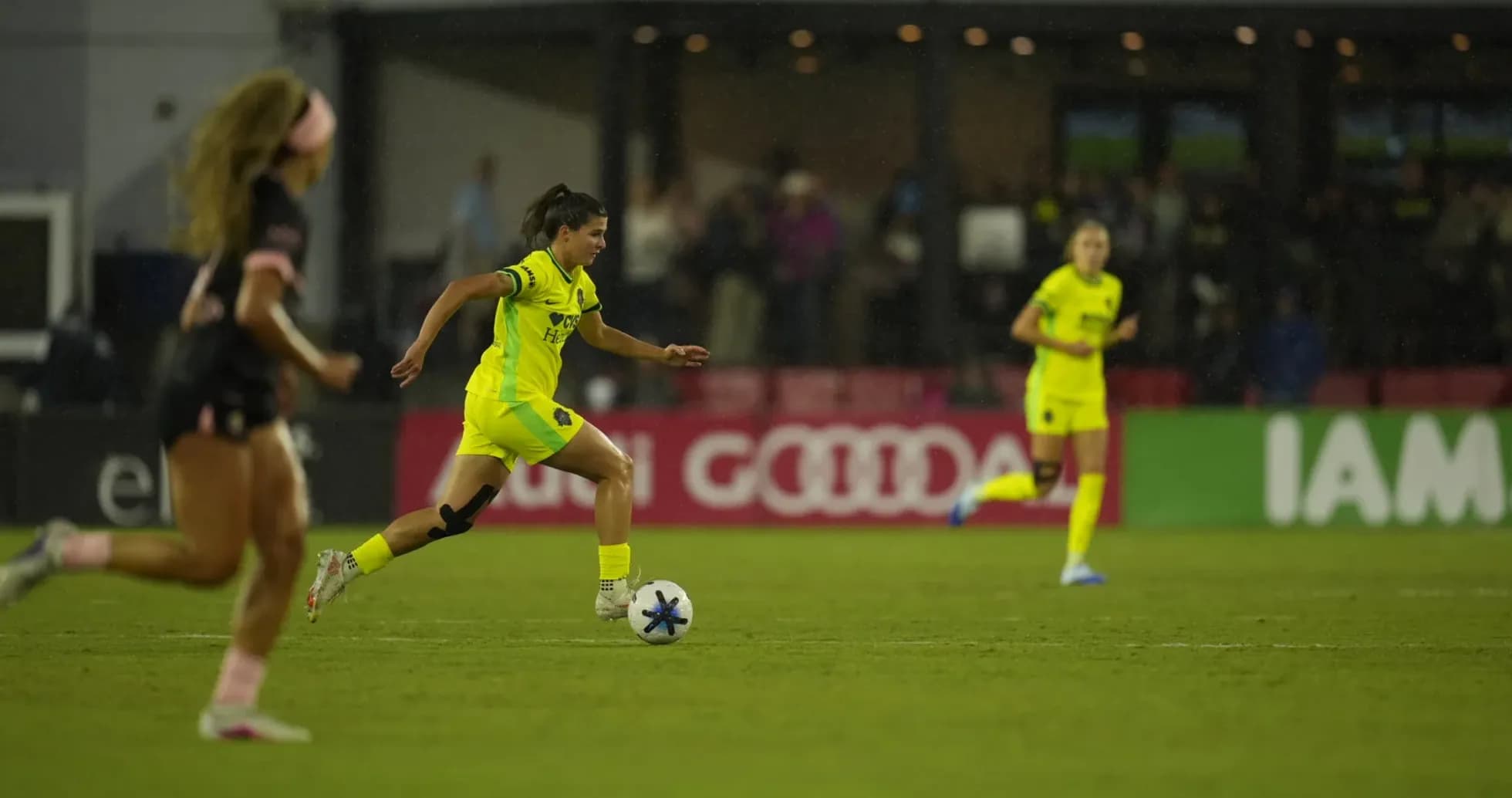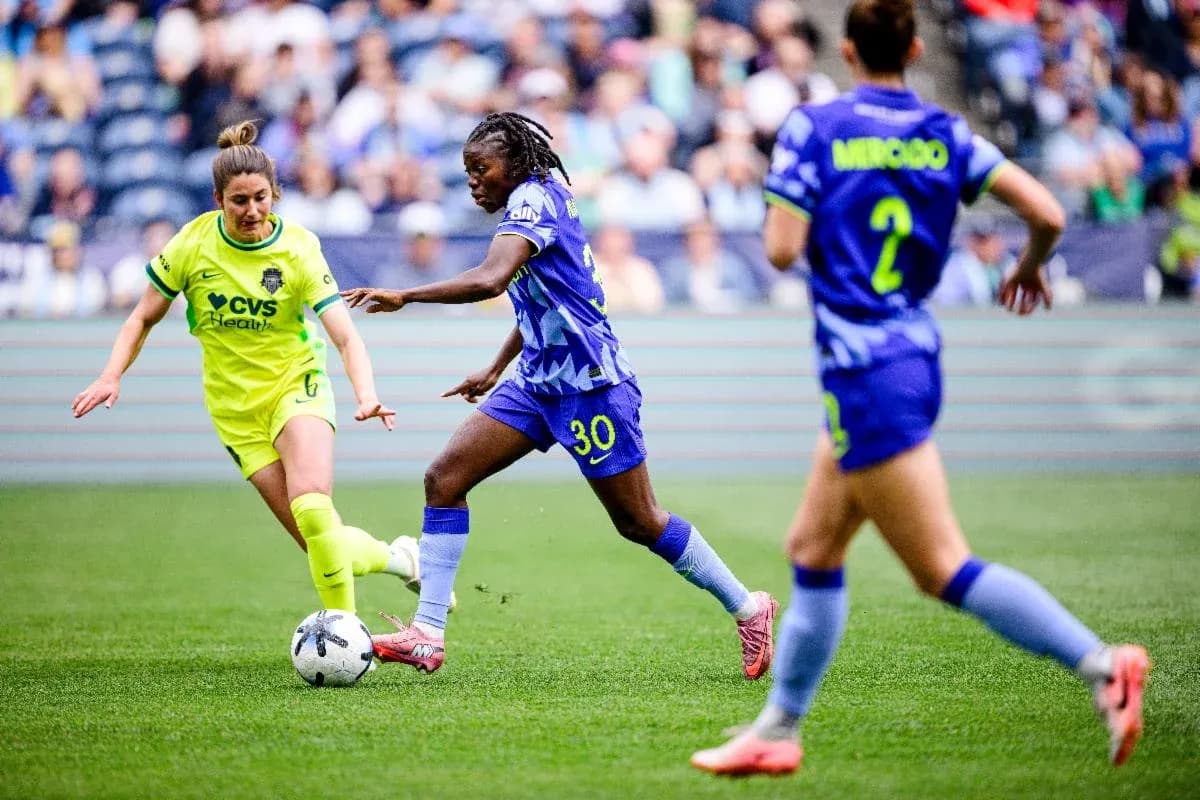
Washington Spirit W vs Seattle Reign FC W: Tactical Insights from a 2–1 Victory
Audi Field under the lights, a 2–1 home win, and a table that tells a clear story: Washington Spirit W look every inch a contender, while Seattle Reign FC W are still trying to work out what they want to be this season.
I. The Big Picture – contrasting trajectories
Following this result, Washington’s campaign profile crystallises. They sit 4th with 21 points from 11 matches, and their overall goal difference of 9 is clean arithmetic: 18 scored, 9 conceded. The numbers back up the eye test of a side with a defined identity. In total this campaign they average 1.6 goals for and just 0.8 against, and at home that balance tilts even further in their favour: 1.6 scored and only 0.6 conceded on their own turf. Audi Field has become a platform for controlled aggression rather than chaos.
Seattle, 10th with 14 points from 11, live in a narrower margin. Overall they have scored 10 and conceded 13, a goal difference of -3 that underlines how often they are playing on the edge. On their travels they are marginally more productive going forward (1.0 goals for away) but concede 1.2 away, the same rate as at home. The Reign can sting, but rarely dominate.
Both coaches leaned into a mirrored 4-2-3-1, but the systems told different stories. Adrian Gonzalez’s Spirit used the shape as a springboard; Laura Harvey’s Reign used it as a shield.
II. Tactical Voids – who was missing, and where the cracks appeared
With no official list of absentees, the tactical “voids” are more conceptual than personnel-driven. For Washington, the potential void is risk management: their card distribution shows yellow spikes at 0–15, 46–60, and 76–90 minutes, each window accounting for 22.22% of their cautions. They are an emotionally front‑foot side, prone to early and late intensity that can spill into bookings.
Seattle’s disciplinary profile is more jagged. Their yellows peak in three late segments: 46–60, 76–90, and 91–105 minutes, each at 21.43%. That tells of a team chasing games, fouling more as structure breaks down. The Reign have yet to see a red, but the pattern hints at fatigue and tactical stretching in second halves.
In this match, Washington’s back four of Gabrielle Carle, Elisabeth Tse, Tara McKeown and Lucia Di Guglielmo looked settled, supported by a double pivot of Hal Hershfelt and Rebeca Bernal that rarely left the centre-backs exposed. The “void” for the Spirit is less about individuals and more about what happens when their press is bypassed: with both full-backs encouraged to step high, space can appear behind Carle and Di Guglielmo.
Seattle’s back line – Sofia Huerta, Phoebe McClernon, Jordyn Bugg, Madison Curry – had a different problem: isolation. With Ainsley McCammon and Angharad James-Turner screening, the Reign tried to keep a compact block, but once the first line was broken, the back four were dragged into wide, uncomfortable duels against Washington’s creative trio.
III. Key Matchups – Hunter vs Shield, and the Engine Room
Hunter vs Shield: Leicy Santos and Trinity Rodman vs the Reign’s defensive record
Heading into this game, Washington’s attack was already balanced. Santos leads the Spirit’s scoring chart with 4 goals and 2 assists in the league, while Rodman and Sofia Cantore have 3 goals each. That trio started together here: Santos as the central playmaker, Rodman from the right, Rosemonde Kouassi from the left behind Cantore.
Against a Seattle side that, in total this campaign, concede 1.2 goals per match and have allowed 13 overall, the “hunter vs shield” battle tilted early. Washington’s home record – 8 scored and 3 conceded in 5 matches – suggested that if Santos and Rodman could find pockets between the lines, the Reign’s back four would be under sustained stress. That is exactly what unfolded.
Rodman’s season data paints her as a volume threat: 26 shots with 13 on target, 3 goals and 3 assists, plus 13 key passes. She is not just a finisher; she is a chaos engine. Here, her wide starting position in the 4-2-3-1 stretched Curry and Bugg repeatedly, forcing Seattle’s midfield to tilt toward her side and opening central lanes for Santos.
Santos, with 446 completed passes and 13 key passes in the league, is the cerebral counterpart. She drifted between McCammon and James-Turner, turning their double pivot into a decision-making minefield: step out and leave space behind, or hold and allow her to dictate. The Reign’s shield held in phases, but the cumulative pressure told. Washington’s second goal felt like the logical end point of that territorial squeeze.
Engine Room: Bernal and Hershfelt vs James-Turner and McCammon
If Santos and Rodman were the hunters, the real battleground was behind them. Rebeca Bernal and Hal Hershfelt formed a disciplined axis, rarely both vacating the centre at the same time. Their job was twofold: protect the centre-backs from transitions and funnel Seattle’s attacks into predictable wide areas.
Seattle’s pairing of James-Turner and McCammon had a more reactive mandate: screen passing lanes into Cantore’s feet and track Santos’ drifting. But with Holly Ward, Sally Marie Menti and Maddie Dahlien all trying to join Maddie Mercado in advanced positions, the Reign’s double pivot was repeatedly outnumbered when Washington broke lines.
The tactical contrast was stark: Washington’s midfield worked in a staggered triangle, with one of Bernal/Hershfelt always anchoring. Seattle’s often became a flat line, easier to bypass with vertical passes from the Spirit’s back four. Once bypassed, Huerta and Curry were exposed 1v1 against Kouassi and Rodman, matchups that favoured the home side’s dribblers and runners.
IV. Statistical Prognosis – what this match says about both futures
From a probabilistic lens, Washington’s profile is that of a sustainable contender. In total this campaign they have 6 wins, 3 draws and only 2 losses, with 5 clean sheets and just 2 matches where they failed to score. Their biggest home win, 4–0, and the fact they have never conceded more than once at Audi Field this season, suggest a side whose underlying defensive “xG against” would be low: they simply do not allow many high-quality chances.
Seattle, by contrast, are volatile. They have failed to score in 6 of 11 league matches and yet have 4 wins, including a 3–0 home victory and a 1–2 away success. That combination hints at a team whose attacking xG is probably modest but heavily dependent on moments rather than sustained pressure. Their -3 goal difference, with 10 scored and 13 conceded, aligns with a mid-to-lower table xG profile: often second-best in chance quality, occasionally rescued by efficiency.
Following this result, the tactical forecast is clear. Washington’s 4-2-3-1, anchored by Bernal and Hershfelt and ignited by Santos, Rodman, Kouassi and Cantore, looks like a repeatable, high-floor model. Their defensive solidity – 9 conceded overall, 3 at home – underpins any xG-based projection that keeps them in the playoff conversation deep into the season.
Seattle’s 4-2-3-1, meanwhile, still feels like a prototype. The spine of McClernon, Bugg, James-Turner and McCammon can offer stability, but without a consistent supply line to Mercado and the attacking midfield trio, they are too often defending one goal rather than chasing a second. Unless their chance creation improves and their late-game discipline (those 21.43% yellow surges) stabilises, any xG model will continue to place them on the fringes rather than in the heart of the playoff race.
At Audi Field, the narrative was simple: one 4-2-3-1 has already found its voice; the other is still searching for its tune.