Portland Thorns and Utah Royals Battle to a 2–2 Draw
On a cool evening at Providence Park, two of the NWSL Women’s most finely tuned machines met and refused to blink. Portland Thorns W and Utah Royals W, separated only by goal difference near the summit of the table, traded blows for 90 minutes and walked away with a 2–2 draw that felt less like dropped points and more like a statement of parity.
Following this result, the standings snapshot still tells of twin contenders. Portland sit 3rd with 24 points, Utah 2nd also on 24, the Royals edging it on goal difference: Utah’s overall +8 (18 scored, 10 conceded) just ahead of Portland’s +6 (20 scored, 14 conceded). Both remain firmly on course for the NWSL Women play-offs, but this game underlined that their routes to the same destination are very different.
Portland’s seasonal DNA is defined by fortress football in Oregon. At home they have played 6, winning 4 and drawing 2, scoring 10 and conceding only 2. That defensive record is underpinned by a remarkable 5 home clean sheets and an average of just 0.3 goals conceded at home, wrapped around a front line that still produces 1.7 home goals per game. Utah, by contrast, are built on balance and resilience across venues: on their travels they have played 7, winning 3, drawing 3 and losing just once, with 10 away goals scored and 6 conceded, an away goals-against average of 0.9 that speaks to a compact, well-drilled unit.
Both coaches doubled down on their identities with matching 4‑2‑3‑1 systems. Robert Vilahamn’s Thorns set up with M. Arnold behind a back four of R. Reyes, I. Obaze, S. Hiatt and M. Vignola. In front, the double pivot of J. Fleming and C. Bogere provided the platform for an attacking trio of M. Muller, O. Moultrie and P. Tordin, with S. Wilson leading the line. Jimmy Coenraets mirrored the shape: M. McGlynn in goal, a back four of M. Moriya, K. Del Fava, K. Riehl and N. Rabano, the midfield shield of N. Miura and A. Tejada Jimenez, and a fluid band of three – C. Delzer, M. Tanaka and C. Lacasse – working off striker K. Palacios.
If there was a “tactical void” for Portland, it lay in discipline and emotional control rather than personnel. Their season card profile shows a worrying late-game edge: 25.00% of their yellow cards come between 61–75 minutes and another 25.00% between 76–90, with a red-card pattern split between the opening 0–15 and 46–60 ranges. C. Bogere, who has collected 2 yellows and a yellow-red this season, is emblematic of that fine line between aggression and overstep in the Thorns’ engine room. R. Reyes, meanwhile, sits in the league’s red-card charts with 1 dismissal, even as she has blocked 6 shots and won 40 of 74 duels – a defender constantly operating at maximum intensity.
Utah’s own disciplinary story is more about sustained pressure than flashpoints. Their yellow cards spike between 46–60 and 61–75 minutes, each window accounting for 27.27% of their cautions, and their single red card this campaign has arrived in the 76–90 range. Ana Tejada, with 4 yellows, is the clear warning light in Coenraets’ back line, a defender who tackles front-foot and lives with the consequences.
Within that framework, the key matchups were as much about structure as individuals.
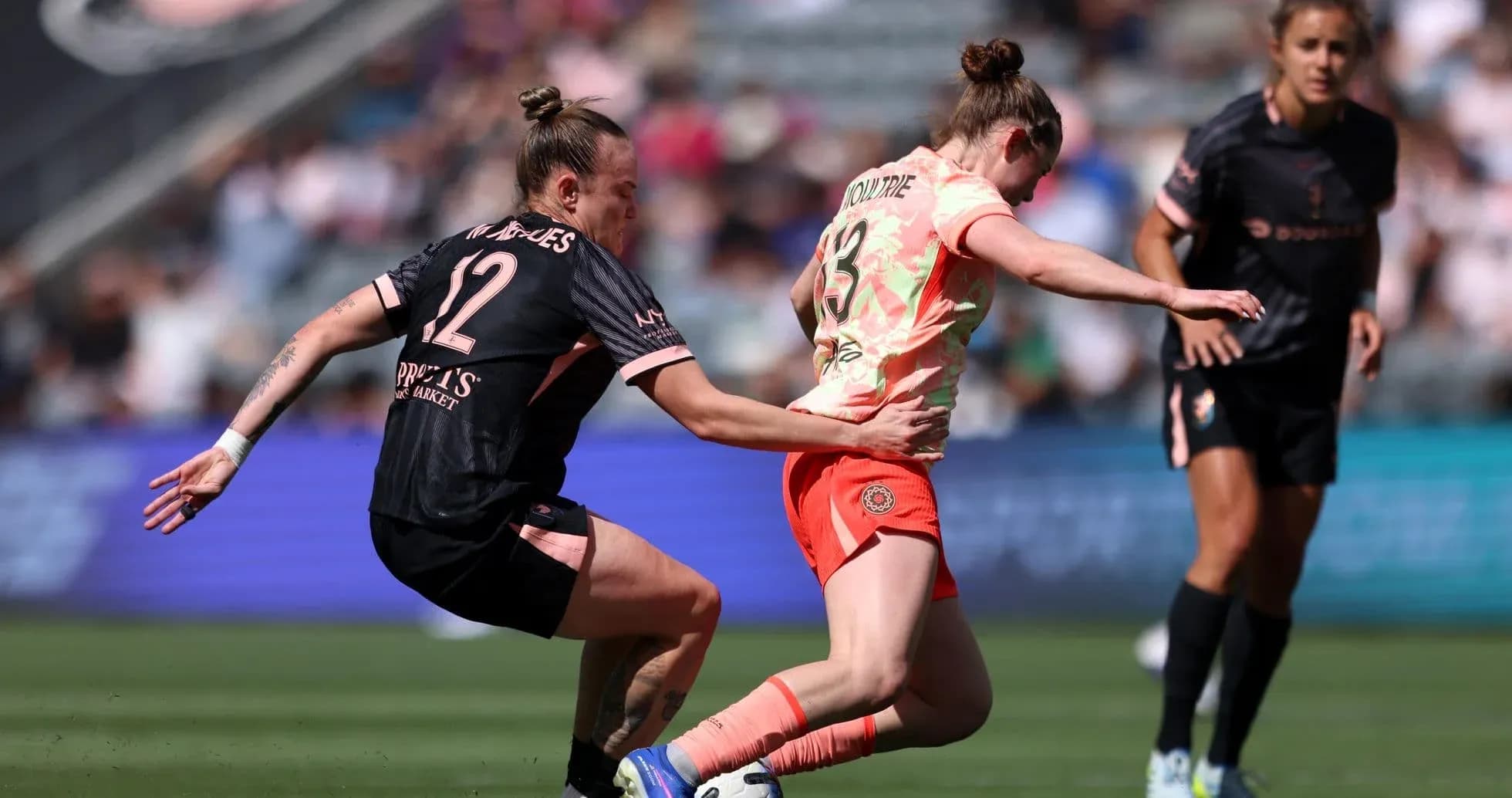
The “Hunter vs Shield” duel was written between Portland’s attacking trident and Utah’s away defensive record. O. Moultrie, with 5 goals and 4 assists overall, operates nominally as an attacking midfielder but functionally as the Thorns’ creative sun. Her 24 key passes and 10 shots on target make her the league’s most complete attacking conduit, and she arrived in this game as both top scorer and top assister for Portland. Flanking her, P. Tordin – 3 goals, 4 assists – offers a relentless pressing presence and secondary playmaking, while S. Wilson’s movement stretches back lines even if the raw scoring numbers are shared across the squad.
Utah’s shield against that storm starts with the centre-back duo and extends outward. K. Del Fava and K. Riehl anchor a unit that has allowed only 10 goals overall, with away games conceding just 6 in 7. Tejada’s blend of 21 tackles, 2 blocks and 11 interceptions, plus 306 completed passes at 74% accuracy, makes her both breaker and builder. Behind them, McGlynn benefits from a system that compresses space in the half-spaces where Moultrie thrives, forcing Portland to work wider through Vignola and Reyes.
In the “Engine Room” battle, the contrast was stark. For Portland, Fleming and Bogere are tasked with knitting transitions and protecting a back four that, away from home, has looked far more vulnerable than at Providence Park. Fleming’s passing security enables Moultrie to operate higher, while Bogere’s 35 tackles and 12 interceptions show why she is trusted to absorb pressure. But her 18 fouls committed and disciplinary record mean that when games become stretched, she is often one mistimed challenge away from tilting the balance.
Utah’s counterweight is the Tanaka–Miura axis, with Tanaka drifting between lines as a hybrid 10/second striker. Tanaka’s 2 goals and 4 assists, backed by 14 shots (10 on target) and 14 key passes, make her Utah’s tempo-setter in the final third. She draws 27 fouls, constantly inviting contact and advancing Utah up the pitch. Beside her, Miura offers positional discipline and passing rhythm, ensuring that when Utah do break, they do so in coordinated waves rather than isolated bursts.
The wings provided another layer of tactical intrigue. C. Lacasse, with 4 goals and 3 assists, is Utah’s chaos agent. Her 26 tackles and 9 interceptions show how much defensive work she adds from wide areas, pinning back opposition full-backs. Against Portland, that meant a direct confrontation with Reyes and Vignola, two defenders who love to advance but must constantly weigh their overlaps against the threat of Lacasse running into the vacated space.
From a statistical prognosis standpoint, this 2–2 draw fits the broader xG-style narrative suggested by season trends. Heading into this game, both sides were averaging 1.5 goals overall per match, and both defences were operating below 1.1 goals conceded on average. Portland’s perfect home record in terms of defeats – 0 home losses – collided with Utah’s resilience on their travels, where they had lost only once in 7 away fixtures. A shared result felt like the median of those competing probabilities.
Penalties offered no hidden edge: both teams are flawless from the spot this season. Portland have scored 2 from 2, Utah 3 from 3, with no penalties missed for either side. In a match decided by fine margins, there was never likely to be a psychological swing from the spot.
Ultimately, this fixture read like a dress rehearsal for a play-off meeting rather than a mere group-stage clash. Portland showed again that Providence Park is a venue where they dictate tempo and create volume, powered by Moultrie’s orchestration and the layered threats of Tordin and their rotating forwards. Utah, meanwhile, reaffirmed their identity as the league’s most balanced traveller: hard to break down, dangerous in transition, and increasingly defined by the Tanaka–Lacasse partnership.
Following this result, the league table still cannot separate them on points, and the tactical tape offers no easy answers either. What it does reveal is a rivalry of styles: Portland’s high-ceiling, emotionally charged football against Utah’s measured, structurally sound approach. If they meet again with knockout stakes attached, the margins will be just as thin – and the story just as rich.