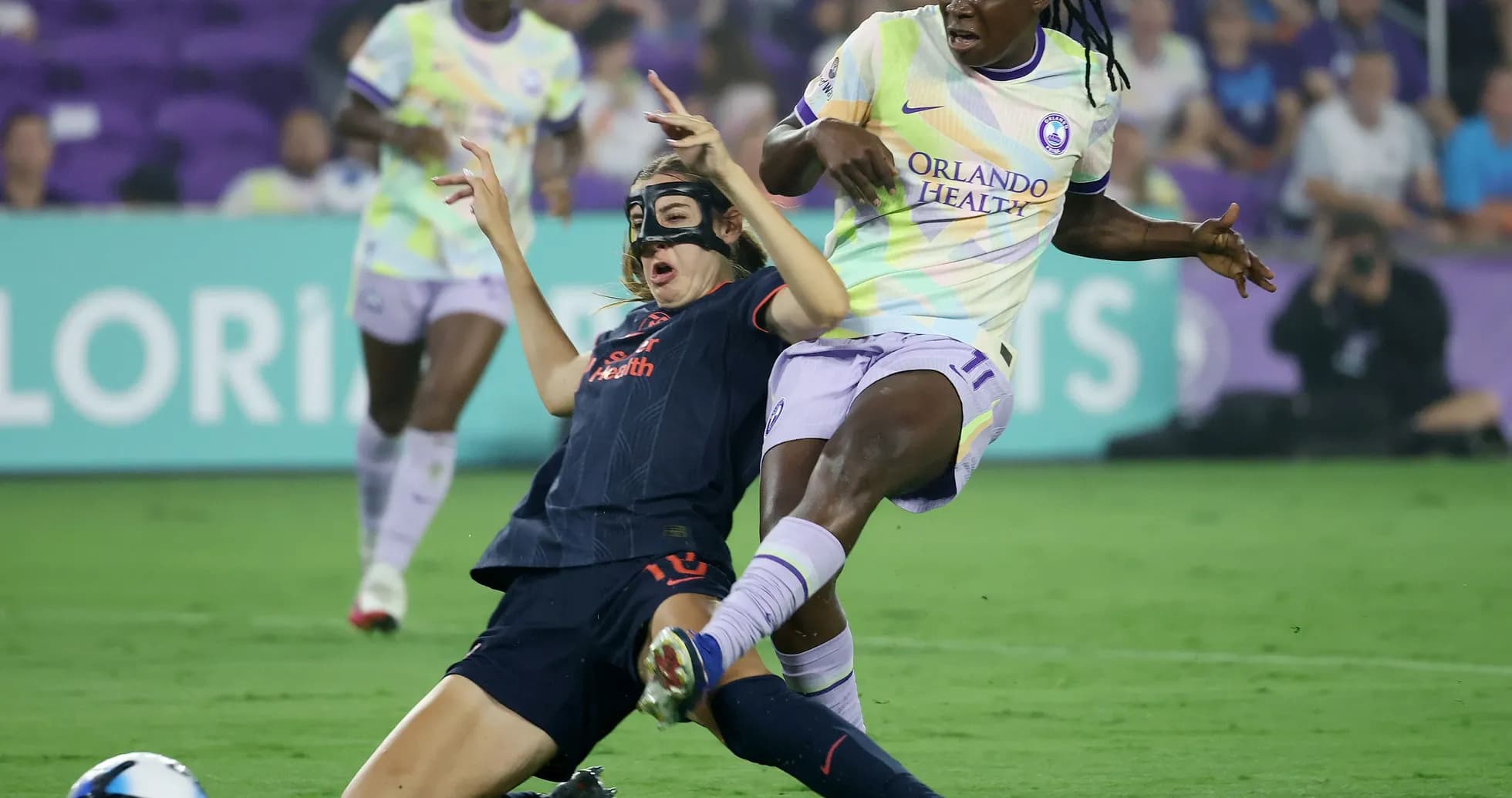
Denver Summit W Clinches 1–0 Victory Over Racing Louisville W
Under the lights at Lynn Family Stadium, Racing Louisville W and Denver Summit W walked out in mirrored 4-2-3-1 shapes, but the night ended with only one side looking upward. The visitors’ 1–0 win, sealed in a cagey Group Stage tie, felt less like a smash-and-grab and more like a clinical extension of their season’s identity: compact, patient, and ruthless in key moments. For Racing, rooted in 16th place with 7 points and a goal difference of -5 overall (15 scored, 20 conceded), this was another chapter in a campaign defined by fine margins and unfinished attacks. Denver, eighth with 15 points and a goal difference of 4 overall (17 scored, 13 conceded), left Louisville looking every inch a playoff contender.
I. The Big Picture – Mirror Shapes, Different Realities
Both coaches leaned into 4-2-3-1, but the same formation framed very different stories. Racing’s season has been built on volatility: heading into this game they had scored 15 goals in total from 11 matches, an average of 1.4 per game overall, but conceded 20 at 1.8 per game overall. At home they were more dangerous, with 9 goals from 5 outings, an average of 1.8, but that attacking edge has not been matched by control without the ball.
Denver arrived with a steadier profile. In total this campaign they had 17 goals for and 13 against, averaging 1.5 scored and 1.2 conceded per match overall. On their travels, 12 goals scored and 9 conceded in 8 games (1.5 for, 1.1 against on average away) painted them as a side that can hurt you without overextending. The 1–0 scoreline fit that pattern almost too neatly.
The match itself grew from a tense, goalless first half into a second period where Denver’s midfield intelligence and defensive discipline gradually suffocated Racing’s attempts to turn territory into chances.
II. Tactical Voids – Where the Game Slipped Away
Racing’s starting XI carried a distinctly youthful, transitional feel. Madison Prohaska in goal fronted a back four of Quincy McMahon, Courtney Petersen, Arin Wright and Lauren Milliet. Ahead of them, Katie O’Kane and Taylor Flint formed the double pivot, with an attacking band of Makenna Morris, Kayla Fischer and Emma Sears supporting lone forward Maja Lardner.
The structure offered width and vertical running, but there was a void between Racing’s front four and the double pivot when Denver compressed central spaces. Without a classic tempo-setter dropping in, Racing struggled to progress cleanly through the thirds, often forced into hopeful passes toward Lardner or wide deliveries that Denver’s centre-backs could read.
Denver’s back line of Ayo Oke, Eva Gaetino, Kaleigh Kurtz and Janine Sonis, shielded by Devin Lynch and Delanie Sheehan, looked purpose-built to exploit that gap. Kurtz, one of the league’s leading yellow-card collectors with 3 bookings this season, walked the line with her usual edge but underpinned the structure with calm distribution and timing. Her 589 passes in the league, at 90% accuracy, speak to a defender who not only stops attacks but restarts them with purpose.
Disciplinary trends framed the risk profile on both sides. Heading into this game, Racing’s yellow cards were spread across the match, but with a noticeable 28.57% spike between 46–60 minutes and a late 21.43% in 91–105. Denver, by contrast, showed a sharp 45.45% yellow-card concentration in the 46–60 window and 18.18% between 76–90, plus a red card in the 16–30 range over the season. The second-half pattern here—Racing chasing, Denver defending deeper—played directly into those tendencies, with the visitors willing to absorb pressure and take calculated fouls without tipping into chaos.
III. Key Matchups – Hunter vs Shield, and the Engine Room
The “Hunter vs Shield” duel was less about a pure No. 9 and more about creative scorers. For Denver, Natasha Flint has been the headline threat in the league table: 3 goals and 2 assists so far, with 12 shots and 5 on target. Even though she did not start this particular fixture, her season profile shapes how opponents must think about Denver’s attacking rotations. Her 15 tackles and 2 blocked shots underline how she presses from the front and then arrives late in the box, forcing back lines to defend both space and body.
On the other side, Racing’s attacking fulcrum has been Emma Sears. With 1 goal and 3 assists in the league, plus 10 shots (6 on target), Sears’ role in this match as the left-sided attacking midfielder was to stretch Denver’s block and combine with Fischer and Lardner. Her 81 total duels and 39 won show a willingness to engage physically, but Denver’s compactness funneled her inside, right into the territory patrolled by Kurtz and Lynch.
The true “Engine Room” clash, though, belonged to Yazmeen Ryan versus Racing’s central unit. Ryan, starting as Denver’s right-sided No. 10 behind Olivia Thomas, arrived with 2 goals, 3 assists and 21 key passes this season. Her 259 completed passes at 77% and 27 dribble attempts (8 successful) mark her as the creative metronome. Up against O’Kane and Flint in the double pivot, Ryan repeatedly drifted into half-spaces, receiving on the half-turn and forcing Racing’s midfield to choose between tracking her or stepping toward Sheehan and Lynch.
For Racing, Fischer played the counterpart role. With 2 goals, 2 assists and 15 key passes in total, plus 30 dribble attempts and 13 successes, she was tasked with breaking lines through individual skill. Yet Denver’s layered pressing—Oke and Sonis aggressive outside, Lynch and Sheehan screening inside—often left Fischer receiving under immediate pressure, reducing her to contested touches rather than clean carries.
IV. Statistical Prognosis – Why Denver’s Edge Endured
Following this result, the numbers underpin Denver’s victory as more than a one-off. Their away profile—3 wins, 2 draws and 3 losses from 8 on their travels, with a 12:9 goal record—suggests a side comfortable living in tight margins. Racing’s home record, 2 wins, 1 draw and 2 losses with a 9:8 goal tally, shows they can hurt visitors but rarely put games out of reach.
Expected Goals data is not provided, but the seasonal scoring and conceding rates sketch a plausible xG story. Denver’s 1.5 goals for and 1.2 against per match overall point to a team that typically edges the shot-quality battle, especially away where they concede just 1.1 on average. Racing’s 1.4 for and 1.8 against overall imply they often need to outperform xG just to stay level; conceding 2.0 on average away and 1.6 at home hints at defensive breakdowns in high-value zones.
In a match where both sides mirrored shapes, Denver’s superior defensive structure and more efficient attacking patterns tilted the underlying probabilities. The visitors’ four clean sheets in total this season, including three on their travels, contrast starkly with Racing’s zero clean sheets overall. That gap in defensive solidity is precisely what played out in Louisville: Denver needing only a single moment to win, Racing needing a perfect night they could not quite find.
The narrative moving forward is clear. Racing’s 4-2-3-1 can be a vibrant attacking platform, but without more control from the double pivot and sharper coordination around Sears and Fischer, it will continue to rely on chaos. Denver’s version of the same shape, anchored by Kurtz’s composure and Ryan’s creativity, looks built for knockout-caliber football. On this night, the Summit’s structure and season-long trends converged into a narrow win that felt, statistically and tactically, entirely inevitable.