Belgium and Egypt Share Spoils in World Cup 2026 Opener
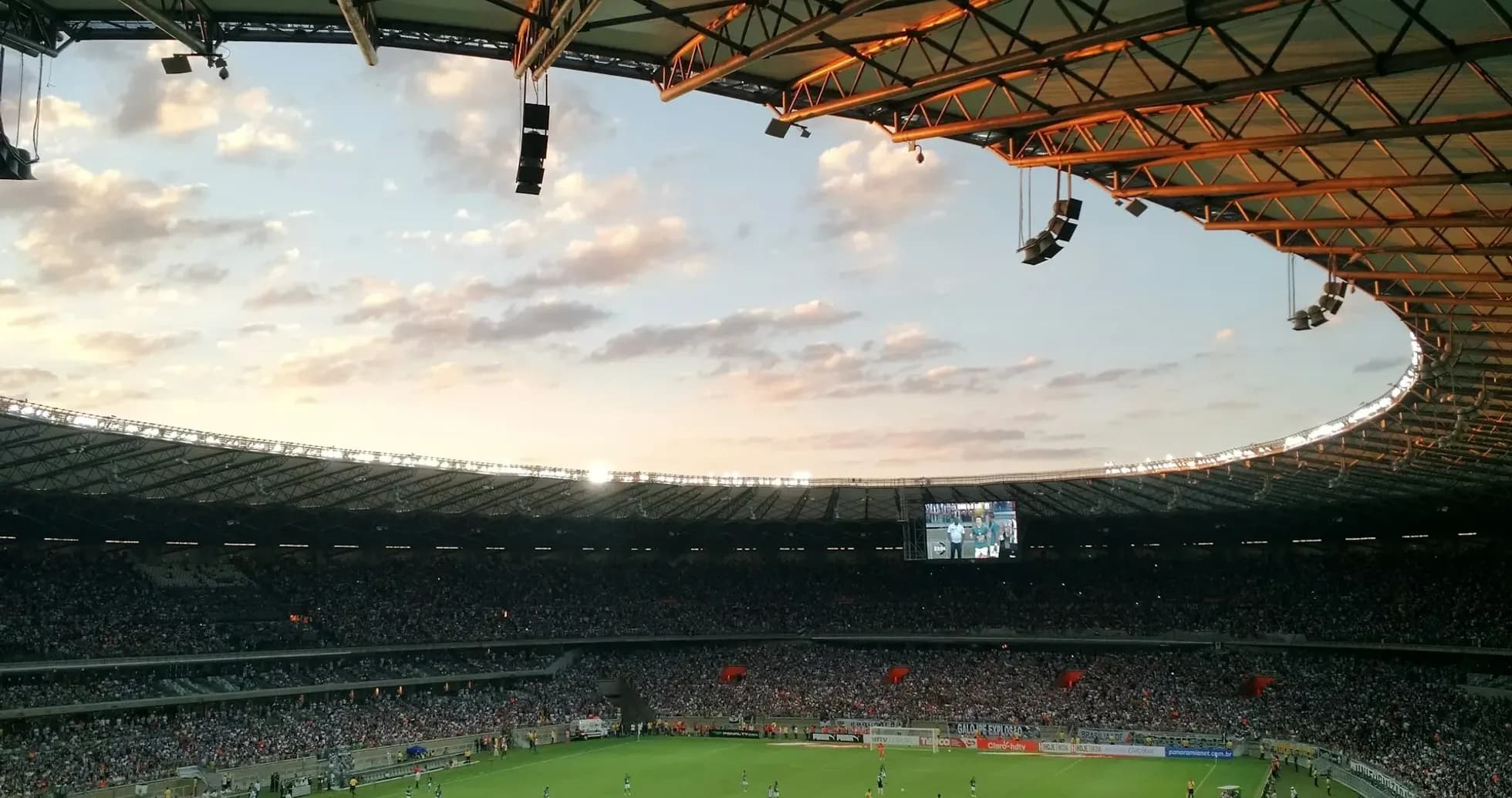
Under the Seattle lights at Lumen Field, Belgium and Egypt opened their World Cup 2026 campaigns with a 1–1 draw that felt less like a settled verdict and more like the first chapter of a tactical chess match that will shape Group G. Following this result, Belgium sit 3rd in the group and Egypt 4th, both on 1 point with a goal difference of 0 after 1 match played, their campaigns still balanced on a knife-edge.
I. The Big Picture – Two 4-2-3-1s, two very different intentions
Both coaches laid their cards on the table with matching 4-2-3-1 formations, but the structures served contrasting identities.
Rudi Garcia’s Belgium leaned into technical dominance. With T. Courtois behind a back four of T. Castagne, B. Mechele, N. Ngoy and T. Meunier, the platform was clearly built to free the creative line of L. Trossard, K. De Bruyne and J. Doku operating behind C. De Ketelaere. Y. Tielemans and A. Onana formed the double pivot, one eye on circulation, the other on counter-pressing.
Egypt’s Hossam Hassan mirrored the shape but not the mentality. O. Shobeir marshalled a back four of M. Hany, Y. Ibrahim, H. Fathy and A. Fatouh, shielded by the industrious pairing of M. Attia and M. Lasheen. Ahead of them, M. Ziko and E. Ashour worked the half-spaces while Mohamed Salah floated as the central creative axis behind O. Marmoush.
Heading into this game, both sides arrived with identical statistical DNA: 1 match played, 1 draw, 1 goal scored and 1 conceded overall. Belgium’s numbers came at home (1.0 goals for and 1.0 against at home on their only fixture), while Egypt’s came on their travels (1.0 goals for and 1.0 against away). Neither had yet kept a clean sheet, neither had failed to score. It was symmetry begging to be broken.
II. Tactical Voids and Discipline – Edges at the margins
There were no listed absentees in the data, so both managers essentially had full decks to shuffle from the bench. Yet the disciplinary profiles hinted at where this match could tilt.
For Belgium, the season card map shows yellow cards split between the opening 0–15 minutes (50.00%) and the 61–75 window (50.00%), a pattern of early aggression followed by second-half reassertion. Egypt’s bookings have been clustered in the first half: 50.00% between 0–15 and 50.00% between 31–45, suggesting a side that tackles on the edge as they settle into the game.
Individually, the Belgian back line already has warning lights flashing. T. Castagne’s World Cup so far has been a mix of defensive excellence and disciplinary risk: in his 56 minutes he has completed 4 tackles, blocked 1 shot and committed 1 foul, collecting a yellow card in the process. M. De Cuyper, who came from the bench for 34 minutes, also took a yellow, committing 2 fouls but crucially blocking 1 shot and making 1 interception. Belgium’s most prominent defender in the card tables is also one of their most proactive ball-winners – a delicate balance Garcia must manage.
Egypt, by contrast, have no red cards and no standout disciplinary culprits in the provided data. Their yellow-card pattern is collective rather than individual, suggesting a tactical, shared responsibility to break play rather than a single hothead.
III. Key Matchups – Hunter vs Shield, Engine Room battles
Hunter vs Shield: De Bruyne and Doku vs Egypt’s compact spine
With both teams having conceded 1 goal overall and no minute-distribution data for goals against, the defensive “when” remains opaque. But the “how” is easier to infer from structure.
Belgium’s main offensive hunters are clustered in that three behind C. De Ketelaere. K. De Bruyne, operating as the central 10, is the primary conduit. Flanked by the direct, one-vs-one menace of J. Doku and the intelligent movement of L. Trossard, Belgium look set to keep probing between the lines rather than relying on sheer crossing volume.
Egypt’s shield is the triangle of Y. Ibrahim, H. Fathy and the double pivot of M. Attia and M. Lasheen. Their task is to deny De Bruyne the pockets he craves and to double up on Doku before he can isolate full-backs. The back line’s ability to hold shape while Salah and M. Ziko spring forward will dictate whether Egypt can continue to concede only 1.0 goal per away match overall or whether that average begins to creep upward.
Engine Room: Tielemans & Onana vs Salah’s creative orbit
The most intriguing battle is not a classic destroyer-vs-playmaker duel, but a clash of asymmetrical roles. For Belgium, Y. Tielemans is the metronome, while A. Onana provides verticality and bite. For Egypt, Salah has been the creative heartbeat from a nominal midfield slot.
Salah’s World Cup numbers underline his dual-threat profile. In total this campaign, across 1 appearance and 76 minutes, he has delivered 3 key passes from 18 total passes with a 94% accuracy, added 1 shot on target from 1 attempt, and drawn 3 fouls while committing 2. He already has 1 assist and has not missed from the penalty spot (0 penalties taken, 0 missed). He is not just a finisher here; he is Egypt’s primary playmaker and tempo-changer.
Belgium’s double pivot must therefore do two things at once: screen Salah’s passing lanes into O. Marmoush and M. Ziko, and still feed De Bruyne quickly enough to keep Egypt pinned back. If they sit too deep, Salah will dictate; if they push too high, Egypt can hit the space behind them.
On the flanks, T. Castagne’s defensive numbers make him a key figure against Salah’s side of the pitch. His 4 tackles and 1 blocked shot in his single appearance show a defender willing to step out aggressively. Against a player with Salah’s timing and dribbling threat, that aggression must be precise; one mistimed challenge risks a booking in those already dangerous early or late-card windows.
IV. Statistical Prognosis – Margins, xG feel, and what comes next
There is no explicit xG data in the snapshot, but the patterns are telling. Both teams have:
- Overall: 1 goal for and 1 against.
- No clean sheets and no failures to score.
- No penalties taken, and therefore no penalties missed.
This paints a picture of two sides that will almost certainly create and concede in every group game unless something fundamentally changes. Belgium’s attacking ceiling, with De Bruyne, Doku and Trossard behind C. De Ketelaere, feels higher, especially at home where they already average 1.0 goal for and 1.0 against. Egypt, on their travels, mirror that exact 1.0-for, 1.0-against profile.
From a probabilistic lens, the next fixtures for both sides project as tight contests where a single moment of quality or a single defensive lapse will swing the result. Belgium’s edge lies in their creative density and the depth offered by players like M. De Cuyper from the bench, who has already shown he can block shots and contribute defensively despite his card. Egypt’s counterweight is Salah’s efficiency and vision, allied to a disciplined 4-2-3-1 that has so far kept opponents to just 1 goal away.
Following this result, the group remains wide open. Belgium look like a side one clinical performance away from justifying their status as favourites to progress, while Egypt have proved they can live with them tactically and emotionally. The story of Group G will likely be written not by sweeping scorelines, but by small adjustments in these key duels: Salah’s freedom between the lines, De Bruyne’s time on the ball, and whether either back four can finally turn their fragile 1–1 pattern into a clean sheet.