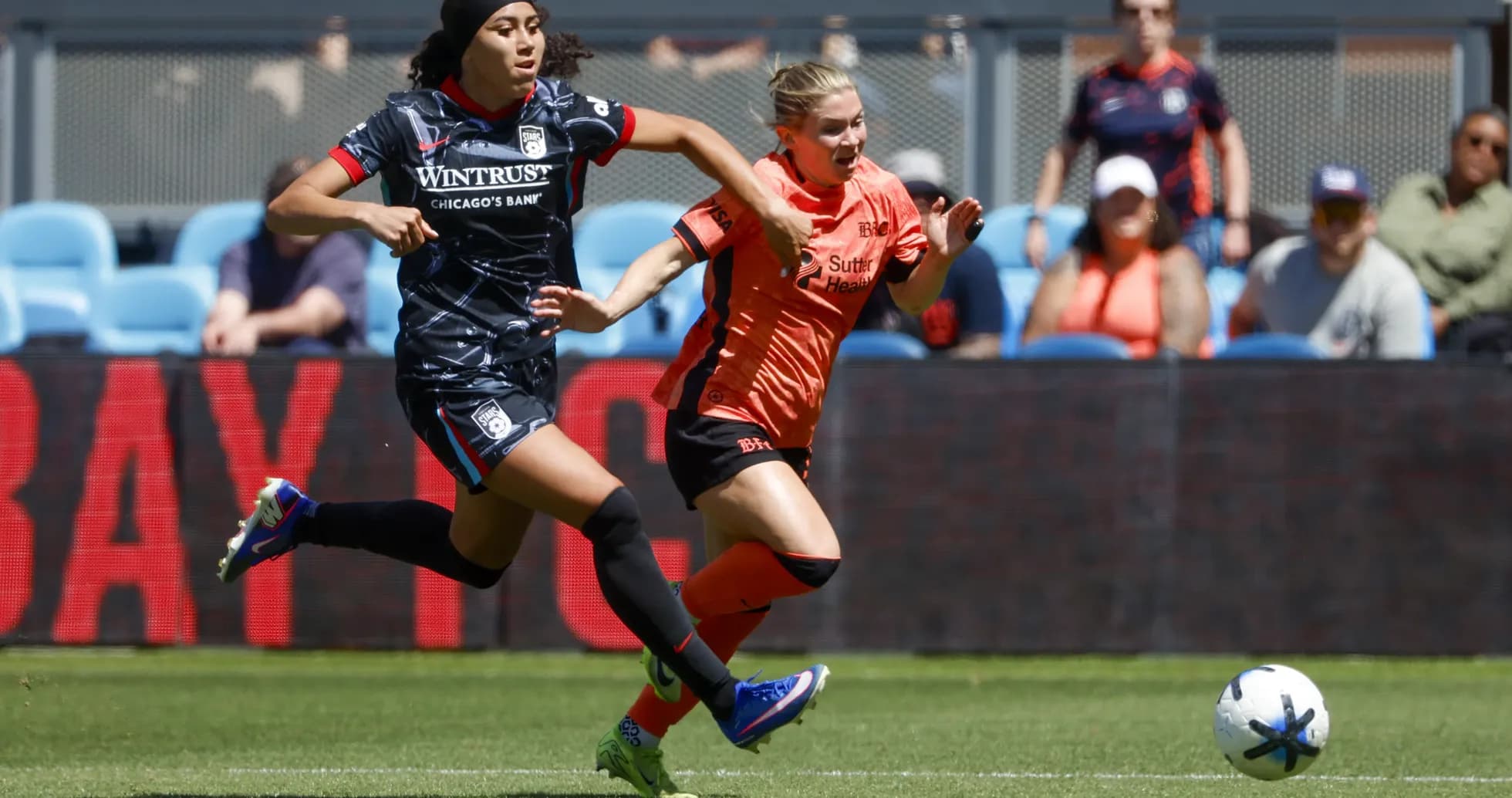
Bay FC W vs Chicago Red Stars W: A Tactical Analysis of the 1-0 Match
Under the California night at PayPal Park, Bay FC W and Chicago Red Stars W staged a game that felt less like a routine group-stage tie and more like a stress test of two fragile projects. The NWSL Women table had them heading into this game in the basement – Bay FC W in 13th with 11 points from 10 matches (goal difference -6), Chicago in 15th with 9 points from 11 (goal difference -17). The margins were thin, the confidence thinner. In the end, Chicago escaped with a 1-0 win, a result that underlined how different their realities are when they can protect a lead versus when they have to chase one.
I. The Big Picture – Systems, Identities, and a 1-0 Knife Edge
Bay FC W went with a 4-3-3, a bolder shape than their more familiar 4-2-3-1, signalling an intent to step higher and attack. The front three of C. Conti, C. Girelli, and K. Lema was backed by a midfield trio of C. Hutton, T. Huff, and H. Bebar – a structure designed to give Girelli pockets between the lines and allow Huff to surge beyond her.
Chicago, by contrast, arrived in San Jose with a 4-1-4-1 that screamed pragmatism. K. Atkinson sat behind a back four of A. Farmer, K. Hendrich, S. Staab, and N. Gomes, with M. Lopez Millan shielding in front. Ahead of her, the line of four – R. Gareis, J. Grosso, B. A. Pinto, and J. Joseph – was built to compress space and spring J. Huitema in transition.
The league data framed the contest starkly. Overall this campaign, Bay FC W have scored 8 and conceded 14 in 10 matches – an average of 0.8 goals for and 1.4 against. Chicago’s numbers are even more brutal: 5 scored and 22 conceded in 11, averaging 0.5 for and 2.0 against. On their travels, Chicago had found the net just once in 6 away games and shipped 14. This 1-0 away win was therefore an outlier – and a blueprint they will cling to.
II. Tactical Voids and Disciplinary Shadows
There were no officially listed absences, but Bay’s season-long disciplinary profile quietly shaped Emma Coates’ approach. They are one of the most card-prone sides in the league: 23.81% of their yellow cards arrive between 76-90', and a further 19.05% between 91-105'. They also have red cards spread across early, mid, and late phases (33.33% of reds in each of 0-15', 61-75', and 91-105'), a pattern that forces game-management conservatism in the closing stretch.
Individually, the spine is combative to the point of volatility. C. Hutton, who again anchored the midfield, has collected 4 yellow cards in 10 appearances, while centre-back A. Cometti brings 3 yellows and 1 red. Goalkeeper J. Silkowitz has also seen red once. It means Bay’s aggression – crucial to their press – always carries the risk of self-sabotage.
Chicago’s disciplinary map is different but equally telling. Their yellow-card peak sits at 31-45', where 33.33% of their bookings arrive, with another 25.00% between 46-60'. They tend to get dragged into scrappy, reactive spells just before and after half-time, but crucially, they have avoided red cards entirely so far. That clean sheet in the sending-off column was mirrored in this match: a disciplined, compact block that trusted structure over individual duels.
III. Key Matchups – Hunter vs Shield, Engine Room vs Enforcer
The “Hunter vs Shield” dynamic was inverted from expectation. On paper, Bay’s attack at home is modest but not lifeless: 4 home goals in 6 matches, averaging 0.7 per game. Chicago’s away defence, however, had been porous, conceding 14 in 6 away fixtures at an average of 2.3 per match, with a glaring vulnerability after the interval. Fully 27.27% of their goals conceded come between 46-60', and another 27.27% between 61-75' – a soft underbelly in the very phase where Bay are at their most incisive.
Bay’s goals this season show a clear offensive peak: 30.00% of their goals arrive between 16-30' and another 30.00% between 46-60'. That 46-60' window was the critical intersection – Bay’s attacking surge against Chicago’s defensive weakness. Yet Chicago bent, dropped deeper, and survived it, with Atkinson’s positioning and the central pairing of Hendrich and Staab refusing to be pulled out by Girelli’s movement or Huff’s late runs.
In the “Engine Room” battle, C. Hutton was again Bay’s metronome and destroyer. Across the season she has completed 418 passes at 77% accuracy, with 11 key passes and a defensive line of 29 tackles, 2 blocked shots, and 23 interceptions. She is both organiser and enforcer, and against Chicago she had to constantly shuffle to cover full-backs S. Collins and M. Moreau as they tried to support the front three.
Opposite her, M. Lopez Millan’s role as the single pivot in Chicago’s 4-1-4-1 was about denial rather than creation. With Chicago averaging just 0.5 goals per game overall and failing to score in 8 of 11 matches, their path to victory lies in suffocating the opponent’s rhythm. Lopez Millan, supported by the work rate of Pinto and Joseph, did exactly that – clogging the central lanes, forcing Bay wide, and limiting the kind of central combinations that usually ignite Huff and Girelli.
IV. Statistical Prognosis – What This Result Really Says
Following this result, the numbers suggest two truths. First, Bay FC W’s structural idea is coherent but underpowered in the box. They have failed to score in 5 of their 10 league games, and their biggest wins (2-1 at home, 1-3 away) feel like outliers rather than norms. Their xG profile – implied by low goal volume despite reasonable shot profiles from players like Huff – hints at a side that reaches the edge of the area but lacks ruthlessness.
Second, Chicago’s path to survival is narrow but clear: embrace the grind. They will not outscore opponents over open, chaotic games; their 5 goals in total this campaign and 0.2 away goals on average underline that. But if they can replicate this 4-1-4-1 discipline, lean on their two clean sheets (one at home, one away), and continue to avoid red cards, they can turn more nights like this into ugly, precious 1-0s.
In tactical terms, this match was a lesson in margins. Bay’s most dangerous window – that 46-60' surge – met Chicago’s softest phase, and the visitors held. For a team that usually concedes in bunches after the break, that resilience may prove more transformative than the solitary goal that won it.