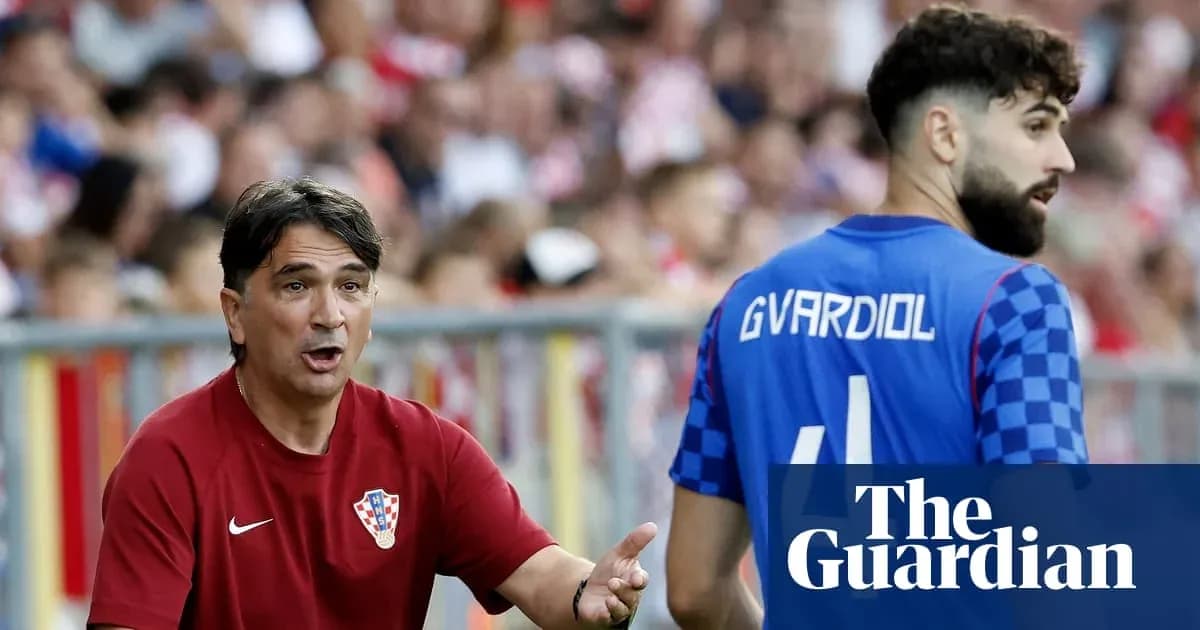
Zlatko Dalic Prepares for England in World Cup Opener
Zlatko Dalic knows exactly what is coming. England, Dallas heat, a World Cup opener that can set the tone for a summer or shatter it before it has even begun.
He would not quite admit to dreading it, but he came close.
“Maybe, because the first game can destroy everything,” he said, asked whether he might have preferred to meet England later in the group. That line hung in the air like a warning. Croatia have lived both sides of the opening‑game story, and Dalic carries the scars.
A brutal first step
His reference point is fresh. At Euro 2024, Croatia were blown away 3-0 by Spain in their first match and never truly recovered. “We fell down, couldn’t come back,” he recalled. That collapse still shapes his thinking.
The contrast with their World Cup journeys is stark. In 2018 they eased into the tournament with a controlled win over Nigeria. In 2022 they steadied themselves with a draw against Morocco, then grew into the competition and finished third. This time there is no gentle runway, no soft landing. It is England, straight away, on 17 June.
“The first game is the most important game,” Dalic said. “Against England we’ll fight, try to do our best and try to win.” The words were standard; the context was not. Croatia arrive in the US patched up, short of rhythm and short of bodies.
Injuries, rust and a thin squad
A 2-1 victory over Slovenia in Varazdin wrapped up their preparations on a positive note, but it did not solve Dalic’s main problem: his best players are not in their best shape.
The Manchester City pair of Mateo Kovacic and Josip Gvardiol are both coming back from injury. Luka Modric, still the heartbeat of this team at 38, is recovering from a fractured cheekbone and played in a protective mask against Slovenia. He scored a beautifully taken goal, a reminder of his class, but Dalic knows the numbers behind the romance.
“Kovacic, Gvardiol and Modric didn’t play much for a long time and they are not in optimal form,” he admitted. “Especially Kovacic, he hardly played this season and now we need him. It’s not easy and we need time. Gvardiol is now back but I know they are not at the optimal level. We don’t have a big roster and these are some of our most important players.”
That last line cuts to the heart of Croatia’s dilemma. They do not have the depth to simply rotate stars in and out. When Kovacic is not fully fit, Dalic has to gamble. When Modric is short of sharpness, he still starts. When Gvardiol is feeling his way back, he remains central to the plan.
And yet there is no time for gentle integration. England are waiting.
Old wounds, new reality
Dalic, of course, has hurt England before. He was on the touchline in Moscow when Croatia came from behind to beat them in the 2018 World Cup semi-final, a night that etched his team into history and left English football deep in introspection.
He did not lean on that memory. Asked about any lingering psychological scars for England, he swerved the invitation. Since that semi-final, England have beaten Croatia twice. The balance of recent results offers Gareth Southgate’s side their own comfort.
Dalic chose instead to talk up the opponent. He called England “a very strong team whose league is the best in the world and who play very offensive, very fast.” There was respect in his voice, and a touch of realism. “We will have to do something more,” he added.
That “something more” is where Croatia have so often found their edge: resilience, control in midfield, the ability to suffer in games and still emerge on the right side. But those qualities rely on legs that can go the distance and minds that are not clouded by fatigue or rust.
England’s long build-up, Croatia’s race against time
While Croatia have been nursing key players back to fitness, England have been laying down foundations. Dalic spoke approvingly of their long US-based preparation. Southgate’s squad flew to Miami a week ago, settling into the conditions well before the opener in Dallas.
For Dalic, that extended stay reflects a serious, well-resourced operation. For Croatia, it is another reminder of the gap they must bridge. His side arrive with questions over fitness, a thin roster and a brutal first fixture.
And yet this is the stage where Croatia have so often thrived, fuelled by adversity and driven by a core of veterans who refuse to accept their era is over. Modric still dictates, mask or not. Kovacic still carries the ball like few others when his body allows. Gvardiol, once fully up to speed, remains one of the most complete defenders in the game.
The risk is obvious: if the first game “destroys everything”, as Dalic fears, there may be no time to rebuild. The reward, though, is equally clear. Survive England, maybe even beat them, and a bruised, doubted Croatia could suddenly look dangerous again.
Dallas will tell whether this is the last stand of a great generation or the start of one more improbable run.