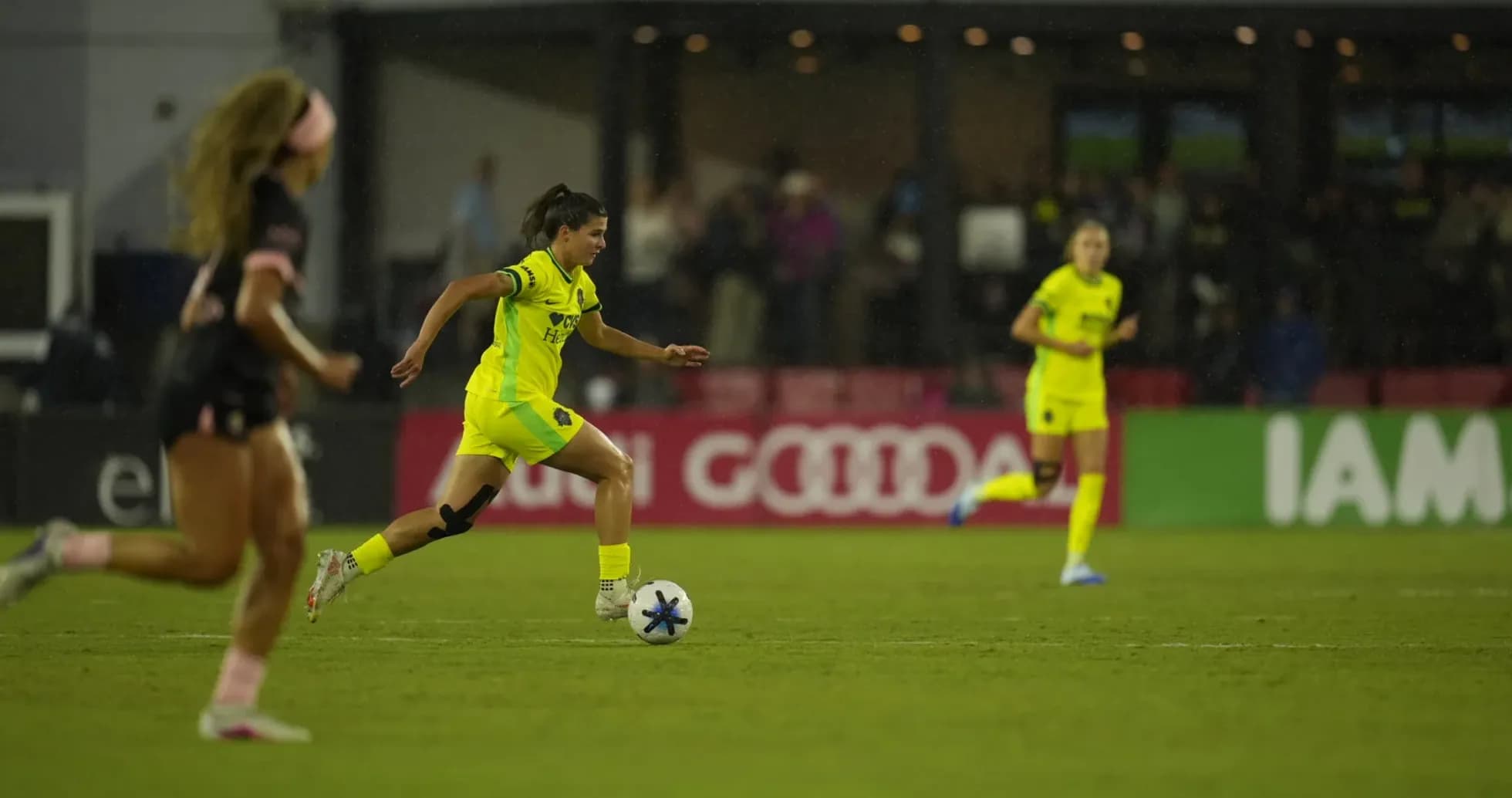
Washington Spirit vs Angel City: NWSL Group Stage Showdown
Audi Field under the lights, Group Stage stakes in the NWSL Women, and two sides who know the playoff race is already tightening. Washington Spirit W, sitting 3rd with 46 points and a total goal difference of +12 (36 scored, 24 conceded), host an Angel City W side in 6th on 42 points with a total goal difference of +16 (44 scored, 28 conceded). The league table says both are on a promotion track toward the Quarter-finals; the performance data says their paths there could not be more different.
I. The Big Picture – Styles in Collision
Washington’s season has been defined by extremes. Overall they average 1.4 goals scored and 0.9 conceded per game, but the split between Audi Field and their travels is stark. At home they score 1.2 and concede 1.1 on average, with a 6–1–6 record that speaks to volatility rather than control. Away, they are one of the league’s most efficient outfits: 1.6 scored, 0.8 conceded, and only two defeats in 13.
Angel City arrive as one of the division’s most dangerous attacking units. Overall they score 1.7 per match and concede 1.1, with a particularly sharp edge on their travels: 1.8 goals scored and only 0.9 conceded away, backed by a 7–3–3 road record. Their total of 44 goals is a clear statement of intent: they lean into chaos, but manage it better than most.
The standings confirm the picture: both sides have played 26 league matches heading into this fixture. Washington’s form line (LWLWW in the table snapshot, and a longer pattern of streaks in the season form string) shows bursts of momentum punctured by sudden drops. Angel City’s snapshot form (WWWDW) hints at a side that has corrected early-season inconsistency and is trending upward at exactly the right time.
II. Tactical Voids and Discipline – Edges on the Margins
There are no listed absentees in the data, so the tactical voids are less about missing personnel and more about structural risk.
For Washington, discipline is a quiet fault line. Their yellow-card timing shows two clear hot spots: 31–45 minutes and 76–90 minutes both at 22.22% of their total yellows. They also have a red card spike in added time between 91–105 minutes at 100% of their reds, a sign that emotional control can slip in the closing stages. Andi Maureen Sullivan embodies that edge: 2 yellows, 1 second yellow sending-off in 19 appearances, a midfielder who walks the tightrope between authority and overcommitment.
Angel City’s caution profile is more evenly spread but still flares late: 76–90 minutes account for 20.69% of their yellows, with significant shares between 46–75 as well. Their single red this season came between 46–60 minutes, via Maiara Niehues, a midfielder who combines bite (16 tackles, 18 fouls committed) with a willingness to live on the disciplinary edge.
Set-piece psychology could also hinge on penalties. Washington have earned three spot-kicks in total and converted only two, with one missed (33.33% of their penalties have not gone in). Angel City, by contrast, are perfect from the spot: five penalties in total, all five scored. In a tight Group Stage contest, that difference in ruthlessness from 12 yards is not a footnote; it is a potential deciding factor.
III. Key Matchups – Hunter vs Shield, Engine Room, and Flank Wars
Hunter vs Shield: T. Rodman vs Angel City’s back four
Trinity Rain Moyer-Rodman is Washington’s attacking spear and creative hub rolled into one. Across the season she has 9 total goals and 5 assists, with 64 shots (27 on target) and 25 key passes. She is not just a finisher; she is a volume creator who lives on the half-spaces, dribbling 74 times and drawing 35 fouls.
Her duel with Angel City’s defensive structure, especially the 4-4-2 line that starts with A. Anderson in goal and a back four of S. KIng, E. Madril, S. Gorden, and E. Shores, will define Washington’s threat. Shores is a pivotal figure: nominally a defender, but with 6 assists and 27 key passes, she is as much a deep-lying playmaker as a full-back. She has also won 114 of 208 duels and blocked 4 shots, making her both creator and shield on that flank. If Shores can pin Rodman back by forcing her to defend wide, Washington’s primary outlet becomes a liability rather than a weapon.
Angel City’s dual hunters: A. Sentnor and S. Jónsdóttir
On the other side, Angel City’s attacking axis is more distributed. Allyson Marie Sentnor, with 7 goals and 3 assists, operates as a hybrid between playmaker and second striker: 40 key passes, 45 shots, and 39 fouls drawn. She thrives between the lines, exactly the zone where Washington’s midfield trio of Sullivan, Hal Hershfelt, and M. Ngock must compress space.
Ahead of her, Sveindís Jane Jónsdóttir brings a direct, vertical menace: 6 goals, 3 assists, 30 shots, and 26 key passes from an attacking role. Her 180 total duels and willingness to stretch defenses will challenge Washington’s back four of L. Di Guglielmo, T. McKeown, E. Morgan, and G. Carle. If Washington’s full-backs push high to support S. Cantore and R. Kouassi in the front line, Jónsdóttir will look to spin into the vacated channels.
Engine Room: Sullivan vs Ary Borges and the midfield battle
The central battle will pivot on Sullivan’s ability to dictate tempo and protect the back line. Her 316 passes at 86% accuracy and 10 interceptions show a player capable of both recycling and screening. Across from her, Ary Borges anchors Angel City’s midfield, linking to G. Thompson and C. Lageyre in the wide roles and to Sentnor ahead. If Ary Borges can break Washington’s first line of pressure and find Sentnor between the lines, the Spirit’s back four will be repeatedly forced into emergency defending.
IV. Statistical Prognosis – Edges and Expected Patterns
The season numbers suggest a contest where Angel City’s attacking depth and away resilience give them a narrow statistical edge. On their travels they have scored 23 total goals and conceded 12, while Washington at home have scored 15 and conceded 14. The contrast is subtle but telling: Angel City are slightly more expansive and significantly more efficient on the road than Washington are dominant at Audi Field.
Washington’s clean sheet profile (10 overall, 4 at home) hints at a side capable of shutting games down when their structure holds. Angel City’s 9 clean sheets in total, 6 away, underline a similar capacity to close doors once in front. With both teams averaging under 1.2 goals conceded overall, this is unlikely to become a wild shootout; instead, the match tilts toward a tight, tactical battle where the first goal carries disproportionate weight.
In xG terms, the underlying shot and chance creation data from the key individuals points toward Angel City creating the higher volume of dangerous opportunities: Sentnor and Jónsdóttir’s combined shot output, plus Shores’ crossing and set-piece delivery, should generate a steady stream of chances. Washington’s path to a result is more concentrated: Rodman must convert her usage into end-product, and the midfield must limit transitions where Angel City are most lethal.
Add in Angel City’s perfect penalty record against Washington’s vulnerability from the spot, and the margins lean toward the visitors. Yet Washington’s total defensive record and their ability to string together winning streaks suggest that if they can keep their discipline in the final quarter-hour—where both teams’ yellow-card rates spike—and avoid late collapses, they have enough structure and star power to turn Audi Field into a proving ground rather than a stage for an away statement.