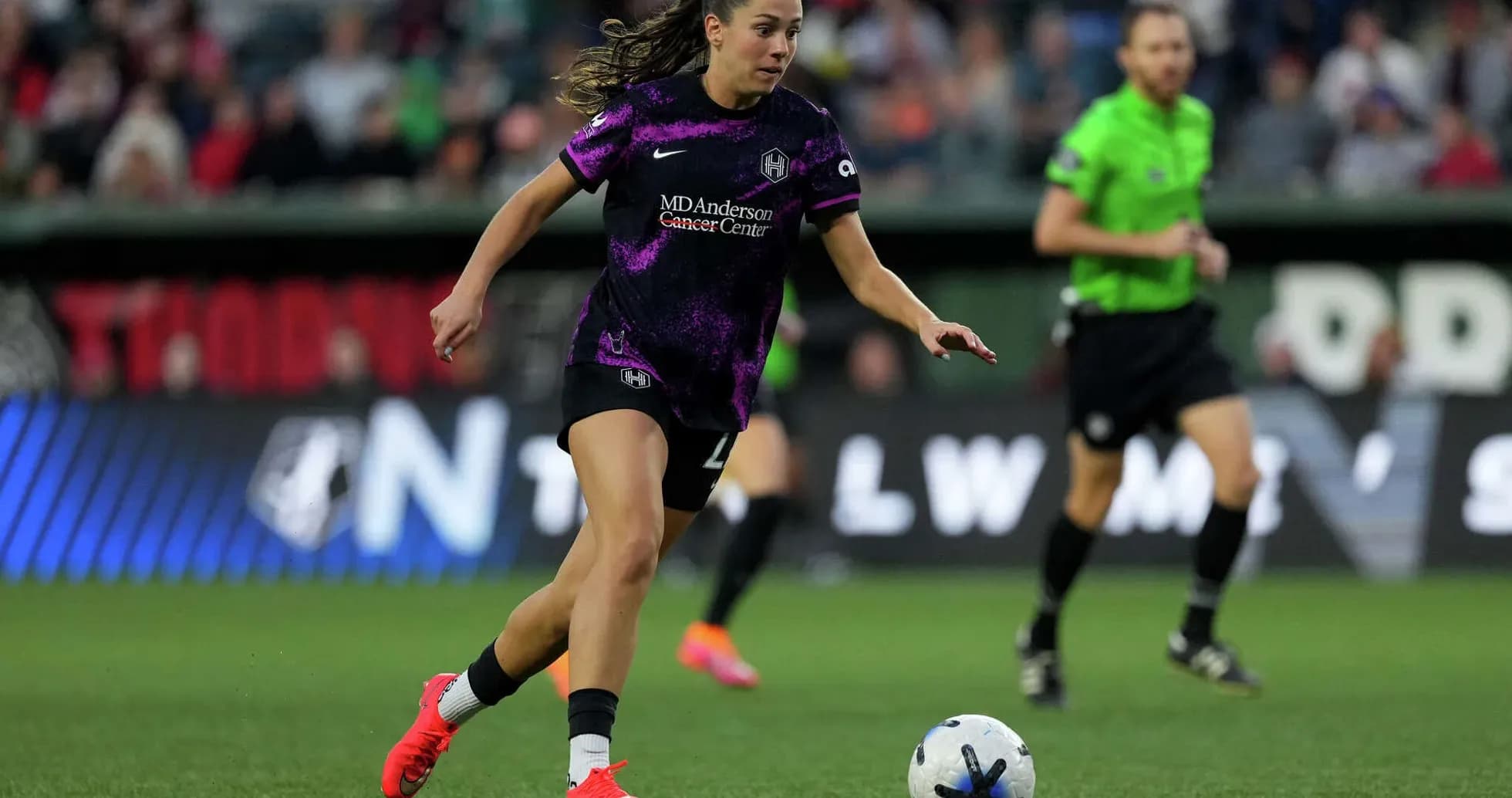
Portland Thorns W vs Houston Dash W: Tactical Draw Analysis
Under the lights at Providence Park, Portland Thorns W and Houston Dash W shared a 1–1 draw that felt less like a deadlock and more like a tactical arm-wrestle between two sides with very different seasonal identities.
I. The Big Picture – contrasting trajectories, shared tension
Heading into this game, Portland were a top‑five side in the NWSL Women, sitting 5th with 43 points and a goal difference of +8 (43 scored, 35 conceded) across 26 matches. Their overall scoring profile has been clear: 1.7 goals per game in total, built on a strong home platform of 1.7 goals per game at Providence Park and only 0.7 goals conceded at home. Houston arrived as the chasers rather than the hunted, 12th with 30 points and a goal difference of -4 (32 for, 36 against), a side whose attack averages 1.2 goals per game in total but drops to 0.9 on their travels.
Both coaches leaned into a mirrored 4‑2‑3‑1, a shape that promised clarity but demanded precision. Robert Vilahamn (Karlsson) trusted his usual attacking spine: M. Arnold in goal behind a back four of R. Reyes, Carolyn Lisette Calzada, J. Perry and M. Vignola; a double pivot of N. Nijstad and J. Fleming; then an aggressive line of three in M. Weaver, P. Tordin and Caiya Hanks, all servicing S. Smith as the lone forward. Juan Carlos Amorós answered with his own 4‑2‑3‑1: J. Campbell in goal, a back line of Avery Patterson, P. Nielsen, L. Klenke and L. Boattin; S. Puntigam and M. Graham as the screen; and an advanced trio of K. van Zanten, K. Rader and M. Ivanović behind forward K. Faasse.
Portland’s season-long pattern of fast starts (26.19% of their goals in the 0–15 minute window) met a Houston side that often grows into games, with 29.41% of their goals coming between 76–90 minutes. The narrative of the match, though, bent around Houston’s ability to strike early and Portland’s capacity to grind their way back.
II. Tactical voids and disciplinary undercurrents
There were no listed absentees, which meant both managers had full access to their key personalities and, crucially, their card magnets. On the Portland side, J. Perry and R. Reyes both brought a history of disciplinary edge: Perry has already collected six yellows and one red this season, while Reyes has also seen red once. On Houston’s flank, Avery Patterson arrived as one of the league’s most card‑prone defenders with seven yellows.
Those profiles mattered. Portland’s card distribution this season shows a pronounced late spike: 25.81% of their yellows arrive between 76–90 minutes, with another 19.35% between 61–75. Houston’s yellows also peak late, with 20.00% in the 76–90 window. In a tight, 1–1 game, that shared tendency toward late fouls and bookings shapes how both sides defend transitions and protect leads; it forces coaches to weigh whether to keep aggressive full‑backs like Reyes and Patterson on the pitch when the game becomes stretched.
Yet, Portland’s red‑card history also hints at a line they sometimes cross. With three different players featuring in the league’s top red‑card list (Perry, Reyes and C. Bogere), the Thorns live on the edge in duels. That edge can be a weapon in disrupting opponents, but it also risks destabilising a match they otherwise control territorially, especially against a counter‑punching side like Houston.
III. Key matchups – Hunter vs Shield, Engine Room battles
Hunter vs Shield: S. Smith vs the Houston back four
Sophia Smith is the league’s purest “hunter” in this fixture: 11 goals and 4 assists in total, with 81 shots (46 on target) and a 7.32 rating. Her movement across the front line is the reference point for Portland’s attack. In a 4‑2‑3‑1, she thrives on the layered service of P. Tordin and M. Weaver, plus the underlapping runs of Vignola and Reyes.
Houston’s “shield” is a collective more than an individual, but the numbers tell a story. On their travels they concede 1.6 goals per game, part of 36 conceded in total. Their defensive minute distribution reveals a vulnerability in the 46–60 window, where 24.24% of their goals against occur, and another 21.21% between 31–45. That dovetails uncomfortably with Portland’s ability to keep pressure on through the first half (59.53% of Thorns goals from 0–45 minutes) and then re‑ignite late (16.67% between 76–90).
Within that, Patterson is a key figure. She has won 120 of 209 duels and blocked 6 shots this season, while also contributing 54 tackles and 26 interceptions. Her willingness to step out aggressively to meet Smith or Tordin is both Houston’s first line of resistance and a risk, given her card history and Portland’s ability to isolate her in wide 1v1s.
Engine Room: P. Tordin and J. Fleming vs S. Puntigam and M. Graham
If Smith is the finisher, P. Tordin is the architect. With 6 goals and 7 assists in total, 44 key passes and 54 dribble attempts (24 successful), she is the creative hub between the lines. She is supported by J. Fleming’s more measured control in the double pivot, knitting together 458 passes from Tordin’s more vertical outlook and Fleming’s ability to dictate tempo.
Houston counter that with the rugged pairing of S. Puntigam and M. Graham. Puntigam’s positional discipline and Graham’s energy aim to choke off central lanes into Smith’s feet and Tordin’s pockets. Yet Houston’s defensive timing profile hints at a recurring issue: 18.18% of their goals conceded come between 16–30 minutes and 24.24% between 46–60, precisely the phases when Portland’s structured possession tends to turn into sustained pressure.
On the other side of the ball, K. Rader is Houston’s answer to Tordin: 9 goals and 1 assist in total, 42 shots (26 on target), 30 key passes and a 7.11 rating. Operating nominally from midfield but often arriving in the box, she tests the channels between Perry and Calzada. With Portland conceding 23.53% of their goals between 31–45 minutes and 20.59% between 76–90, Rader’s late surges and Houston’s 29.41% late‑goal share form a clear threat pattern.
IV. Statistical prognosis – margins, xG logic, and playoff shadows
Even with the 1–1 final score, the deeper numbers still tilt the broader narrative toward Portland. Overall they score 1.7 goals per game and concede 1.3, with 9 clean sheets in total and only 2 matches where they failed to score. Their home record is even more imposing: 7 wins, 5 draws and just 1 loss, with 22 goals for and 9 against at Providence Park.
Houston, by contrast, live on a thinner margin. They average 1.2 goals for and 1.4 against in total, with only 5 clean sheets and 9 games in which they failed to score. On their travels they have 3 wins, 3 draws and 8 losses, with 13 goals for and 22 against. Their away goal difference of -9 (13 scored, 22 conceded) underlines how much they must overperform their usual attacking output to claim full points in venues like Portland.
Overlaying these profiles on an xG‑style lens, the expectation before a ball was kicked would have been a narrow Portland win: a side that consistently creates more than it concedes at home against an opponent that tends to be out‑created away. The 1–1 draw, then, feels like a result where Houston slightly outperformed their usual away defensive baseline, while Portland under‑converted relative to their typical home scoring rate.
For Portland, following this result the story is about fine‑tuning rather than reinvention. Their 4‑2‑3‑1 remains the league’s most frequently used shape by the club, and the synergy between Smith and Tordin is a playoff‑calibre axis. The main question is whether they can smooth out those late‑game defensive wobbles that leave the door open to teams like Houston.
For Houston, this was a point won more than two lost. The Dash showed that with Rader’s timing, Patterson’s aggression and a disciplined double pivot, they can frustrate a top‑five attack even in one of the league’s toughest venues. If they can translate that defensive resilience into more consistent away performances, their negative goal difference and fragile away record need not define the rest of their campaign.
In the end, the 1–1 at Providence Park felt like a snapshot of the NWSL’s middle tier: a contender refining its edges and a chaser proving it can live with the league’s elite, if only in 90‑minute bursts.