Bay FC W's Tactical Struggles Against Orlando Pride W
Under the lights at PayPal Park, Bay FC W’s 1–3 defeat to Orlando Pride W felt less like a one-off setback and more like a sharp illustration of where these two projects currently stand in the NWSL Women Group Stage.
I. The Big Picture – Two Paths Crossing
Following this result, Bay FC W remain 13th with 26 points from 26 matches. Their overall goal difference is -10, the product of 27 goals scored and 37 conceded. At home, they have now played 13 times, with 4 wins, 2 draws and 7 losses, scoring 14 and conceding 17. The numbers mirror what unfolded on the pitch: a side that can strike, but rarely controls the story over 90 minutes.
Orlando Pride W, by contrast, consolidate 11th place with 33 points from 26 matches. Their overall goal difference sits at -6, with 35 goals for and 41 against. On their travels, they have 4 wins, 2 draws and 7 defeats, scoring 15 and conceding 21. This away win fits neatly into their season profile: imperfect, but dangerous, especially when their attacking stars are given space.
Both managers leaned into their seasonal identities. Bay FC W, who have used a 4‑3‑3 seven times this campaign, rolled it out again, trusting their front three to unsettle Orlando’s back line. Orlando Pride W went back to their most familiar shape, a 4‑2‑3‑1 they have used 17 times overall, designed to funnel the game through a creative band of three behind a focal point striker.
II. Tactical Voids and Disciplinary Shadows
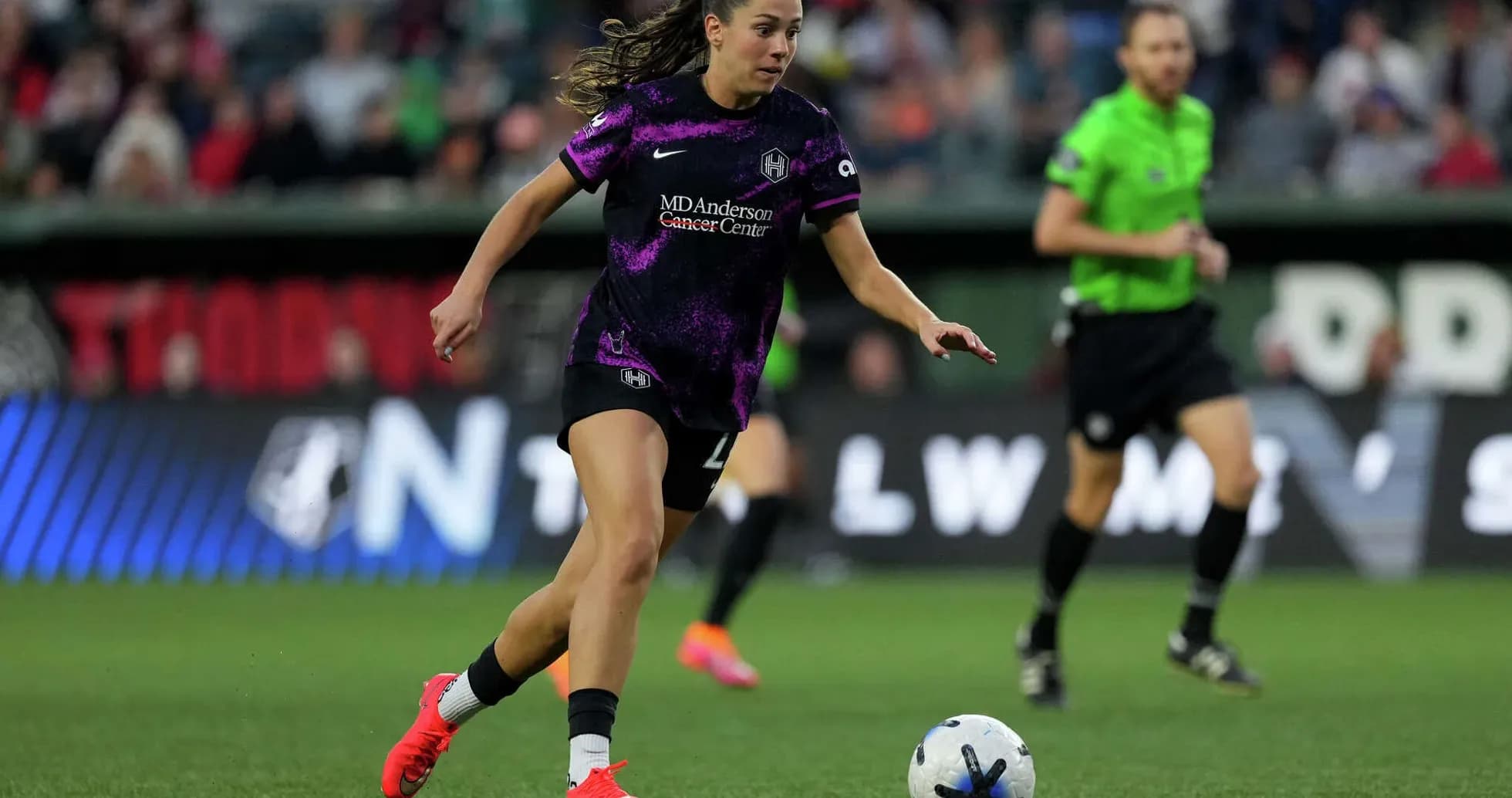
Bay FC W’s lineup was bold, almost idealistic. Jordan Silkowitz started in goal behind a back four of S. Collins, H. Gilchrist, J. Anderson and J. Nighswonger. Ahead of them, the midfield trio of C. Hutton, T. Huff and H. Bebar was tasked with bridging defense and attack. Up front, A. Pfeiffer and K. Lema flanked the explosive R. Kundananji.
On paper, this is a side built for front-foot football. Heading into this game, Bay FC W’s goals-for profile showed a team that loves fast starts: 27.59% of their goals arrive between 0–15 minutes, and another 24.14% between 16–30. Yet their defensive timing is a mirror of vulnerability. They concede 22.86% of their goals in the opening 15 minutes and another 22.86% between 76–90. Early chaos, late collapse: that is the Bay pattern, and Orlando were perfectly suited to exploit it.
Disciplinary trends deepen the tactical void. Bay FC W are one of the league’s most combustible sides in the latter stages. Their yellow-card distribution spikes to 25.64% between 76–90 minutes, and they have red-card incidents spread across 0–15, 61–75 and 91–105. Players like A. Cometti, who has already seen red this season, and T. Huff, who has a yellow-red on her record, embody a back line and midfield that can be drawn into desperate challenges when the game state turns against them. Even Silkowitz has been sent off once, underlining how often Bay’s last line is dragged into crisis.
Orlando Pride W bring their own edge. Angelina carries a red card this season, and the team’s yellow-card curve rises steeply in the 61–75 (23.33%) and 76–90 (26.67%) windows. Yet their indiscipline tends to come while defending a lead or contesting a tight game, not from systemic collapse. In midfield, H. McCutcheon is a walking duel, with 53 tackles, 10 successful blocks and 29 interceptions overall, plus 5 yellow cards to show for that edge. She is the kind of player who bends the line between control and chaos but rarely breaks it.
III. Key Matchups – Hunter vs Shield, Engine Room vs Engine Room
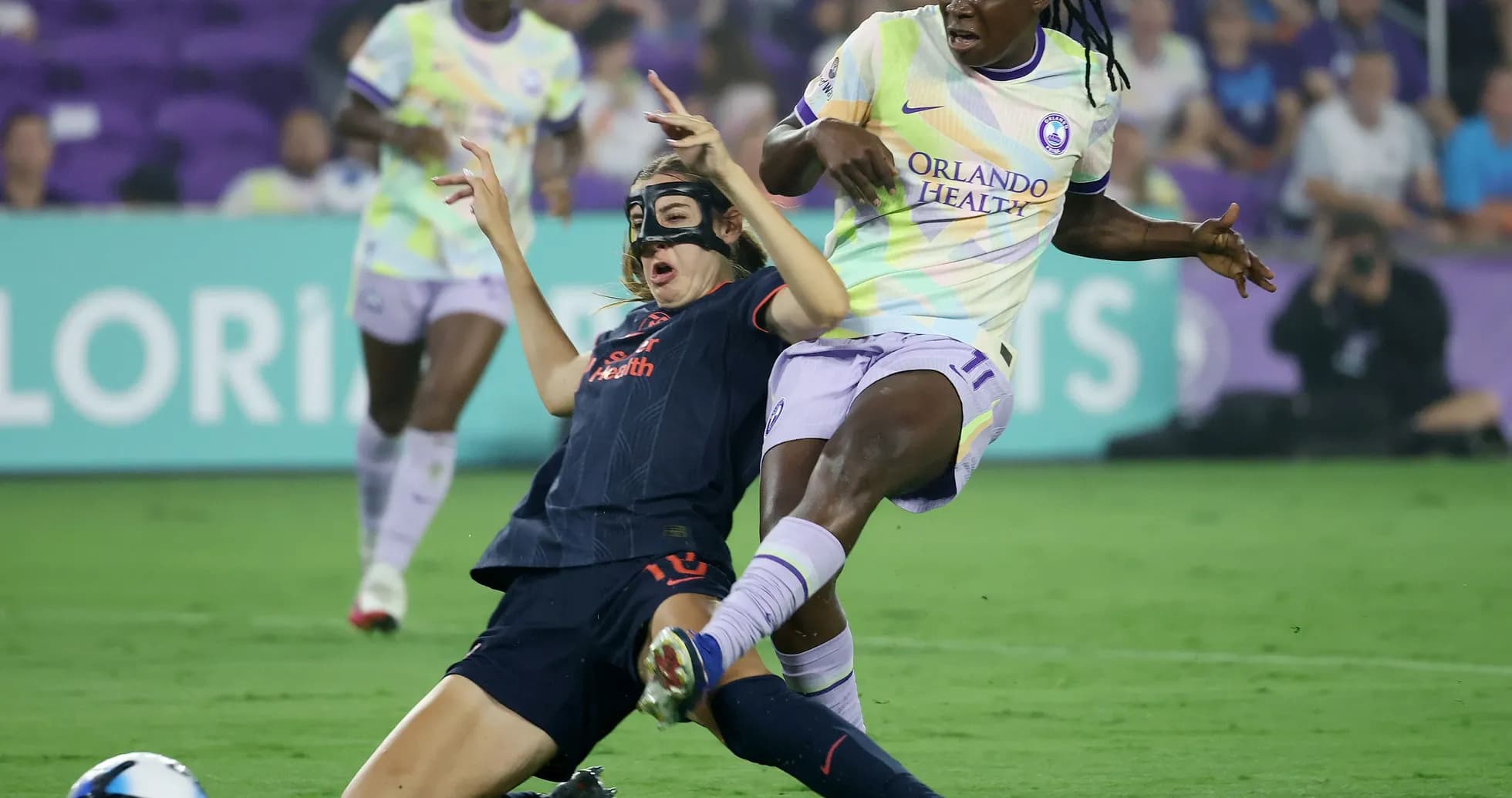
The headliner was always going to be the duel between the two Zambian forwards, even if only one appears in the league’s top-scorer charts. For Orlando, B. Banda came into this fixture as one of the league’s most devastating hunters: 15 total goals and 3 assists in 22 appearances, with 66 shots (36 on target). She is not just a finisher but a volume creator of danger, backed by 26 key passes and 51 attempted dribbles.
Bay FC W’s “shield” against her was a unit rather than an individual: the Silkowitz-led back four that, overall, concedes 1.4 goals per match, with 1.3 at home. Silkowitz herself has made 87 saves this season and even saved a penalty, but the structural numbers around her are unforgiving. Bay concede heavily in the 0–15 and 76–90 windows, exactly where a striker like Banda loves to attack tired legs and disorganized lines.
The engine-room battle was just as decisive. For Bay, C. Hutton is the heartbeat: 25 appearances, 2 goals, 2 assists, 1,153 passes at 80% accuracy, 32 key passes, and a ferocious defensive contribution of 74 tackles, 7 blocked shots and 45 interceptions. She is both metronome and shield, and her 5 yellow cards show how often she has to put out fires.
Alongside her, T. Huff offers forward thrust, with 2 goals, 2 assists, 389 passes and 18 key passes, plus 28 tackles and 4 blocked shots. But Huff’s disciplinary profile – 2 yellows and a yellow-red this season – hints at how easily Bay’s midfield balance can tilt from aggression to recklessness.
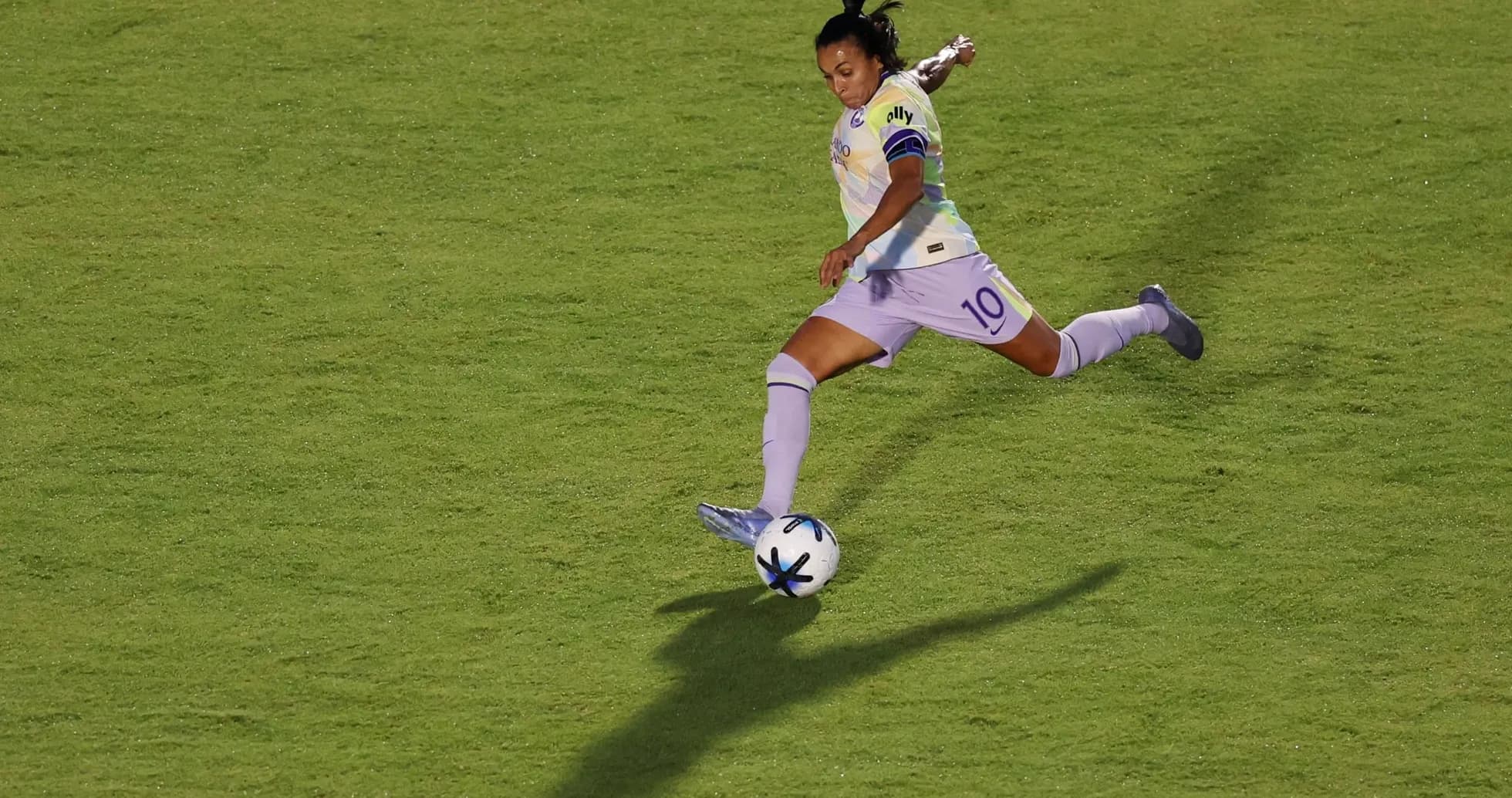
Across from them, Orlando’s double pivot of Angelina and H. McCutcheon was built to suffocate and spring. Angelina is a deep-lying connector, with 654 passes at 78% accuracy and 17 key passes, plus 32 tackles and 3 blocked shots. Her red card this season is the cost of playing on the edge, but her line-breaking passing is vital to linking defense to the creative trio of Luana, Marta and S. Washington.
McCutcheon is the enforcer-playmaker hybrid: 657 passes at 77% accuracy, 23 key passes, 5 goals and 2 assists, underpinned by 53 tackles and 10 blocked shots. She blocked 10 shots overall this season, a huge number for a midfielder, and her 5 yellow cards and 1 penalty won show a player who lives in the heart of contact zones. Against Bay’s 4‑3‑3, she could step out to press Hutton or Huff, knowing Angelina would slide across to cover.
IV. Statistical Prognosis – Why Orlando’s Plan Was Built to Prevail
Strip away the narrative, and the numbers still point toward Orlando’s superiority in this matchup. Heading into this game, Bay FC W scored 1.1 goals per match at home and 1.0 overall, while conceding 1.3 at home and 1.4 in total. Their goal distribution shows a team that starts fast but fades, with just 3.45% of their goals arriving between 76–90 minutes, compared to 22.86% of their goals conceded in that same late window.
Orlando Pride W, on their travels, averaged 1.2 goals scored and 1.6 conceded. Their attacking curve is far more balanced: 20.59% of their goals between 31–45 minutes, 23.53% between 46–60, and a significant 17.65% between 76–90. They are built to grow into games, not just to blitz them early.
The critical intersection is brutal for Bay: their late-game defensive weakness collides directly with Orlando’s late-game offensive surge. As Bay’s yellow cards spike in the final quarter-hour and their legs tire, Orlando’s front four – with Banda as the spear, Marta and Luana threading passes, and S. Washington attacking space – find more and more room to operate.
Add in Orlando’s penalty profile and you get another layer of risk. They have earned 4 penalties this season, but scored only 2, missing 2. That 50.00% conversion rate means they are far from automatic from the spot, yet their ability to generate those situations speaks to how often they occupy dangerous zones in the box. Against a Bay defense that has already conceded one penalty and relies heavily on last-ditch interventions from Cometti and Silkowitz, every late scramble feels loaded.
For Bay, there are green shoots: 7 clean sheets in total, and a biggest home win of 3‑0, show that when their structure holds, their 4‑3‑3 can overwhelm opponents. But those performances are the exception rather than the rule. With 10 matches in which they failed to score overall and 6 such blanks away, their attacking volatility puts immense pressure on a defense that is already stretched.
Orlando, by contrast, have 7 clean sheets of their own and have failed to score only 5 times overall. Their 3‑0 wins, both home and away, and their comfort in a 4‑2‑3‑1 that has been drilled 17 times this season, give them a platform that Bay currently lack.
In the end, the 1–3 scoreline is less a surprise than a confirmation. Bay FC W’s aggressive 4‑3‑3, led by Hutton and Huff in midfield and Kundananji up front, can hurt teams in bursts but remains hostage to its own late-game fragility and disciplinary strain. Orlando Pride W, anchored by the double pivot of Angelina and McCutcheon and unleashed by the ruthless instincts of B. Banda, are built to wait, absorb, and then punish exactly those weaknesses.
Following this result, the trajectories feel clear. Bay must find a way to extend their early intensity into a full 90 minutes and to cool their disciplinary spikes in the closing stages. Orlando, meanwhile, leave PayPal Park with three points and the quiet confidence of a side whose numbers, structure and stars are finally beginning to align.