York United Upsets Cavalry FC 3-1 in Tactical Showdown
York Lions Stadium had barely settled after kickoff when it became clear this would not be a routine afternoon for league leaders Cavalry FC. In a Canadian Premier League season where Cavalry have largely cruised, York United – seventh in the table with a negative goal difference and a chaotic defensive record – ripped up the script and imposed their own.
The numbers before this fixture painted a stark contrast. Overall, Cavalry arrived top of the league with 53 points from 25 matches, powered by 51 goals for and only 19 against: a goal difference of +32, fully matching their table line. On their travels they had been efficient rather than overwhelming, with 7 wins from 13 away games and an away scoring rate of 1.6 goals per match against 0.9 conceded. York, by contrast, were a paradox: seventh with 27 points from 24 matches, yet with 39 goals for and 54 against overall – a goal difference of −15, again perfectly mirroring their record. At home they had been wildly open, scoring 27 and conceding 28 across 12 games, an average of 2.3 goals both for and against at York Lions Stadium.
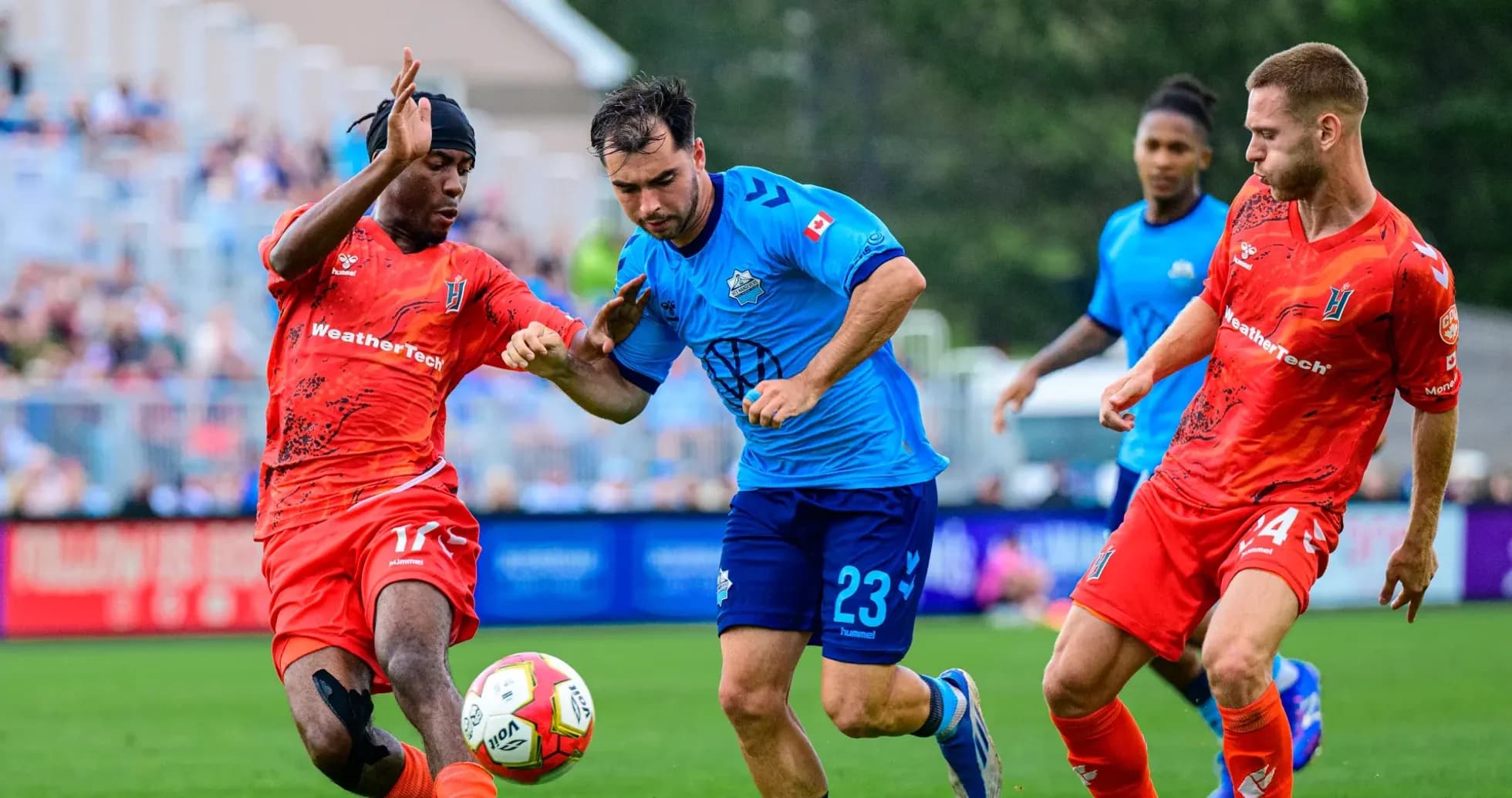
York’s 3-1 win – built on a 2-0 half-time lead and managed with rare control – felt like a tactical statement as much as an upset.
York's Formation
York lined up in Mauro Eustaquio’s preferred 3-4-3, a shape they have used more than any other this season. A. Campos anchored the back line from goal, with a trio of defenders in front: L. Singh on the left of the three, F. Sturing central, and R. Lopez to the right. That back three has often been exposed by York’s high-risk approach, but here it found a better balance between aggression and protection.
Ahead of them, the four-man midfield line was crucial. M. Ferrari and C. Guzman provided the width, while J. Cordova and O. Bassett worked as the interior engines. Bassett, wearing 10, was the hinge between build-up and the front line, often dropping into pockets that pulled Cavalry’s double pivot out of shape. The front three – S. Yeates, S. Gonzales, and A. Almagro – gave York a fluid, interchangeable attack. Yeates, one of York’s standout performers this season with 5 goals and 2 assists in league play, drifted intelligently between the lines, while Almagro, already among the league’s leading providers with 5 assists, repeatedly attacked the half-spaces.
Cavalry's Formation
Cavalry, under Tommy Wheeldon, stayed loyal to their 4-2-3-1, the formation that has underpinned 11 of their league outings. N. Ingham started in goal, shielded by a back four of Fewo at left-back, A. Didic and D. Klomp in central defence, and J. McGlinchey on the right. That central pairing has been one of the league’s most dominant: Klomp has chipped in with 4 goals and 1 assist, blocking 8 shots and winning 65 duels, while Didic has added 3 goals and 3 assists and an 89% passing accuracy. On paper, it was a formidable spine.
In midfield, E. Kobza and N. Myroniuk formed the double pivot, tasked with controlling transitions and feeding an attacking trio of A. Musse, T. Warschewski, and N. Edwards behind lone forward O. Graham-Roache. Few teams can boast an attacking axis as productive as Musse and Warschewski: Musse entered this game with 3 goals and 5 assists, while Warschewski, one of the league’s top scorers and creators, had 7 goals, 3 assists, and 40 key passes to his name.
Match Dynamics
Yet from the opening exchanges, the dynamic tilted towards York. The 3-4-3 allowed Eustaquio’s side to create a box in midfield – Bassett and Cordova inside, Guzman and Ferrari outside – that overloaded Cavalry’s double pivot. With York’s home scoring average at 2.3 per match heading into this fixture, the intent was clear: lean into their attacking strengths and accept the risk.
The first half’s 2-0 scoreline reflected that gamble paying off. York’s wing-backs pinned Cavalry’s full-backs deep, limiting the forward runs that usually give Musse and Warschewski the space to combine. In possession, Singh stepped out from the left of the back three to compress the pitch, while Sturing held his ground against Graham-Roache’s attempts to run in behind.
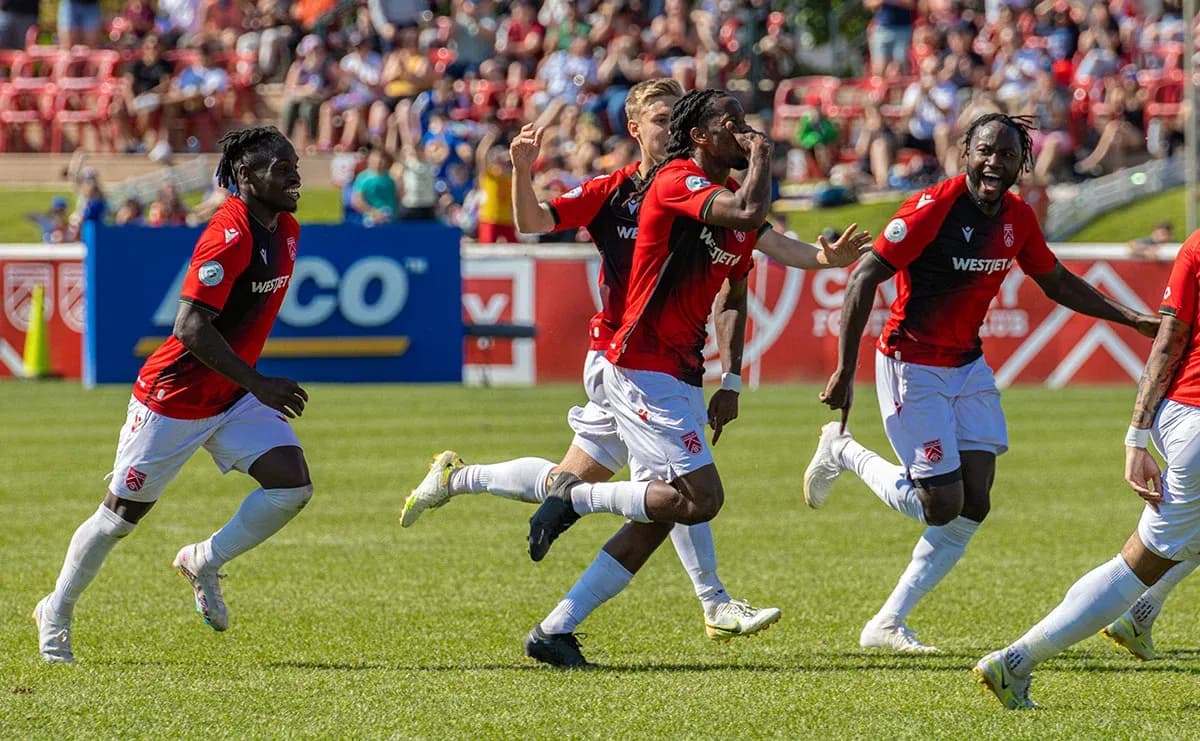
Cavalry’s usual defensive solidity – only 12 goals conceded away all season before this game – was repeatedly stretched. York targeted the channels between full-back and centre-back, with Almagro and Yeates making diagonal runs that forced Didic and Klomp into wide areas they are less comfortable defending. Once Cavalry were pulled apart horizontally, Bassett and Cordova attacked the gaps at the top of the box, either to shoot or slip passes into Gonzales.
If “Hunter vs Shield” is the classic matchup of top scorer against defensive wall, this fixture inverted the roles. Cavalry’s usual hunters – Warschewski and Musse – were forced into deeper starting positions, spending more time trying to escape York’s compact central block than attacking the box. York’s own threats, led by Yeates and Almagro, became the hunters, testing a Cavalry back line not often asked to defend prolonged spells of pressure.
The “Engine Room” duel was equally decisive. Kobza, one of the league’s more combative midfielders with 23 tackles and 16 interceptions this season, found himself outnumbered. York’s four across midfield could rotate and press in waves, and with no extra Cavalry midfielder dropping in consistently, the visitors struggled to establish their usual passing rhythm from deep.
Discipline and Conclusion
Discipline was always likely to be a subplot. York’s season-long card profile shows a heavy concentration of yellows between 46-75 minutes, with 20.55% of their cautions arriving in that spell and a further 23.29% between 61-75, while Cavalry’s yellows peak just after half-time as well. The second half inevitably became more fractured, but York managed the chaos better than in earlier parts of the season, where long losing streaks and late lapses had defined them.
From a statistical prognosis standpoint, this result sits against the grain of the broader campaign. Overall, York have scored 1.6 goals per match and conceded 2.3, with only 2 clean sheets and a fragile defensive identity. Cavalry, by contrast, have combined 2.0 goals scored per game with just 0.8 conceded and 10 clean sheets. On paper, Cavalry’s superior xG profile and defensive solidity should still carry them over the long haul.
But matches like this one at York Lions Stadium reveal the nuance beneath the numbers. York’s 3-4-3, when executed with the intensity and cohesion shown here, maximises their attacking talent while giving just enough structure to protect a vulnerable back line. Cavalry remain the benchmark, yet this 3-1 defeat will serve as a reminder that even the league’s most balanced squad can be unsettled by a well-drilled, fearless mid-table side prepared to turn the game into a tactical street fight rather than a controlled procession.