USA Triumphs 2-0 Over Bosnia & Herzegovina in Round of 32
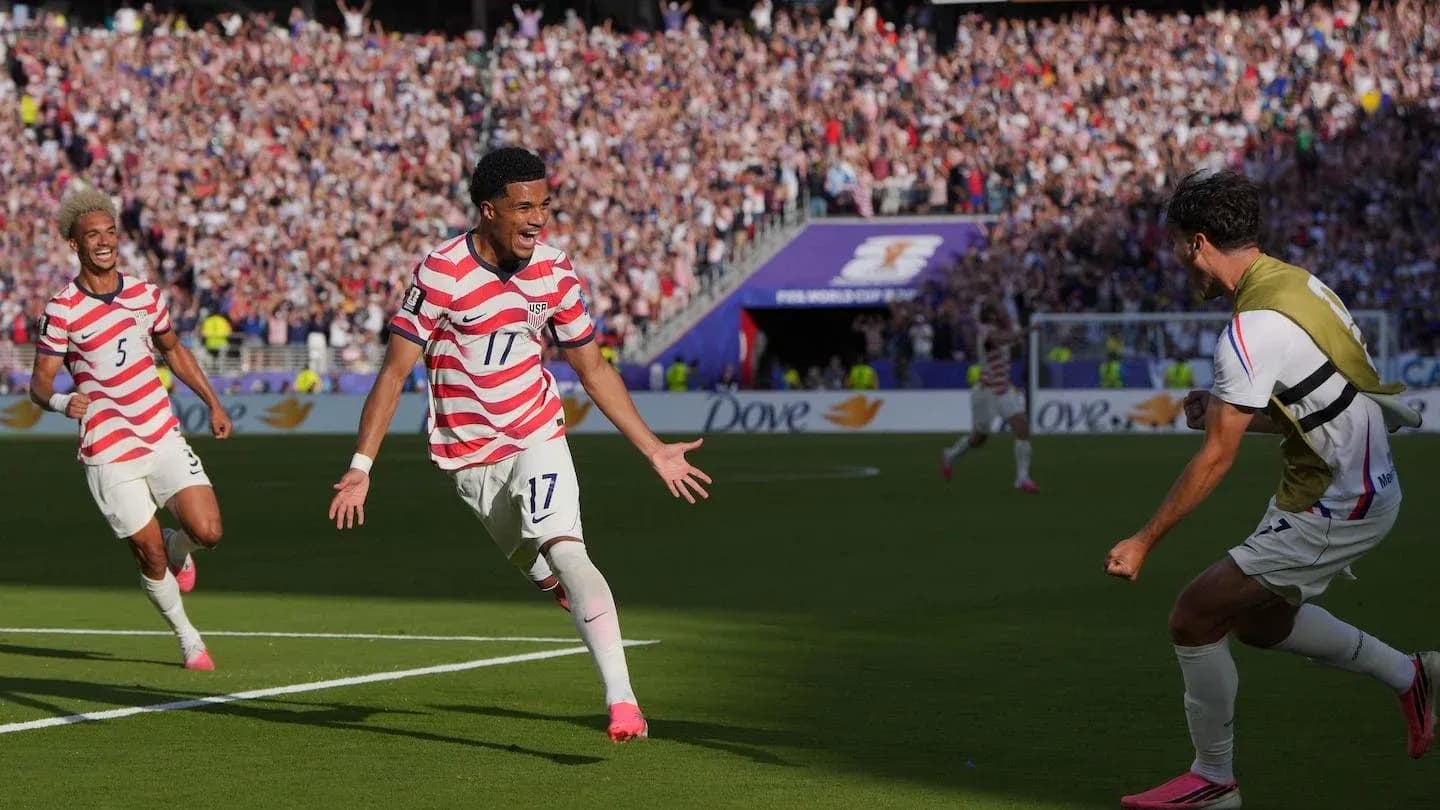
Under the California night sky at Levi’s Stadium, the Round of 32 brought a meeting of contrasts: a USA side riding a sharp attacking wave, and Bosnia & Herzegovina, hardened by group-stage turbulence, trying to turn defensive grit into a knockout upset. The final scoreline – USA 2, Bosnia & Herzegovina 0 – felt like the natural extension of each team’s seasonal DNA as much as it did a one-off cup tie.
I. The Big Picture – Shapes, context, and campaign identities
Mauricio Pochettino leaned into the USA’s most familiar attacking skin, rolling out a 4-3-3 that has already been his most-used shape this tournament. Heading into this game, the USA had played 4 matches overall, winning 3 and losing 1, with 3 of those wins coming “at home” in World Cup terms. Their attacking output has been emphatic: 10 goals in total, with 8 at home and 2 on their travels, underpinned by a total average of 2.5 goals scored per match (2.7 at home, 2.0 away). At the other end, they had conceded 4 in total (1 at home, 3 away), for a total average of 1.0 goal against per match.
That profile – front-foot, high-scoring, and generally secure defensively – framed the USA as a Round of 32 favourite, especially after topping Group D with 6 points, a goal difference of 4 (8 goals for and 4 against), and a form line of WLWW.
Bosnia & Herzegovina arrived from a more chaotic path. Their group campaign in Group B yielded 4 points from 3 matches (1 win, 1 draw, 1 defeat), with 5 goals scored and 6 conceded for a goal difference of -1. Across the wider World Cup campaign, they had played 4 fixtures in total, with 1 win, 1 draw, and 2 defeats. The split between home and away performances was stark: 3 goals scored and 1 conceded at home, but only 2 goals scored and 7 conceded on their travels. That translated into a total attacking average of 1.3 goals per match (3.0 at home, 0.7 away) and a total defensive average of 2.0 goals conceded per match (1.0 at home, 2.3 away).
Sergej Barbarez responded to those numbers with a pragmatic 5-3-2, packing the back line with Sead Kolasinac, Siniša Radeljić, Tarik Muharemović, Nikola Katić and Amar Dedić in front of goalkeeper Nikola Vasilj, trying to insulate a defence that has bled too often away from home.
II. Tactical Voids – Absences, discipline, and hidden risks
The USA’s squad sheet carried two quiet but meaningful absences. Mark McKenzie (bruised foot) and Cristian Roldan (muscle bruise) were both listed as missing for this fixture. Neither is a headline star in this particular tournament data, but their absence subtly narrows Pochettino’s rotation options: McKenzie as a depth piece in central defence, Roldan as a flexible midfield presence capable of shoring up transitions or adding late energy.
In disciplinary terms, the USA have walked a fine line. Across the tournament they have accumulated yellow cards at several points in matches, with 20.00% of their yellows coming between 16-30 minutes, 40.00% between 46-60 minutes, another 20.00% between 76-90 minutes, and 20.00% in the 91-105 window. The red-card profile is even more concentrated: 100.00% of their reds have arrived between 61-75 minutes. That history is embodied by Folarin Balogun, who appears both among the top scorers and the leading red-card recipients, carrying 1 yellow and 1 red in just 3 appearances.
Bosnia & Herzegovina’s card map is more back-loaded. Their yellows spike late, with 37.50% shown between 76-90 minutes and another 12.50% in the 91-105 period. Their only red card has also come in that 76-90 window, and that belongs to Tarik Muharemović. In a knockout setting, that late-game volatility is a tactical fault line: fatigue, stretched distances, and desperation all colliding precisely when the USA like to keep pushing.
III. Key Matchups – Hunter vs shield, and the engine room
The most obvious “Hunter vs Shield” storyline revolved around Balogun. Heading into this tie he had scored 3 goals in total for the USA, from 8 shots (4 on target), at a strong tournament rating of 7.23. His profile is that of a modern penalty-box forward: 27 duels contested with 10 won, 7 dribbles attempted with 3 successful, and 7 fouls drawn. He is both finisher and magnet, bending defensive structures around him.
Bosnia & Herzegovina’s shield was a five-man line anchored by Muharemović, whose tournament numbers paint him as more than a simple stopper. Across his 3 appearances and 260 minutes, he had completed 157 passes at 84% accuracy, made 8 interceptions, and blocked 1 shot. He is not just clearing danger; he is also the conduit to turn regain into build-up. Yet his disciplinary edge – 5 fouls committed and that single red card – suggests that when pressed deep and repeatedly, his interventions can tip from precise to reckless.
Around that duel, the USA’s flanks and midfield looked designed to stretch Bosnia & Herzegovina’s compactness. Sergiño Dest, nominally listed as a forward, started wide on the right, with Antonee Robinson bombing from left-back. Christian Pulisic on the left side of the front three, Balogun central, and Dest on the right formed a trident tasked with pinning back the Bosnian wing-backs, especially Dedić and Kolasinac.
Behind them, the “Engine Room” confrontation was between Weston McKennie and Tyler Adams against Ivan Šunjić, Amar Gigović and Karlo Alajbegović. McKennie’s box-to-box instincts and Adams’ screening role were set against a Bosnian trio asked to both double as a second defensive line and find Edin Džeko and Ermedin Demirović early in transitions. With Bosnia & Herzegovina having failed to keep a single clean sheet overall and conceding 8 goals in total, that midfield resistance was always likely to be under siege.
IV. Statistical Prognosis – Why 2-0 made sense
The USA’s season-long numbers always hinted at a night like this. With 3 wins from 3 home fixtures, 8 goals scored and just 1 conceded at home, and 2 clean sheets “at home” already, they came into Levi’s Stadium as a side comfortable dictating knockout tempo. They had not failed to score in any match this campaign, and their biggest home win – 4-1 – underscored their ability to run away from opponents once they find rhythm.
Bosnia & Herzegovina, by contrast, had not kept a clean sheet in any of their 4 matches overall, and had failed to score once. On their travels, they had conceded 7 goals while scoring only 2, and their heaviest defeat, 4-1 away, mirrored the structural issues their 5-3-2 was trying to mask: vulnerability when forced to defend deep for long stretches, and difficulty sustaining pressure high enough to relieve that strain.
Layer onto that the disciplinary patterns – the USA’s occasional mid-second-half red, Bosnia & Herzegovina’s flurry of late yellows and one late red – and the tactical intersection becomes clear. A USA side that scores freely and maintains pressure met an opponent whose defensive line tends to crack late and whose away record is porous.
In that light, a 2-0 USA win in regular time feels almost like the statistical mean: the hosts’ attacking averages slightly under their usual home output but well within their total trend, Bosnia & Herzegovina’s defensive frailty showing again but contained enough by the five-man line to avoid collapse. The Round of 32 became less an upset battleground and more a confirmation of trajectories: the USA marching on with their aggressive 4-3-3, Bosnia & Herzegovina bowing out with the same away vulnerabilities that shadowed their entire campaign.