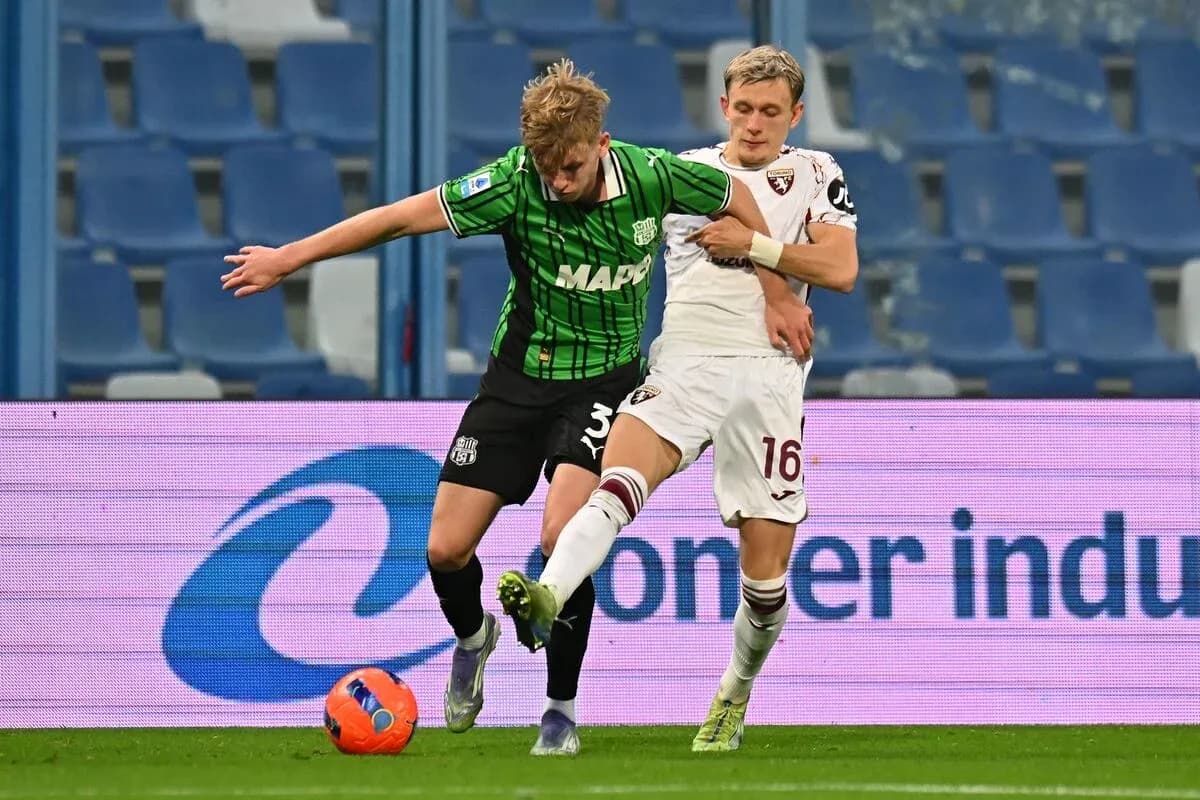
Torino's Statement Win Over Sassuolo: A Mid-Table Clash
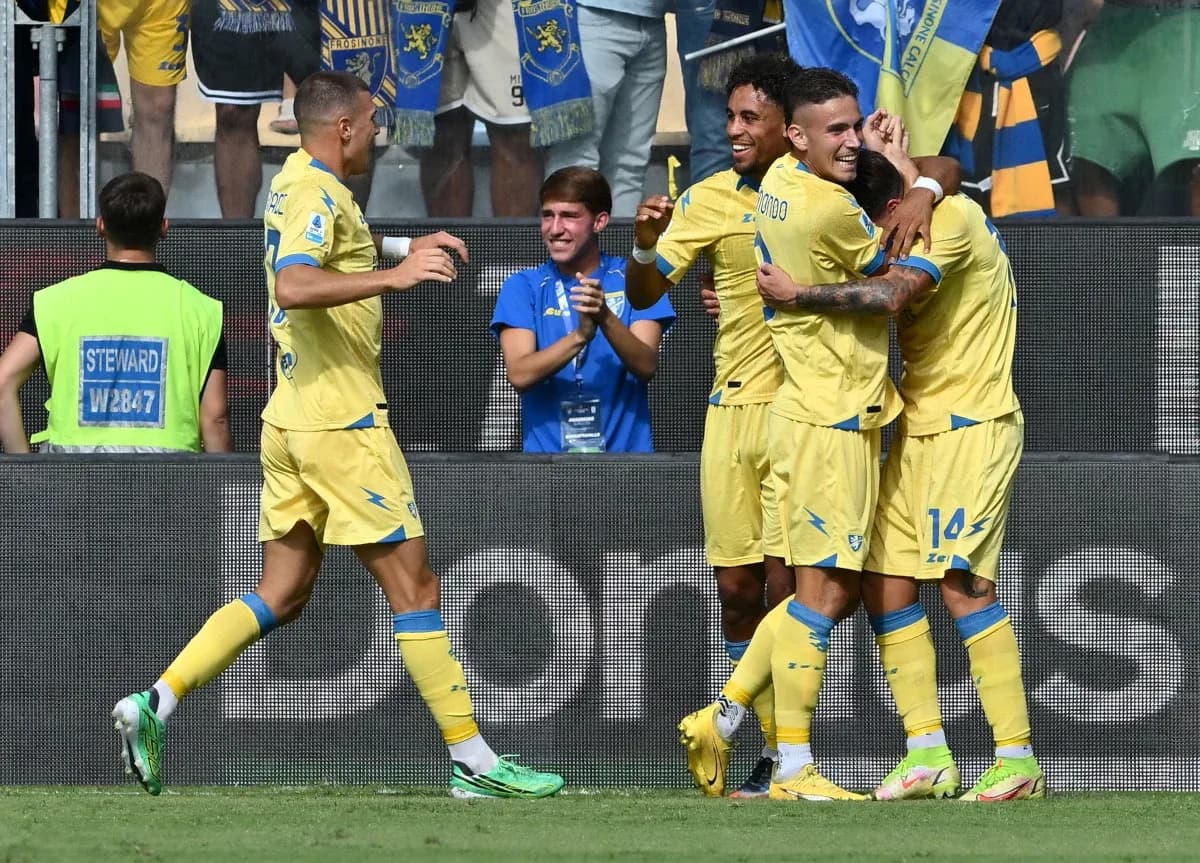
Under the Turin floodlights at Stadio Olimpico Grande Torino, this was billed as a mid‑table reckoning rather than a title decider, but Torino’s 2–1 win over Sassuolo felt like a statement about identity as much as points. In Serie A’s Regular Season - 36, 12th‑placed Torino and 11th‑placed Sassuolo arrived separated by five points, their seasons defined more by volatility than consistency. Following this result, the numbers still say mid‑table, but the performances on the night hinted at two very different trajectories.
Torino came in as a contradiction: rugged yet fragile. Overall this campaign they had scored 41 and conceded 59, a goal difference of -18 that underlined their tendency to leak as much as they create. At home, though, they were a different animal: 8 wins from 18, 25 goals scored and 27 conceded, averaging 1.4 goals for and 1.5 against at Stadio Olimpico Grande Torino. Sassuolo, by contrast, were the archetypal open game merchants: 44 scored and 46 conceded overall, a goal difference of -2, with a near-symmetrical profile home and away. On their travels they had 5 wins, 5 draws and 8 defeats, scoring 21 and conceding 23, an average of 1.2 goals for and 1.3 against away from home.
I. The Big Picture: Shapes, context and seasonal DNA
Leonardo Colucci leaned into Torino’s season-long three-at-the-back identity, rolling out a 3-4-2-1 that told you everything about his priorities. A. Paleari anchored the back line behind a trio of L. Marianucci, S. Coco and E. Ebosse, with width coming from V. Lazaro and R. Obrador as aggressive wing-backs. The central engine was youthful and industrious: M. Prati and G. Gineitis tasked with both screening and sparking transitions. Ahead of them, N. Vlasic and A. Njie floated behind lone striker G. Simeone, Torino’s primary finisher and one of Serie A’s most efficient volume shooters this season.
On the other bench, Fabio Grosso refused to abandon Sassuolo’s long‑running 4-3-3. A. Muric started in goal, shielded by a back four of W. Coulibaly, S. Walukiewicz, T. Muharemovic and J. Doig. In midfield, L. Lipani and N. Matic sat either side of K. Thorstvedt, the Norwegian a hybrid between playmaker and late runner. Up front, C. Volpato and A. Lauriente flanked A. Pinamonti, a trio built for verticality and quick strikes rather than patient siege.
Heading into this game, Torino’s season-long form line – a jagged “LDWLLDWWDDDLLLWWLWLLLLWDLLWLWLWWDDLW” – spoke of streaks and mood swings. Their biggest home win was a 4-1, their heaviest home loss a 1-5; they could overwhelm or implode. Sassuolo’s own pattern – “LLWLWWDLWLWDLWDLDDLLLWWLWWWLLDWLWDWL” – was scarcely less chaotic, but their attacking ceiling, especially with Lauriente and D. Berardi in the squad, always made them dangerous.
II. Tactical Voids: Absences and discipline
Both sides arrived with important gaps. Torino were without Z. Aboukhlal, F. Anjorin and A. Ismajli, all listed as Missing Fixture through muscle and hip injuries. For Colucci, that removed a potential wide threat in Aboukhlal and another creative option between the lines in Anjorin, sharpening the responsibility on Vlasic and Njie to carry the attacking burden.
Sassuolo’s absentee list was longer and more structurally damaging. D. Boloca (muscle), F. Cande and E. Pieragnolo (knee), J. Idzes (foot) and A. Fadera (suspended for yellow cards) stripped Grosso of depth at full-back, centre-back and in midfield. It forced a heavy load on the starting back four and increased the pressure on Matic to control central spaces almost alone at times.
Disciplinary trends framed the contest’s edge. Torino’s yellow cards this season peaked late: 18.84% of their cautions arrived between 76-90 minutes, and a further 21.74% in 91-105, a clear pattern of late-game strain. Sassuolo were even more combustible in the closing stages: 28.75% of their yellows came from 76-90, with another 15.00% from 91-105. With both teams inclined to fray late, the closing quarter of an hour was always likely to be played on a disciplinary tightrope.
III. Key Matchups: Hunter vs Shield, Engine Room battles
The headline duel was always going to be G. Simeone against Sassuolo’s defensive structure. Overall this campaign Torino averaged 1.1 goals per game, but that jumped to 1.4 at home, and Simeone’s 11 league goals from 56 shots (28 on target) made him the sharpest spear on the pitch. His relentless duelling – 271 contests, 106 won – dovetailed with Torino’s direct, vertical surges. Against a Sassuolo defence that conceded 1.3 goals per game both home and away, the question was whether Walukiewicz and Muharemovic could handle his constant movement across the channels.
On the other side, A. Pinamonti embodied Sassuolo’s own “Hunter”. With 8 goals and 3 assists, 54 shots (27 on target) and a willingness to attack crosses, he posed a constant penalty-box threat. Yet his penalty record this season came with a blemish: he had missed 1 spot-kick, underlining that Sassuolo’s attack, for all its volume, could falter at decisive moments.
Behind him, the “Engine Room” confrontation was fascinating. For Torino, Prati and Gineitis had to compress space around N. Matic, Sassuolo’s deep-lying metronome. Matic’s 1 goal and 1 assist disguise his influence: 1,645 passes at 86% accuracy, 42 tackles, 10 successful blocks and 26 interceptions. He is both organiser and shield, and he blocked 10 shots this campaign, a key figure in Sassuolo’s attempts to keep Torino at arm’s length.
Opposite him, K. Thorstvedt was Sassuolo’s two-way fulcrum. With 4 goals, 4 assists and 981 passes at 81% accuracy, plus 43 tackles and an impressive 13 successful blocks, he offered vertical runs and defensive graft. His disciplinary profile – 8 yellow cards – hinted at the risks of playing on the edge, particularly against a Torino side that thrives in broken, transitional phases.
On the flanks, the duel between Torino’s wing-backs and Sassuolo’s wide forwards shaped the game’s geometry. V. Lazaro and R. Obrador were tasked with pinning back C. Volpato and Lauriente, but also exploiting the spaces behind Coulibaly and Doig. Lauriente, in particular, arrived as one of Serie A’s premier creators: 6 goals, 9 assists, 52 key passes and 75 dribble attempts, with 27 successful. His capacity to carry the ball and draw fouls (42 won) against Torino’s late‑game yellow-card tendency was a clear tactical lever for Sassuolo.
IV. Statistical Prognosis: xG logic and defensive solidity
Even without explicit xG numbers, the season data sketches a clear expected-goals landscape. Torino at home, averaging 1.4 scored and 1.5 conceded, tend to be involved in matches hovering around the 2.9-goal mark. Sassuolo away, with 1.2 scored and 1.3 conceded, live around 2.5 goals per game. Layer those together and a 2–1 type scoreline sits right in the statistical sweet spot.
Defensively, Torino’s 12 clean sheets overall – 5 at home – suggest that when their back three is protected, they can shut games down. Sassuolo’s 8 clean sheets, split evenly home and away, tell of a unit that can hold firm but more often plays in open contests. With both sides having converted all their penalties this season (Torino 5 from 5, Sassuolo 2 from 2) but with Pinamonti and Berardi each having missed one, the margins in the box were always likely to be thin.
Following this result, the numbers and narrative converge: Torino’s structural solidity in a 3-4-2-1, anchored by Paleari and animated by Simeone’s ruthlessness, edged out Sassuolo’s more expansive but brittle 4-3-3. In a match where mid‑table comfort could have bred complacency, it was Torino who embraced the grind, their statistical profile of narrow, hard‑fought games crystallising into a deserved 2–1 win.