Fiorentina vs Genoa: Tactical Stalemate in Serie A
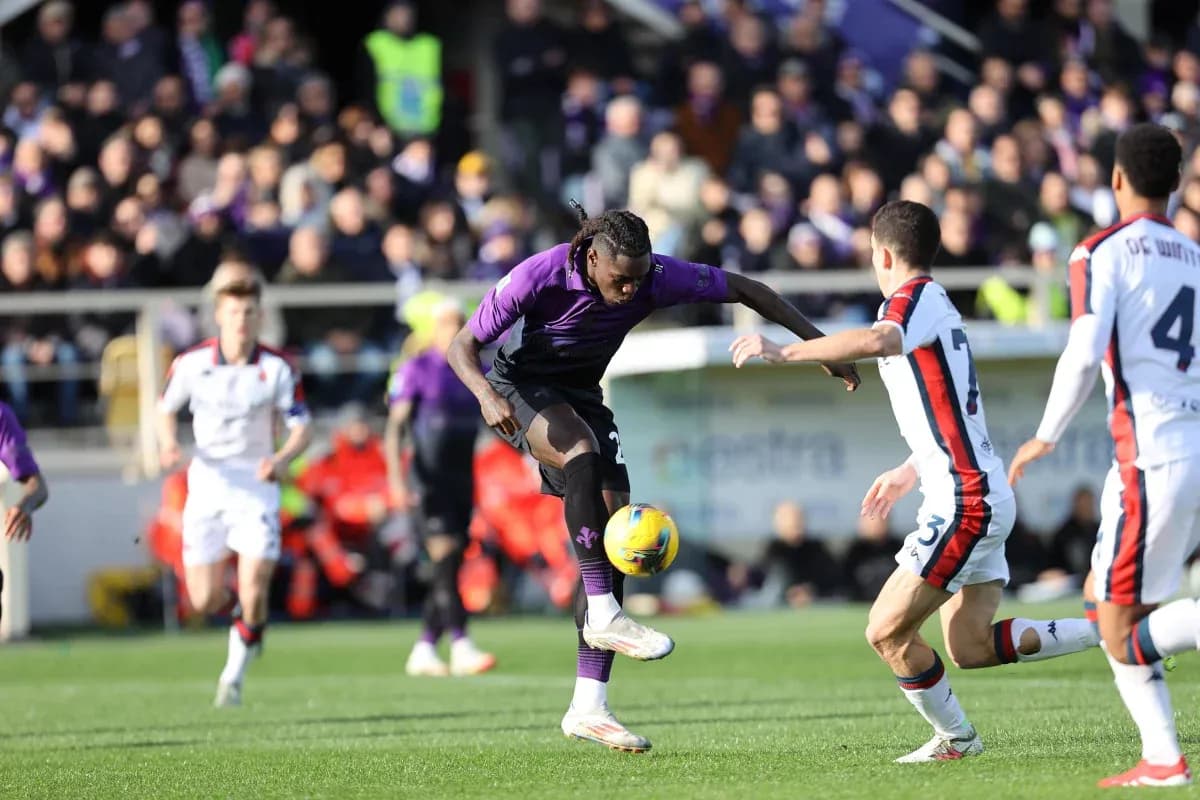
Stadio Artemio Franchi felt like a stage for tension rather than spectacle as Fiorentina and Genoa ground out a 0–0 that said as much about their seasons as any high‑scoring thriller. In Serie A’s Regular Season - 36, with Fiorentina sitting 15th on 38 points and Genoa 14th on 41 heading into this game, this was less about glamour and more about survival, structure and small margins.
Fiorentina’s seasonal DNA is written in stalemates and fine lines. Overall they had played 36, winning 8, drawing 14 and losing 14, scoring 38 and conceding 49 for a goal difference of -11. At home they had been steady rather than intimidating: 18 matches, 4 wins, 8 draws, 6 defeats, with 20 goals for and 20 against, mirroring their overall average of 1.1 goals scored and 1.1 conceded per home game. Genoa arrived with a similar profile: 36 played, 10 wins, 11 draws, 15 losses, 40 scored and 48 conceded for a goal difference of -8. On their travels, Genoa’s 18 away games had brought 4 wins, 7 draws and 7 defeats, with 19 goals scored and 24 conceded, an away average of 1.1 for and 1.3 against.
Against that backdrop, the tactical shapes told their own story. Paolo Vanoli went to his most trusted template, a 4-3-3 that has been Fiorentina’s most‑used formation this season, deployed 13 times overall. Daniele De Rossi, by contrast, leaned into Genoa’s three‑at‑the‑back identity with a 3-4-2-1, a variant of the 3-5-2 and 3-4-2-1 structures that have underpinned their campaign.
The absences framed both managers’ options. Fiorentina were without their leading scorer M. Kean, ruled out with a calf injury. His 8 league goals and 2 penalties scored had been the sharpest edge of a side that already failed to score in 11 league matches overall; his absence forced Vanoli into a more improvised front line of F. Parisi, R. Braschi and M. Solomon. T. Lamptey’s knee injury further reduced the full‑back rotation, making the inclusion of R. Gosens and Dodo almost non‑negotiable.
Genoa’s list of missing players was longer, if more distributed: T. Baldanzi (thigh), M. Cornet and S. Otoa (inactive), Junior Messias (muscle injury) and B. Norton‑Cuffy (thigh) all unavailable. None are their sole reference point in attack, but collectively they stripped De Rossi of variety between the lines and on the flanks, pushing more responsibility onto Vitinha, L. Colombo and the wing‑backs.
Within those constraints, Fiorentina’s back four had a clear spine. D. de Gea anchored the line, shielded by the physically imposing pairing of M. Pongracic and L. Ranieri. Both are serial card collectors: Pongracic has 11 yellows this Serie A season, while Ranieri has 8, underlining how aggressively they defend space. On the flanks, Gosens and Dodo offered width and crossing, but with Fiorentina having kept 6 home clean sheets overall, there was always a balance between adventure and caution.
In midfield, R. Mandragora, N. Fagioli and C. Ndour formed a three designed to control rhythm rather than overwhelm. Mandragora as the pivot, Fagioli as the passer between the lines, Ndour as the runner: it was a triangle built to protect the centre and feed the front three, even without a natural penalty‑box predator like Kean.
Genoa’s 3-4-2-1 was more about lanes and pressing triggers. J. Bijlow in goal sat behind a back three of A. Marcandalli, L. Ostigard and N. Zatterstrom, tasked with dealing with crosses and defending the width against Fiorentina’s wingers and overlapping full‑backs. The midfield four of M. E. Ellertsson, Amorim, M. Frendrup and A. Martin blended work‑rate and technique. A. Martin, one of the league’s standout creators with 5 assists and 60 key passes, started as the left‑sided midfielder, a key conduit for transitions.
Ahead of them, J. Ekhator and Vitinha supported central striker L. Colombo. Without Baldanzi as an extra creative outlet, Genoa’s attacking burden fell heavily on that trio and on A. Martin’s delivery from wide and deep.
Discipline and game management were always likely to be central themes. Heading into this game, Fiorentina’s yellow‑card profile showed a clear late‑game spike: 25.00% of their yellows came between 76-90', part of a broader tendency to pick up cards as matches stretched, with additional peaks at 61-75' (16.25%) and 31-45' (15.00%). Their reds were even more concentrated: both of their red cards this season arrived between 76-90', a warning about how emotional their endings can become.
Genoa, meanwhile, spread their cautions more across the middle phases, but with a notable 24.59% of yellows between 61-75'. Their red cards were scattered in dangerous moments: one between 0-15', one between 46-60' and one between 91-105', underlining a volatility at the start of each half and in stoppage time. With M. Pongracic and R. Malinovskyi both among the league’s most‑booked players, the undercurrent of risk was always there, even if this particular fixture passed without a sending‑off.
The “Hunter vs Shield” dynamic was blunted by absences. Fiorentina’s most reliable finisher, Kean, was in the stands, and the makeshift front line could not convert possession into clear chances. Yet structurally, the home side did what their numbers suggest they can: at home they had conceded only 20 in 18, an average of 1.1 per game, and this clean sheet added to a tally that already stood at 6 home shutouts overall. Genoa, for their part, came in with 9 clean sheets in total, 5 of them away, and again showed why their 3-4-2-1 can be so awkward to break down.
In the “Engine Room” battle, Fiorentina’s trio tried to smother Genoa’s creators. A. Martin, who has also won a penalty this season but missed from the spot once, was tracked carefully, while Mandragora and Fagioli sought to deny Frendrup and Amorim time to switch play. On the flip side, Genoa’s midfield was built to disrupt rhythm and spring forward quickly, especially down Martin’s flank.
Statistically, both sides came into the day with almost identical attacking outputs: Fiorentina averaging 1.1 goals per game overall, Genoa 1.1 as well. Defensively, Genoa were marginally tighter overall at 1.3 goals conceded per match to Fiorentina’s 1.4, but the home/away split flipped the nuance: at home Fiorentina conceded 1.1 on average, while Genoa on their travels allowed 1.3. That narrow edge, combined with Fiorentina’s 9 clean sheets and Genoa’s own 9, always hinted that a low‑scoring contest was more likely than a shoot‑out.
Following this result, the xG narrative would likely mirror the scoreboard: two teams with limited cutting edge on the day, but clear structural identities. Fiorentina’s 4-3-3 once again provided a stable platform, but without Kean’s penalty‑box instincts, their attacks lacked a ruthless finish. Genoa’s 3-4-2-1, anchored by a disciplined back three and an industrious midfield, delivered yet another away performance in line with their season-long profile: difficult to break down, occasionally short of inspiration.
In tactical terms, the draw felt inevitable: two sides whose seasons have been defined by balance, small margins and an almost mathematical symmetry between goals for and against. At the Franchi, that symmetry crystallised into 0–0, a result that will not live long in the memory, but perfectly captures where Fiorentina and Genoa stand in this Serie A campaign.