Valencia Edges Athletic Club in Tactical La Liga Clash
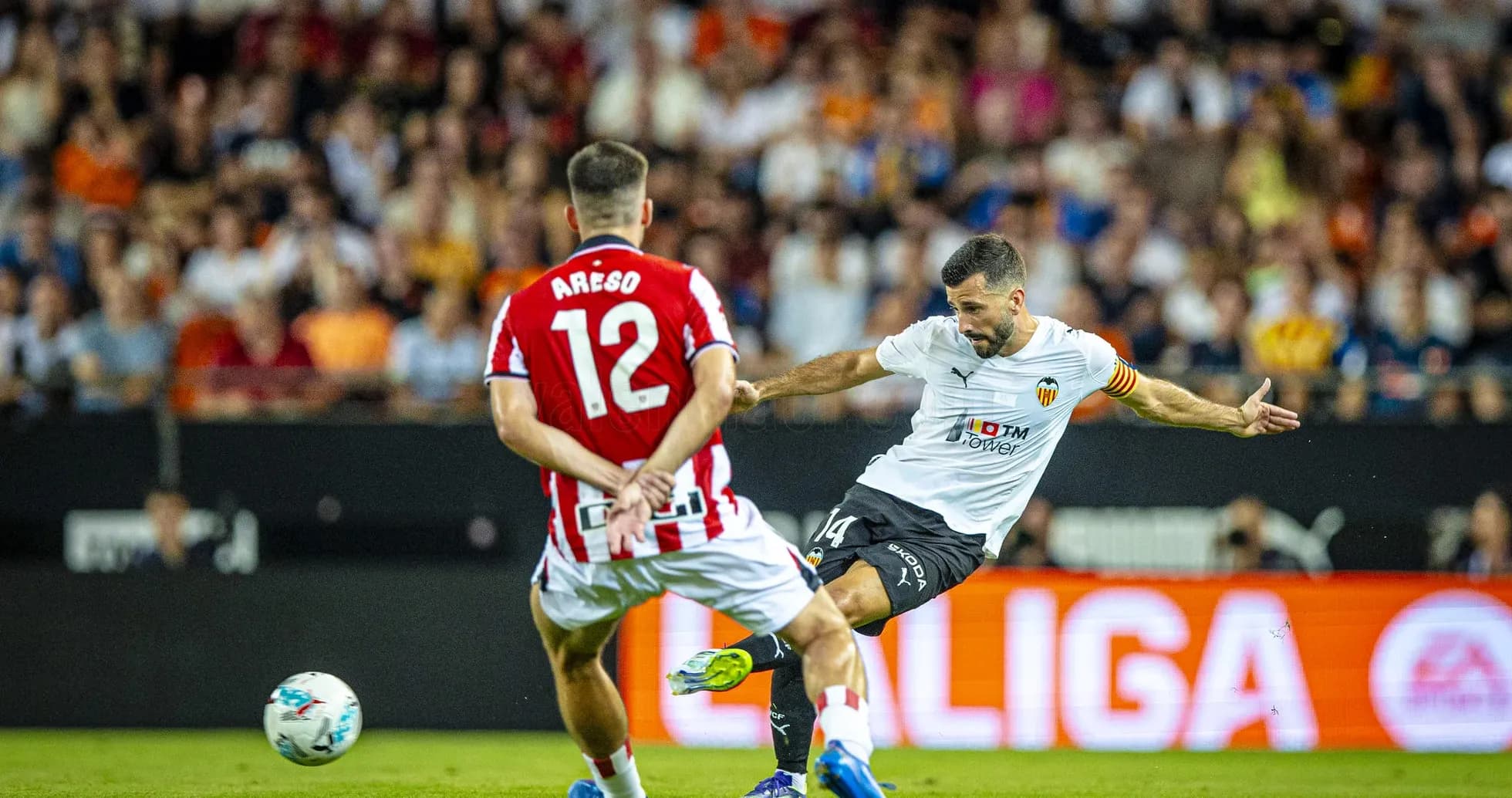
San Mamés under grey Bilbao skies staged a tight, tactical La Liga duel, and it was Valencia who slipped away with a 1–0 win, reshaping the narrative of mid‑table jostling in Round 35. Following this result, the table tightens around them: Athletic Club sit 9th on 44 points with a goal difference of -11 (40 scored, 51 conceded overall), while Valencia lurk just behind in 12th on 42 points with a goal difference of -12 (38 for, 50 against overall). It felt like a meeting of kindred spirits: two flawed but dangerous sides, both more comfortable in transition than in long spells of sterile dominance.
I. The Big Picture – Two 4‑2‑3‑1s, Two Different Stories
Both coaches mirrored each other on the whiteboard. Ernesto Valverde set Athletic up in a 4‑2‑3‑1, the club’s default structure this season (34 league games in that shape), with Unai Simón behind a back four of Aitor Gorosabel, Yeray Álvarez, Aymeric Laporte and Yuri Berchiche. Mikel Jauregizar and A. Rego formed the double pivot, with a fluid trio of R. Navarro, Oihan Sancet and Nico Williams supporting Gorka Guruzeta.
Carlos Corberán matched the 4‑2‑3‑1 but with a very different personality. Stole Dimitrievski anchored Valencia’s shape, protected by Renzo Saravia, Cenk Tárrega, Eray Cömert and José Gayà. In front of them, Pepelu and G. Rodríguez were the screening pair, with Diego López and Javi Guerra running the inside lanes, Luis Rioja wide left and Hugo Duro as the lone forward.
Heading into this game, the numbers painted Athletic as a volatile home side: at home they had scored 21 and conceded 20 in 18 league matches, averaging 1.2 goals for and 1.1 against. Valencia on their travels were more cautious, with 15 goals scored and 29 conceded in 18 away games, an away average of 0.8 scored and 1.6 conceded. The expectation was that Athletic’s energy at San Mamés would eventually crack an away defence that has been fragile across the campaign. Instead, Valencia leaned into their identity as a low‑margin, opportunistic side and pinched the kind of result that defines mid‑table seasons.
II. Tactical Voids – Absences and Discipline
Athletic entered without several midfield and squad options: U. Egiluz (injury), B. Prados Díaz (knee injury), Iñigo Ruiz de Galarreta (personal reasons) and M. Sannadi (coach’s decision). The most notable tactical void was Ruiz de Galarreta. Across the season he has been a central metronome and an aggressive presser, with 58 tackles, 4 successful blocks and 18 interceptions in La Liga. His 10 yellow cards underline how often he lives on the edge in midfield duels, but also how important he is in disrupting opposition build‑up. Without him, Athletic’s double pivot lacked his blend of bite and progression, forcing Jauregizar and Rego into roles that demanded both ball circulation and defensive control.
On the Valencia side, the absences were concentrated in defence and deeper midfield: L. Beltrán (knee), J. Copete (ankle), Mouctar Diakhaby (muscle), Dimitri Foulquier (knee) and T. Rendall (muscle) were all out. In theory, that should have weakened their defensive rotation, particularly in aerial and physical duels. In practice, Corberán’s compact 4‑2‑3‑1, with narrow wingers and full‑backs timing their advances, reduced the need for constant one‑v‑one defending in open spaces.
Discipline was always going to be a subplot. Heading into this game, Athletic’s yellow card distribution showed a clear spike between 61–75 minutes (22.37%) and 46–60 minutes (18.42%), a sign that their intensity often tips into rashness as the game stretches. Valencia’s yellows peak even later, with 23.19% of their cautions coming between 76–90 minutes and 20.29% between 46–60 minutes, suggesting late‑game strain when defending leads or clinging to points. In a match decided by a single goal, both sides had to ride that emotional line; Valencia did so more calmly, aided by the experience of Pepelu and Gayà in game management.
III. Key Matchups – Hunter vs Shield, Engine Room Battles
Hunter vs Shield
For Athletic, the attacking “hunter” role was shared between Nico Williams and Guruzeta. Athletic’s overall scoring profile this season is modest (40 goals in total, 1.1 per game overall), but at home they have been more incisive. The challenge was to unpick a Valencia side whose away defensive record (29 conceded on their travels, 1.6 per game) is poor on paper yet structurally more solid when they can sit deep.
Valencia’s “shield” in this one was the Dimitrievski‑led block, with Cömert and Tárrega defending the box and Pepelu patrolling the space in front. With Valencia having kept 5 clean sheets away from home this season, their model is clear: restrict central access, concede wide territory, and trust the first contact in the box. That approach suffocated Guruzeta’s ability to pin centre‑backs and forced Athletic’s wide men into lower‑value crossing zones.
On the flip side, Hugo Duro’s work as the spear of Valencia’s attack was about exploiting an Athletic defence that, overall, has conceded 51 goals (1.5 per game total), with a particularly leaky record on their travels but still prone to lapses at home. With Laporte and Yeray holding a high line and full‑backs pushing on, Duro’s movement between lines, combined with late runs from Guerra and López, created the few but decisive moments that tilted the match.
The Engine Room
The most fascinating duel unfolded in midfield. Athletic’s Jauregizar–Rego axis had to replicate some of Ruiz de Galarreta’s volume and aggression. Across the season, Athletic have relied heavily on that central energy, which is reflected in their disciplinary map: 17.11% of their yellows arrive between 91–105 minutes, evidence of a team that presses and fouls late as they chase games.
Valencia’s response was the Pepelu–G. Rodríguez pair, supported by Guerra. Pepelu’s role as organiser and shield was pivotal. His positioning allowed Valencia to keep their distances compact, funneling Athletic’s attacks into crowded central zones where second balls could be contested. That in turn freed Luis Rioja to stay higher on the left.
Rioja’s season numbers underline why he is so central to Valencia’s attacking transitions. With 6 assists and 35 key passes in La Liga, plus 60 dribble attempts with 34 successes, he is the primary conduit from middle third to final third. His duel with Gorosabel and Navarro on Athletic’s right was a constant tension point: every turnover offered the possibility of Rioja driving into space and feeding Duro or the arriving Guerra.
On the other side, Athletic’s creative hub, Sancet, tried to find pockets between Pepelu and the centre‑backs. But without Ruiz de Galarreta’s vertical passing and under intense central traffic, his influence was often forced wide or backwards, blunting the home side’s usual rhythm at San Mamés.
IV. Statistical Prognosis – xG Tilt and Defensive Solidity
Even without explicit xG values in the data, the season‑long patterns give a clear lens. Heading into this game, Athletic’s home averages of 1.2 goals for and 1.1 against suggested a roughly balanced expected‑goals profile at San Mamés: they typically create just enough to win if they defend cleanly. Valencia’s away averages of 0.8 scored and 1.6 conceded pointed towards a side usually out‑chanced on their travels, relying on efficiency and defensive resolve rather than volume.
The 1–0 scoreline fits Valencia’s broader identity. They have 9 clean sheets in total this season, 5 of them away, and have failed to score away from home only 6 times. When they do score first, their compactness and late‑game discipline – despite that high 23.19% yellow share in the 76–90 minute window – make them difficult to break down.
For Athletic, the defeat is an illustration of their season’s fragility. Overall they have failed to score in 12 league matches and kept only 6 clean sheets. When the first wave of energy does not yield a goal, their structure can become stretched, and without Ruiz de Galarreta’s control they lacked a stabilising presence to recycle pressure and protect against counters.
Following this result, the tactical verdict is clear: Valencia’s lower‑margin, defence‑first model, anchored by Dimitrievski, Pepelu and the creative release valve of Luis Rioja, is better suited to tight, nervy contests than Athletic’s more emotional, momentum‑based game. In a match that could easily have been framed as a coin‑flip on xG, it was the side with the sturdier defensive habits and the sharper transition edge that left San Mamés with three points and a story of quiet, calculated resistance.