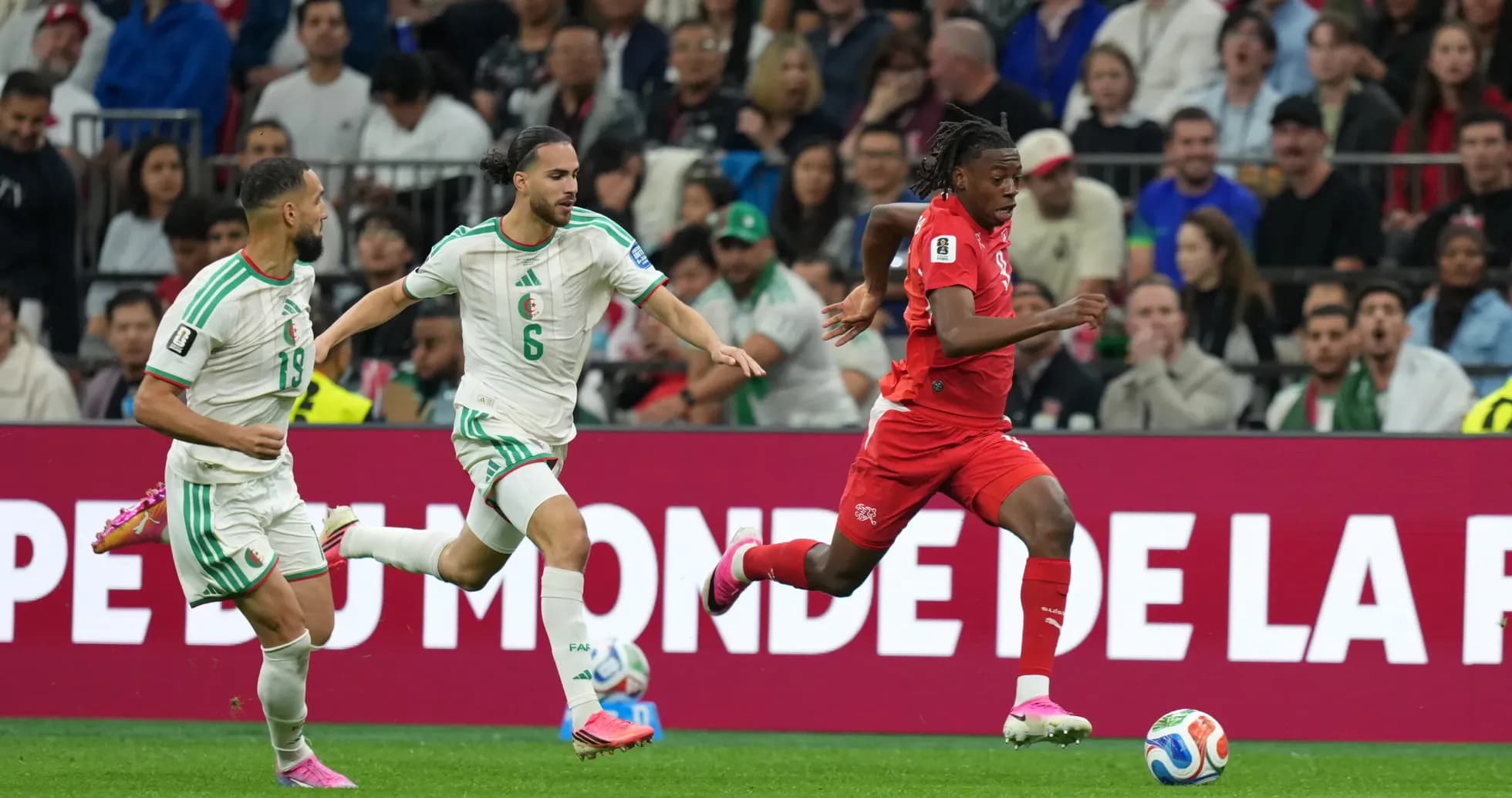
Switzerland's Tactical Masterclass in 2-0 Win Over Algeria
Switzerland’s 2-0 win over Algeria at BC Place was a controlled, structurally coherent performance built on a compact 4-2-3-1, efficient chance creation and disciplined game management once ahead. Despite having only 45% of the ball and fewer passes than Algeria (436 vs 561), Murat Yakin’s side consistently generated higher-quality opportunities, reflected in a clear xG edge of 2.56 to 0.73.
Out of possession, Switzerland’s 4-2-3-1 narrowed into a tight mid-block, with Granit Xhaka and Remo Freuler screening the central lanes and forcing Algeria’s 4-3-3 to play in front of them. The back four of Ricardo Rodríguez, Manuel Akanji, Nico Elvedi and Denis Zakaria stayed compact horizontally, which limited the impact of wide forwards Riyad Mahrez and Houssem Aouar. Algeria’s 55% possession was often sterile, with many of their 561 passes circulating across the back line and midfield rather than breaking lines.
First Half
The opening goal on 10 minutes from Breel Embolo, assisted by Johan Manzambi, underlined Switzerland’s vertical threat. From the 4-2-3-1 base, the three attacking midfielders – Dan Ndoye, Manzambi and Rubén Vargas – occupied the half-spaces aggressively. When Switzerland recovered the ball, Xhaka and Freuler looked early for direct progression into those pockets. Manzambi’s involvement in the first goal typified his role as a central connector, receiving between Algeria’s midfield and defence before releasing Embolo’s forward run. That early strike allowed Switzerland to lean further into a transition-focused plan.
Algeria’s 4-3-3, on paper, had technical quality in the central trio of Ramiz Zerrouki, Nabil Bentaleb and Farès Chaïbi, but they struggled to find positional superiority between Swiss lines. Switzerland’s double pivot stayed close, and the centre-backs were proactive in stepping into Mahrez’s and Aouar’s feet when they drifted inside. The result was that Algeria, despite 8 total shots, produced only 2 on target and a modest 0.73 xG. Their 3 blocked shots also indicate that Swiss defenders were quick to close down shooting lanes around the box.
Second Half
In contrast, Switzerland’s attacking structure yielded 11 shots, 5 on goal, and a striking 9 attempts from inside the box. That shot map profile – heavily weighted to the penalty area – explains the high xG figure. Embolo’s movement off the last line, combined with wide underlaps and overlaps from Rodríguez and Zakaria, repeatedly created overloads in the channels. Ndoye’s goal just after the restart at 46 minutes, coming with Switzerland’s first meaningful action of the second half, was a decisive tactical blow: it rewarded their insistence on attacking the box directly and effectively killed Algeria’s hopes of gradually turning possession into pressure.
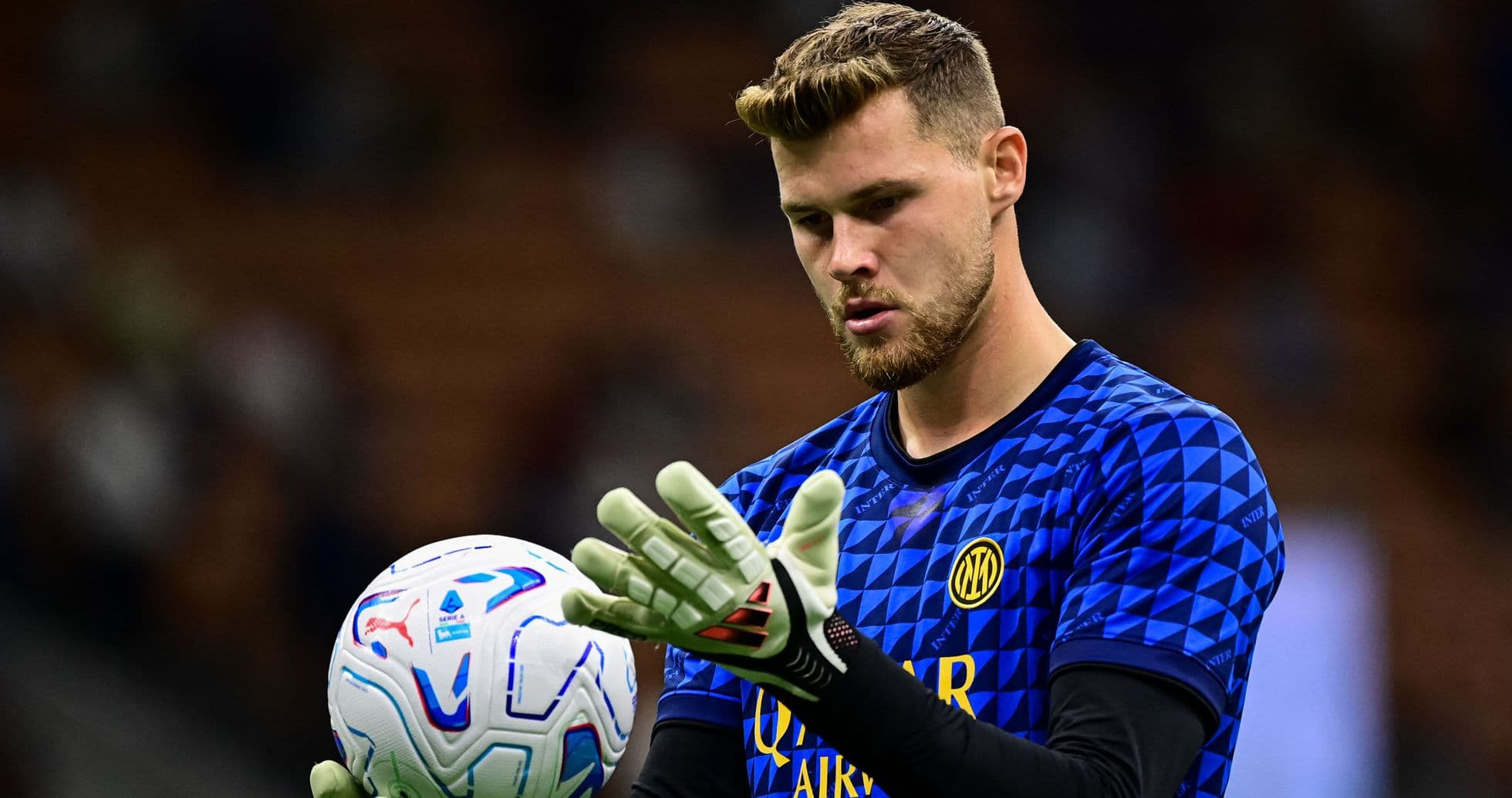
From a defensive standpoint, Gregor Kobel (Switzerland) had a relatively calm evening. He was called upon to make 2 saves, and Switzerland’s defensive structure limited Algeria to sporadic, low-probability efforts. The negative “goals prevented” value of -0.29 for Switzerland indicates that, on the shots they did face, Kobel marginally underperformed the model’s expectation, but the volume and quality of those attempts were too low to punish them. At the other end, Luca Zidane (Algeria) also made 2 saves, but with Switzerland generating 2.56 xG and scoring twice, Algeria’s own “goals prevented” figure of -0.29 suggests their goalkeeper did not exceed expectations either; Switzerland simply created too many high-quality looks inside the area.
The midfield battle was where Switzerland subtly tilted the game. Although Algeria completed more passes with higher accuracy – 561 passes at 85% compared to Switzerland’s 436 at 81% – Switzerland’s passing was more vertical and purpose-driven. Xhaka and Freuler combined for a stable base, allowing the front four to stay high and ready to spring. The Swiss used only 10 fouls to manage transitions, compared to Algeria’s 12, and avoided any bookings, while Algeria collected two yellow cards (Farès Chaïbi for “Tripping” and Hicham Boudaoui for “Roughing”). That disciplinary contrast mirrored the broader pattern: Switzerland were controlled and selective in their aggression; Algeria were often a step late and forced into reactive challenges.
The substitutions around the hour and into the final quarter-hour reflected both tactical intent and game state. For Algeria, Vladimir Petkovic’s triple wave at 58 and 71 minutes – introducing Jaouen Hadjam, Amine Gouiri, Anis Hadj Moussa and Hicham Boudaoui for Houssem Aouar, Ramiz Zerrouki, Riyad Mahrez and Nabil Bentaleb – was an attempt to inject fresh legs and more direct threat. Structurally, though, the 4-3-3 shape remained, and Switzerland’s block continued to hold. Switzerland’s own changes at 71 minutes – Fabian Rieder for Vargas and Noah Okafor for Manzambi – freshened the attacking midfield line without altering the 4-2-3-1 blueprint. Later introductions of Zeki Amdouni for Embolo and Silvan Widmer and Michel Aebischer for Zakaria and Ndoye were clearly game-management moves, aimed at preserving the 2-0 lead while maintaining defensive solidity on the flanks.
Statistically, the match underlines a classic knockout pattern in the World Cup Round of 32: the side with less of the ball but clearer structure and sharper execution in both boxes advances. Switzerland converted 2 of their 5 shots on target, closely matching their 2.56 xG, and conceded little of note. Algeria’s superior possession and pass accuracy did not translate into territory or threat, and their 2 shots on target were comfortably handled by Kobel. Switzerland’s 4 corner kicks to Algeria’s 2 further highlight their territorial advantage once they chose to attack.
Overall, Switzerland’s tactical plan – a compact 4-2-3-1, strong central shielding, and rapid vertical attacks into a mobile front four – was perfectly calibrated to this knockout tie. Algeria’s 4-3-3 offered control but lacked penetration, and once Ndoye doubled the lead early in the second half, Switzerland were able to drop the tempo, rotate intelligently, and close out a professional 2-0 victory at BC Place.