San Diego Wave W Edges Washington Spirit W in Tactical Showdown
Under the floodlights of Snapdragon Stadium, San Diego Wave W and Washington Spirit W delivered a 2-1 contest that felt far more like a playoff dress rehearsal than a routine NWSL Women group-stage date. Heading into this game, it was first versus third in the table: San Diego on 21 points with a goal difference of 5, Washington on 18 with a goal difference of 8. Two teams with different identities, but the same ambition – to prove their blueprint can stand up when the margins tighten.
Both coaches doubled down on a mirrored 4-2-3-1, but the symmetry on the whiteboard disguised very different interpretations. Jonas Eidevall’s Wave came in as a high-variance side: 7 wins and 3 defeats in total, no draws, built on a front half that scores 1.5 goals per game overall and lives with the defensive risk of conceding 1.0. Adrian Gonzalez’s Spirit, by contrast, were the league’s control artists – 5 wins, 3 draws, 2 defeats in total, with a lean defensive record of only 0.8 goals conceded per game overall.
From the opening whistle, the contest was about who could impose their version of control. For San Diego, that meant using the double pivot of K. Dali and K. Ascanio to connect quickly into a fluid band of three: Gabi Portilho and Dudinha flanking G. Corley behind lone forward T. Byars. The Wave’s season numbers had already underlined their intent: at home they score 1.4 goals per game and concede 0.8, a profile that rewards front-foot aggression.
Washington’s response was to build a more layered resistance. The Spirit’s defensive spine has been one of the most efficient in the league: only 8 goals conceded overall across 10 matches, with a particularly stingy home record of 0.5 goals against per game and a still-respectable 1.0 on their travels. In front of Sandy MacIver, the back four of G. Carle, E. Morgan, T. Rudd and L. Di Guglielmo were screened by the industrious pairing of R. Bernal and H. Hershfelt, tasked with disrupting the Wave’s central combinations before they reached dangerous zones.
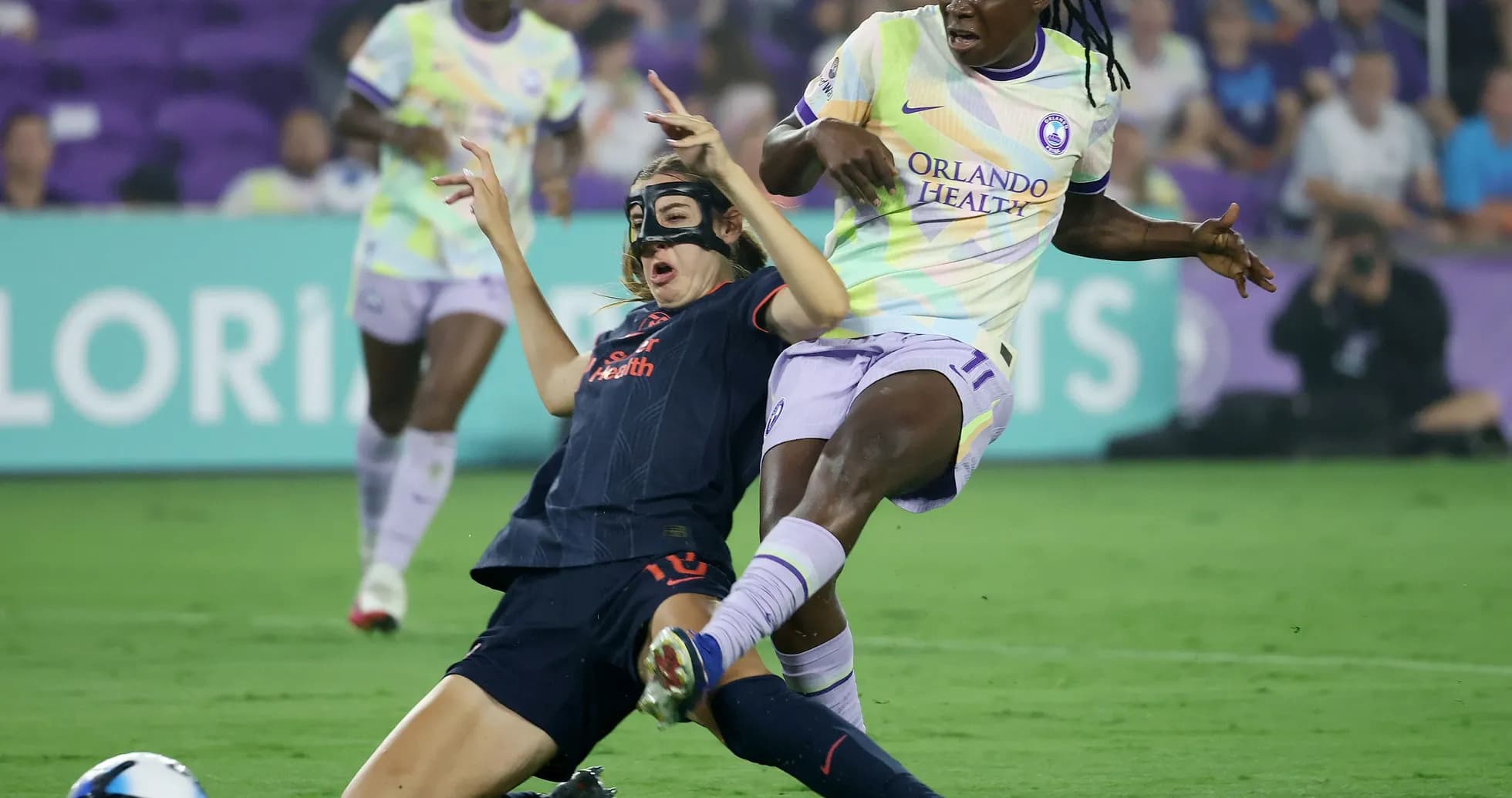
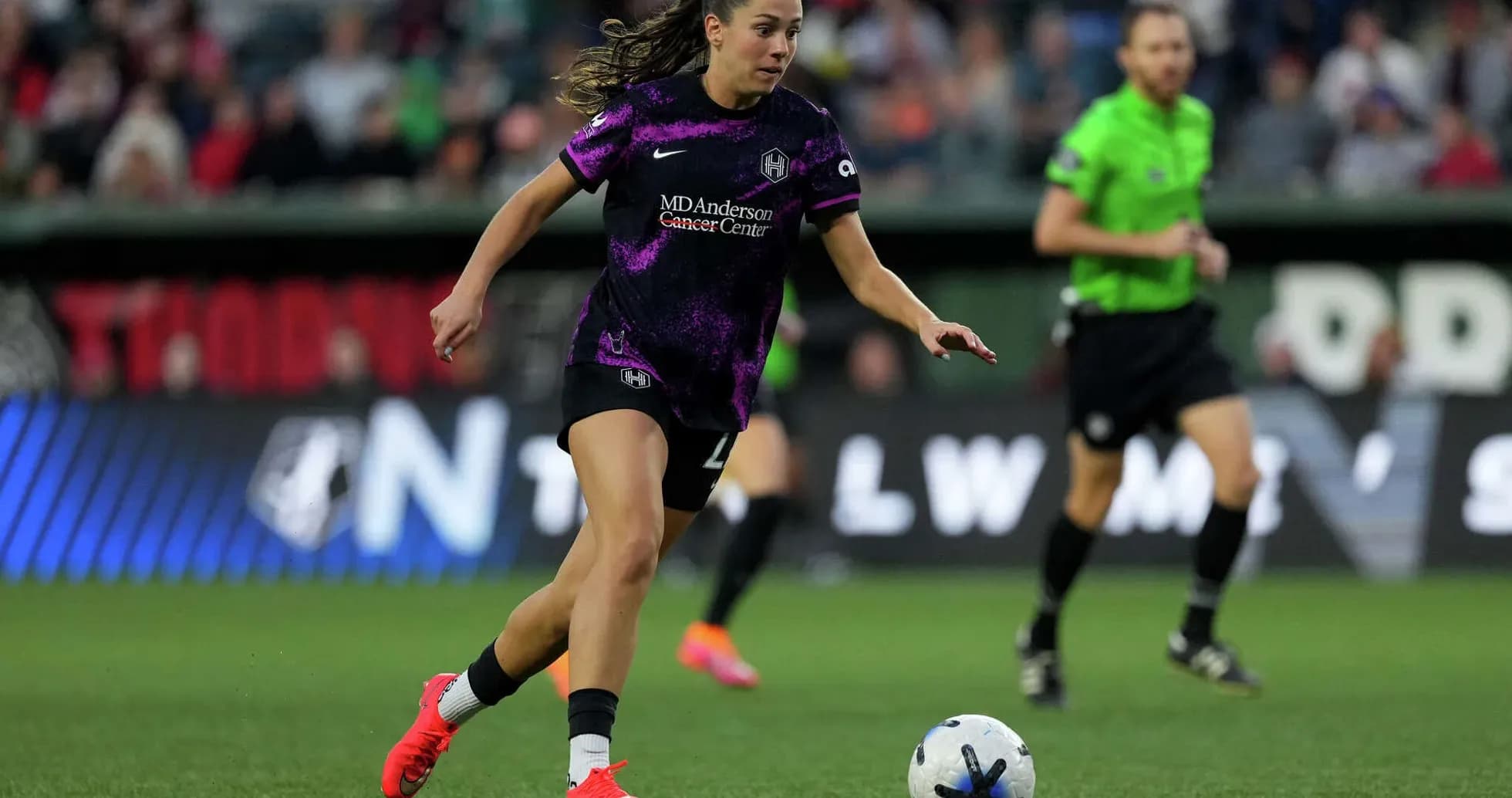
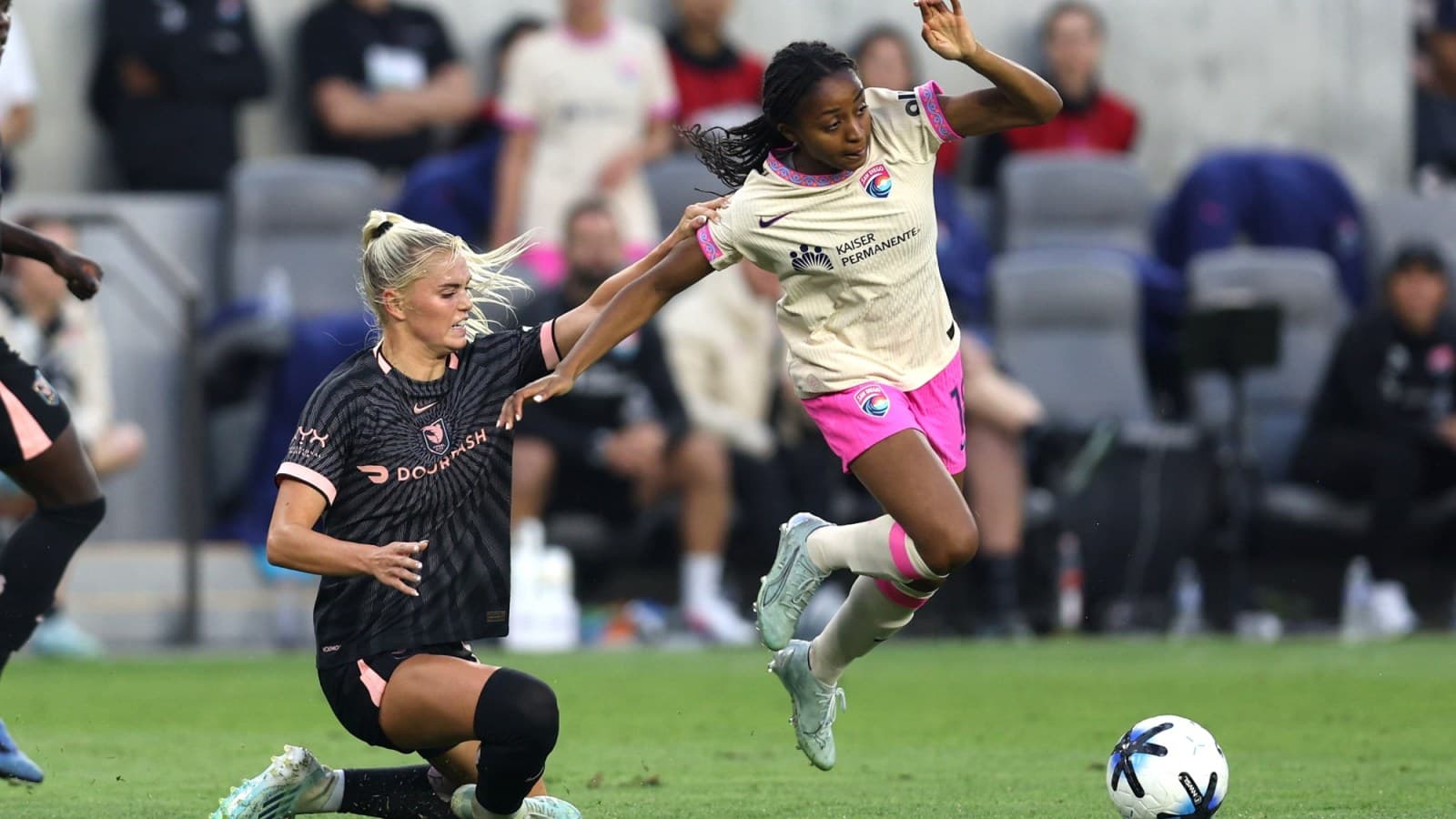
Yet the game never quite settled into the chess match Washington might have preferred. The first half’s 1-1 scoreline reflected San Diego’s willingness to take risks between the lines and Washington’s capacity to spring forward through their stars. T. Rodman, operating off the right as the nominal “10” in the line of three, carried the threat that has made her one of the league’s most watched players: 3 goals and 3 assists in total this season, with 25 shots and 13 on target. Every time she received facing forward, the Wave’s back line of P. Morroni, K. McNabb, K. Wesley and A. D. Van Zanten had to compress quickly or risk being run at in isolation.
The tactical voids in this one were less about absences and more about discipline and timing. San Diego entered the night as a side that tends to pick up their yellows late: 33.33% of their cautions arriving between 46-60 minutes and another 33.33% between 61-75, with a further 16.67% from 76-90. Washington’s distribution is similar in its danger zones – 25.00% of their yellows between 46-60 and another 25.00% between 76-90. This shared tendency towards second-half bookings was always likely to shape the closing stages, forcing both midfields to manage aggression carefully as legs tired and spaces opened.
Within that landscape, the “Hunter vs Shield” duel was clear. For San Diego, the primary hunters were coming from midfield and wide zones rather than a traditional No. 9. L. E. Godfrey, though on the bench here, came into the fixture as the club’s leading scorer with 4 goals and 1 assist, while Dudinha added 3 goals and 4 assists in total, her 39 dribble attempts and 23 successes marking her as the side’s primary line-breaker. Against a Washington defence that had conceded only 6 goals away from home in 6 games, the question was whether individual creativity could crack collective solidity.
On the other side, Washington’s attacking trident behind S. Cantore posed a different kind of threat. L. Santos, with 3 goals and 2 assists in total and 403 completed passes at 78% accuracy, orchestrated from the left half-space, while Cantore’s 3 goals and 1 assist added penalty-box presence. But the real fulcrum was Rodman: 87 total duels, 39 won, 28 dribbles attempted. She was the Spirit’s chaos agent, the one player capable of bending San Diego’s shape out of alignment.
The “Engine Room” battle turned on how those profiles collided with the enforcers. For San Diego, Ascanio’s two-way game – 292 passes at 86% accuracy, 18 tackles, 2 blocked shots and 7 interceptions – provided a stabilising axis in front of the back four. Her job was to step into Santos and Rodman early, cutting supply before it reached Cantore. On Washington’s side, Bernal’s presence was just as critical. With 2 goals, 5 key passes and 17 tackles, she offered both first-pass progression and bite, but her disciplinary record – 2 yellow cards already this season – meant she had to walk a fine line in those high-tempo middle-third duels.
Defensively, San Diego leaned heavily on Morroni’s edge. The French full-back is one of the league’s more combative defenders: 29 tackles, 2 blocked shots, 7 interceptions and 3 yellow cards in total, a profile that explains both her value and her volatility. Her duels with Rodman on that flank were a running subplot, each challenge a negotiation between necessary aggression and the risk of tilting the card balance.
From a statistical prognosis standpoint, the result felt like a meeting point of the two teams’ seasonal curves. San Diego’s attack, averaging 1.5 goals per game overall and 1.6 on their travels, found just enough incision to edge a Spirit side whose own forward line has been humming at 1.6 goals per game overall. Washington’s defensive solidity – 5 clean sheets in total, 3 of them away – finally cracked under the weight of repeated wide overloads and second-phase pressure.
In an xG sense, you would expect this fixture to sit in the 1.3–1.6 band for both sides given their scoring and concession averages. A 2-1 scoreline fits that profile: marginally above Washington’s usual concession pattern, slightly above San Diego’s typical output against a top defence, but entirely consistent with a game where both coaches trusted their attacking identities.
Following this result, the narrative tilts subtly towards San Diego. They remain a high-ceiling, high-risk side whose best football can unpick even the league’s most organised blocks. Washington, meanwhile, leave with their defensive reputation slightly bruised but their structural logic intact. On another night, with sharper final-third execution from Rodman and Santos, the numbers suggest this could just as easily have been their statement win.