Huntsville City vs Atlanta United II: A Wild MLS Next Pro Showdown
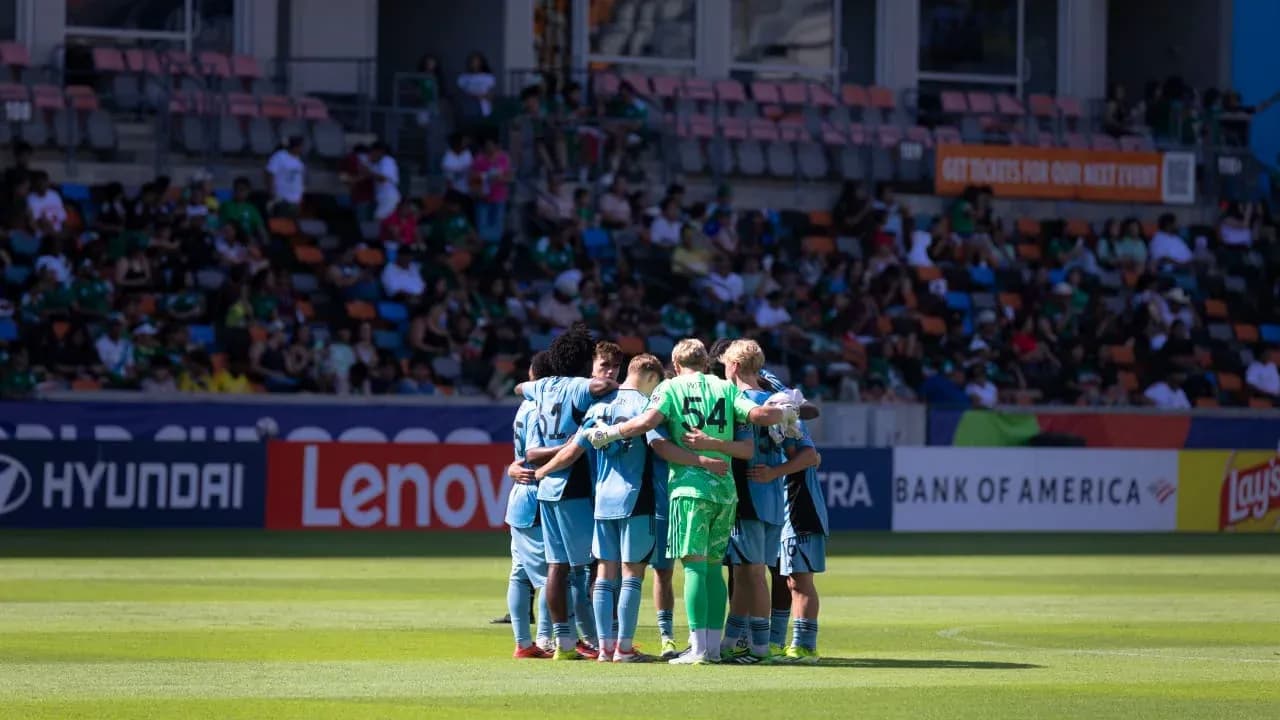
Under the lights of Joe W. Davis Stadium, a wild Group Stage night in MLS Next Pro ended with a scoreline that felt almost surreal: Huntsville City 2, Atlanta United II 6. Following this result, two teams already near the sharp end of the Eastern Conference picture revealed very different faces of their seasonal identity—Huntsville’s volatility, and Atlanta’s ruthless away punch.
I. The Big Picture – Two Contenders, One Collapse
Both sides came into this fixture with strong league platforms. Huntsville City sat 3rd in the Central Division and 6th in the Eastern Conference, with 18 points from 10 matches and a narrow overall goal difference of +1 (23 goals for, 22 against in total). Their season had been defined by extremes: six wins, no draws, four defeats, and a form line of LWWWW heading into this game.
Atlanta United II arrived even better placed: 2nd in the Central Division and 4th in the Eastern Conference, on 19 points from 10 matches, with an overall goal difference of +7 (20 goals for, 13 against in total). Their trajectory—WLWWW—spoke of a side learning quickly and tightening up both ends of the pitch.
The raw season data hinted at a goal-heavy contest. Huntsville, in total this campaign, had averaged 2.4 goals for and 2.3 goals against per match, while Atlanta, in total, had averaged 2.0 scored and 1.4 conceded. At home, Huntsville’s attacking output was 2.4 goals per game, but they also allowed 1.8. On their travels, Atlanta’s balance was impressive: 2.0 scored and only 1.4 conceded away. The ingredients were there for a high-scoring match; few would have predicted the scale of Atlanta’s six-goal avalanche, especially after Huntsville’s 2–0 half-time lead.
II. Tactical Voids – Discipline, Fatigue, and Mental Gaps
There is no explicit injury list for this fixture, so the tactical voids here are less about absentees and more about structural and psychological absences as the match wore on.
Huntsville’s season-long card profile tells a story of a side that frays late. Their yellow cards peak in the 76–90 minute window, where 30.77% of their cautions arrive, and they also show a notable spike from 46–60 minutes (19.23%). Red cards are split between 31–45 minutes and 76–90 minutes, each accounting for 50.00% of their dismissals. That pattern suggests a team whose intensity can spill into recklessness as pressure builds, especially in the closing stages.
Atlanta’s disciplinary curve is more evenly spread but still late-heavy. Yellow cards between 61–75 and 76–90 minutes each account for 21.74% of their cautions. More concerning, all of their red cards in total this campaign have come in the 46–90 minute band, split equally between 46–60, 61–75, and 76–90 (33.33% each). Both teams, then, are prone to losing control in the second half—Huntsville through emotional overreach, Atlanta through aggressive interventions.
In this match, the tactical void for Huntsville was not numerical inferiority but emotional management. To go from 2–0 up at the break to a 2–6 defeat speaks of a side that lost its structure, compactness, and collective belief once Atlanta’s first goal landed. The defensive frailty reflected their season-long pattern: in total, Huntsville concede 2.3 goals per match, with a particularly fragile away record but still 1.8 goals against at home. Atlanta’s ability to hit their biggest away win of 2–6 this season underlines how thoroughly they exploited that mental and tactical collapse.
III. Key Matchups – Hunter vs Shield, Engine Room vs Chaos
Hunter vs Shield
Without individual scorer data, the “hunter” is Atlanta’s collective attacking unit, which has produced 14 away goals in 7 matches. On their travels, that 2.0 goals-per-game output has already included a previous 2–6 away victory, and they repeated that exact margin here.
The “shield” was supposed to be Huntsville’s improving home back line, which had conceded 9 goals at home across 5 matches before this fixture, an average of 1.8 per game. But once Atlanta broke the early structure, Huntsville’s defensive identity—already fragile in total—crumbled. Atlanta’s season-long defensive record in total, 1.4 goals conceded per match, held up even after shipping two in the first half; they shut the door entirely after the interval, while Huntsville’s back line offered almost no resistance to wave after wave of transition attacks.
Engine Room – Control vs Transition
In midfield, Huntsville’s strength this season has been front-foot football and volume of chances, underpinned by the likes of M. Veliz and M. Yoshizawa from the starting lineup, with N. Pariano and M. Ekk providing connective tissue between lines. Their high attacking averages suggest a side that wants the ball, wants territory, and trusts its ability to outscore problems.
Atlanta, by contrast, have built an away identity around efficiency and verticality. With players like A. Gill, A. Torres, and M. Tablante starting, and options such as P. Weah and M. Pineda on the bench, this is a unit capable of turning midfield regains into direct, punishing attacks. The 6-goal haul here fits that pattern: not a slow siege, but a series of rapid, incisive punches once Huntsville’s shape stretched and their emotional control slipped.
IV. Statistical Prognosis – What This Result Tells Us
Following this result, the numbers sharpen the narrative. Huntsville remain a high-variance side: in total this campaign they now sit on 24 goals scored and 23 conceded, with their biggest home loss being this 2–6 defeat. They still own a strong attacking average of 2.4 goals for per game, but the defensive side—2.3 conceded in total—will cap their ceiling unless addressed.
Atlanta, meanwhile, reinforce their status as one of the league’s most dangerous away outfits. Four wins in seven on their travels, 14 away goals, and only 9 conceded underline a side whose xG profile would almost certainly show a ruthless conversion rate and a compact defensive block that bends but rarely breaks.
In a playoff context, these trajectories matter. Huntsville’s all-or-nothing style, with no draws and a card distribution skewed toward late chaos, makes them a thrilling but risky knockout proposition. Atlanta’s blend of stable defending (1.4 goals against in total), clean sheets away, and the capacity to explode for six goals in hostile territory paints the picture of a team built for 1/8-final football.
The night at Joe W. Davis Stadium did more than produce a wild scoreline; it crystallized identities. Huntsville City are the volatile aggressor who can overwhelm or implode. Atlanta United II are the clinical traveler, comfortable suffering early, then dismantling opponents once the game tilts their way.