North Texas Dominates Sporting KC II with 5–1 Victory
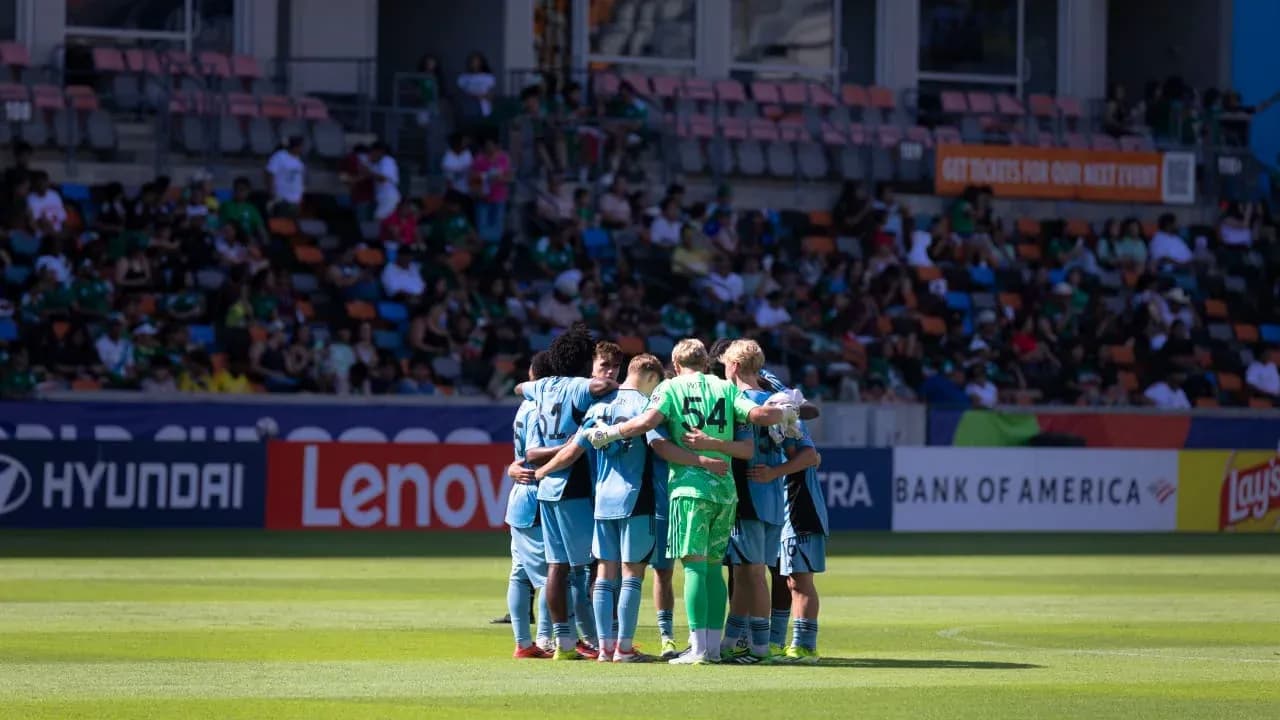
Under the lights at Choctaw Stadium, North Texas did far more than collect three points; they delivered a statement 5–1 demolition of Sporting KC II that crystallised the contrasting trajectories of these two MLS Next Pro projects.
Heading into this game, North Texas were an attacking, high-variance side: 11 matches played overall, 6 wins and 5 defeats, with no draws. They had scored 22 goals in total and conceded 16, a positive goal difference of 6 built on front‑foot football. At home they were especially ruthless, averaging 2.8 goals for and 1.5 against, and their biggest home win of the season before this fixture was already a 5–1 scoreline – a blueprint they would replicate here with eerie precision.
Sporting KC II arrived with a very different seasonal DNA. Across 13 matches overall, they had 3 wins and 10 losses, with 16 goals scored and 36 conceded – a goal difference of -20 that underlined their fragility. On their travels they actually attacked with some verve, averaging 1.8 goals for away, but that ambition came at a heavy price: 3.0 goals against away on average and no clean sheets anywhere this campaign.
The first half followed the contours of the table. North Texas, coached by John Gall, raced into a 2–1 lead by half-time, leaning into their home comfort and vertical instincts. After the break, they simply overwhelmed Istvan Urbanyi’s Sporting KC II, stretching the scoreline to 5–1 and turning a competitive opening into a rout that mirrored the underlying numbers of both seasons.
Tactical Voids and Discipline
With no official injury or suspension list provided, both coaches appeared to lean on their core groups. Gall’s decision to start B. Thompson in goal, shielded by a line that included E. Newman, Alvaro Augusto, L. Goncalves and L. Vejrostek, spoke to continuity rather than experimentation. In front, the blend of E. Nys, I. Charles, M. Luccin and the attacking trio of N. James, R. Louis and N. Simmonds gave North Texas multiple ball carriers and runners between lines.
Urbanyi’s Sporting KC II setup looked more cautious on paper, with J. Kortkamp between the posts and a defensive cohort of J. Francka, P. Lurot, L. Antongirolami and Z. Wantland trying to stabilise a back line that had already absorbed 36 goals overall this season. The midfield band of J. Ortiz, B. Mabie and G. Quintero, with M. Rodriguez, K. Hines and S. Donovan further forward, was tasked with threading the needle between compactness and counter‑threat.
From a disciplinary standpoint, the season-long trends shaped the edge of the contest. North Texas have been a high‑intensity, card-prone side: overall, their yellow cards cluster heavily between 16–30 minutes (26.92%) and remain high across 31–45 minutes (19.23%) and 46–60 minutes (19.23%). They also carry a red‑card risk in the middle and late phases, with 33.33% of their reds in each of the 46–60, 61–75 and 91–105 ranges. That profile hints at a team that presses hard, tackles aggressively and occasionally oversteps as fatigue or emotion rises.
Sporting KC II, by contrast, tend to collect their cautions in more measured waves: 23.53% of their yellows arrive between 16–30 minutes and another 23.53% between 31–45, before tapering off slightly but remaining present late (17.65% from 76–90 and 11.76% from 91–105). They have yet to see a red card in any interval, suggesting a group that bends but rarely snaps – though the defensive damage they suffer often makes that discipline feel hollow.
In this match, the script of a North Texas side willing to live on the disciplinary edge while pinning Sporting KC II back played out cleanly: intensity over caution, risk over restraint, and a reward measured in goals.
Key Matchups
Without explicit top‑scorer data, the “hunter” in this narrative becomes the collective North Texas attack rather than a single marksman. At home this season, they had already scored 11 goals across 4 matches, and their biggest home win before this fixture was 5–1 – exactly the margin they reproduced against Sporting KC II. That attacking machine, driven by the movement of N. James, the direct running of R. Louis and the support play of N. Simmonds, confronted one of the league’s most porous defensive “shields.”
Sporting KC II’s overall defensive record was alarming even before kick‑off: 36 goals conceded in 13 games overall, including 15 on their travels. The away average of 3.0 goals against away aligned almost perfectly with the four‑goal margin they ultimately surrendered here. For Kortkamp and his back line, the problem was structural rather than individual: wide spaces opening too early, midfield lines not tracking runners, and a chronic inability to defend the box once the first line was broken.
The central duel revolved around how M. Luccin and I. Charles could dictate tempo against the trio of Ortiz, Mabie and Quintero. North Texas’ season form line – LWLLWWWLLWW – tells the story of a side that lives by the sword: when their midfield connects passes and wins second balls, they become a wave of runners and combinations that few MLS Next Pro defences can live with. When that link breaks, their own back line is exposed.
Here, the engine room belonged to North Texas. Luccin’s positioning in front of the defence gave them a platform to recycle possession and re‑launch attacks, while Charles’ presence allowed them to compress the pitch, trapping Sporting KC II in their own half. The away side’s midfield, already part of a team that has failed to score in 5 matches overall and has never kept a clean sheet, simply could not turn defensive actions into sustained possession.
Urbanyi’s bench – with options like J. Molinaro, T. Burns, T. Ikoba and D. Russo – offered potential energy but little structural change. Gall, meanwhile, could introduce the likes of F. Aroyameh, Z. Molomo, C. Salazar and S. Sedeh to maintain intensity and fresh legs, ensuring that the tempo advantage in midfield was preserved deep into the second half.
Statistical Prognosis and Verdict
If we frame this as a tactical preview of what this result projects forward, the numbers and patterns are stark. North Texas now look like one of the league’s most dangerous home sides: across their campaign they average 2.8 goals for at home and 1.5 against, and they have already twice produced 5–1 home wins. Their overall goal profile – 22 scored and 16 conceded, a GD of 6 – suggests an xG landscape where they consistently create more than they allow, particularly in Arlington.
Sporting KC II’s defensive metrics, by contrast, forecast continued turbulence unless there is a structural reset. Conceding 36 goals overall with a GD of -20, allowing 3.0 goals against away on average, and never registering a clean sheet are all indicators of an xG‑against profile that is simply too high to sustain results, even with a respectable 1.8 goals for away.
Following this result, the statistical prognosis is clear:
- North Texas will remain a high‑ceiling, high‑tempo side whose home fixtures tilt towards high‑scoring affairs. Their attacking patterns, depth options and willingness to play on the edge – even at the cost of cards – give them a genuine playoff punch.
- Sporting KC II, despite flashes of attacking promise on their travels, are trapped in a defensive spiral. Without tightening their lines, compressing space and better protecting Kortkamp, any xG gains they make in attack will be drowned by the volume of chances they concede.
In narrative terms, Choctaw Stadium witnessed a microcosm of both seasons: North Texas doubling down on their identity and being rewarded, Sporting KC II chasing stability and finding only more evidence that their defensive structure must be rebuilt from the ground up.