Orlando Pride Triumphs Over Houston Dash: A Tactical Breakdown
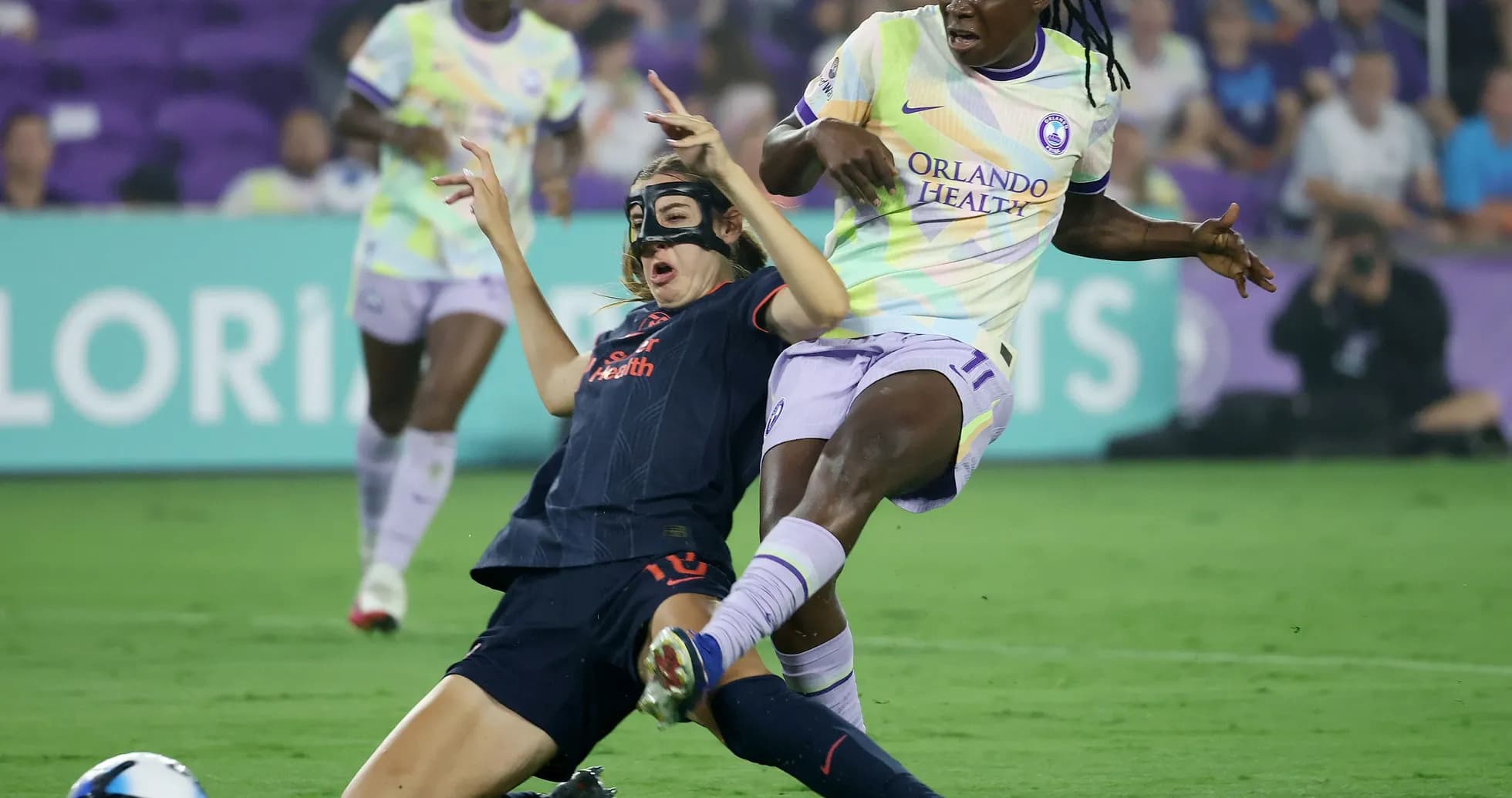
On a humid night at Inter&Co Stadium, Orlando Pride W and Houston Dash W closed another chapter of a season spent on the league’s lower rungs, but rich in tactical nuance. The Group Stage fixture finished 3–1 to Orlando, a result that subtly reshapes the narrative between two sides separated by a thin margin in the table.
Heading into this game, Orlando sat 11th in NWSL Women with 29 points from 23 matches, their overall goal difference at -5, built from 29 goals scored and 34 conceded. At home, they had been sharper: 6 wins from 12, with 19 goals for and 16 against, an average of 1.6 goals scored and 1.3 conceded on their own turf. Houston arrived in 12th with 26 points from 23 games, also on 29 goals scored but with 33 conceded overall, a goal difference of -4. Their away record was fragile: 2 wins, 2 draws, and 8 defeats on their travels, averaging only 0.8 goals scored and 1.7 conceded per away match.
I. The Big Picture – Identity in the Shapes
Orlando’s choice of a 4-4-2 under Yolanda Thomas felt like a deliberate break from their season-long reliance on 4-2-3-1. Across the campaign they had started 14 times in 4-2-3-1, but only 3 in 4-4-2; here, the tweak was clearly built around maximizing Barbra Banda.
The back four of H. Mace, H. Anderson, C. Dyke, and O. Hernandez sat in front of goalkeeper C. Morche, with a flat midfield band of S. Yates, Angelina, A. Lemos, and H. McCutcheon behind a front two of L. Ovalle and Banda. It was a shape designed to compress the middle third and then explode into the channels.
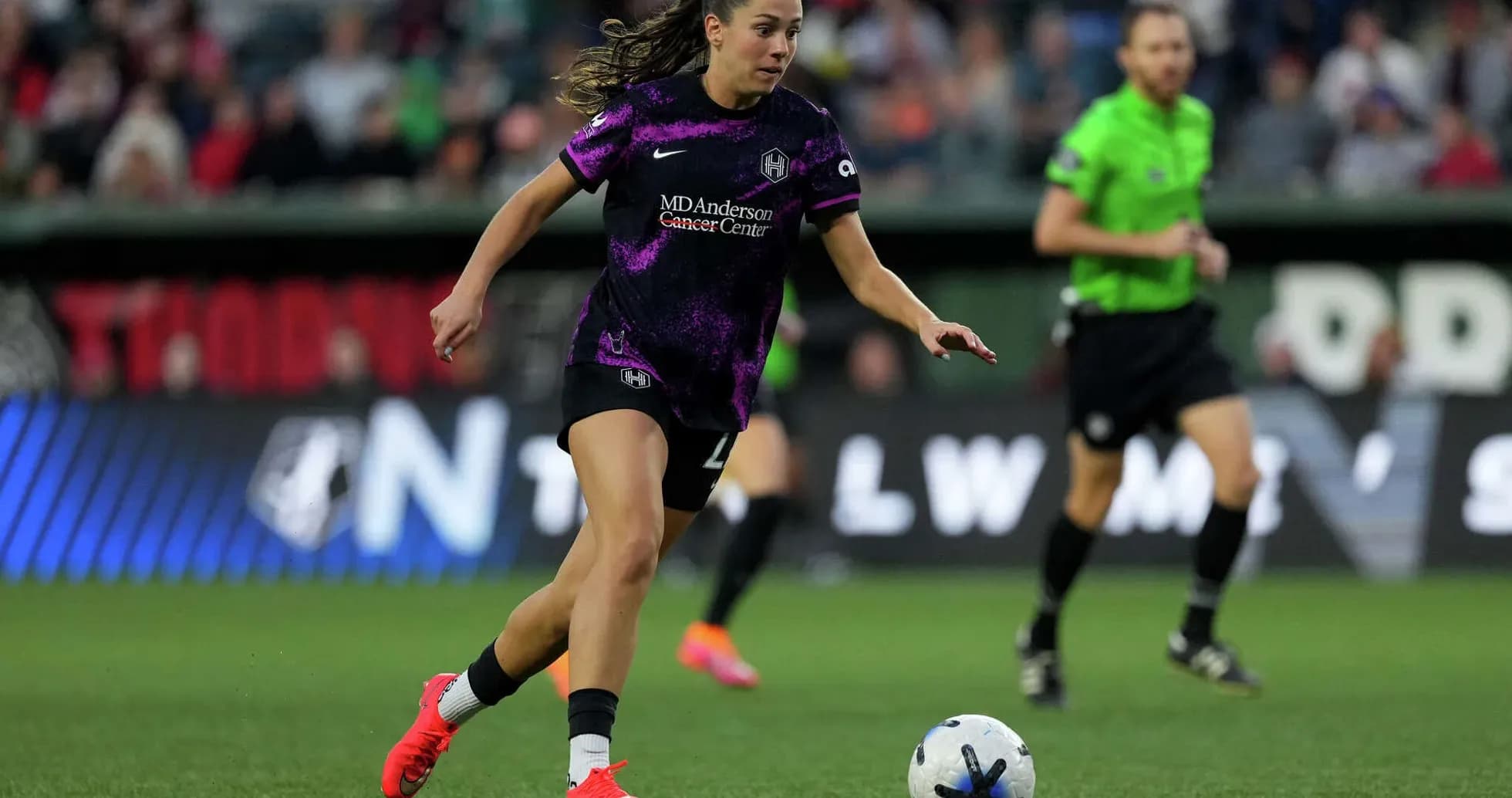
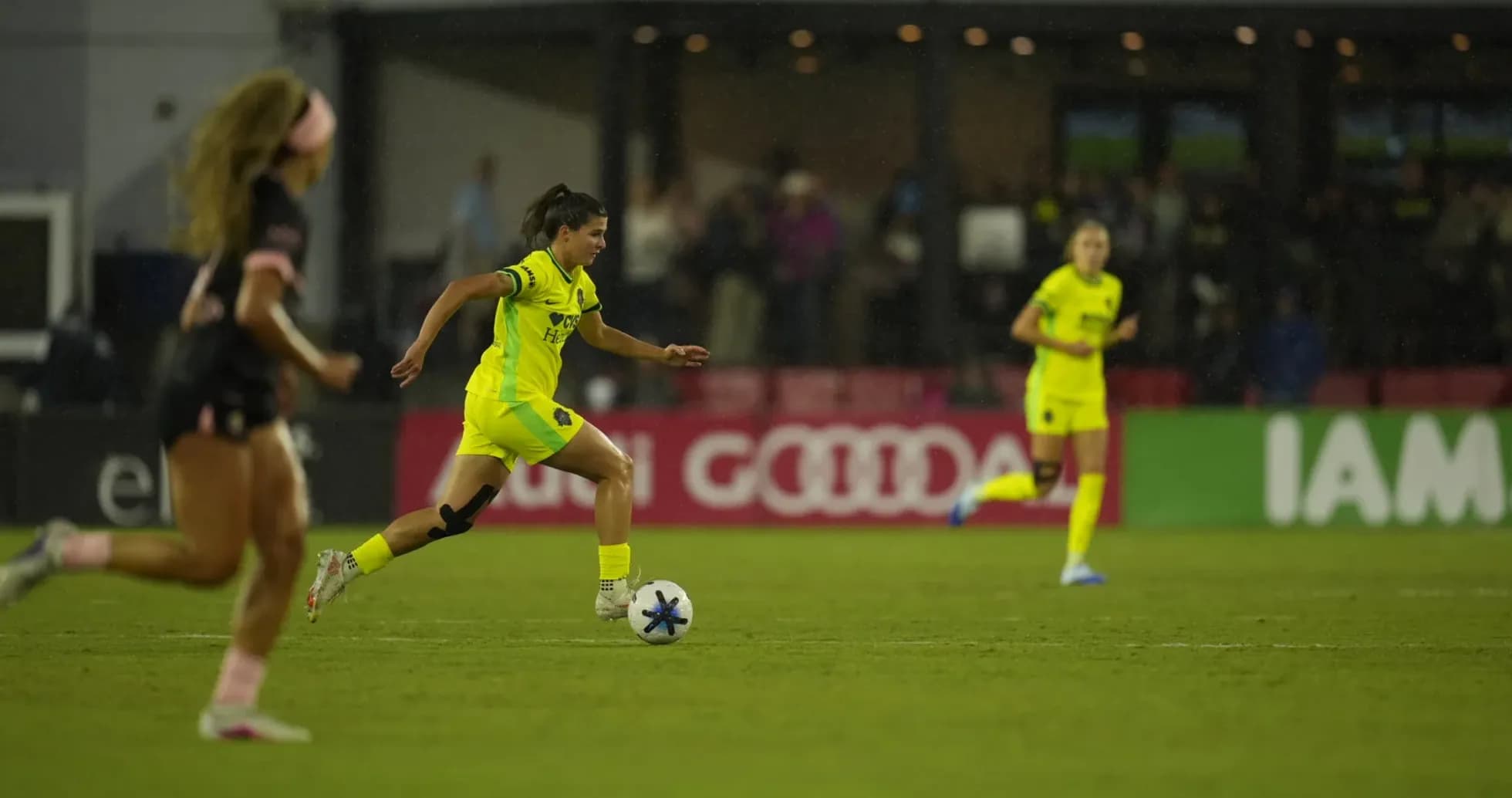
Houston, under Fabrice Gautrat, lined up in a 4-2-3-1, one of their two core identities this season alongside a 4-4-2 that has been used 12 times. J. Campbell anchored a back line of C. Hardin, L. Klenke, N. M. Bain, and Avery Patterson. In front of them, the double pivot of D. Colaprico and M. Graham shielded a creative trio of M. Ivanovic, K. Rader, and P. K. Nielsen, all servicing lone forward K. Faasse.
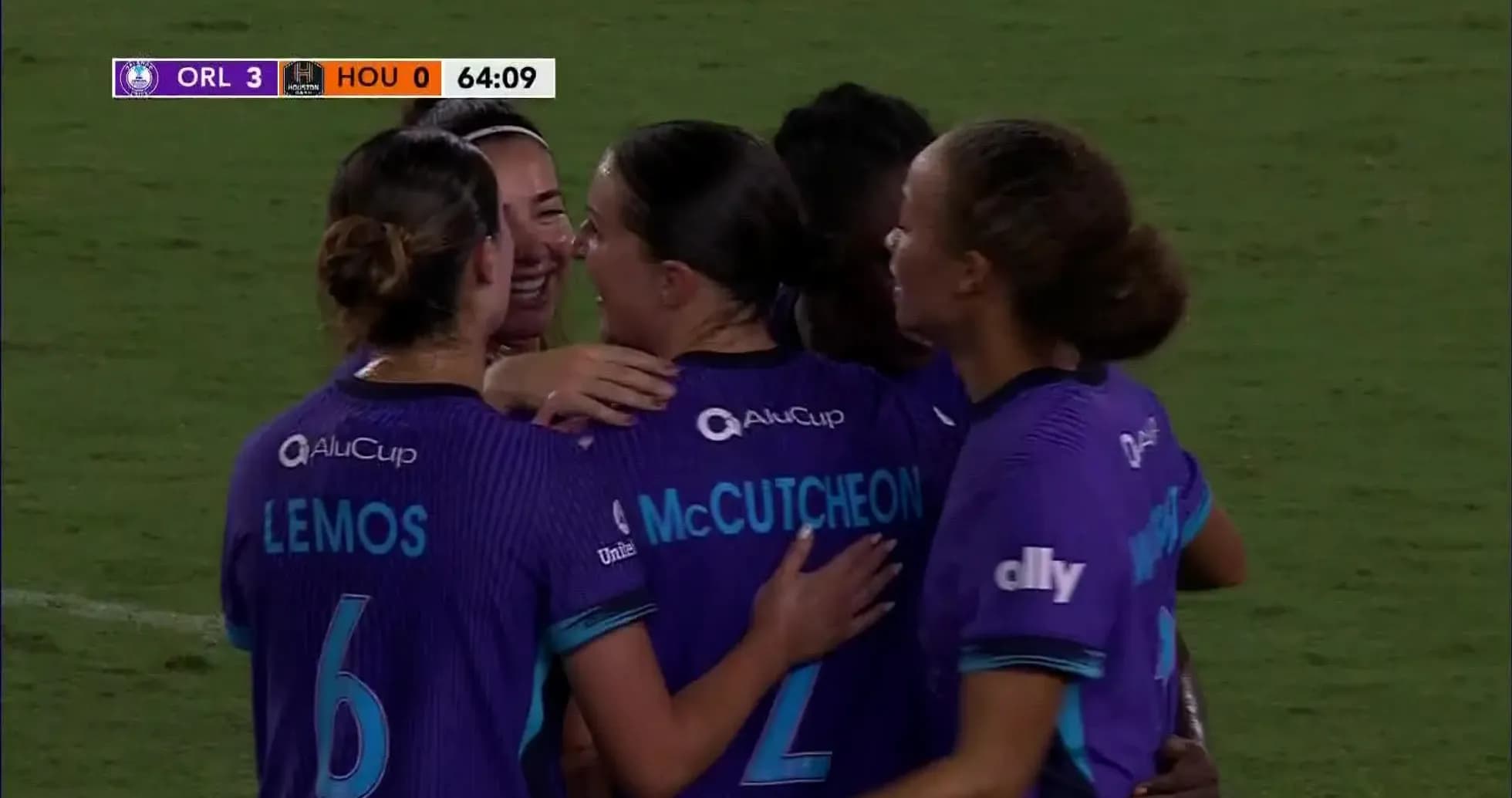
The opening 45 minutes tracked the season data almost too neatly. Orlando, who overall score heavily in the 31–45 and 76–90 minute windows (25.00% and 28.57% of their goals respectively), struck twice before the break, leaning into that late-first-half surge. Houston, who concede 22.58% of their goals between 31–45 minutes and 25.81% between 46–60, once again saw their defensive structure buckle across that hinge of the match.
II. Tactical Voids – Discipline, Risk, and Space
Neither side entered with a published injury list, so the absences were tactical rather than enforced. The real “missing piece” for Orlando was structural: they have struggled with defensive concentration, conceding consistently across almost every 15-minute band. Overall, 20.00% of their goals conceded come between 46–60 minutes and another 20.00% between 76–90, making them vulnerable to waves of pressure after restarts and late in games.
Houston’s void was more psychological: away from home they have failed to score in 5 matches overall, and their travel record of 10 goals scored and 20 conceded speaks to a team that shrinks once it leaves its own ground. Their late-game concessions (16.13% of goals conceded between 76–90 minutes) combine with a high yellow-card load in that same window (19.35%) to paint a picture of a side that tires and fouls when chasing.
Disciplinary trends mattered here. Orlando’s season shows a heavy yellow-card concentration from 61–75 minutes (25.00%) and 76–90 (21.43%), and Angelina carries the shadow of a red card on her record. Houston’s Patterson is one of the league’s most card-prone defenders with 6 yellows, plus a history of 44 tackles and 6 blocked shots. This made the wide channels a risky battleground: every direct run at Patterson or Hardin carried the potential for both progress and fouls drawn.
III. Key Matchups – Hunter vs Shield, Engine Room
The headline duel was obvious: Barbra Banda versus Houston’s collective defensive record. Banda came into the fixture with 12 goals and 1 assist in 19 appearances, averaging a 7.64 rating, with 53 shots and 30 on target. Orlando’s overall scoring rate of 1.3 goals per match is, in many ways, Banda’s personal imprint on the season.
Houston’s defence, though modestly better overall than Orlando’s, is structurally fragile in the very windows Banda thrives in. They concede 22.58% of their goals between 31–45 minutes and 25.81% between 46–60, precisely the phases where Orlando’s attack tends to ramp up after a slow mid-half. With Orlando also scoring 28.57% of their goals between 76–90 minutes and Houston conceding 16.13% in that same late stretch, the “Hunter vs Shield” dynamic tilted heavily toward the Pride once the match opened up.
In the “Engine Room,” Angelina and A. Lemos were tasked with disrupting Houston’s double pivot of Colaprico and Graham. Angelina’s season profile is that of a two-way midfielder: 481 passes at 78% accuracy, 22 tackles, 2 blocked shots, and 13 interceptions, but also carrying the risk of 2 yellows and 1 red. Her aggression was vital in breaking Houston’s rhythm, especially against Colaprico, who has quietly been one of the Dash’s stabilizers with 32 tackles, 10 blocks, and 21 interceptions, plus 468 passes at 80% accuracy.
Further ahead, K. Rader was Houston’s creative heartbeat and secondary goal threat. With 8 goals, 1 assist, 24 key passes, and 43 dribble attempts, she is both finisher and facilitator. Orlando’s defensive line, which overall concedes 1.5 goals per match and allows 20.00% of those between 76–90 minutes, had to track Rader’s late surges into the box. Yet the Pride’s switch to 4-4-2 meant an extra forward line of pressing, reducing Rader’s time on the ball in central pockets.
IV. Statistical Prognosis – Why 3–1 Felt Inevitable
Even without explicit xG numbers, the probability landscape before kickoff leaned toward a home win with goals on both sides. Orlando’s home scoring average of 1.6, paired with Houston’s away concession rate of 1.7, suggested the Pride were likely to reach or exceed two goals. Conversely, Orlando’s tendency to concede 1.3 at home, matched against Houston’s away scoring of 0.8, hinted at a single Dash goal as their ceiling.
Add in the timing patterns, and Orlando’s 3–1 victory fits the season-long script. A strong late-first-half surge, a capacity to score late, and a home environment where they have produced 19 goals in 12 matches combined to overwhelm a Houston side that travels poorly and concedes heavily in the very phases Orlando attacks best.
Following this result, Orlando’s attacking identity around Banda and their flexible use of 4-4-2 versus 4-2-3-1 looks increasingly like a weapon rather than an experiment. Houston, meanwhile, must confront a recurring truth: until their away structure tightens and their defensive discipline in the 31–60 and 76–90 windows improves, they will remain a side whose margins are too thin to survive nights like this in Orlando.