New England II's Comeback Victory Over New York City II
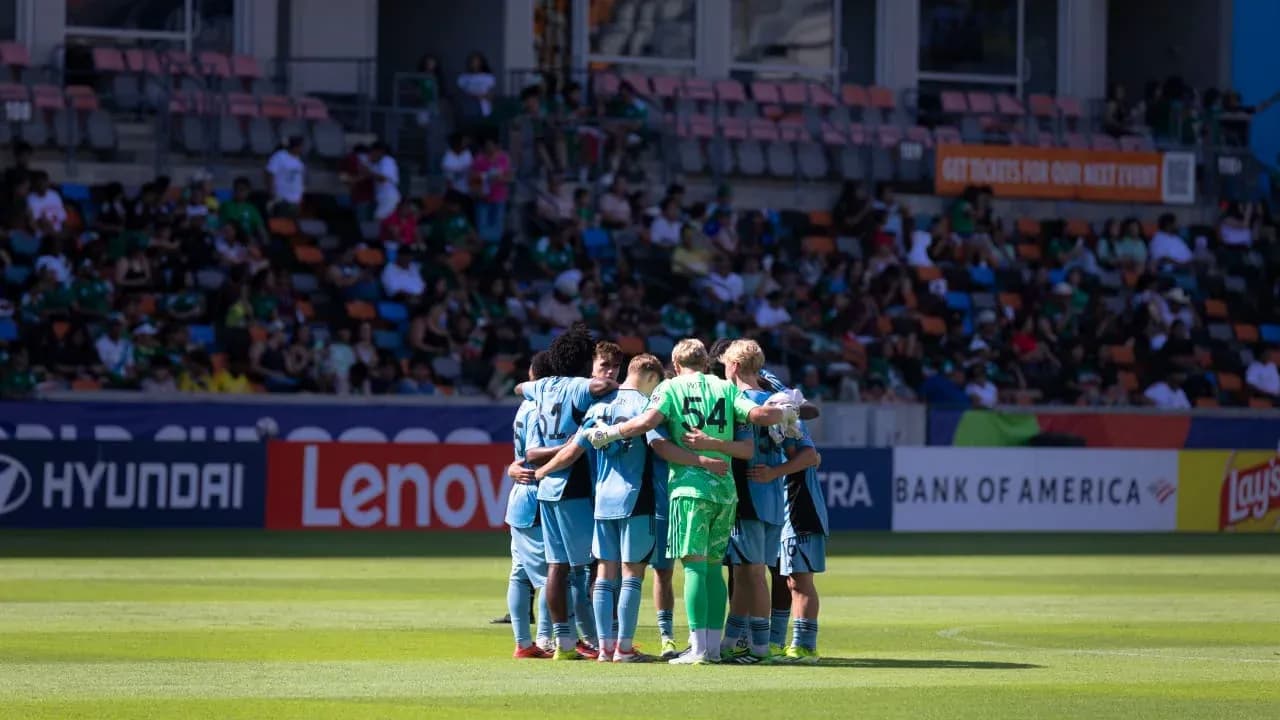
Under the lights of Gillette Stadium, New England II turned what began as a nervy evening into a statement 3–2 comeback against New York City II, a result that crystallised the seasonal DNA of both sides. Heading into this game, New England II were already a home-centric force in MLS Next Pro’s 2026 season: 5 wins from 6 at home, with 9 goals scored and 6 conceded. On their travels, New York City II arrived burdened by an away record of 4 defeats from 4, with 3 goals for and 6 against.
Over the full campaign so far, New England II’s profile is that of a ruthless home operator. In total this season they had played 8, winning 5 and losing 3, with 12 goals for and 9 against, a goal difference of +3. At home, their attack has been sharp, averaging 1.8 goals for and 1.0 against. New York City II, by contrast, came in as a split personality: strong at home, fragile away. Overall they had played 8, winning 3 and losing 5, with 9 goals for and 15 conceded, a goal difference of -6. On their travels they averaged 0.8 goals for and 1.8 against, a profile that foreshadowed the pressure they would face once New England II began to turn the screw.
The 0–1 deficit at half-time, then the 3–2 full-time scoreline, fits those arcs perfectly: New England II leaning into their home resilience, New York City II once again unable to translate home confidence into away control.
Tactical Voids and Discipline
There were no listed absences in the data, so both coaches effectively had their core groups available. For New York City II, Matt Pilkington set out a youthful, mobile XI: M. Learned behind a back line anchored by D. Randazzo and J. Loiola, with the likes of K. Smith and P. Molinari providing the connective tissue through midfield, and a front unit featuring C. Flax, C. Danquah, D. Duque, D. Kerr and S. Musu.
New England II’s selection skewed toward balance and ball progression. D. Parisian, D. McIntosh, G. Dahlin, C. Mbai Assem and S. Mimy formed the defensive spine, with J. Mussenden and E. Klein offering legs and structure in midfield. Ahead of them, A. Oyirwoth, C. Oliveira, M. Morgan and S. Sasaki gave the hosts multiple lanes of attack between the lines and into the channels.
Disciplinary trends framed an important subtext. Heading into this game, New England II’s yellow cards were spread but with a clear second-half bias: 23.81% of their cautions between 46–60 minutes, another 23.81% between 61–75, and 23.81% again in the 76–90 window. New York City II, meanwhile, showed a more volatile pattern: 31.25% of yellows in the 16–30 minute spell and a late-game spike of 37.50% between 76–90, plus a red card profile entirely concentrated in that same 76–90 band (100.00% of their reds).
That combination paints a picture of New England II as a side willing to foul to manage transitions after half-time, and New York City II as a team whose discipline frays as fatigue and scoreboard pressure build. In a match that swung dramatically after the break, those tendencies would have shaped the emotional and tactical temperature of the closing stages, even if individual card details are not enumerated here.
Key Matchups
Hunter vs Shield
Without explicit top-scorer data, the “hunter” role for New England II is more collective than individual. What is clear is the unit’s attacking ceiling at Gillette Stadium: heading into this game, their biggest home win was 2–0 and their most prolific home outing featured 3 goals. They had failed to score at home exactly 0 times, underlining a reliability in chance creation.
Set against that, the “shield” of New York City II’s away defence had been porous. On their travels they had conceded 7 goals in 4 games, an average of 1.8 per match, with their heaviest away loss by a 3–2 scoreline. That exact pattern repeated here: once New England II found rhythm, the away back line could not absorb sustained pressure.
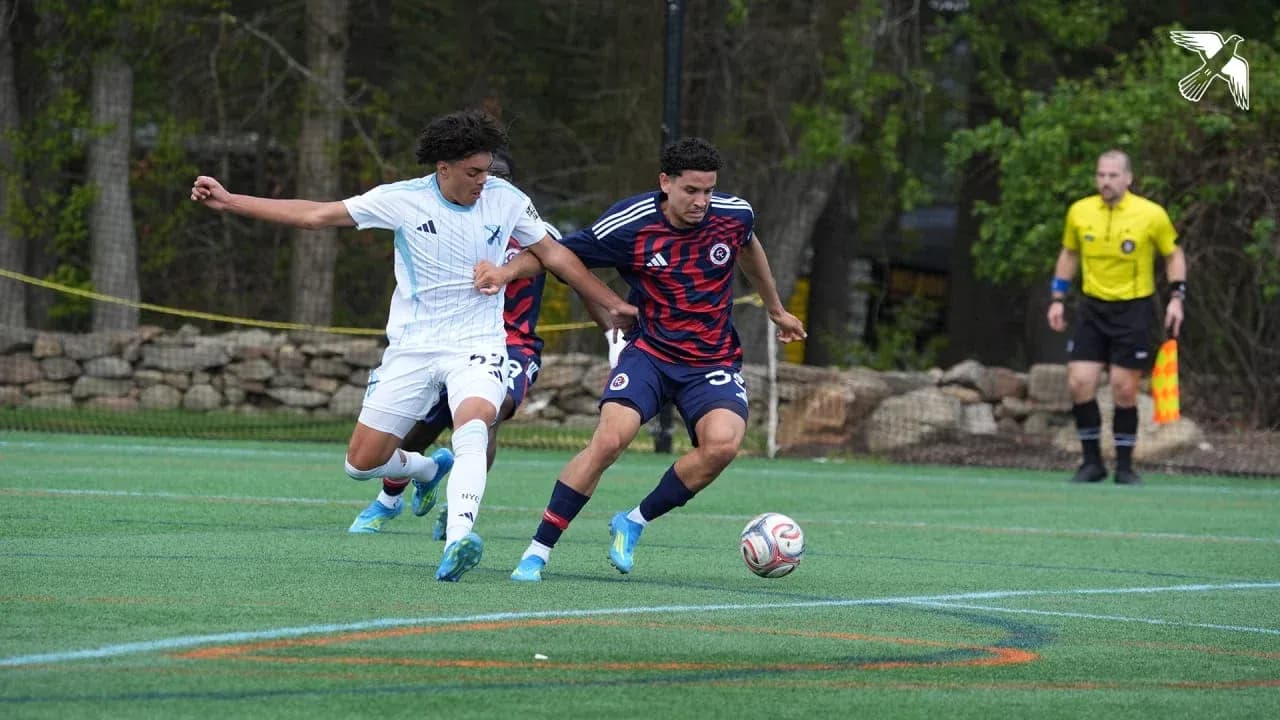
The duel between New England II’s front quartet of A. Oyirwoth, C. Oliveira, M. Morgan and S. Sasaki and the visiting defensive core built around D. Randazzo, J. Loiola and J. Suchecki was always going to decide the night. New England II’s willingness to commit multiple runners into the box and half-spaces ultimately overwhelmed a New York City II defence that has yet to keep a single clean sheet this season, either home or away.
Engine Room
In midfield, the game hinged on whether New England II’s structure—via J. Mussenden and E. Klein—could control tempo against the more transition-minded trio of P. Molinari, K. Smith and C. Flax.
Seasonal numbers suggested New England II would be comfortable in a controlled, medium-tempo game. In total this campaign they had conceded just 9 goals across 8 fixtures, averaging 1.1 against, and had produced 2 clean sheets. New York City II, on the other hand, had allowed 15 goals in 8, averaging 1.9 against, with 0 clean sheets.
That disparity in defensive solidity meant that if the midfield battle slowed into structured phases, New England II’s shape and spacing would favour them. Once they turned the match around after the interval, the pattern likely shifted toward longer New York City II possessions and higher-risk passing from Pilkington’s side, the kind of scenario where their late-game disciplinary issues and defensive instability tend to surface.
Statistical Prognosis and Tactical Verdict
From an xG-style lens, the underlying season data already leaned toward a New England II edge, especially at Gillette Stadium. At home they averaged 1.8 goals for and 1.0 against; New York City II away averaged 0.8 for and 1.8 against. Overlaying those profiles, the most probable scoring band pre-match was New England II somewhere between 2 and 3 goals, New York City II between 1 and 2. The eventual 3–2 sits squarely within that expectation, but the route there—0–1 down at half-time, then a second-half surge—underscored the psychological and tactical contrasts.
New England II’s campaign-long streak profile—4 consecutive wins at one point, then 3 straight losses—speaks to a high-variance, aggressive identity. Their willingness to front-foot games at home, backed by a penalty record of 2 taken and 2 scored (100.00% conversion, with no misses), suggests a side confident in attacking moments and set-piece execution. New York City II’s more modest best winning streak of 1, and their lack of any clean sheet, point to a team still searching for defensive balance and emotional control, particularly away from home.
Following this result, the narrative hardens: New England II remain one of the league’s most dangerous home outfits, capable of flipping a deficit into a win through sustained pressure and structural stability. New York City II, for all their individual talent in players like C. Flax, D. Duque and S. Musu, continue to be undermined by an away defensive profile that cannot yet withstand the kind of second-half onslaught that Gillette Stadium demands.