Barcelona Dominates Real Madrid: A Tactical Breakdown
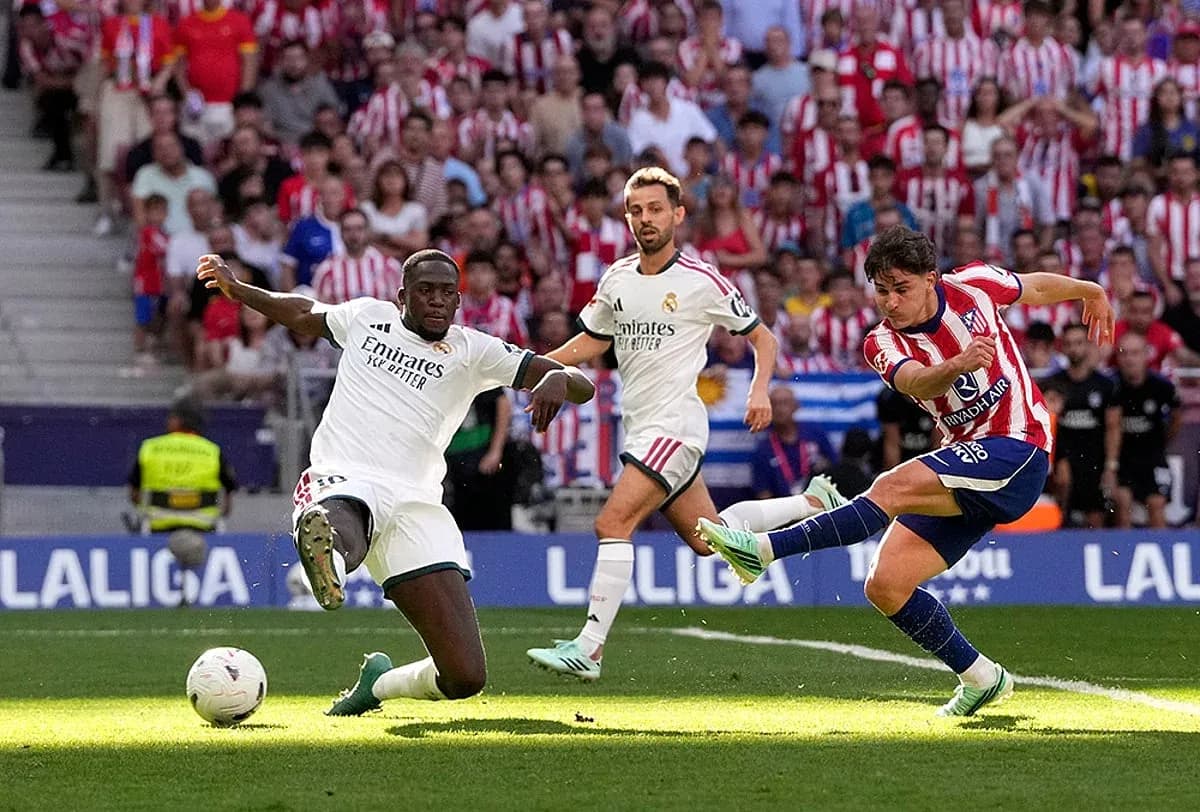
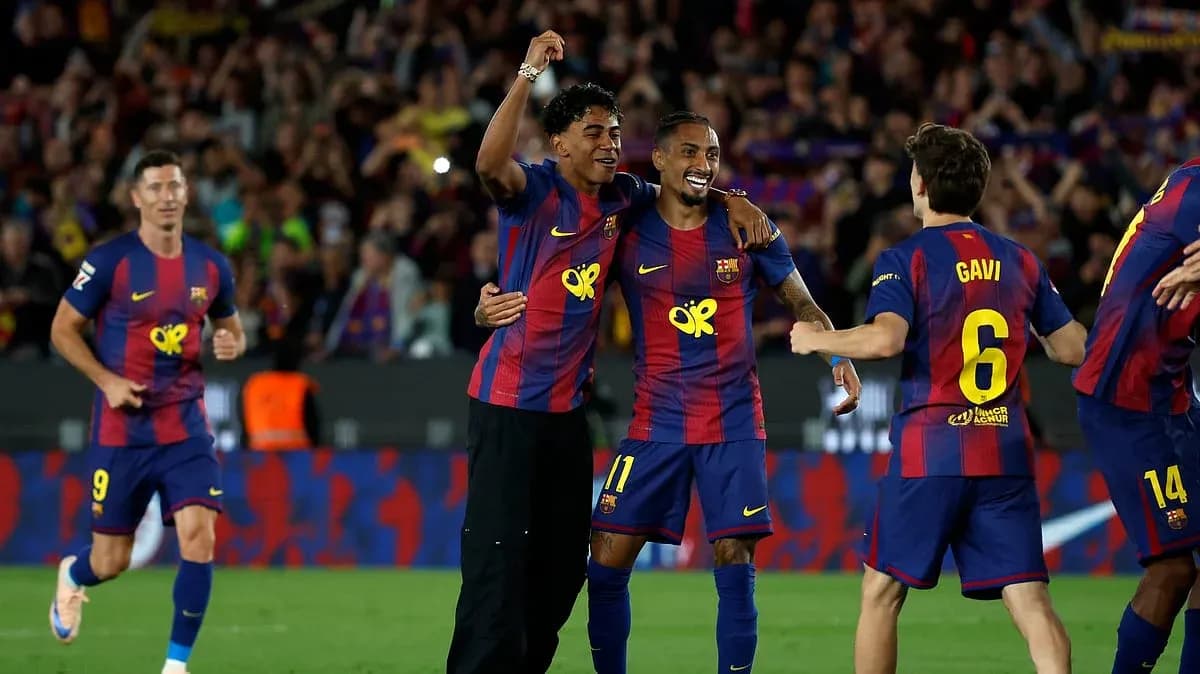
On a warm May evening at Camp Nou, Barcelona did not just beat Real Madrid; they imposed their season’s entire identity on the fixture. In La Liga’s Regular Season - 35, the league leaders, ranked 1st with 91 points and a goal difference of 60, met a Real Madrid side sitting 2nd on 77 points, goal difference 37. The 2-0 scoreline, sealed by half-time, felt less like a shock and more like the logical extension of a campaign in which Barcelona have dominated the league and, crucially, turned their home into a fortress.
Heading into this game, Barcelona had won all 18 home matches, scoring 54 and conceding only 9 at Camp Nou. An average of 3.0 goals for and 0.5 against at home framed Hansi Flick’s approach: front-foot, aggressive, and built on territorial suffocation. Real Madrid arrived as the only plausible challengers, with 10 away wins from 18 and 31 goals scored on their travels (1.7 per away game), but also a hint of vulnerability: 19 goals conceded away (1.1 per away game) against a side that punishes any looseness between the lines.
Flick’s selection underlined that intent. Barcelona lined up in a 4-2-3-1, a shape they had already used 25 times this season, with J. Garcia in goal behind a back four of J. Cancelo, G. Martin, P. Cubarsi and E. Garcia. The double pivot of Gavi and Pedri formed the control centre, with a hyper-fluid trio of M. Rashford, Dani Olmo and Fermín behind Ferran Torres as the nominal striker.
The tactical voids were significant, especially for Barcelona. A. Christensen’s knee injury and the absence of Lamine Yamal with a thigh problem removed both a stabilising presence in the back line and the league’s most electric wide creator. Yet Flick compensated by densifying the central lane. Without Yamal’s touchline gravity, Rashford started as a wide midfielder but constantly attacked the half-spaces, while Fermín drifted between the lines, offering vertical runs and late box entries.
Real Madrid, coached by Alvaro Arbeloa, also went 4-2-3-1, though this was a departure from their most-used 4-4-2. T. Courtois anchored a back four of T. Alexander-Arnold, R. Asencio, A. Rudiger and F. Garcia. E. Camavinga and A. Tchouameni formed the double pivot, with B. Diaz and Vinicius Junior flanking J. Bellingham behind G. Garcia up front.
But Madrid’s absences were brutal: K. Mbappe (muscle injury), Rodrygo (knee injury), F. Valverde (head injury), Eder Militao, F. Mendy and A. Guler all missing, plus D. Carvajal and D. Ceballos. That stripped Arbeloa of his primary vertical runner (Mbappe), one of his key transitional midfielders (Valverde), a first-choice centre-back, a starting left-back, and a creative playmaker. The result was a Madrid XI heavy on technical quality but lighter on pure explosiveness and backline depth.
The disciplinary backdrop added another layer. Barcelona’s yellow cards this season skewed towards the middle and late phases: 27.59% between 46-60 minutes and 20.69% between 76-90, with no red cards in regular time and two only in the 91-105 window. Real Madrid, by contrast, showed a more volatile profile: yellow cards peaking at 22.06% between 61-75 and 17.65% in both the 46-60 and 76-90 ranges. Their red-card pattern was even more telling, with dismissals spread across 31-45, 61-75, 76-90 and 91-105 minutes. It painted a picture of a side that can become emotionally stretched as games tighten.
On the pitch, the “Hunter vs Shield” duel crystallised around Ferran Torres and Real Madrid’s defensive record. Torres arrived with 16 league goals in total, converting from 56 shots with 36 on target. He was supported by the shadow threat of Robert Lewandowski off the bench, whose 13 goals in total masked a season of more selective usage. Against them stood a Madrid defence that, heading into this game, had conceded 33 goals overall, 19 of them away. A. Rudiger’s leadership and Courtois’s presence were supposed to be the shield; instead, Barcelona’s early tempo and positional rotations repeatedly pulled Madrid’s back four into uncomfortable zones.
The true narrative engine, though, was in the “Engine Room”: Pedri, Gavi and Dani Olmo versus Camavinga, Tchouameni and Bellingham. Pedri came into the fixture with 8 assists in total and a passing accuracy of 91%, the league’s metronome in tight pockets. Dani Olmo added 8 assists and 7 goals, with 45 key passes and 42 fouls drawn across the campaign, a constant provocateur between the lines. Fermín, with 9 assists and 6 goals, offered the vertical punch from midfield, his 236 duels and 47 tackles speaking to a player who marries craft with bite.
Opposite them, Madrid lacked Valverde’s two-way engine and A. Guler’s line-breaking passing. That forced Bellingham to shoulder more creative load while also tracking Pedri, and it tilted the midfield contest. Camavinga and Tchouameni could screen, but they could not fully contain the constant rotation of Olmo dropping in, Fermín running beyond, and Rashford driving diagonally at Alexander-Arnold’s channel.
Vinicius Junior, with 15 goals and 5 assists in total and 189 dribble attempts, remained Madrid’s primary outlet. But without Mbappe stretching the opposite flank and without Valverde’s covering runs, Barcelona could afford to tilt their block towards Vinicius, doubling him with Cancelo and Gavi and trusting P. Cubarsi and E. Garcia to manage G. Garcia centrally.
From a statistical prognosis standpoint, this felt like a match where xG would mirror the table: Barcelona’s home average of 3.0 goals for and 0.5 against set a baseline of territorial and chance dominance, while Real Madrid’s away profile of 1.7 for and 1.1 against suggested they could create but would almost certainly concede. With Barcelona yet to fail to score at home this season (0 “failed to score” at Camp Nou) and Madrid conceding in the majority of their away fixtures, a clean-sheet win for the hosts aligned with both the eye test and the numbers.
Following this result, the story is of a champion side reinforcing its authority. Barcelona’s 4-2-3-1, even without Lamine Yamal and Christensen, proved tactically mature and structurally superior. Real Madrid’s depth, stretched by injuries, could not withstand the sustained pressure, and their disciplinary and defensive patterns away from home once again betrayed them against the league’s most ruthless home side.