AC Milan vs Atalanta: Tactical Analysis of a Five-Goal Drama
Under the San Siro floodlights, this was supposed to be a statement night for a Champions League‑bound AC Milan. Instead, it became a chaotic, five‑goal drama in which Atalanta walked out of Stadio Giuseppe Meazza with a 3–2 win, exposing structural flaws in Milan’s trusted 3‑5‑2 and sharpening the tactical questions that will follow both sides into the final stretch of the Serie A season.
I. The Big Picture – Two Systems, One Fractured Script
Following this result in Round 36, the table tells its own story. Milan sit 4th on 67 points with a goal difference of 18, built on 50 goals scored and 32 conceded overall. Atalanta, 7th with 58 points and a goal difference of 16 (50 for, 34 against), arrived as one of the division’s most balanced outfits, and their 3‑4‑2‑1 once again proved a flexible, punishing structure.
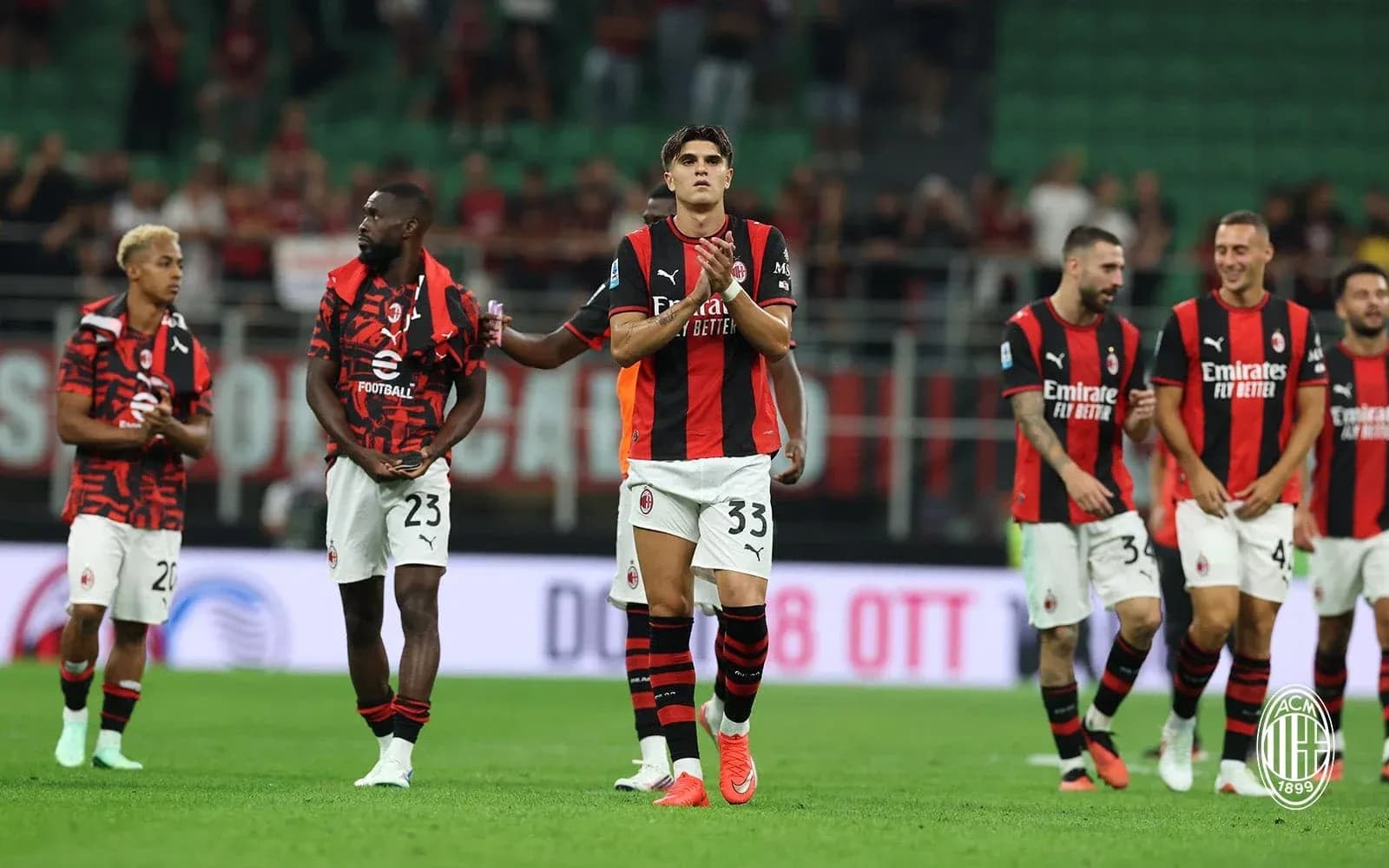
Milan’s season-long identity has been clear: a back three, wing‑backs high, and a midfield platform that allows Rafael Leão to attack space while a central striker pins the line. Their most common shape, the 3‑5‑2, has been used 32 times, and it was no surprise to see Massimiliano Allegri lean on it again: Mike Maignan behind a trio of Koni De Winter, Matteo Gabbia and Strahinja Pavlović; Alexis Saelemaekers and Davide Bartesaghi wide; a central band of Ruben Loftus‑Cheek, Samuele Ricci and Adrien Rabiot; with Santiago Giménez and Leão up front.
On their travels, Atalanta have been wedded to the 3‑4‑2‑1 (32 matches with that base shape), and Raffaele Palladino kept faith with it. Marco Carnesecchi started in goal, shielded by Giorgio Scalvini, Isak Hien and Sead Kolašinac. Davide Zappacosta and Nicola Zalewski worked the flanks, with Marten de Roon and Ederson inside. Charles De Ketelaere and Giacomo Raspadori floated behind Nikola Krstović, the Montenegrin forward who has quietly become one of Serie A’s most productive attackers.
The first half’s 2–0 scoreline to Atalanta confirmed a pattern: Milan’s home record is solid but not intimidating – 24 goals for and 19 against at home, an average of 1.3 scored and 1.1 conceded – and when their press is broken, the back three can be exposed in transition. Atalanta, meanwhile, brought their away scoring average of 1.4 goals into a stadium where they were happy to sit, spring and punish.
II. Tactical Voids – Absences and Discipline
Both sides came into this game carrying notable absentees that reshaped their tactical options.
For Milan, the absence of Luka Modrić (broken cheekbone) removed an elite tempo‑setter from midfield. Without his ability to dictate rhythm, Ricci and Rabiot had to share build‑up duties, with Loftus‑Cheek pushed higher to break lines with carries rather than passes. Christian Pulišić, missing with a muscle injury, stripped Allegri of a one‑v‑one outlet between the lines and a late runner into the box. Fikayo Tomori, suspended after a red card, forced Gabbia into the central leadership role in the back three – a change that subtly shifted Milan’s defensive aggression and line height.
Atalanta were without L. Bernasconi and Berat Djimsiti, the latter’s hamstring injury particularly significant. Djimsiti’s absence weakened their depth and experience in the back line, placing more responsibility on Scalvini and Hien to manage Leão’s runs and Giménez’s movement.
From a disciplinary perspective, both teams arrived with a clear tendency toward late‑game volatility. Milan’s yellow‑card distribution shows a pronounced spike in the 76–90' window, where 25.42% of their cautions occur, reflecting a side that often finishes games on the edge. Atalanta mirror that pattern: 22.81% of their yellow cards fall between 61–75' and another 22.81% between 76–90'. The closing stages at San Siro were always likely to be frenetic, and the five‑goal scoreline, combined with the emotional weight of the table, only heightened that edge.
III. Key Matchups – Hunter vs Shield, Engine Room vs Enforcer
Hunter vs Shield
Nikola Krstović arrived as Atalanta’s dual‑threat spearhead: 10 total league goals and 5 assists, with 74 shots (33 on target) and 20 key passes. His role in Palladino’s 3‑4‑2‑1 is not just to finish but to occupy centre‑backs and create space for De Ketelaere and Raspadori.
Milan’s defensive “shield” at home had been respectable: 19 goals conceded in 18 home matches, an average of 1.1 per game, with 7 clean sheets overall. But the absence of Tomori meant De Winter and Pavlović had to step higher and wider than usual to contain Atalanta’s front three. Krstović’s duel numbers – 258 total duels with 113 won – underline his capacity to turn long balls into platforms. Every time Milan’s press faltered, Atalanta could go direct into him, trusting his hold‑up play to bring the advanced midfielders into the game.
On the other side, Rafael Leão stood as Milan’s primary hunter. With 9 goals and 3 assists in Serie A, plus 45 shots (24 on target) and 20 key passes, he remains the Rossoneri’s most dangerous forward. Atalanta’s away defensive record – 20 conceded in 18, an average of 1.1 per game – suggested they could be stretched, especially with wing‑backs high. But their three‑man rear guard, led by Scalvini, managed the risk well enough, even if Milan’s second‑half fightback did break through twice.
Engine Room – Playmakers vs Enforcers
The midfield battle was always going to be about control versus disruption. For Atalanta, De Roon and Ederson form an axis that marries ball‑winning with vertical progression. De Ketelaere, one of Serie A’s most creative attackers with 5 assists and 60 key passes, floats into half‑spaces, drawing markers and freeing the wing‑backs.
Milan’s response relied on Ricci’s metronomic passing and Rabiot’s two‑way running. Without Modrić, their ability to change tempo in tight zones was diminished, forcing more reliance on direct balls into Giménez and early releases to Leão. Loftus‑Cheek’s surges from midfield were crucial to breaking Atalanta’s compact block, but they also left spaces behind for De Ketelaere to exploit in transition.
On the edges of this engine room battle sat the disciplinary shadows. Pervis Estupiñán, on Milan’s bench, carries a red card in his season profile, underlining why Allegri might have been cautious about throwing him into an already volatile contest. On the Atalanta side, a season of split red cards in the 0–15' and 76–90' windows reflects a team that can be both explosive at the start and combustible at the end.
IV. Statistical Prognosis – xG Logic and Defensive Reality
Even without explicit xG numbers, the season data sketches a clear expected‑goals landscape. Both sides average 1.4 goals per match overall. Milan concede 0.9 per game overall; Atalanta also concede 0.9 overall, though their away figure rises to 1.1. Heading into this game, a tight, high‑quality contest with marginal attacking superiority for either side was the logical forecast.
The 3–2 scoreline fits within that band: both teams operating around or slightly above their season scoring averages, with Milan’s home defensive number (1.1 conceded) stretched by Atalanta’s away potency. The absence of penalties missed this season for either side (Milan have scored 6 of 6, Atalanta 3 of 3) meant that any spot‑kick on the night would have been statistically likely to be converted, further boosting the attacking expectation.
In narrative terms, this match felt like the meeting of two mirrored profiles: both comfortable in a back three, both averaging 1.4 goals for and 0.9 against overall, both prone to late‑game cards and emotional swings. Atalanta’s slightly sharper execution in the first half, combined with Krstović’s all‑round threat and De Ketelaere’s creative gravity, tilted the balance just enough.
Following this result, Milan remain in the Champions League places but with their defensive structure under renewed scrutiny, especially without Tomori and Modrić. Atalanta, meanwhile, leave Milan with three points that validate Palladino’s 3‑4‑2‑1 as one of Serie A’s most modern and adaptable systems – a shape that, on nights like this, can turn statistical equilibrium into a decisive, tactical edge.