Mohebi's Gesture Sparks Political Debate in Iran's World Cup Match
Iran’s World Cup opener against New Zealand was supposed to be remembered for its drama: a 2-2 draw, a late surge, a point rescued. Instead, it was Mehdi Mohebi’s celebration – a few seconds of charged movement – that turned a routine group-stage match into a political talking point.
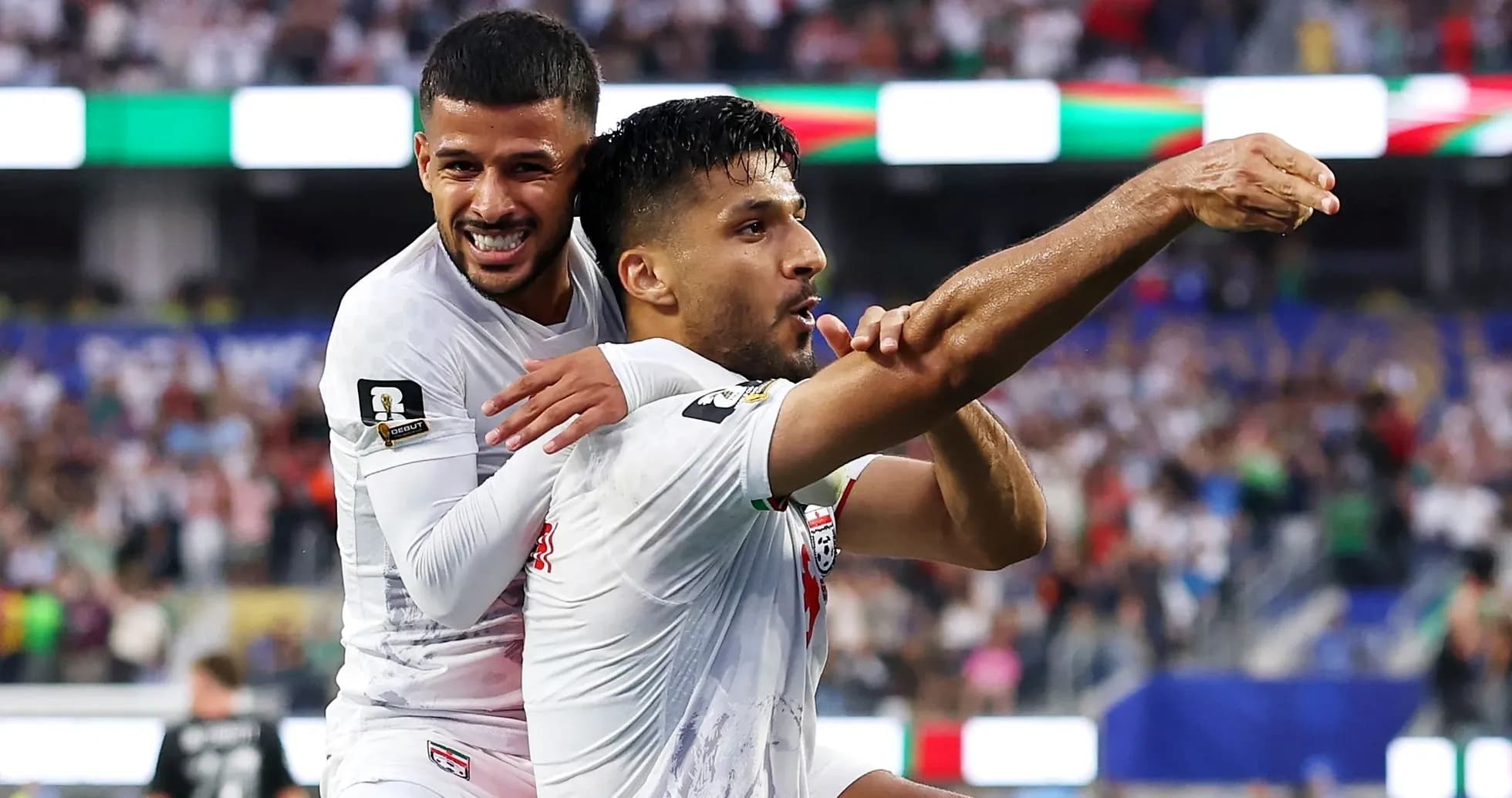
The 27-year-old midfielder dragged Iran level in the 64th minute, his finish sparking a roar from the stands in Los Angeles. Then came the gesture.
Mohebi pointed two fingers toward his arm, then extended two fingers on his right hand and sliced them through the air. To many watching, in the stadium and online, it looked unmistakably like a “gun” motion.
Within minutes, clips of the celebration were circulating widely, slowed down, zoomed in, dissected frame by frame. In a tournament already laced with political tension around Iran, those few seconds detonated a fresh wave of debate. Some supporters demanded answers. Commentators called on FIFA to step in and review the incident.
Mohebi, though, moved quickly to cool the storm.
“I wanted to say thank you to all Iranians who live in Los Angeles, they make a great atmosphere,” he said. “The celebration came to mind, and I do this [gestures] for all of the fans, just a celebration, you know.”
He framed it as spontaneous, born out of emotion, not protest. The explanation may not convince everyone, but it underlined a familiar World Cup fault line: where players’ celebrations end and political interpretations begin.
If Mohebi tried to keep things on the safe side, his teammate Ramin Rezaeian stepped closer to the edge.
The defender had already drawn attention with his own goal celebration, covering his face with his shirt as he sprinted towards the supporters. The image, stark and symbolic, immediately raised questions. When reporters asked him about it, Rezaeian did not pretend it was meaningless.
“It's something political (his goal celebration), I don't want to talk about that,” he said, offering just enough to confirm there was more beneath the surface, then shutting the door on further detail.
He then attempted to pull the conversation back to the pitch.
“We are here to answer football questions. If there is a problem between us (the Iranian people), it is between us.”
The contrast was striking. One player insisting on a purely footballing gesture, the other openly acknowledging a political layer while refusing to unpack it. Both, in different ways, highlighted how little separation there is right now between Iran’s national team and the wider issues swirling around it.
For FIFA, the situation is delicate. The governing body has been approached for comment regarding Mohebi’s gesture, and pressure is building for clarity on whether a formal investigation will follow. The organization has long championed the idea of keeping politics off the pitch, yet World Cups routinely expose how fragile that line can be.
Any move to sanction Mohebi would ignite a new debate about consistency and intent. Was the gesture explicitly threatening, or simply misread in a charged climate? Does a player’s explanation outweigh public interpretation? Those are the questions now hanging over the disciplinary corridors.
Inside Iran’s camp, though, the message is likely to be simpler: refocus. The draw with New Zealand leaves Group G finely poised, and a tougher assignment looms.
Next up is Belgium in Los Angeles on June 21, a match that will test Iran’s tactical discipline and mental resilience in equal measure. The football alone would be demanding enough. Now they must also carry the weight of scrutiny on every movement, every celebration, every glance toward the stands.
One equaliser has already changed the conversation around their tournament. The real test is whether their football can take it back.