Luka Modric's Defiant Journey: From Heartbreak to Resilience
Luka Modric walked off the pitch in Leipzig last summer looking like a man who had just seen the end of something he wasn’t ready to let go.
He had done what he always does for Croatia: dragged them towards the line. At 38, in what felt like a straight shootout with Italy for a place in the Euro 2024 last 16, he scored the goal that should have carried them there, reacting first to his own saved penalty and burying the rebound at the Red Bull Arena. It was a defiant moment, a veteran refusing to bow to time or tension.
Then came the 98th minute. Mattia Zaccagni bent in a cruel, arcing finish, and with one swing of his right boot sent Italy through and Croatia out. By the time Modric stood for the obligatory Player of the Match photo, the award in his hands looked less like a trophy and more like a reminder of what had slipped away. His eyes told the story: this was not how an international career like his was supposed to fade.
Nobody wanted it to end that way. Not his team-mates. Not the Croatian fans. Not even the opposition.
In the press conference that followed, Italian journalist Francesco Repice spoke for a global audience. He thanked Modric “for everything you have shown, not just tonight but in your career” and pleaded with him to “never retire”. It cut through the usual post-match noise. This was respect, raw and unfiltered, from a country that had just benefited from his heartbreak.
Modric smiled, but his answer carried the weight of reality. He admitted he would love to play forever, then acknowledged that at some point the boots would have to be hung up. He would carry on for now, he said, but didn’t know for how long.
Almost a year on, he still doesn’t. Because he still hasn’t slowed down.
The boyhood dream that wasn’t nostalgia
When Modric left Real Madrid after 13 glittering seasons to join AC Milan last summer, it was easy to file the move under “romantic final chapter”. The boy who had grown up admiring the Rossoneri, drawn in by the elegance of Zvonimir Boban, finally pulling on the red and black. Nice story. Soft landing.
Modric rejected that framing from the start. This wasn’t a testimonial tour. He came to Milan to matter.
Plenty in Italy doubted how much he had left. At 39, in a league that still prides itself on tactical intensity and physical duels, the question was obvious: could he really dictate games at the top end of Serie A? Especially in a midfield that had just added 24-year-old Samuele Ricci, a player many expected to become the heartbeat of the side.
The answer arrived quickly. Allegri kept picking Modric. Ricci had no complaints.
“He’s the strongest player I’ve ever played with,” the younger midfielder admitted, still taken aback by the Croatian’s humility and ferocity in training. That combination – the quiet star who still tackles sessions like a teenager trying to earn a contract – disarmed a dressing room that already knew his medal collection by heart.
Italian journalists ran out of superlatives. Alberto Polverosi joked that if Modric really was 40, science should get to work and clone him. It didn’t feel like hyperbole. Week after week, Modric stitched Milan’s play together with the same clarity and rhythm that defined his Madrid years. Head up. Feet dancing. Passes punched through lines or floated just out of reach of despairing defenders.
Kaka, watching his former Real Madrid team-mate reinvent himself in another European giant’s colours, put it more bluntly: Modric was a “force of nature”. He knew the mentality behind it. Most players, Kaka pointed out, lose a little hunger after winning everything. Modric, though, seemed to grow more obsessive. He still called team-mates, still pushed standards, still treated every training session as a chance to teach and compete.
That, Kaka argued, was as valuable to Milan as anything he did on matchdays. His presence raised the level not only of the club, but of Serie A itself. The enthusiasm. The leadership. The technique that refused to age.
The price of dependence
Allegri fell for him, of course. Coaches always do with players like this. Modric read the game like an assistant on the pitch, and there was even talk of him joining Allegri’s staff when he eventually stopped playing.
There was a catch. Milan leaned on him too hard.
For months, the system bent around his brain and his boots. When he played, Milan looked coherent, confident, capable of grinding or gliding depending on the moment. When he didn’t, the structure wobbled.
That fragility was brutally exposed at the worst possible time. In a cagey 0-0 draw with Juventus on April 26, Modric suffered a fractured cheekbone. The injury kept him out of the starting XI for the final four games of the season. Milan promptly lost three of them.
The collapse was costly. From third place and a seemingly safe route back to the Champions League, they slid to fifth. No top-four finish. No Champions League nights at San Siro. No margin for Allegri.
The coach paid with his job. The club, having built so much of their rhythm around a 39-year-old, suddenly had to confront a future without either of them. And Modric, once again, found himself at a crossroads.
What comes next?
Whether he stays at Milan is now an open question. He has spoken warmly of the club, of the city, of the way the fans embraced him as if he had always been theirs. Yet the landscape has shifted. Allegri has gone. The project will be reshaped. And in the background, Real Madrid wait.
Reports in Spain suggest Madrid want him back at the Bernabeu in some capacity if he decides this summer is finally the moment to stop playing. A mentor. An ambassador. A bridge between eras. It would be a natural reunion.
For now, he refuses to offer a definitive answer. He has another task in front of him.
One more World Cup with Croatia. One last tilt on the biggest stage.
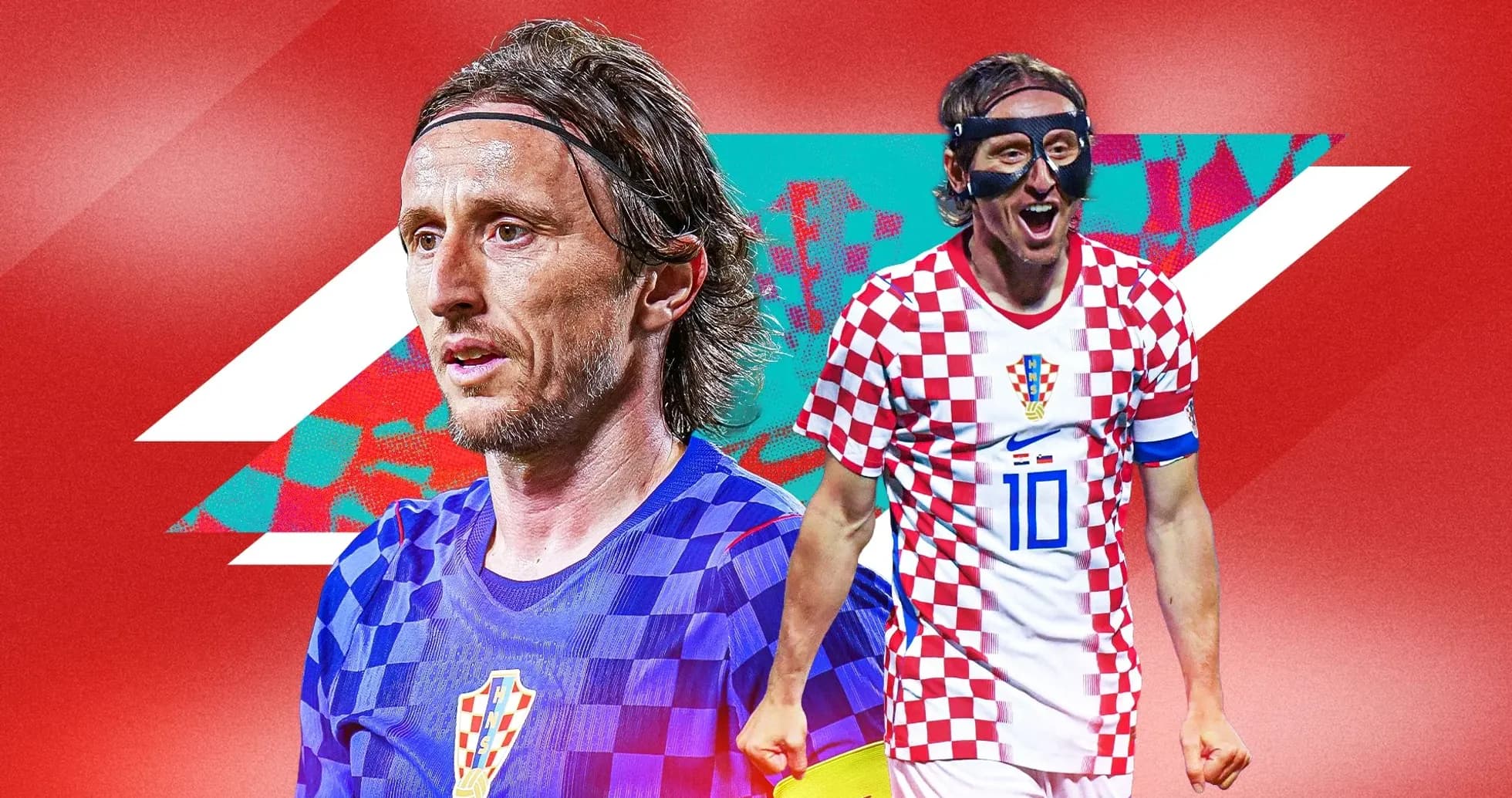
The expectation is that this will be his final major tournament in the famous red-and-white checks. The conditions will be demanding, the schedule unforgiving, and Modric will be doing it all with a protective mask strapped to his face to shield that damaged cheekbone. It’s an image that fits his story: the artist turned warrior, still stepping into the storm.
Masks can be uncomfortable, restrictive, a constant reminder of vulnerability. Modric has built a career on ignoring that kind of noise. He said it himself not long ago: he never really cared what anyone else said; doubt only drove him harder.
So here he is, 40 years old, still dictating games, still shaping seasons, now preparing to carry a nation again with his face partially hidden but his intent unmistakable.
Who dares write him off now? Not in England. They have seen this film before – and they know how often Luka Modric rewrites the ending.