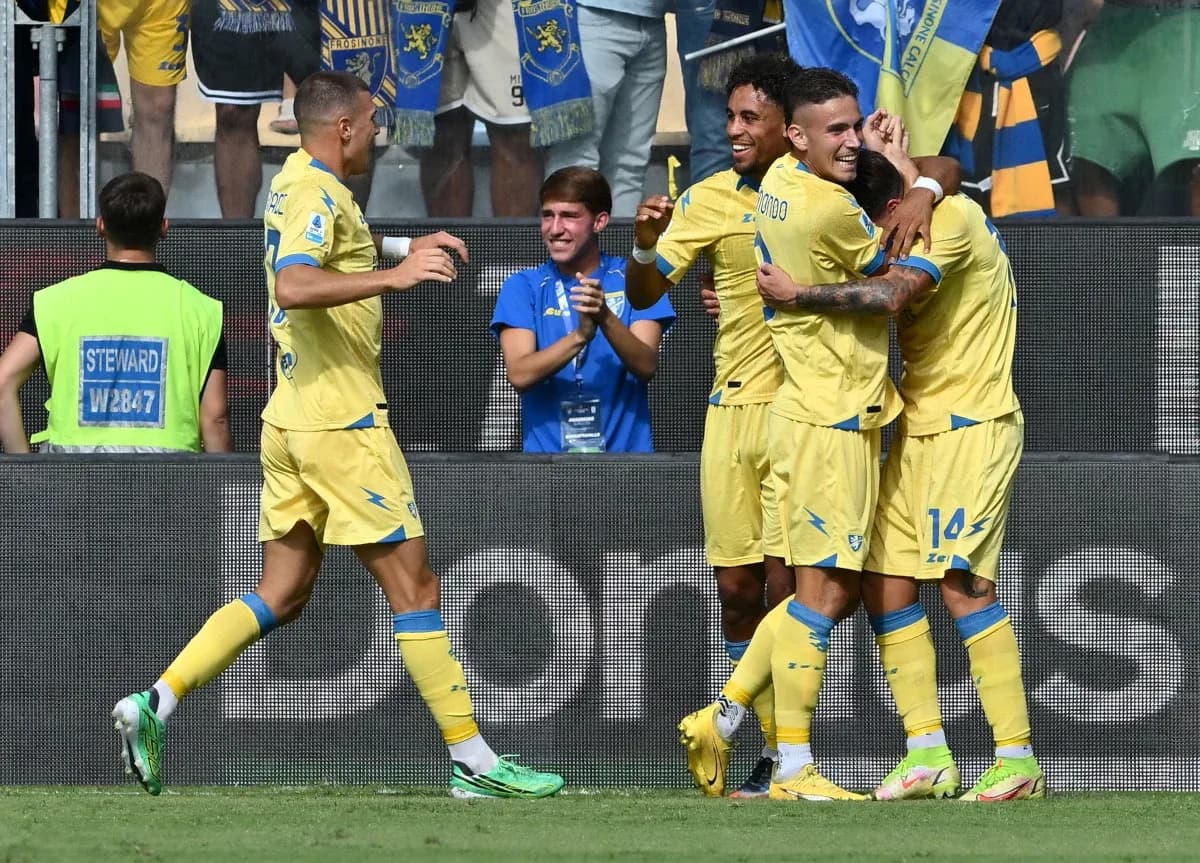
Juventus Edges Lecce 1-0 in Serie A Clash
Lecce’s 0-1 home defeat to Juventus at Stadio Ettore Giardiniero - Via del Mare was defined by an early structural shock and then ninety minutes of game-state management. D. Vlahovic’s strike in the 1' gave Luciano Spalletti’s side a platform to control territory and tempo. From there, Juventus’ 4-2-3-1, with its double pivot and aggressive front four, leveraged a clear technical superiority in possession and chance volume, while Lecce’s mirror 4-2-3-1 under Eusebio Di Francesco struggled to convert sporadic transitions into sustained pressure.
I. Executive Summary (Score, Venue, Round)
In a Serie A Regular Season - 36 fixture, Juventus edged Lecce 0-1, the decisive moment arriving almost immediately. With the visitors enjoying 65% possession and a 15–8 shot advantage (14–6 from inside the box), the match evolved into a controlled away performance. Lecce’s compact 4-2-3-1 could not consistently disrupt Juventus’ build-up nor generate enough final-third presence, reflected in their 0.88 xG against Juventus’ 2.16. Despite the narrow scoreline, the underlying metrics point to a Juventus display based on structural dominance and efficient defensive control once ahead.
II. Scoring Sequence & Disciplinary Log
Scoring and VAR chronology (in event order):
- 1' – Goal: D. Vlahovic (Juventus), assisted by A. Cambiaso. A textbook early pattern: Juventus built quickly down the left, Cambiaso advanced from full-back and delivered for Vlahovic to finish, immediately tilting the tactical landscape.
- 50' – VAR: A potential goal by Dušan Vlahović (Juventus) was disallowed by VAR. Juventus’ vertical threat remained, but the technology intervention preserved the 0-1 scoreline.
- 61' – VAR: A potential goal by Pierre Kalulu (Juventus) was disallowed by VAR. Again, Juventus’ set-piece or secondary-phase presence produced a finishing action, but structural superiority did not translate into a second official goal.
Substitutions (using required template):
- 62' – Lecce: G. Jean (IN) came on for O. Ngom (OUT), adding fresh legs and more aggression from the back.
- 70' – Lecce: T. J. Helgason (IN) came on for D. Veiga (OUT), shifting the balance slightly towards midfield creativity.
- 76' – Lecce: F. Camarda (IN) came on for W. Cheddira (OUT), changing the reference point up front.
- 76' – Lecce: K. Ndri (IN) came on for L. Banda (OUT), seeking more direct running and penetration.
- 77' – Juventus: E. Holm (IN) came on for D. Vlahovic (OUT), moving Juventus towards a more conservative, structurally solid shape without a classic target 9.
- 83' – Juventus: J. David (IN) came on for A. Cambiaso (OUT), preserving energy and maintaining width.
- 83' – Juventus: J. Boga (IN) came on for K. Yildiz (OUT), adding ball-carrying threat in transition.
- 83' – Juventus: E. Zhegrova (IN) came on for F. Conceicao (OUT), refreshing the right-sided attacking lane.
- 86' – Juventus: F. Gatti (IN) came on for W. McKennie (OUT), reinforcing the defensive block for the closing phase.
Disciplinary log (all cards, exact reasons):
- 80' Francisco Conceição (Juventus) — Foul
- 82' Gaby Jean (Lecce) — Argument
Card totals: Lecce: 1, Juventus: 1, Total: 2.
III. Tactical Breakdown & Personnel
Both sides lined up in a 4-2-3-1, but the same base shape produced very different dynamics. Juventus’ back four of A. Cambiaso, L. Kelly, Bremer and P. Kalulu operated with a high line supported by an assertive double pivot of M. Locatelli and T. Koopmeiners. Their ability to circulate under pressure is visible in Juventus’ 501 passes, 430 accurate (86%), and 65% possession. The pivot consistently created 3v2s against Lecce’s first line, pulling Y. Ramadani and O. Ngom out of their slots and opening half-spaces for K. Yildiz and F. Conceicao.
The early goal was tactically decisive. Once ahead, Juventus could compress the field, with W. McKennie often stepping into the right half-space to form a situational 2-3-2-3 in possession. This allowed them to maintain a high volume of entries into the box (14 shots inside the area) and sustain pressure that produced two disallowed potential goals via VAR. The repeated ability to reach finishing zones, even if the score did not inflate, underlined structural superiority rather than randomness.
Lecce’s 4-2-3-1 was more reactive. The back four of A. Gallo, Tiago Gabriel, J. Siebert and D. Veiga had to defend large spaces, especially once Lecce pushed their full-backs slightly higher to chase the game. The double pivot of Ramadani and Ngom struggled to both screen passing lanes into Vlahovic and McKennie and support the press on Locatelli/Koopmeiners. As a result, Lecce’s defensive index was heavily reliant on last-line interventions and goalkeeping: W. Falcone registered 5 saves, a clear indicator of sustained Juventus pressure and of Lecce’s need to collapse deep around their box.
Going forward, Lecce’s structure produced only 8 total shots (6 inside the box, 2 outside) and a modest 0.88 xG. With just 267 passes, 196 accurate (73%), their possession phases were short and often vertical, looking for L. Banda’s direct running on the left and W. Cheddira’s ability to pin centre-backs. However, Juventus’ central pairing of Bremer and Kelly dealt well with Cheddira’s presence, while Kalulu’s athleticism allowed him to recover in depth against Banda. The lack of a stable central playmaker meant Lecce’s “10” line—S. Pierotti and L. Coulibaly operating between the lines—rarely received clean, front-facing possession.
The substitutions reflected tactical needs. Di Francesco’s introduction of G. Jean at 62' for Ngom added a more assertive, front-foot defender who later received a yellow card for “Argument” at 82', signaling Lecce’s growing frustration. T. J. Helgason’s entry for D. Veiga rebalanced the side towards more midfield occupation, but without significantly altering the chance quality. The double attacking change at 76'—F. Camarda for Cheddira and K. Ndri for Banda—was an attempt to refresh the pressing and attacking reference points, yet Juventus’ defensive reconfiguration (Holm and later Gatti) ensured the block remained compact.
For Juventus, the withdrawal of Vlahovic at 77' for E. Holm shifted the team into a more conservative posture, with less emphasis on direct central finishing and more on lane control and transition defense. The triple change at 83' (David, Boga, Zhegrova) injected pace and ball-carrying, preserving the threat of counters to keep Lecce honest and prevent them from committing numbers recklessly. The late introduction of F. Gatti for McKennie at 86' effectively converted Juventus into a more robust, hybrid back five in the closing minutes, prioritizing aerial dominance and box protection.
Goalkeeper reality underscores the tactical story. W. Falcone’s 5 saves versus M. Di Gregorio’s 3 saves aligns with Juventus’ higher xG (2.16) and shot volume. Both keepers show identical “goals prevented” at 0.64, suggesting that, relative to shot quality faced, each performed to a similar standard, but Di Gregorio benefited from a more controlled defensive environment, while Falcone was repeatedly exposed to high-value chances.
IV. The Statistical Verdict
The statistical profile is clear. Juventus’ 65% possession, 501 passes (430 accurate, 86%) and 15 shots (6 on target) versus Lecce’s 35% possession, 267 passes (196 accurate, 73%) and 8 shots (3 on target) paint a picture of territorial and technical dominance. The xG split—2.16 for Juventus against 0.88 for Lecce—confirms that the 0-1 scoreline actually flatters the hosts in terms of chance quality.
Defensively, Lecce committed only 7 fouls to Juventus’ 18, a function of spending long periods in a low block rather than pressing high. The card count, Lecce 1 and Juventus 1, reflects isolated incidents—Francisco Conceição’s “Foul” at 80' and Gaby Jean’s “Argument” at 82'—rather than a chronically ill-disciplined game. Corner kicks (7–1 to Juventus) and offsides (6–2 against Juventus) further emphasize that Spalletti’s side repeatedly pushed the last line and lived in the attacking third.
Overall form-wise, Juventus combined structural control, high passing accuracy and repeated box entries to manage the game once ahead. Lecce’s defensive index—anchored by Falcone’s 5 saves and a relatively low foul count—prevented a heavier defeat, but their limited possession and modest xG underline the attacking constraints of their current 4-2-3-1 against top opposition.