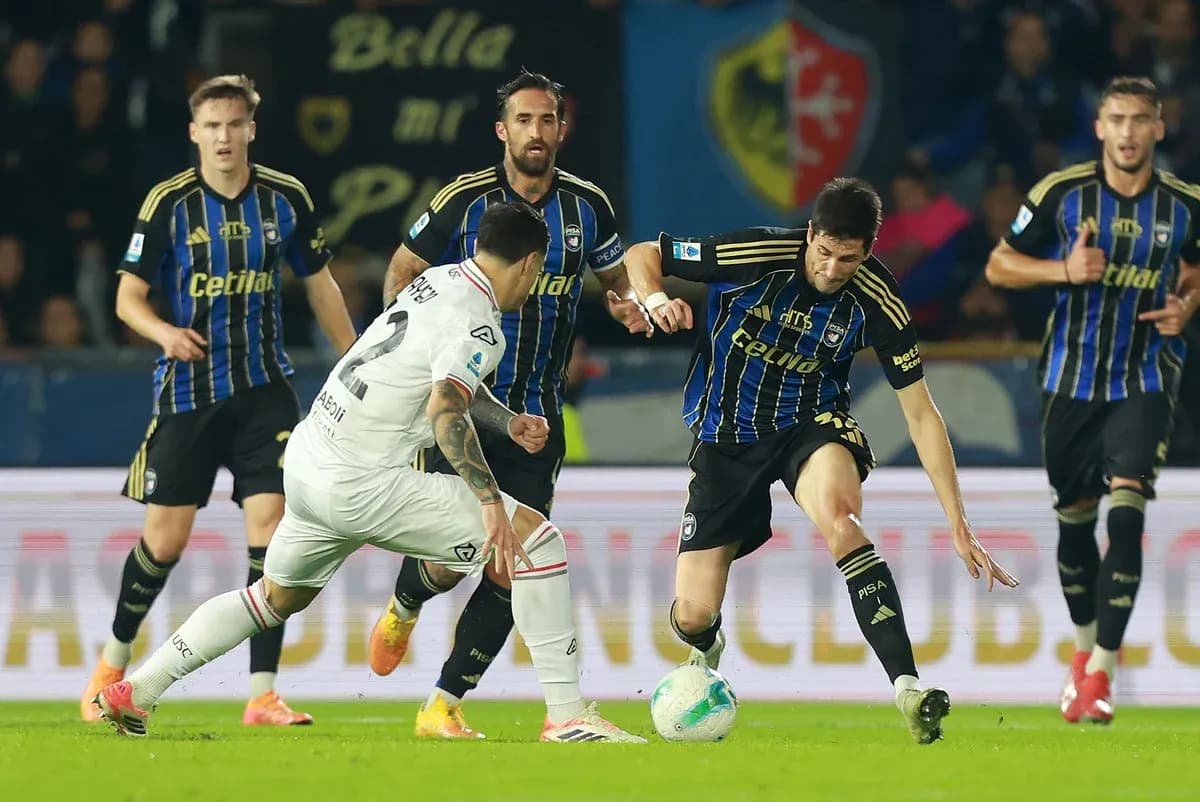
Cremonese Dominates Pisa in Tactical Display
Cremonese’s 3-0 home win over Pisa at Stadio Giovanni Zini was a tactical strangling disguised as a routine scoreline. In a Serie A Round 36 fixture, Marco Giampaolo’s 4-4-2 monopolised the ball, stretched a Pisa side reduced to nine men, and translated structural dominance into steady, controlled scoring: 1-0 at half-time, 3-0 by full-time. The statistical profile – 77% possession, 10–0 in total shots, 7–1 in corners – underlines how completely Cremonese dictated territory and tempo, while Pisa’s 3-5-2 collapsed under repeated defensive emergencies and indiscipline.
I. Scoring Sequence & Disciplinary Log
Disciplinary log (chronological, with reasons):
- 16' Rosen Bozhinov (Pisa) — Foul
- 23' Rosen Bozhinov (Pisa) — Foul
- 23' Rosen Bozhinov (Pisa) — Foul
- 49' Arturo Calabresi (Pisa) — Foul
- 57' Felipe Loyola (Pisa) — Foul
- 89' Malthe Højlholt (Pisa) — Foul
Cremonese: 0 cards, Pisa: 6 (4 yellow, 2 red), Total: 6
The game’s tactical story is written in those early minutes. Pisa’s right-sided centre-back Rosen Bozhinov, already struggling to contain Cremonese’s left flank, was booked at 16' for a Foul. Seven minutes later, at 23', he committed another Foul, drawing a second yellow and an immediate Red Card, leaving Pisa down to ten and forcing Oscar Hiljemark to abandon any meaningful front-foot plan.
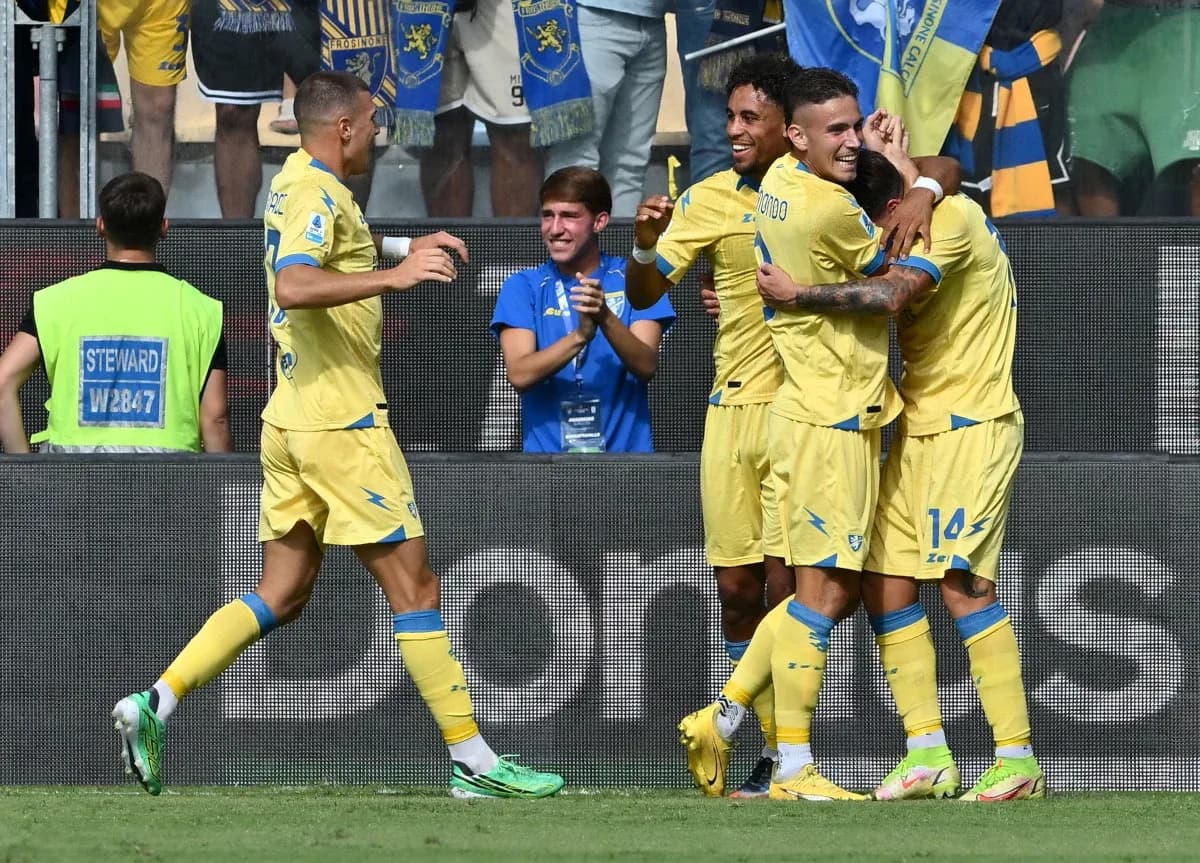
Cremonese converted numerical superiority into a lead on 31', when J. Vardy struck a Normal Goal for 1-0. Pisa reacted with a double reshuffle at 37': S. Moreo (OUT) was replaced as A. Calabresi (IN) came on, and M. Leris (OUT) made way as S. Angori (IN) came in, signalling a move to restore defensive balance and protect the flanks.
The second half opened with further Pisa indiscipline. At 49', Arturo Calabresi was booked for a Foul, tightening the tactical handcuffs on Pisa’s back line. Two minutes later, at 51', Cremonese doubled their lead: F. Bonazzoli finished a Normal Goal after service from J. Vandeputte, making it 2-0 and effectively ending the contest as a competitive duel.
Pisa’s resistance disintegrated further at 57', when Felipe Loyola saw a straight Red Card for a Foul, dropping the visitors to nine men. From there, Cremonese managed the game with the ball and with substitutions: Y. Maleh (OUT) as M. Thorsby (IN) came on, and G. Pezzella (OUT) as A. Zerbin (IN) entered at 59', adding fresh legs and width against a shrinking block.
At 65', Pisa attempted damage control: I. Vural (OUT) as M. Hojholt (IN) came on, and F. Stojilkovic (OUT) as H. Meister (IN) entered, effectively conceding attacking threat to stabilise central zones. Cremonese then rotated their forwards at 72': J. Vardy (OUT) as A. Sanabria (IN) came on, and J. Vandeputte (OUT) as D. Okereke (IN) entered, keeping pressing intensity and depth.
Pisa’s bench was used again at 72', with E. Akinsanmiro (OUT) as G. Piccinini (IN) came on, another defensive-minded adjustment. At 85', S. Luperto (OUT) as F. Folino (IN) came in for Cremonese, before the hosts added a third at 86': D. Okereke scored a Normal Goal, assisted by A. Zerbin, for 3-0. The final disciplinary note came at 89', when Malthe Højlholt was booked for a Foul, capping Pisa’s chaotic defensive evening.
II. Tactical Breakdown & Personnel
Giampaolo’s 4-4-2 was built on extreme ball retention and territorial suffocation. Cremonese completed 735 passes, 684 accurate (93%), using the back four of F. Terracciano, M. Bianchetti, S. Luperto and G. Pezzella as a circulating platform. With Pisa dropping deeper after the first red card, Cremonese’s centre-backs could step into midfield, drawing out Pisa’s first line and then playing into the half-spaces for J. Vandeputte and Y. Maleh.
The double pivot of A. Grassi and Y. Maleh controlled central circulation, frequently creating 3v2s against Pisa’s remaining midfielders. T. Barbieri and Vandeputte provided width on the right and left respectively, pinning Pisa’s wing-backs and preventing counter-attacking outlets. Once Pisa went down to nine, Cremonese’s shape resembled a 2-4-4 in possession, with both full-backs high and the wide midfielders operating almost as inside forwards.
Up front, J. Vardy and F. Bonazzoli interpreted the space differently but complementarily. Vardy’s movement across the line and into the channels disrupted Pisa’s three-man defence, particularly targeting the right side where Bozhinov initially struggled. Bonazzoli occupied central zones, pinning the remaining centre-backs and opening pockets for late runs. His goal at 51' – assisted by Vandeputte – was the product of Cremonese’s sustained occupation of the final third and their ability to find a free man between Pisa’s collapsing lines.
After the red cards, Giampaolo’s substitutions were tactical, not reactive: Thorsby added physicality and aerial presence in midfield to secure transitions, while Zerbin and Okereke brought direct running and one-versus-one threat against tiring defenders. Okereke’s 86' goal, supplied by Zerbin, was emblematic: fresh attackers exploiting wide overloads against a nine-man low block.
Defensively, Cremonese were almost untested. Pisa registered 0 total shots and 0 Shots on Goal, leaving E. Audero without a recorded save. The home side’s Defensive Index – inferred from 0 shots conceded, 10 fouls committed, and constant territorial control – was elite on the day, though their Overall Form in attack slightly under-delivered relative to dominance: 10 Total Shots and 6 Shots on Goal from 77% possession and 1.15 xG suggests control over chance volume rather than high-risk, high-yield finishing.
Pisa’s 3-5-2 under Hiljemark never settled. Initially, the back three of S. Canestrelli, A. Caracciolo and Bozhinov was meant to provide a stable platform with wing-backs pushing on, but early fouls and the dismissal of Bozhinov forced a reactive reshaping into something closer to a 4-4-1 and later a 4-3-1. The midfield of I. Toure, E. Akinsanmiro, F. Loyola, I. Vural and M. Leris was overrun, unable to press high due to numerical inferiority and constantly dragged side-to-side by Cremonese’s width.
The introduction of Calabresi, Angori, Hojholt, Meister and Piccinini all pointed toward damage limitation. Pisa finished with 218 passes, 161 accurate (74%), and only 23% Ball Possession, rarely stringing sequences long enough to exit their half. Their disciplinary collapse – four yellows, two reds, all for Foul – reflected a team defending in permanent emergency, arriving late into duels and lacking structural protection.
In goal, A. Semper made 2 Goalkeeper Saves, but the metric "goals_prevented" at -1.18 and 0 expected_goals for Pisa underline that his influence was limited to delaying the inevitable rather than changing the game state.
III. The Statistical Verdict
The numbers crystallise the tactical reality. Cremonese’s 3-0 win from 1.15 xG indicates clinical enough finishing within a controlled game state; they did not need to chase high xG chances because Pisa’s attacking threat was non-existent. Pisa’s 0 shots and 0 xG are a direct outcome of red cards, deep defensive positioning, and Cremonese’s pressing and rest-defence structures.
Cremonese’s Overall Form on the day was that of a high-possession, low-risk side: 10 Total Shots, 6 on target, 7 corners, 77% possession, and 735 passes at 93% accuracy. Their Defensive Index – zero shots allowed, zero saves required, and only 10 fouls – speaks to control rather than last-ditch defending.
Pisa’s Overall Form was deeply negative: 0 shots, 1 corner, 12 Fouls, 4 Yellow Cards and 2 Red Cards, with 218 passes at 74% accuracy and 23% possession. The disciplinary disparity – Cremonese 0 cards, Pisa 6 – was not incidental but integral to the tactical story: Cremonese’s structure allowed them to defend without fouling, while Pisa’s collapsing shape forced them into repeated, desperate Fouls that progressively reduced their numbers and eliminated any tactical flexibility.