Egypt Triumphs Over Australia in World Cup Knockout
Under the vast roof of the Dallas Cowboys’ arena, in air-conditioned tension and with 70,000 voices bouncing off the steel, Egypt and Australia dragged each other to the edge of exhaustion – and then to the penalty spot.
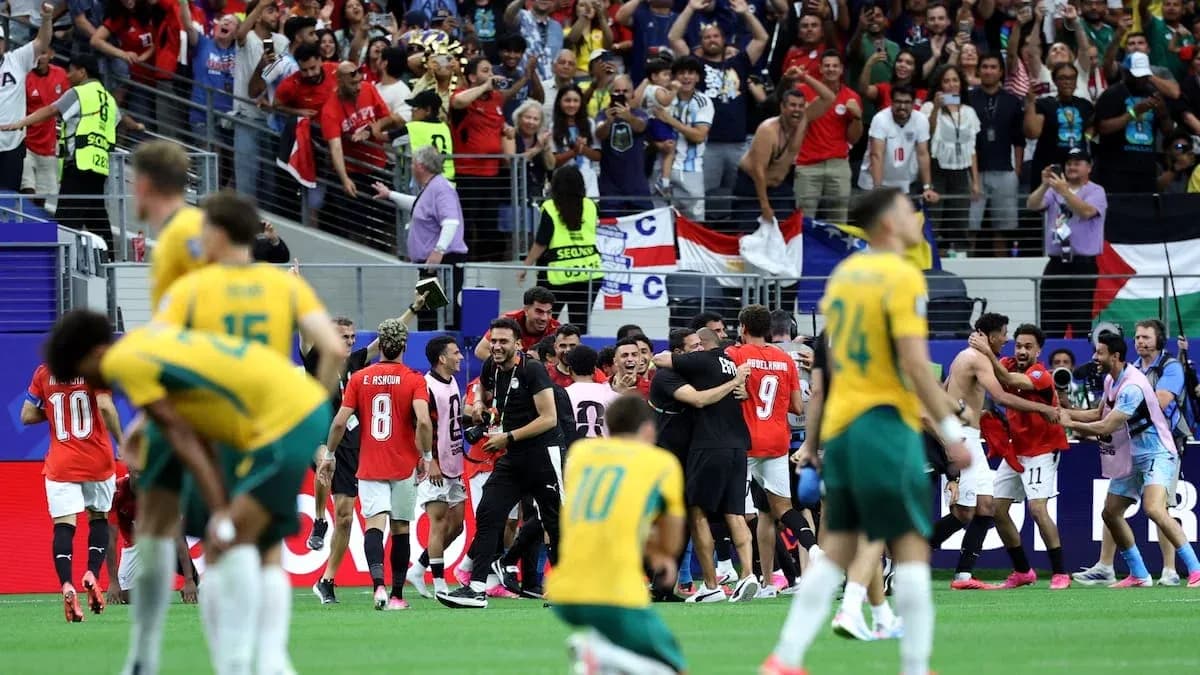
In the end, it was Egypt who walked away, Mohamed Salah in tears of joy, Australia on their knees.
A gamble from the spot
Tony Popovic rolled the dice at the last, sending on Mathew Ryan specifically for the shootout. It was a bold, old-school manager’s call: trust experience, trust the big-game aura.
It unravelled almost immediately.
Shooting towards the end packed with Egypt fans, whistles pouring down like rain, Harry Souttar stepped up first for the Socceroos and smashed his penalty over the bar. Advantage Egypt. The kind of miss that hangs in the air and lingers in the legs of everyone waiting behind you.
From there, five penalties in a row were buried with icy calm. Salah, largely muted in open play, walked up and rolled in his kick with that familiar, unhurried certainty. No sign of the hamstring strain then. Just a superstar doing what he has done for more than a decade.
Australia’s hopes clung to the boots of 18-year-old defender Lucas Herrington. He went high, too high, and the ball crashed off the bar. One kick from the end.
Abdelmaguid stepped forward, blocked out the chaos, and drilled Egypt into the next round. Salah collapsed in tears. Australian players stared at the turf, motionless. A World Cup dream gone in the space of 12 yards.
Egypt strike first, against the flow
The story had begun very differently.
Australia, so blunt in the group stage with just two goals to their name, almost stunned Egypt inside five minutes. Cristian Volpato, the late convert from Italy to the green and gold, rattled the top of the crossbar with a rising effort that had Mostafa Shoubir beaten. A warning shot, loud and clear.
Egypt, who had only just tasted their first ever World Cup win by beating New Zealand 3-1 in the group phase, looked edgy at the back. Passes went astray, clearances sliced. For a moment, it felt like Australia might bully their way on top.
Then, almost out of nowhere, Hossam Hassan’s side struck.
Nestory Irankunda switched off at the back post, losing track of Emam Ashour. Karim Hafez whipped in a teasing cross and Ashour, timing his run perfectly, powered a header home after 13 minutes. His second goal of the tournament, and a finish that underlined why Egypt have leaned on him in this campaign.
The goal flipped the entire dynamic. The onus fell on a shot-shy Australia to chase the game, to take risks they had largely avoided in the group stage.
Yet clear chances refused to come. Ten minutes before the break, Aziz Behich finally tested Shoubir, but his low effort was tame, an easy claim for the goalkeeper whose father, Ahmed, had stood in Egypt’s goal at the 1990 World Cup. The lineage was rich; the shot, anything but.
Bruises, blows and a turning point
The first half became attritional, heavy on collisions and light on quality. Salah, 34 and nursing that recent hamstring issue, drifted on the fringes, rarely able to accelerate into the spaces where he usually does the most damage.
The half ended with a thud. Jordan Bos, one of the quickest players at this World Cup, was left in a heap after a flying, robust challenge from Rabia. Bos stayed down. The replay told its own story. He did not return after the interval, replaced by Kai Trewin, a significant blow to Australia’s attacking thrust on the flank.
Seconds into the second half, Egypt should have buried the contest. Omar Marmoush, the Manchester City attacker, slid a close-range effort wide when it looked easier to score. A let-off that would come back to haunt them.
Egypt’s coach had spoken about Australia’s physical edge, wary of their set-piece threat and aerial power. His concern proved justified.
From an in-swinging Socceroos free-kick, Mohamed Hany buckled under pressure and glanced a header into his own net. One apiece. Hany’s second own goal of the tournament, and a cruel twist in a game Egypt had largely contained.
The equaliser changed everything. Australia grew bolder, Egypt more cautious. The match tilted into a tense arm-wrestle, both teams suddenly aware of what was at stake: neither had ever won a knockout game at a men’s World Cup. History sat just out of reach, taunting both benches.
Egypt finish stronger, Australia hang on
Salah still floated on the edge of things, more decoy than destroyer, but his presence alone stretched Australia’s back line. Deep into added time at the end of 90 minutes, he was involved in the move that almost settled it, only for Patrick Beach to produce a superb, athletic save to deny Ramy. It was the kind of intervention that usually becomes the foundation of a famous story.
Instead, it only delayed the heartbreak.
Egypt ended normal time in the ascendancy, their midfield snapping into duels, their forwards finding pockets of space. Early in extra time, Salah finally found a shooting lane on his weaker right foot and lashed over. The chance came and went. The clock kept draining away. Penalties began to feel less like a possibility and more like a destination.
Neither side could prise open another clear opening. Legs faded. Cramp set in. Coaches paced and gestured, knowing the match had slipped beyond tactics and into the realm of nerve.
From history to heartbreak
When the whistle blew for penalties, both sets of players knew they were stepping into uncharted territory for their countries. One would claim a first men’s World Cup knockout win. The other would carry that wait into another generation.
Popovic’s late switch in goal signalled his intent. Trust the veteran. Trust the moment.
But Souttar’s early miss set a tone Australia could never quite shake. Salah’s assurance from the spot underlined why he remains Egypt’s talisman, even on a night when his influence from open play was limited. Herrington’s miss, brutal for a teenager thrust into such a spotlight, pushed the door wide open.
Abdelmaguid walked through it, coolly and decisively.
Egypt celebrated a landmark victory, a night to sit alongside their greatest achievements on the continental stage, now finally mirrored on the World Cup knockout stage. Australia, who had flirted with an upset and pushed this tie all the way to the wire, were left to reckon with a familiar question.
How many more times can they come this close without finally breaking through?