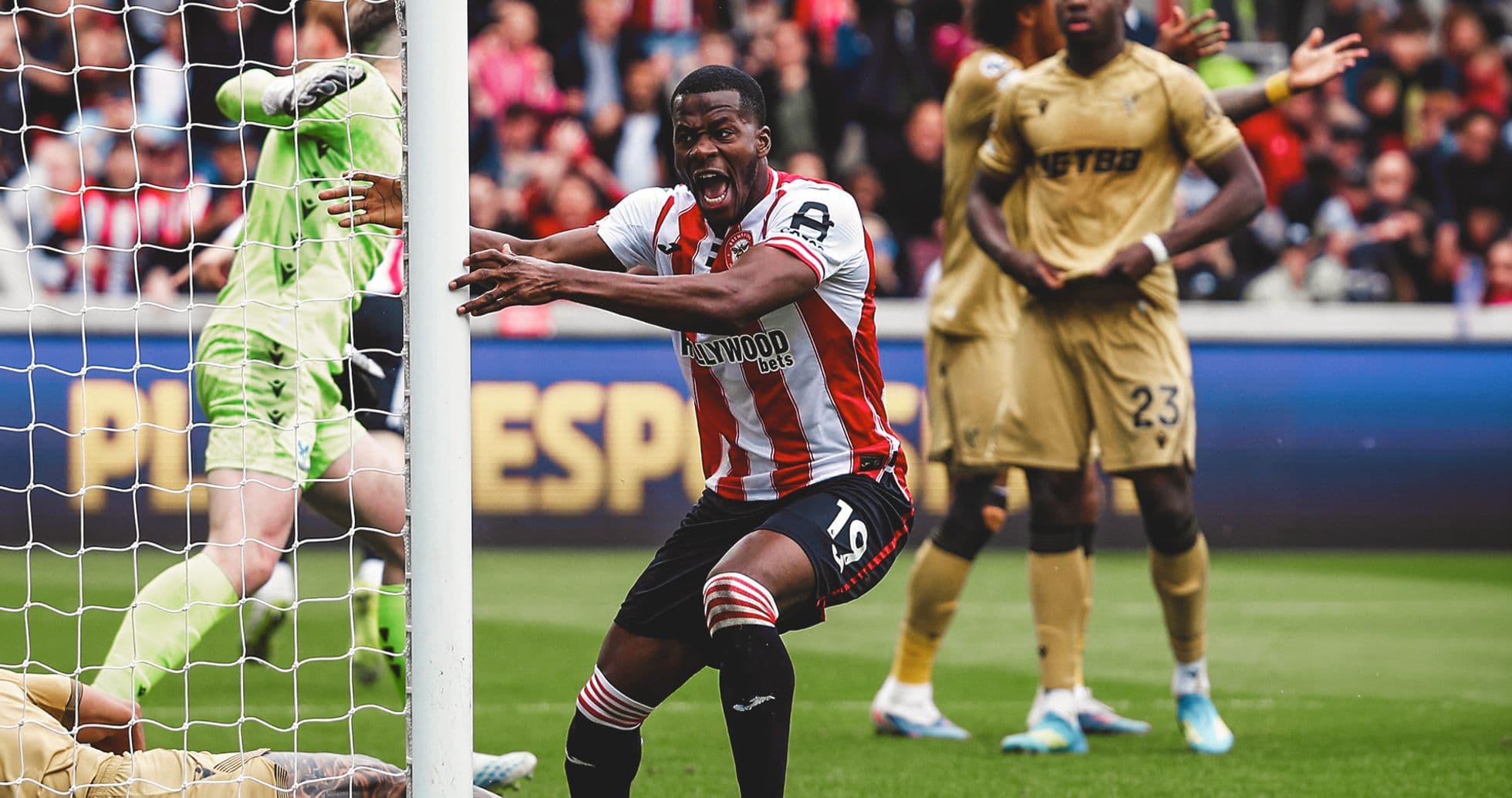
Brentford vs Crystal Palace: Tactical Insights and Match Analysis
The afternoon at Brentford Community Stadium closed with the sense of a story half-finished. A 2-2 draw between Brentford and Crystal Palace, in Round 37 of the Premier League season, left both sides exactly where the table said they belonged: Brentford in 8th on 52 points, Crystal Palace in 15th on 45. Following this result, the numbers tell of two mid-table sides with contrasting identities, but the lineups and patterns hint at managers trying to stretch those identities into something more ambitious.
I. The Big Picture – Structures and Season DNA
Keith Andrews leaned into Brentford’s established template, rolling out a 4-2-3-1 that has been his default this campaign, used 28 times in total. At home they have been quietly formidable: 19 matches played, 8 wins, 8 draws, just 3 defeats. They average 1.7 goals at home and concede 1.1, part of an overall goal difference of +3 (54 scored, 51 conceded in total). That foundation of stability underpinned his selection.
Caoimhín Kelleher anchored the side behind a back four that underlined Brentford’s tactical flexibility. M. Kayode and K. Lewis-Potter were listed as defenders, but their grid positions (2:4 and 2:1) hinted at aggressive full-back roles. Between them, K. Ajer and N. Collins formed a physically imposing central pairing. In front, the double pivot of Y. Yarmolyuk and V. Janelt offered a blend of vertical energy and positional discipline. The attacking trio of D. Ouattara, M. Jensen and M. Damsgaard worked behind the spearhead: I. Thiago, one of the league’s standout forwards this season.
Thiago’s numbers frame Brentford’s attacking story. Across the campaign he has 22 goals in total, from 37 appearances, supported by 66 total shots and 43 on target. He has been the reference point of this system, a penalty-box presence who also presses and duels (513 duels contested, 199 won). Even his penalty record carries narrative weight: 8 scored, 1 missed, a reminder that his ruthlessness is not entirely flawless.
Opposite him, Oliver Glasner doubled down on Crystal Palace’s structural revolution. The 3-4-2-1 has been their tactical backbone, used 32 times in total. At Brentford he went with a familiar shape: D. Henderson in goal; a back three of J. Canvot, M. Lacroix and C. Riad; wing-backs D. Munoz and T. Mitchell flanking the central pair A. Wharton and D. Kamada; and a fluid front three of I. Sarr, Y. Pino and J. S. Larsen.
Palace’s season numbers tell a different tale to Brentford’s. Overall they have scored 40 and conceded 49, for a goal difference of -9. On their travels they have been more dangerous than their league position suggests: 7 away wins, 3 draws and 9 defeats, with 22 away goals at an average of 1.2 per away game, conceding 1.5. This is a side that can punch upwards on the road but rarely controls games for long stretches.
II. Tactical Voids – Absences and Discipline
Both managers were forced to navigate around key absences. Brentford were without F. Carvalho and A. Milambo (both knee injuries) and R. Henry (muscle injury). The absence of Henry, a natural left-sided defender, made the selection of K. Lewis-Potter at left-back more than just a tactical wrinkle; it was a necessity that tilted Brentford slightly more towards attack from that flank, but with potential defensive vulnerability against Palace’s right-sided runners.
Crystal Palace’s missing trio reshaped their spine. C. Doucoure’s knee injury removed a natural ball-winner from midfield, pushing more defensive responsibility onto A. Wharton and D. Kamada. E. Nketiah’s thigh injury limited Glasner’s options for a different type of central forward, and the loss of B. Sosa removed a left-sided option that could have allowed Mitchell to play more conservatively. Instead, Mitchell had to balance the dual role of full-back and auxiliary winger.
Disciplinary trends added another layer to the risk calculus. Brentford’s yellow cards this season skew heavily towards the closing stages: 27.27% of their yellows arrive from 76-90 minutes, with another 22.73% between 61-75. Palace show a similarly volatile profile late in halves, with 18.42% of yellows between 31-45 and another 18.42% in the 76-90 window. Both sides, in other words, become more stretched and more reckless as fatigue bites, and this match followed that pattern in its open, end-to-end conclusion.
III. Key Matchups – Hunter vs Shield, Engine Room Battles
The headline duel was always going to be Thiago against Palace’s back three, and specifically against M. Lacroix. Lacroix’s profile is that of a modern stopper: 60 tackles, 18 blocked shots and 45 interceptions this season, plus an 88% passing accuracy from 1,656 passes. He is also no stranger to the darker arts, with 34 fouls committed and a red card on his record. This was the classic “Hunter vs Shield” confrontation: Thiago’s penalty-box instincts, aerial threat and physicality against Lacroix’s anticipation and aggression.
Thiago’s volume of duels (513 total) meant Lacroix and his partners were always going to be dragged into physical contests. Palace’s three-at-the-back structure is designed to crowd that zone, but Brentford’s wide players – Ouattara and Damsgaard – constantly threatened to isolate the outside centre-backs and force Lacroix into covering wider channels. Every Brentford cross or cut-back was essentially a test of whether Palace’s central shield could keep Thiago from turning half-chances into goals.
In midfield, the “Engine Room” battle pitted Brentford’s double pivot against Palace’s central pair. Janelt, the metronome, and Yarmolyuk, the more vertical presence, were tasked with breaking Palace’s first line and feeding Jensen between the lines. For Palace, Wharton and Kamada had to do two jobs at once: protect the central corridor without Doucoure, and still provide progression into Sarr and Pino.
The wing-backs were the swing factor. Munoz and Mitchell, stationed as the wide four in Palace’s 3-4-2-1, had to decide whether to pin back Brentford’s full-backs or respect the threat of Ouattara and Damsgaard. When Palace pushed high, Brentford found space in behind; when they sat deeper, Thiago could receive more direct service and pin the back line.
IV. Statistical Prognosis – What the Numbers Say
Following this result, the draw felt like a statistical equilibrium between Brentford’s home strength and Palace’s away punch. Brentford’s season-long profile at home – 33 goals scored and 21 conceded – suggests a side that typically edges games by fine margins. Palace’s away numbers – 22 scored, 28 conceded – speak of a team that lives on transitions and moments rather than control.
Neither side’s season-long xG data is available here, but proxies are clear. Brentford’s total scoring rate of 1.5 goals per match, combined with 10 clean sheets overall and 12 matches where they failed to score, paints a picture of streaky efficiency: when Thiago is serviced, they look like a European contender; when he is isolated, they can be blunted. Palace’s 1.1 goals per match overall, offset by 12 clean sheets, indicates a team that often plays on a knife-edge, willing to accept low-scoring battles away from home.
The penalty narratives underline their margins. Brentford have taken 8 penalties and scored all 8 in total this season, with no misses recorded at team level, even though Thiago himself has missed 1 in his personal record. Palace, too, are perfect from the spot as a team this campaign, scoring all 8 penalties they have been awarded, with J. Mateta converting 4 without a miss. In tight games like this, those small edges often decide outcomes; here, open play and structural matchups dictated a more chaotic, shared outcome.
In the end, 2-2 felt like a fitting reflection of where these squads stand. Brentford, with Thiago as their spearhead and a 4-2-3-1 that maximises his presence, look like a side on the cusp of European qualification, but still prone to defensive lapses. Crystal Palace, shaped by Glasner’s 3-4-2-1 and stabilised by Lacroix at the back, remain a dangerous, if inconsistent, traveller. The draw preserves both narratives: Brentford as upwardly mobile, Palace as awkward opponents whose structure and away threat can disrupt almost anyone, but rarely for long enough to completely rewrite the story.