Manchester City vs Aston Villa: Premier League Final Twist
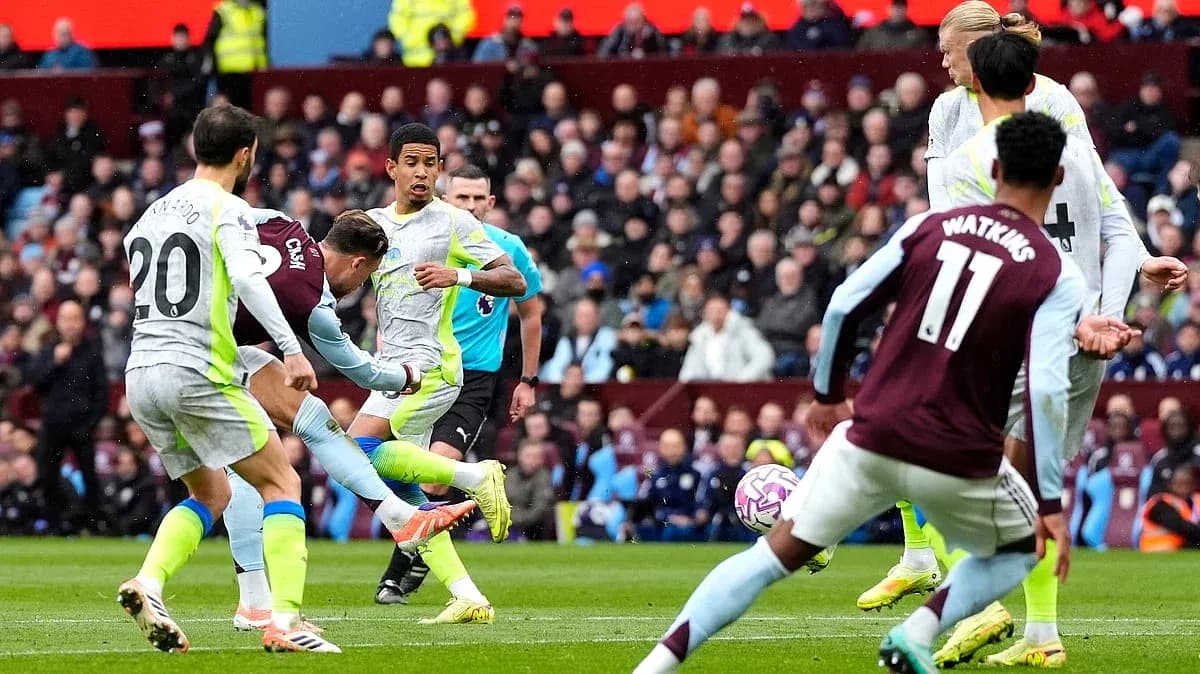
The Etihad Stadium’s final act of the 2025–26 Premier League season ended in a twist. Manchester City, heading into this game as the division’s most polished home side, fell 2–1 to Aston Villa despite leading 1–0 at half-time. Over 38 games City finish 2nd on 78 points, their overall goal difference a commanding +42 (77 scored, 35 conceded). Villa’s comeback secures 4th with 65 points and a leaner +7 (56 for, 49 against), a testament to Unai Emery’s capacity to weaponise structure and suffering on their travels.
I. The Big Picture – Styles Colliding at the Etihad
Across the campaign at home, City have been relentless: 14 wins from 19, with 45 goals scored at an average of 2.4 per match and only 14 conceded at 0.7. Their season-long tactical identity is clear in the data and in Pep Guardiola’s team sheet: possession-heavy, high-control football, usually through 4-1-4-1 or 4-3-3, but here morphing into a 4-2-2-2.
J. Trafford’s inclusion in goal behind a back four of R. Lewis, J. Stones, R. Dias and N. Ake sets a familiar platform. Ahead of them, Nico and Bernardo Silva form a double pivot, with A. Semenyo and Savinho as narrow attacking midfielders behind a fluid front two of P. Foden and T. Reijnders. It is a shape designed to flood central zones, with the full-backs stepping inside and the “tens” attacking the half-spaces.
Villa arrive with a different energy but an equally clear identity. Over the season they have leaned heavily on 4-2-3-1 (34 league matches in that shape), and Emery stays loyal to it: M. Bizot deputises for the absent E. Martinez, shielded by a back four of A. Garcia, V. Lindelof, T. Mings and I. Maatsen. L. Bogarde and Douglas Luiz sit as a double pivot, with L. Bailey, R. Barkley and E. Buendia supporting O. Watkins as the lone forward.
On their travels this campaign, Villa have been resilient rather than dominant: 7 away wins, 6 draws, 6 defeats, scoring 24 and conceding 27, an away average of 1.3 goals for and 1.4 against. This is a side built to absorb pressure and strike in moments, and at the Etihad they execute that script to perfection.
II. Tactical Voids – Absences and Discipline
The most significant absences are all on the Villa side. B. Kamara’s knee injury strips Emery of his most natural ball-winning screen in midfield, while E. Martinez’s finger injury removes a vocal, high-level shot-stopper from the spine. Alysson’s muscle injury further trims depth. The response is structural: Bogarde’s selection alongside Douglas Luiz signals a more conservative double pivot, with the ball-winning burden spread rather than concentrated.
City, by contrast, arrive with their attacking stars fit but make an intriguing call: Erling Haaland, the league’s top scorer with 27 goals and 3 penalties scored from 4 (one missed), starts on the bench. It is a deliberate tactical gamble – more fluidity, less reference point – and it shapes the narrative of the afternoon.
Disciplinary trends add another layer. Across the season, City’s yellow cards show a late-game surge: 20.90% of their cautions arrive between 76–90 minutes, with another 16.42% from 91–105. Villa’s bookings peak earlier in the second half: 29.31% between 46–60 minutes, followed by 17.24% in both the 61–75 and 91–105 ranges. In a match where City are chasing after falling behind, that late-game City aggression and Villa’s mid-half volatility become fertile ground for tactical fouls, time management and territorial battles.
III. Key Matchups – Hunter vs Shield, Engine Room vs Enforcer
Hunter vs Shield
Even without starting, Haaland’s presence looms over Villa’s back line. Overall, City have averaged 2.0 goals per game this season, while Villa have conceded 1.3. The “hunter” is not just Haaland; it is a system. Foden, with 7 goals and 5 assists in the league, drifts between lines from a nominal forward role here, while Savinho and Semenyo attack the channels around Mings and Maatsen.
Villa’s shield is multi-layered. Lindelof and Mings must manage depth and aerial duels, but the real work is in front of them. Douglas Luiz, with his positional intelligence, and Bogarde’s legs form the first barrier against City’s central overloads. Their task is to keep City’s attacks in front of them, forcing shots from less optimal zones and protecting Bizot, who steps into Martinez’s shadow.
Engine Room
The true duel of the day is in midfield. For City, Bernardo Silva is the metronome and the irritant. Over the season he has produced 2 goals, 4 assists, 53 tackles and 6 blocked shots, with 10 yellow cards reflecting his willingness to break rhythm with tactical fouls. In this 4-2-2-2, he and Nico are asked to both construct and compress – building the first phase and then collapsing on Villa’s counters.
Villa’s engine is more distributed. Douglas Luiz orchestrates the first pass out, while Barkley and Buendia connect transitions to Watkins. Bailey’s pace pins back Ake and forces City to respect the threat in behind, preventing them from fully committing both full-backs to the attack.
In the wider creative stakes, the league data underlines how much quality sits on both benches and pitch. R. Cherki’s 12 assists and 86% passing accuracy, plus Foden’s 56 key passes, speak to City’s depth of invention. For Villa, M. Rogers’ 10 goals and 6 assists, and L. Digne’s 6 assists from left-back, show there were alternative creative profiles available if Emery had wanted to tilt the game differently.
IV. Statistical Prognosis – Why the Game Tilted Villa’s Way
Following this result, the numbers tell of a structural upset rather than a fluke. City’s home defensive record – only 14 conceded in 19 before this – is breached twice by a Villa side that, on their travels, average 1.3 goals. The explanation lies in the tactical intersection: City’s aggressive late-game push, historically accompanied by a spike in yellow cards, collides with a Villa team drilled in second-half resilience and counter-punching.
City’s season-long xG profile (implied by 77 goals at 2.0 per game and a high volume of chances) suggests they will usually overwhelm opponents, especially at home. Villa’s defensive solidity is more fragile statistically, but Emery compensates with structure: a compact 4-2-3-1 block, disciplined full-backs, and a lone striker in Watkins who, with 16 league goals and 38 shots on target, punishes any looseness in the defensive line.
In pure probabilistic terms, a typical Etihad fixture between these sides would skew towards a City win, with something like a 2–1 or 3–1 scoreline aligning with their attacking averages and Villa’s away concessions. Yet football lives in the margins: a rotated structure, a missing elite goalkeeper, and the psychological weight of a season’s final day all bend the curve.
Villa survive the early storm, concede once before the break, then exploit City’s increasingly stretched shape after half-time. The hunter’s volume of chances is there, but the shield holds just enough, and in the critical moments it is Villa’s verticality – through Watkins’ movement, Bailey’s pace and the lines of Barkley and Buendia – that defines the narrative.
In the end, a season’s worth of numbers meet 90 minutes of detail. City remain the division’s most consistent attacking machine, but at the Etihad on this final afternoon, it is Emery’s calculated risk, his patched-together shield without Kamara and Martinez, that bends the story and secures a 2–1 away triumph.