Arsenal Controls Burnley for 1-0 Victory at Emirates
Arsenal’s 1-0 win over Burnley at Emirates Stadium was a territorial stranglehold built on structure and control rather than volume of chances. Mikel Arteta’s 4-3-3 delivered 61% possession, 510 passes and an xG of 1.03, translating into a single decisive moment from Kai Havertz. Burnley, in Mike Jackson’s 4-2-3-1, accepted life without a shot on target and tried to compress the central lane, but their 16 fouls and three late bookings underlined how reactive they became. With Arsenal limiting Burnley to just five attempts (0.21 xG) and zero saves required from David Raya, the contest evolved into a managed, low-risk closing of a narrow lead rather than an expansive attacking showcase.
Arsenal’s attacking structure was clear from the opening phase. The back four of C. Mosquera, William Saliba, Gabriel and Riccardo Calafiori provided a wide base, with Declan Rice anchoring in front. Rice’s role as single pivot in the 4-3-3 allowed both Martin Odegaard and Eberechi Eze to take higher, more aggressive positions between Burnley’s lines. Bukayo Saka and Leandro Trossard held the width, while Havertz operated as a flexible central forward, often dropping to connect play. The passing profile – 510 total passes, 440 accurate at 86% – reflects a patient, circulation-heavy approach, using side-to-side movement to shift Burnley’s 4-2-3-1 block and open half-spaces for the advanced interiors.
The breakthrough on 37 minutes encapsulated that design: Saka, starting wide on the right, combined from an advanced position to feed Havertz, whose finish gave Arsenal their 1-0. It was one of just three shots on goal from 13 total attempts, but the combination of sustained territory (nine shots inside the box) and compact rest-defense meant Arsenal could afford to prioritize control over risk once in front.
Out of possession, Arsenal’s shape was equally important. With the front three pressing Burnley’s build-up, Rice screened passes into Zian Flemming, while Odegaard and Eze stepped onto the double pivot of Florentino and L. Ugochukwu. The back line’s starting positions were aggressive, compressing the pitch and helping to hold Burnley to only five shots, most of them from outside the box (three attempts from range). The fact that Raya registered zero goalkeeper saves and still posted 0.85 goals prevented in the data block underlines how little direct threat actually reached his goal: Arsenal’s defensive line and midfield screen resolved danger before it turned into on-target efforts.
Burnley’s 4-2-3-1, on paper, offered width through L. Tchaouna and Jaidon Anthony with Flemming as the central reference. In practice, they were pushed so deep that the shape often resembled a 4-5-1. Their 325 passes (254 accurate at 78%) show a side that could occasionally connect phases but rarely progress into genuinely dangerous zones. The double pivot of Florentino and Ugochukwu spent more time collapsing towards their own box than launching transitions, and with no shots on goal and an xG of 0.21, Burnley’s attacking presence was largely theoretical.
The disciplinary pattern reveals how much defending Burnley had to do. Hannibal Mejbri’s 28' yellow card for Time wasting already suggested a side trying to disrupt rhythm rather than trade attacks. Later, in added time, Lucas Pires and Zian Flemming were both booked for Foul, capping a total of 16 fouls and three yellow cards. Arsenal, by contrast, committed only seven fouls and received a single booking: Kai Havertz in the 67', also for Foul. The asymmetry in fouls and cards mirrors the flow of the game – Arsenal on the ball, Burnley chasing and breaking play.
Second Half Substitutions
Substitutions in the second half were tactically coherent rather than transformative. For Burnley, Zeki Amdouni (IN) came on for Hannibal Mejbri (OUT) at 70', J. Laurent (IN) for L. Ugochukwu (OUT) at 71', J. Ward-Prowse (IN) for Florentino (OUT) at 78', J. Bruun Larsen (IN) for L. Tchaouna (OUT) at 82', and B. Humphreys (IN) for Maxime Esteve (OUT) also at 82'. These changes nudged Burnley towards a more progressive midfield and fresh wide options, but Arsenal’s structure limited their impact.
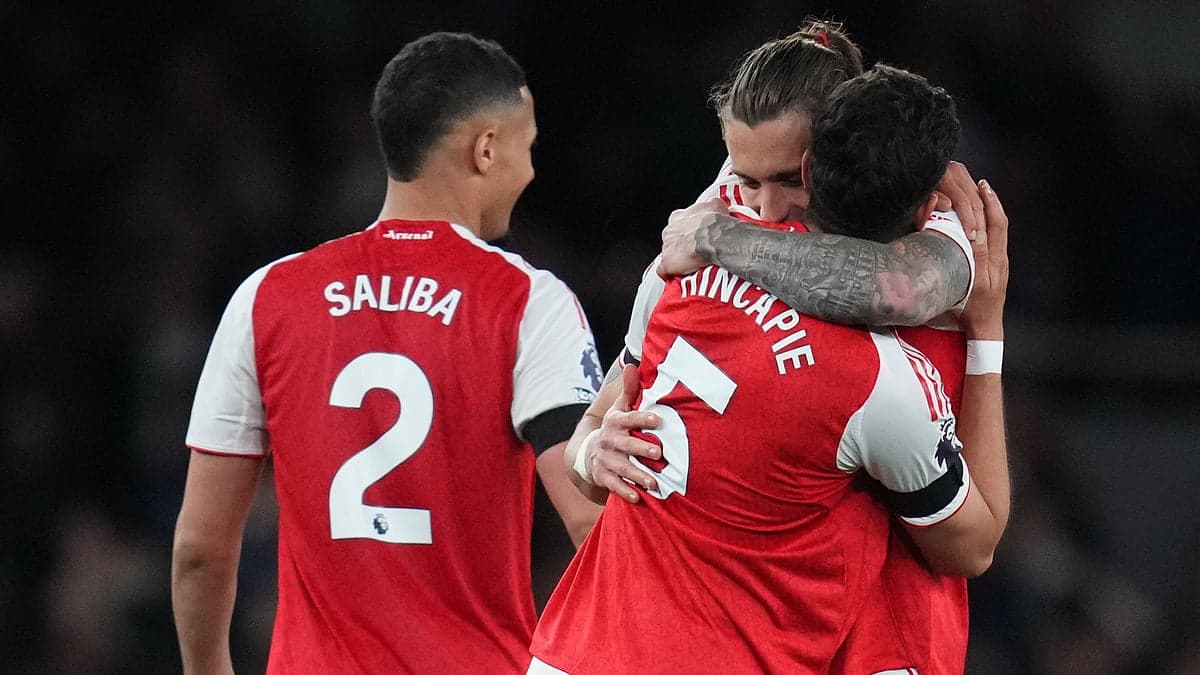
Arteta’s changes were about game management. Piero Hincapie (IN) replaced Riccardo Calafiori (OUT) on 72', adding fresh legs and defensive security on the left. Viktor Gyökeres (IN) came on for K. Havertz (OUT) at 73', providing a more direct outlet to attack depth and relieve pressure. Moments later, Myles Lewis-Skelly (IN) replaced Eberechi Eze (OUT), shoring up the midfield’s defensive energy. In added time, Gabriel Martinelli (IN) for Leandro Trossard (OUT) and Mikel Zubimendi (IN) for Martin Odegaard (OUT) at 90+3' further solidified Arsenal’s capacity to defend their lead and maintain possession in safer zones.
In goal, the contrast was straightforward. Raya’s line is defined by control rather than heroics: zero saves required, his involvement mostly in build-up and positioning behind a dominant defense. For Burnley, M. Weiss made two goalkeeper saves and, according to the data, matched Raya with 0.85 goals prevented, indicating that Arsenal’s best chances were of decent quality even if not numerous. Those interventions kept Burnley alive on the scoreboard far longer than the territorial balance might suggest.
Statistically, the match aligns almost perfectly with the tactical story. Arsenal’s 61% possession, 13 total shots, nine inside the box and xG of 1.03 map onto a controlled, medium-volume attacking display with one clear payoff. Burnley’s 39% possession, five shots, none on target and 0.21 xG confirm that their threat was marginal. The foul and card counts – Arsenal: 1 yellow; Burnley: 3 yellows; total: 4 – reinforce how much defensive strain Burnley endured in trying to contain Arsenal’s positional play.
Overall, Arsenal produced a textbook example of protecting a narrow advantage through structure: high passing accuracy, a compact rest-defense, and late substitutions designed to lock the game down. Burnley’s plan to stay compact and counter never translated into genuine chances, leaving their goalkeeper and defensive line to absorb pressure while their attack remained almost entirely muted.