Wolves vs Fulham: Tactical Analysis of 1-1 Draw
Wolves and Fulham shared a 1-1 draw at Molineux Stadium, a result that neatly reflected a match defined by contrasting game plans rather than clear superiority. Wolves, under Rob Edwards, leaned into a compact 4-2-3-1 geared towards vertical transitions and direct running, while Marco Silva’s Fulham used the same base shape in a far more possession-heavy, positional framework. The statistical split – 31% possession and 11 shots for Wolves against Fulham’s 69% and 13 shots – underlined that this was a territorial Fulham performance met by a counter-punching Wolves side. Both teams generated similar xG (Wolves 1.4, Fulham 1.53), reinforcing the sense of a tactically balanced contest.
I. Executive Summary
The match’s key tactical storyline revolved around how effectively Wolves could compress space without the ball and then break through Molineux’s channels, versus Fulham’s ability to manipulate that block with patient circulation and overloads between the lines. Wolves’ lower pass volume – 250 passes, 173 accurate (69%) – was a feature, not a flaw: they accepted long spells without the ball to protect central areas and spring forward through Hwang Hee-Chan and the advanced midfield line. Fulham, by contrast, completed 580 passes with 501 accurate (86%), constantly rotating their attacking midfield trio and full-backs to probe for gaps. The draw ultimately owed as much to both goalkeepers’ mixed afternoons (each side’s keeper at -0.64 goals prevented) as to either side’s tactical execution.
II. Scoring Sequence & Disciplinary Log
The game opened with Wolves’ structure working exactly as designed. On 25', M. Mane (Wolves) finished a transition move to make it 1-0, assisted by Hwang Hee-Chan. The goal was emblematic of Wolves’ plan: win the ball in midfield, break quickly into the spaces behind Fulham’s full-backs, and commit runners from the second line.
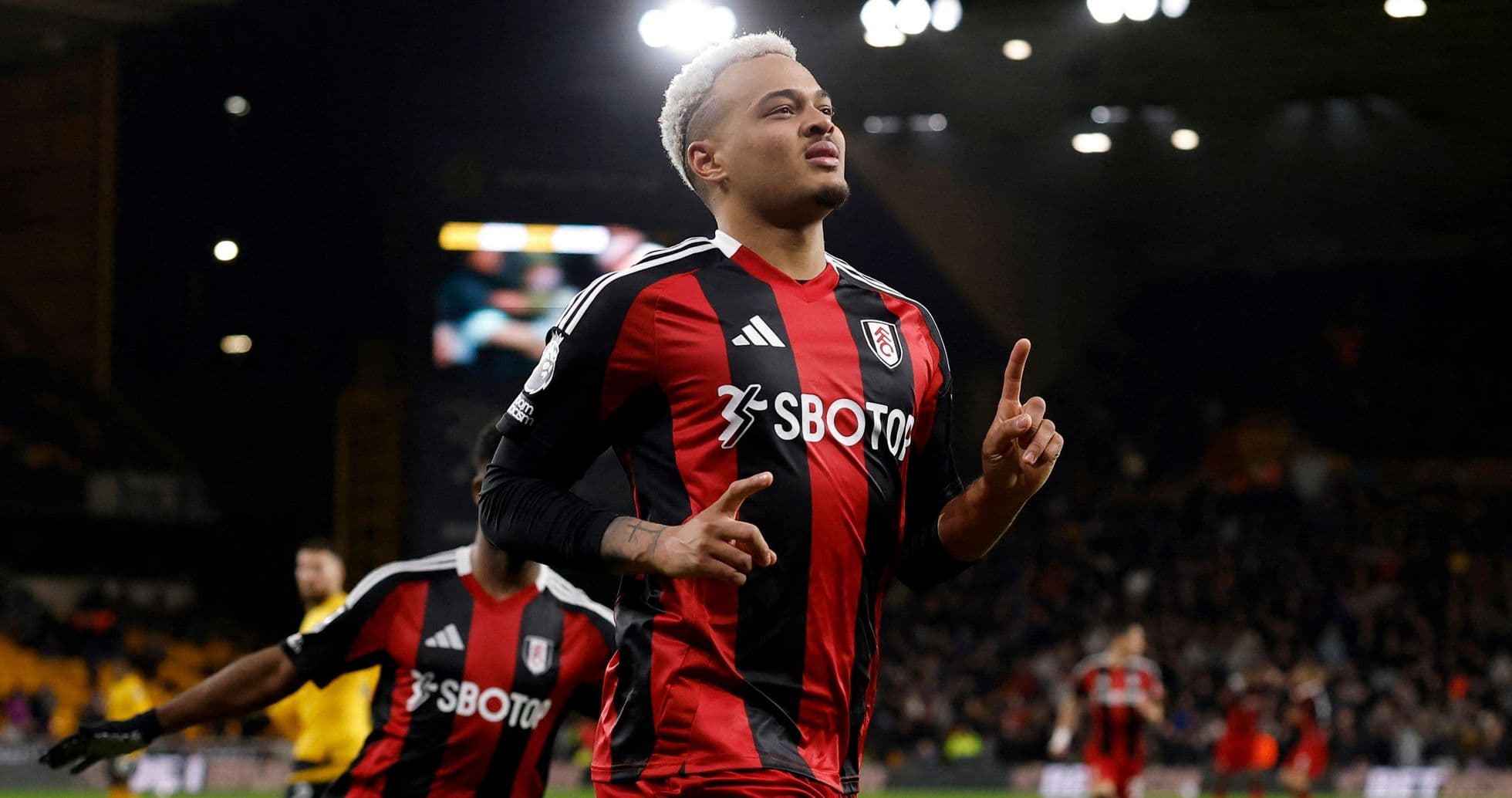
Fulham’s equaliser came at the end of a sustained period of pressure. At 45+1', VAR intervened: a “Penalty confirmed” decision involving Timothy Castagne gave Fulham the route back into the match. Two minutes of game flow are not listed, but chronologically, the check came just before the break in the first-half window. The key outcome was the penalty award, and at 45', A. Robinson (Fulham) converted from the spot to level the score at 1-1. That penalty, coming just before half-time, reset the tactical context for the second half and rewarded Fulham’s insistence on playing through Wolves’ block rather than around it.
Discipline was minimal but telling. The only card of the match arrived deep into stoppage time: 90+4' André (Wolves) — Foul
This solitary yellow card, against a backdrop of 20 Wolves fouls and just 8 by Fulham, reflected how often Wolves had to break up play to disrupt Fulham’s rhythm, even if most infractions did not reach booking level.
III. Tactical Breakdown & Personnel
Both teams lined up in a 4-2-3-1, but the similarities ended there. Wolves’ back four of D. M. Wolfe, L. Krejci, S. Bueno and Y. Mosquera stayed relatively narrow, with full-backs cautious in their starting positions. In front of them, the double pivot of Joao Gomes and André was key: they screened central zones, tracked Fulham’s advanced midfielders, and were tasked with the first forward pass on turnover.
The attacking midfield trio of Hwang Hee-Chan, M. Mane and R. Gomes operated in tight relation to A. Armstrong up front. Hwang often drifted inside from the left to receive on the half-turn, while Mane’s central positioning between Fulham’s lines gave Wolves a vertical link. The opening goal on 25' captured this: Wolves recovered the ball, Hwang found space to drive or slip a pass, and Mane arrived in the attacking lane to finish. With only 3 shots on target from 11 attempts, Wolves’ shot quality matched their xG (1.4) reasonably well; they simply lacked the volume to push for a second goal.
J. Sa, in goal for Wolves, made 4 saves. The goals prevented figure of -0.64 indicates that, relative to the quality of chances faced, he slightly underperformed: conceding one from an xG-on-target profile that suggested he might have done marginally better. However, with the concession coming from a penalty by A. Robinson, the statistical underperformance is more a reflection of the inherent difficulty of spot kicks than systemic goalkeeping issues in open play.
Fulham’s use of possession was more elaborate. The back four of A. Robinson, C. Bassey, I. Diop and T. Castagne built from deep, with S. Berge and S. Lukic forming a double pivot that anchored circulation. Ahead of them, O. Bobb, E. Smith Rowe and A. Iwobi interchanged positions, trying to drag Wolves’ midfield out of shape. Rodrigo Muniz provided a central reference point but often had to operate against a crowded central block.
With 69% possession and 13 total shots (5 on goal), Fulham’s structure succeeded in territorial terms. Their xG of 1.53, slightly higher than Wolves’, suggested they created enough to consider themselves unlucky not to find a second goal in open play. B. Leno, meanwhile, faced only 3 shots on target and made 2 saves, with the same -0.64 goals prevented mark as Sa, implying that Mane’s finish was well taken and difficult to stop.
Substitutions reflected evolving tactical needs. At 46', Kevin (IN) came on for S. Berge (OUT), adding more attacking thrust from midfield. On 67', R. Jimenez (IN) replaced Rodrigo Muniz (OUT), and J. King (IN) came on for A. Iwobi (OUT), giving Fulham fresh energy and different movement profiles in the front line. Later, at 79', H. Wilson (IN) replaced E. Smith Rowe (OUT) and S. Chukwueze (IN) came on for O. Bobb (OUT), with Silva clearly chasing more direct threat and one-versus-one ability in wide areas.
For Wolves, T. Arokodare (IN) replaced A. Armstrong (OUT) on 72', giving them a more physical focal point to contest long balls and hold up play. At 79', J. Bellegarde (IN) came on for Hwang Hee-Chan (OUT), adding fresh legs and ball-carrying in the channels. On 85', H. Bueno (IN) replaced D. M. Wolfe (OUT) and Pedro Lima (IN) came on for R. Gomes (OUT), adjustments that subtly rebalanced the back line and midfield to protect the draw and manage Fulham’s late pressure.
IV. The Statistical Verdict
The statistical picture supports the narrative of stylistic contrast rather than dominance. Fulham’s 69% possession, 580 passes (501 accurate, 86%) and 13 shots underline their control of tempo and territory. Wolves’ 31% possession, 250 passes (173 accurate, 69%) and 11 shots reflect a deliberate low-block and transition strategy. Crucially, the xG numbers – 1.4 for Wolves, 1.53 for Fulham – show near-parity in chance quality, validating the 1-1 scoreline.
Discipline-wise, Wolves committed 20 fouls to Fulham’s 8, with only one booking: André’s 90+4' yellow for “Foul”. This disparity illustrates how much defensive work Wolves had to do to disrupt Fulham’s patterns, but also how controlled Fulham’s pressing and counter-pressing were, avoiding cheap fouls. With both goalkeepers at -0.64 goals prevented, neither side gained a decisive edge from the last line of defence. In the end, M. Mane’s incisive first-half strike and A. Robinson’s calmly taken penalty framed a match where tactical plans were clear, execution was solid, and a draw was a fair reflection of the balance between control and counter.