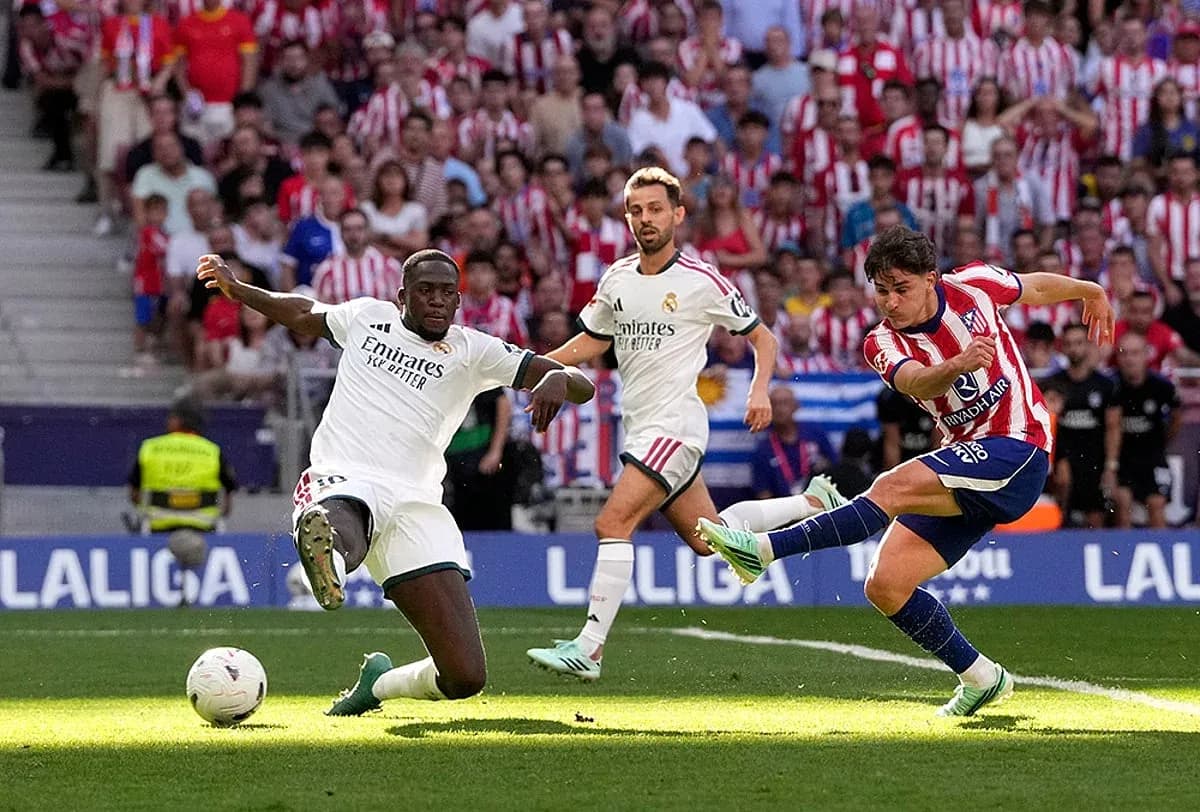
Sevilla vs Real Madrid: Tactical Analysis of the 1-0 Defeat
Sevilla’s 1-0 defeat to Real Madrid at Estadio Ramón Sánchez Pizjuán unfolded as a study in contrasting control: territorial and technical dominance from the visitors against high-intensity, often reactive defending from the hosts. Real Madrid, under Alvaro Arbeloa, imposed a 4-3-3 possession structure that translated into 59% of the ball, 528 passes, and 88% accuracy, while Luis Garcia Plaza’s Sevilla relied on a compact 4-4-2, vertical transitions, and aggressive duels that produced 18 Fouls and four late yellow cards.
The game’s only goal, Vinicius Junior’s 15th-minute strike, framed the tactical narrative. Madrid’s front three of Brahim Diaz, Kylian Mbappe, and Vinicius Junior stretched Sevilla’s back four horizontally, forcing G. Suazo and J. A. Carmona into deep, narrow positions. With T. Pitarch and Aurelien Tchouameni providing short options in the left half-space and Jude Bellingham stepping higher on the right, Madrid consistently created 3v2 overloads against Sevilla’s central pair of Nemanja Gudelj and Djibril Sow. The 1.03 xG total for Madrid reflects a controlled, if not explosive, attacking display: relatively few clear chances, but most of them constructed inside the box (9 shots inside versus 3 outside).
Sevilla’s 4-4-2, led by forwards A. Adams and N. Maupay, was designed to screen Madrid’s first line rather than press high. The front two curved their runs to block passes into Tchouameni and Bellingham, but Madrid’s centre-backs Antonio Rudiger and Dean Huijsen were comfortable progressing the ball, supported by full-backs Dani Carvajal and Fran Garcia stepping into midfield lanes. As a result, Madrid often advanced through controlled circulation rather than risky vertical balls, trading speed for security.
Once the ball entered the Sevilla half, the hosts’ defensive block compressed aggressively around the ball, which explains the high foul count and the distribution of yellow cards. The disciplinary sequence captures their escalating physical response:
- 48' Nemanja Gudelj (Sevilla) — Off the ball foul
- 80' Alexis Sánchez (Sevilla) — Argument
- 84' Juanlu Sánchez (Sevilla) — Foul
- 90+4' Lucien Agoumé (Sevilla) — Argument
All four cards fell to Sevilla, underlining how often their midfielders and substitutes had to break Madrid’s rhythm either by late contact or by protest. Real Madrid, by contrast, finished without a single booking, reflecting how their control of possession limited defensive emergency situations.
Sevilla’s own attacking structure was more direct and phase-based. In settled play, the 4-4-2 looked to exploit the channels between full-back and centre-back, with Adams running off the shoulder and Maupay dropping to link. The wide midfielders, R. Vargas and Oso, were tasked with early deliveries once Sevilla broke Madrid’s first line. Their 14 Total Shots and 6 Shots on Goal, combined with 0.73 xG, show that while they reached shooting positions, the quality of those chances was generally modest and often from semi-contested situations.
The substitutions from Luis Garcia Plaza after the break were a clear attempt to tilt the game towards more verticality and fresh energy between the lines. The substitution vector followed this pattern:
- 53' Alexis Sanchez (IN) came on for N. Maupay (OUT)
- 54' C. Ejuke (IN) came on for R. Vargas (OUT)
- 54' L. Agoume (IN) came on for N. Gudelj (OUT)
- 70' Juanlu Sánchez (IN) came on for J. A. Carmona (OUT)
- 78' I. Romero (IN) came on for Oso (OUT)
Sanchez’s introduction shifted Sevilla towards a 4-4-1-1/4-2-3-1 hybrid in possession, with the Chilean operating between Madrid’s lines rather than as a pure second striker. Ejuke added one-versus-one threat on the flank, trying to attack Fran Garcia directly. Agoume and later Juanlu Sánchez brought more mobility and pressing range in midfield and at right-back, allowing Sevilla to push the block higher in the final 20 minutes. However, the increased aggression also fed into the yellow cards for Alexis Sanchez, Juanlu Sánchez, and Agoume as they repeatedly contested Madrid’s attempts to slow the tempo.
Madrid’s changes were about game management and physical balance rather than structural upheaval:
- 70' E. Camavinga (IN) came on for A. Tchouameni (OUT)
- 70' F. Mastantuono (IN) came on for T. Pitarch (OUT)
- 77' T. Alexander-Arnold (IN) came on for B. Diaz (OUT)
- 77' G. Garcia (IN) came on for Vinicius Junior (OUT)
- 87' A. Leiva (IN) came on for J. Bellingham (OUT)
Camavinga’s entry provided fresher legs and press-resistance at the base, helping Madrid survive Sevilla’s more aggressive second-half press. Mastantuono and later A. Leiva injected energy and ball-carrying in the half-spaces, while Alexander-Arnold’s arrival at right-back offered a safer outlet and long passing to relieve pressure. Removing both Vinicius and Brahim reduced Madrid’s counter-attacking threat, but it reinforced their ability to keep the ball and see out the 1-0 scoreline.
In goal, the statistical profile is telling. O. Vlachodimos registered 1 Goalkeeper Save and 0.46 goals prevented, closely aligned with Madrid’s 1.03 xG and single goal scored. This suggests that while Madrid’s chances were relatively controlled, Vlachodimos did contribute with at least one high-value intervention to keep Sevilla in the game. At the other end, Thibaut Courtois made 6 Goalkeeper Saves with 0.46 goals prevented against Sevilla’s 0.73 xG. That combination paints him as decisive: Sevilla generated enough volume to justify a goal on another day, but Courtois’ shot-stopping, particularly against low and mid-range efforts, underpinned Madrid’s clean sheet.
Statistically, the match reflects a narrow but deserved Madrid win. Their higher xG (1.03 vs 0.73), superior passing volume (528 vs 355) and accuracy (88% vs 80%), and cleaner disciplinary record indicate a side in control of tempo and territory. Sevilla’s 41% possession, 14 Total Shots, and 7 efforts from outside the box underline a game plan built on moments rather than sustained dominance. Their Overall Form in this fixture showed resilience and work rate, but the Defensive Index is mixed: they limited Madrid to just 1 Shot on Goal yet conceded from that chance, while also allowing 9 shots inside the box.
In tactical terms, the contest was decided early: Madrid’s first-half exploitation of Sevilla’s central spaces and wide stretching created the decisive goal, after which Arbeloa’s side managed the game through structure and possession. Sevilla’s late surge, fueled by substitutions and rising intensity, produced pressure but also indiscipline, and against a goalkeeper of Courtois’ level, their marginal xG edge in the second half was not enough to overturn the early deficit.