Virgil van Dijk Faces Backlash After Netherlands' World Cup Exit
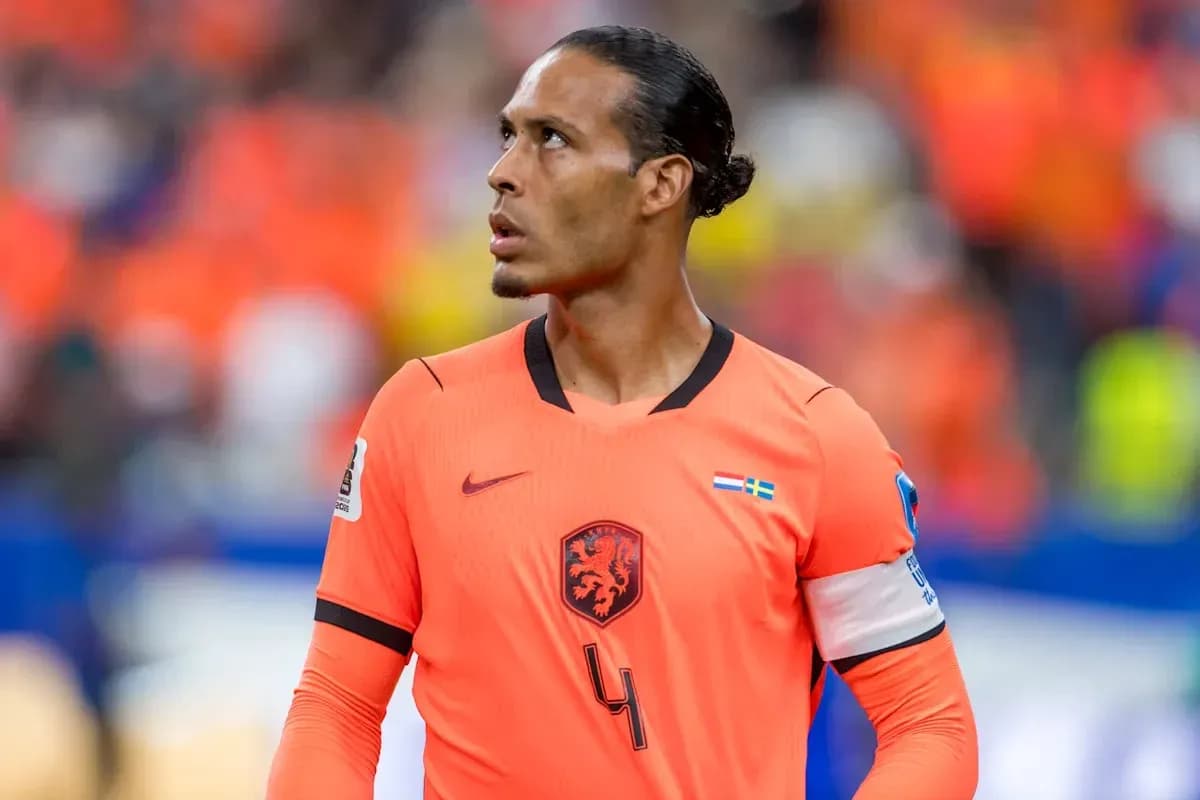
The Netherlands’ World Cup campaign ended in the cruellest fashion, and the inquest back home has zeroed in on one man. Virgil van Dijk, captain, defensive leader, standard-bearer for a generation, finds himself at the centre of a storm after the Dutch crashed out to Morocco on penalties.
A late Moroccan equaliser dragged the quarter-final into extra time, then the shootout finished the job. The result hurt. The reaction has been brutal.
At the forefront of it stands Valentijn Driessen, one of the most combative voices in Dutch football journalism, who used his De Telegraaf column to deliver a blistering verdict on both Van Dijk and departing head coach Ronald Koeman.
“Betrayed everything our national team stands for”
Driessen did not bother with nuance. In a column that has ricocheted around the Netherlands, he accused Koeman and Van Dijk of betraying the very identity of Dutch football.
“Ronald Koeman and Virgil van Dijk have betrayed everything our national team stands for,” he wrote, a line that cuts to the heart of a nation fiercely protective of its footballing ideals.
For Driessen, the shift to a back three summed up the problem. He argued the change was forced not by tactical innovation but by Van Dijk’s inability to marshal the defence during the group stage. In his view, the captain’s struggles at the heart of the back line pushed Koeman into a system that compromised the team’s principles.
Then came the late equaliser against Morocco. Driessen laid that, too, at Van Dijk’s feet, accusing him of losing his man at the decisive moment and allowing the chance to unfold. His conclusion was as stark as it was unforgiving: Van Dijk’s “time is up” at international level.
For a defender who has come to symbolise composure and authority for both club and country, it is a savage appraisal — and one that reflects the raw frustration of a fanbase that expected far more than a quarter-final exit.
One lapse, one turning point
Strip away the emotion and the key moment remains painfully clear. Deep into stoppage time, with the Netherlands clinging to a fragile lead, Morocco threw everything forward. The cross came in, the run was made, and Van Dijk, usually so immaculate in those situations, could not shut it down.
The ball ended up in the net. The game, and perhaps a tournament, turned in an instant.
For a player whose reputation rests on reading danger early, dominating his area and snuffing out precisely that kind of movement, it was a jarring sight. The kind of lapse that sticks in the memory, the kind that defines a narrative.
Yet to reduce an entire World Cup exit to one misjudged moment is to ignore the rest of the night. The Dutch had chances to kill the tie long before Morocco’s late surge. They didn’t. Knockout football rarely forgives such wastefulness.
Over the course of the match, Van Dijk still did much of what he has built his name on: clearing danger, winning aerial duels, organising the line, helping keep Morocco’s threat at arm’s length for long stretches. The problem is that defenders are rarely judged on the 89 minutes they get right. They are judged on the one they don’t.
The injury detail that changes the picture
Only after the game did another piece of the puzzle emerge. Koeman revealed that Van Dijk had been far from fully fit in the closing stages.
The Netherlands coach admitted the defender’s calf had been “bothering him badly”, yet Van Dijk chose to stay on through extra time, pushing his body through obvious discomfort with a semi-final place on the line.
That detail matters. A central defender asked to cover big spaces, late in a draining knockout tie, while carrying a calf problem is operating with a clear handicap. Mobility dips. Recovery runs slow. The split-second adjustments that separate a block from a goal become harder to execute.
He could have asked to come off. He didn’t. He stayed on, backing his experience and presence to carry him through a period when his body was protesting. For some, that will be seen as leadership and commitment. For others, especially in the cold light of elimination, it may be framed as a risk that backfired.
Either way, it adds context to a performance now being dissected frame by frame.
Legacy under scrutiny, not erased
The reaction in the Netherlands underlines a familiar truth: captains carry more of the blame when things go wrong. Van Dijk is not just another player; he is the face of this Dutch side, a defender who has spent more than a decade at the top of the European game, collecting honours and plaudits for his consistency and calm under pressure.
One bruising night does not wipe away that history. It does, however, open up a new phase of debate. Is this a blip under extreme circumstances, or the start of a decline at international level? Has he been let down by the structure around him, or has he become part of the problem?
Those are the questions now swirling around Dutch football circles, fuelled by Driessen’s incendiary column and the rawness of the exit.
For Van Dijk himself, the immediate priority lies elsewhere. He faces the task of recovering physically and mentally before throwing himself back into the demands of the domestic season. Time away from the national shirt may help reset the picture, especially if the calf issue is given the chance to heal properly.
The Netherlands, meanwhile, will move into a new cycle, with fresh plans and possibly a different defensive blueprint. When the next squad is named and the armband is handed out again, all eyes will turn back to the same question: how does Virgil van Dijk answer this, not with words, but with his next performance in orange?