Tottenham's Draw: De Zerbi's Frustration and Team Resilience
Tottenham finally put a point on the board on Saturday. That’s the good news. The bad news? Roberto De Zerbi’s side still haven’t scored a single Premier League goal this season.
A bruising, goalless draw with Nottingham Forest at the City Ground gave Spurs their first point of the campaign and offered a glimpse of resilience. It also underlined, in brutal detail, where this team keeps breaking down.
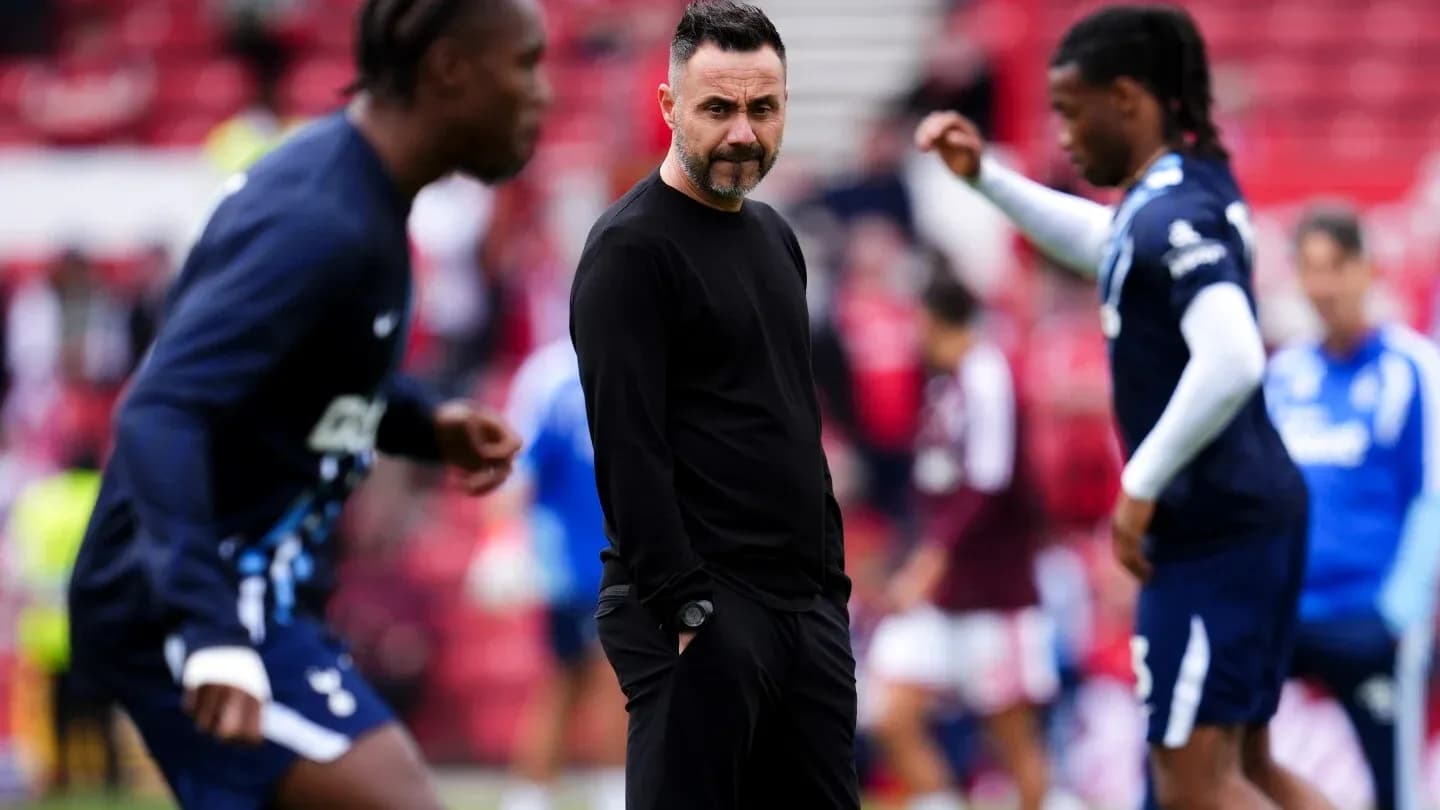
De Zerbi: Proud of the performance, frustrated by the finish
“Disappointing for the result, but for the performance, very happy,” De Zerbi said after the 0-0. “Considering we started working together on Thursday for the first time, we played well.”
He went straight to the heart of the problem.
“I think we can improve in the last pass. If we improve in the last third, I think we can score many, many goals because we have the players with big qualities. Now it’s a tough moment to accept this result, because I think we played well.”
Spurs moved the ball with control, built from the back with composure and repeatedly escaped Forest’s press. De Zerbi was adamant the structure worked.
“It’s not to unlock [the final third]. It’s the mistakes. We have to work in this part. I think we played very well with the ball, we found the solutions because they press [our defenders] with three, but one of our full backs was always alone and we found him always in 90 minutes. So in build-up, we played very well. In the last third, I think we can be… better. Much better.”
The patterns are there. The finish isn’t.
Key changes, key losses
The game’s rhythm shifted just as Spurs looked to turn pressure into chances. De Zerbi revealed that two of his most important players had to come off earlier than planned.
“The second half, I’m sorry because the medical stuff pushed to change Savio and Udogie after 60 minutes. Kudus and Robertson played very well, but maybe two substitutions in that moment was not so good. But now we can’t take risk with injuries again. Savio is too important for us, the same Destiny. Maybe we lost some balance, some connection [when they came off].”
Spurs lost some fluency, some bite. The replacements worked hard, but the side never quite rediscovered the same rhythm in attack.
Defensively, though, De Zerbi was satisfied.
“I think today we defended very, very well. We have to improve the physical condition [of some players], the connection between the players. We changed, I don’t know how many players in this transfer window. We brought very, very good players, but the team doesn’t adjust like the names on paper or Football Manager.”
The message was clear: this is a new group, and cohesion doesn’t arrive with a signature.
Strong base, blunt edge
Strip away the noise and the problem is simple. Spurs can’t make the final action count.
They control two-thirds of the pitch. They move the ball, they escape pressure, they reach promising areas. Then, around that white rectangle everyone’s supposed to be obsessed with, the ideas dry up.
The system is built to stress the backline. De Zerbi accepts that risk because, when it works, the attacking rewards should dwarf the danger. Right now, those rewards aren’t coming. The defenders are being asked to live on the edge for very little return.
Micky van de Ven, though, is thriving in that chaos. He has started the season impressively, forming a solid partnership with compatriot Jan Paul van Hecke. Even in last week’s defeat to Newcastle, it was set pieces that undid Spurs in what was otherwise another largely steady defensive display.
Van de Ven raises Spurs’ floor. He keeps them in games, gives them a platform. The problem lies above him.
No creator, no unlock
The ceiling is painfully low at the moment. Spurs’ attacking play in the final third feels cramped, predictable, and far too easy to defend.
De Zerbi admitted the attacking talent looks impressive on paper, but reminded everyone that games are not played on paper. The squad has been heavily reshaped since last season, yet the same old issue lingers.
They lack a true creator in midfield. Without that central spark, Spurs funnel everything wide. Opponents see it coming, slide across, set their shape, and wait. Forest did exactly that: a high press early on, then a deep block with nine or ten bodies packed around the box once the initial storm passed.
Spurs, full of dribblers but with no natural no. 10, never found the key. They twisted, turned, and ran into traffic.
James Maddison may return from injury and, in an ideal world, quickly rediscover his best level after effectively missing a year. That’s the optimistic view. The more realistic one? Until someone in this side starts consistently creating and finishing chances, this is what a lot of their season will look like: solid, organised, and waiting for a goal that never quite arrives.