Thomas Tuchel Reflects on England's World Cup Semi-Final Collapse
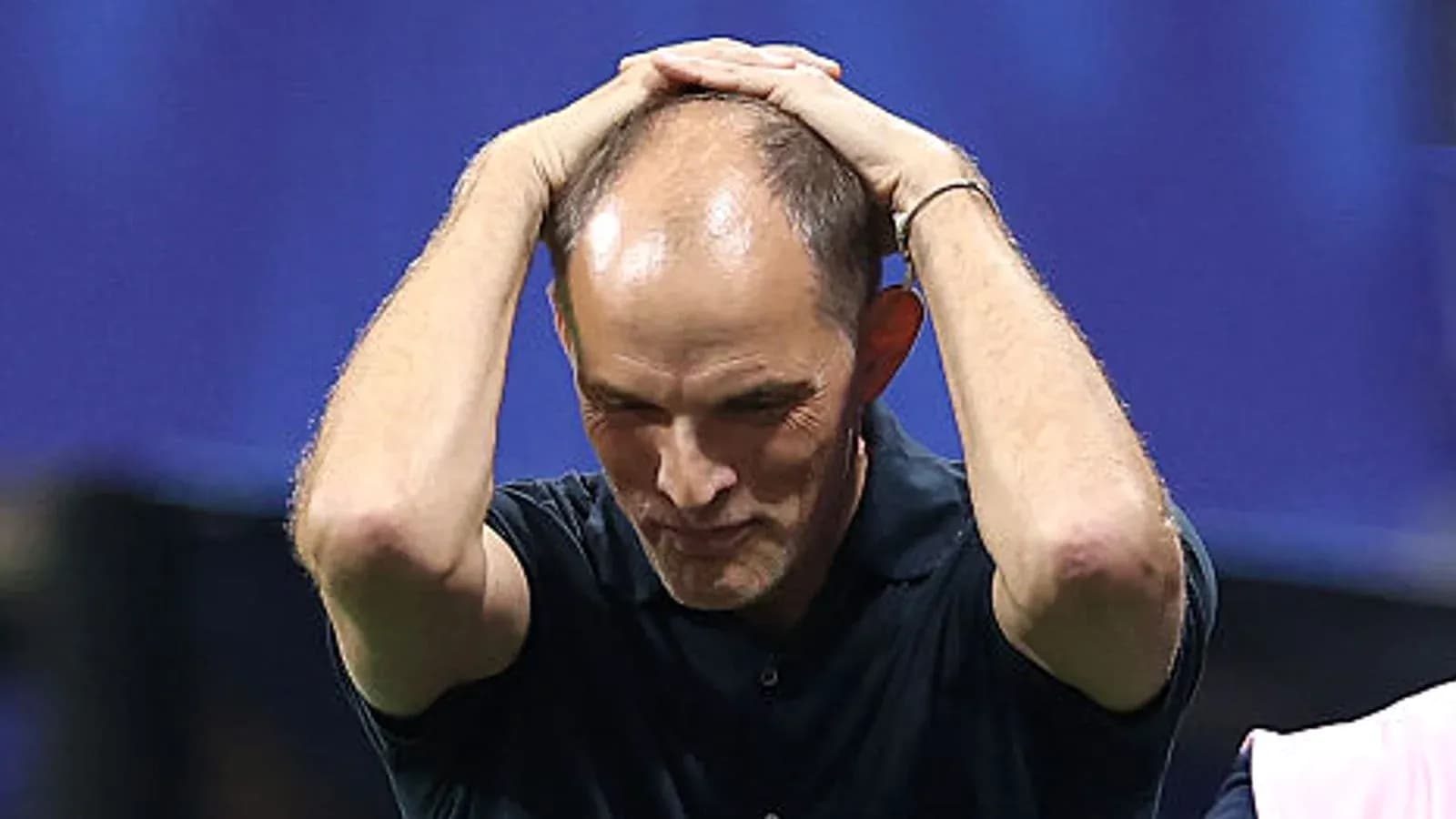
Thomas Tuchel does not dodge the scars. He leans into them.
Sitting down to relive England’s World Cup semi-final collapse against Argentina, the England manager went straight to the substitutions that have stalked him ever since: the switch to a back five, the retreat, the sense that a first World Cup final since 1966 slipped away on the touchline as much as on the pitch.
“You can try to kill me here. But it’s my scar, it’s not your scar,” Tuchel says in an England documentary, revisiting the night his team led 1-0 with five minutes plus stoppage time left – and still lost.
Enzo Fernandez and Lautaro Martinez flipped the game in those frantic closing stages, punishing England after Tuchel had abandoned his 4-4-2 for a more conservative shape. The debate has raged ever since. Tuchel knows it. He hears it. And he’s not pretending he got everything right.
“I have to live with it. It’s not you having to live with this. I’m in charge here and I take these decisions,” he says. “No-one is more hurt than me, no-one wanted it more. They can endlessly torture you and think: if I had done different substitutions, then we would have won the match. You just don’t know it.”
He does, though, admit one thing: the defensive mindset came too early.
The tackle that changed everything
The turning point, in Tuchel’s mind, was not a goal. It was a tackle.
England had survived the first half well. “It was totally an even match,” Tuchel recalls. “We had good ball possession moments. I was actually happy and I saw us growing into this match. I felt we were there.”
After the break, Argentina loosened up. “From the start of the second half, I felt us on the back foot. I felt Argentina were more liberated and free in their movements, finding better solutions,” he says.
Then came the surge. Anthony Gordon struck to put England 1-0 up. Declan Rice and Harry Kane both had chances to kill it. England were hunting, pressing, sensing Argentina’s panic.
And suddenly, chaos.
An Argentina break, Giuliano Simeone bursting clear, Jordan Pickford exposed. Djed Spence flew back and made that huge, last-ditch tackle that kept England in front. The kind of moment that ends up in montages and social clips. For Tuchel, it did something darker.
“We go after them, we have a ball win, we have a chance, we have another half chance, we lose the ball in another attack and it’s the Spence tackle and they almost score from a counter-attack,” he says.
“It did something to me, it maybe did something to the players. And we suddenly shift into a mindset of: ‘let’s just overcome it’. We played like there were four minutes left, rather than 30.”
From there, England stopped doing what had brought them to the brink of a World Cup final. The details vanished.
“From executions, the details of execution, playing around in deep build-up, playing around Messi, playing to one side then switching the side, bringing the game in the opponent’s half, making them suffer, having time to recover physically and mentally in ball possession, we were lacking all these things.”
That loss of control set the stage for the decision that would define the night.
‘We will not survive this’
The pressure built. Argentina went bolder, wilder, almost reckless.
“Argentina then play very, very quickly. Sorry for the language, [they played] f*** it football. ‘We have nothing to lose. Let’s f*** it,’” Tuchel says.
They threw everything on. “They played four strikers. They played two wingers, the two strikers and Messi. They took a No 6 off and put a No 10 in. A central defender off and played a No 6. At some points they played 3-1-6. And we struggled.”
Just before the final water break, Nicolas Gonzalez forced a big save from Pickford. England bent. Tuchel snapped into action.
“A key moment if I look back at it and what happened to my decision-making, we conceded a big, big chance right before the water break. And I thought: we will not survive. This is waiting for death,” he says.
“We don’t have ball possession, we’re not defending good, we’re not defending properly in our 4-4-2. We need help. I wanted to give the players something: this is what we do. This is what we do now.”
So Gordon, the goalscorer, came off. Ezri Konsa came on. England dropped into a back five.
Tuchel had history with this move. “Coming with this mindset and this experience, we ended the game against Norway in a back five. We ended the match against Mexico in a back five. And we did it,” he explains.
“I thought Argentina relied heavily on crosses, they have four strikers in the last line. I think: let’s play in a back five.”
He shifted to a 5-3-2. Later, 5-4-1. Line after line in front of Pickford, bodies behind the ball, the message clear: survive.
“Even my mindset is maybe like: let’s just overcome it. And it’s too early. Too early for that mindset.”
The storm did not ease. Alexis Mac Allister hit the woodwork. England sank deeper. The goals, inevitably, came.
A tournament that drained everything
Tuchel’s defence of his decisions leans heavily on context: a squad running on fumes, a tournament that had already taken England to the edge.
“It just piles up through the tournament,” he says. “Congo, 70 minutes trailing 1-0, Mexico the altitude, flying to Miami and playing against Norway. We are tired. And still we hang on until the 88th minute.”
The late comeback against DR Congo after trailing for so long, the grind of playing with 10 men in the Azteca altitude against Mexico, the extra-time win over Norway in the Miami heat – by the time Argentina arrived, England were physically and emotionally stretched.
Asked whether he could have gone the other way – attacking changes, not defensive ones – Tuchel does not hide from the alternative.
“Of course you could. No-one knows what would have happened,” he says. “We could have done it and maybe lost 2-1 and could have gone: ‘Is he crazy? He finished the game against Norway with a back five, why didn’t [he] finish the game off with five?’”
His answer is blunt: he reacted to the chaos in front of him.
“I think from what I saw and the experience, the information and the level of craziness from Argentina put in – change after change after change, it was just one offensive change after the other. That was my solution to the problem.
“That’s what the intervention of a coach is. I try to help, you don’t implement anything for your ego or whatever. You just try to help.”
The regret is not the system itself, but the fact England never managed to keep the ball well enough to avoid that drastic shift.
“If we would have been more stable in the game, with more percentage of ball possession, I would have not changed the structure, why would I? And I would have gone for offensive changes,” Tuchel says. “But that is a very, very difficult road to have gone down. That can torture you.”
It already does. And it will, right up until England find themselves again in a semi-final, with a lead to protect and a nation watching to see if Tuchel chooses to bend, or to bite back.