Spokane Velocity Defeats Boise in USL League One Cup Clash
Under the lights of One Spokane Stadium, Spokane Velocity’s 2–1 win over Boise felt less like a routine group match and more like a declaration of identity in the USL League One Cup. Heading into this game, the table framed the stakes clearly: Spokane in 2nd on 6 points with a negative goal difference of -2 (3 goals for, 5 against overall), Boise in 3rd on 5 points with a positive goal difference of 2 (10 goals for, 8 against overall). One side had been grinding results in tight contests; the other had been trading punches in high‑scoring firefights.
Spokane arrived with a perfect home record in the competition: 2 wins from 2, 3 goals scored and just 1 conceded at One Spokane Stadium. Their home attacking average stood at 1.5 goals per game, while defensively they were allowing only 0.5 at home. Boise, by contrast, had been open and ambitious everywhere: on their travels they had 1 win and 1 loss from 2, scoring 3 and conceding 3, an away average of 1.5 goals both for and against. This was always likely to be a clash between Spokane’s controlled home edge and Boise’s end‑to‑end chaos.
With no formal formations listed, the story of the match is written through roles and relationships. For Spokane, the spine began with S. Lewis in goal, shielded by a defensive unit anchored by S. Fitch and G. Margvelashvili, with C. Miller and D. Waldeck completing what functioned like a compact back line. In front of them, the double presence of C. Fernandez and A. Lewis hinted at a midfield capable of both screening and springing transitions, while the attacking trident of S. John-Brown, L. Gil, and J. Gallardo worked in support of central forward N. Brett.
Boise’s structure mirrored their season‑long personality: adventurous, front‑foot, but vulnerable. J. Mazzola started in goal, behind a back line of J. Ricketts, J. Yaro, J. Crull, and N. Moon. In midfield, the trio of D. Kostyshyn, M. Ndiaye, and P. Mayaka formed an energetic engine, feeding a dangerous attacking line of B. Bodily, T. Amang, and T. Moshobane. Heading into this game, Boise had scored 7 goals in total in the competition, with a total average of 2.3 goals for per match and 2.0 against; they had yet to keep a clean sheet home or away. Their identity was clear: they would try to outscore you rather than shut you down.
The disciplinary backdrop added another layer of tension. Spokane’s yellow card distribution this season showed a pronounced late‑second‑half spike: 42.86% of their yellows had come between 61–75 minutes, with additional cautions spread across 16–30, 31–45, 46–60, and 91–105. Boise’s bookings, meanwhile, were more evenly spread but still front‑loaded around key momentum swings: 16.67% between 0–15, 33.33% between 31–45, and then a steady 16.67% in each of the 46–60, 61–75, and 76–90 windows. This hinted at a match where the middle third of each half would become increasingly combustible as both sides pushed.
Tactically, the “Hunter vs Shield” dynamic centered on Boise’s attack against Spokane’s home defence. Boise’s overall numbers—7 goals for and 6 against in total—spoke to a side that always creates, but always offers something back. Spokane, despite a negative overall goal difference of -2, had been far more secure at home: 3 scored, 1 conceded, 1 clean sheet from 2 home fixtures. The question was whether Boise’s volume of chances could puncture Spokane’s home solidity, or whether Spokane’s structure would suffocate Boise’s transitions.
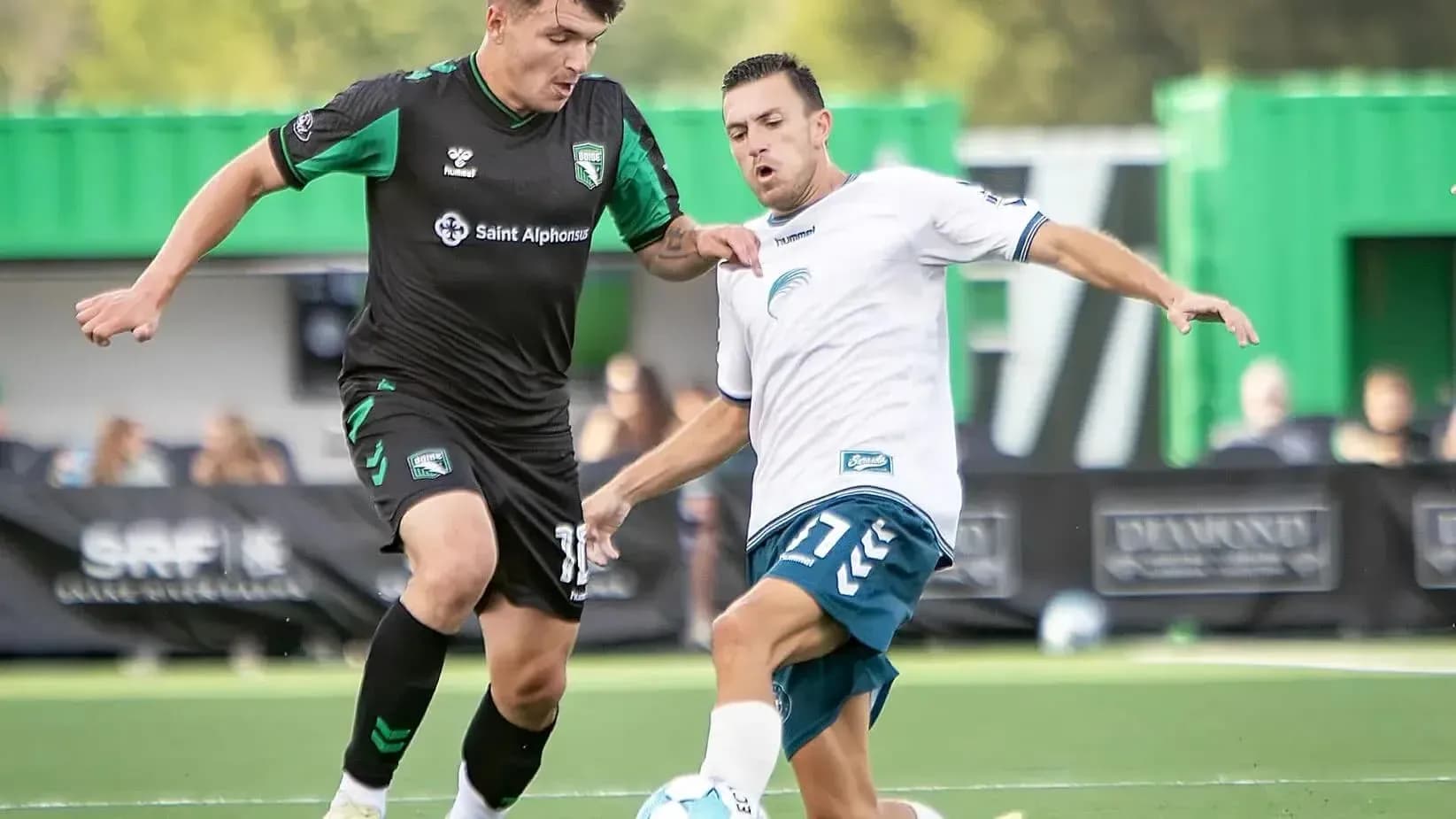
On the night, Spokane’s back line, with Fitch and Margvelashvili as the central pillars, played as the true “Shield”. They kept distances tight, forced Boise’s front three to receive with their backs to goal, and trusted S. Lewis to handle anything that leaked through. Boise’s “Hunter” unit of Bodily, Amang, and Moshobane still found moments, as reflected in the single away goal, but they were rarely allowed the kind of open‑field chaos that had powered Boise’s earlier 4–3 home win and 2–1 away victory referenced in their “biggest wins” profile.
In the “Engine Room”, the battle between Spokane’s midfield pairing of Fernandez and A. Lewis and Boise’s central trio of Kostyshyn, Ndiaye, and Mayaka was decisive. Spokane needed that pair to play slightly outnumbered but smarter—closing passing lanes into Boise’s forwards, then using L. Gil and J. Gallardo between the lines to escape pressure. Boise’s central three, who had underpinned a 2‑match winning streak earlier in the group, were tasked with both disrupting Spokane’s buildup and driving their own vertical attacks. Over 90 minutes, Spokane’s balance won out: they tilted the game into Boise’s half often enough to give Brett and the wide attackers the platform to produce the two goals that ultimately settled it.
From the bench, Spokane had options to either lock the game down or add fresh legs in wide and central areas. Players like N. Vinyals, M. Hernandez, and N. Spielman offered flexibility across midfield and defence, while L. Opara and M. Mensah gave Leigh Veidman extra running power higher up the pitch. Boise’s substitutes—Luan Brito, J. Hanson, J. Stephens, and others—were more attack‑tilted, consistent with a side that has yet to register a clean sheet and tends to double down on offense when chasing.
Statistically, the prognosis before kick‑off leaned towards a tight, high‑leverage contest. Spokane’s overall attacking average of 1.0 goals per match, combined with Boise’s total defensive average of 2.0 conceded, pointed to Spokane finding chances, especially at home where they had already hit a maximum winning margin of 2–1. Boise’s own away attacking average of 1.5 suggested they would almost certainly threaten. Without explicit xG data, the expected‑goals picture can only be inferred: Boise’s volume of goals for and against implies matches with high xG at both ends, while Spokane’s home record hints at more controlled, mid‑range xG games where structure prevails over chaos.
Following this result, the narrative crystallises. Spokane have reinforced their identity as a formidable home side in the USL League One Cup, able to bend but not break against one of the group’s most explosive attacks. Boise, for all their attacking promise, are reminded that in tournament football, defensive detail matters as much as offensive flair. On this night in Spokane, the Shield held firm just long enough for the Hunters in blue to strike twice and tilt Group 1 in their favour.