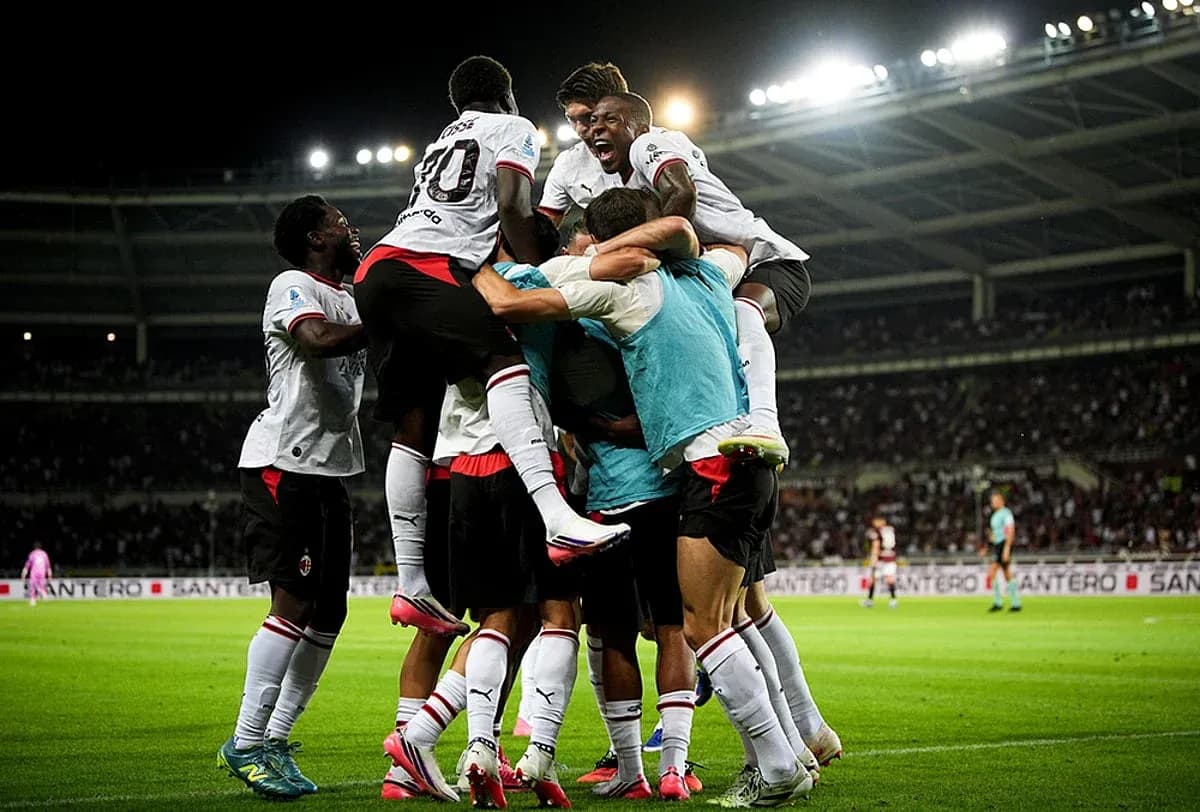
Serie A Opening Night: Torino vs AC Milan Tactical Analysis
On a warm Serie A opening night at the Stadio Olimpico Grande Torino, two sides stepped out in mirrored 3-4-2-1 shapes but with very different intentions. Torino, under Ignazio Abate, were trying to launch a new cycle; AC Milan, guided by Ruben Amorim, were intent on proving that their retooled squad could control games through structure and verticality. After 90 minutes, the table told a simple story: Torino 1–2 AC Milan, with Torino sitting 13th on 0 points and a goal difference of -1, Milan 5th on 3 points and a goal difference of 1. The tactical tale underneath, however, was far richer.
I. The Big Picture: Mirrored Systems, Different Personalities
Both coaches lined up in a 3-4-2-1, but the systems were cousins rather than twins.
Abate’s Torino built from a back three of S. Coco, A. Ismajli and P. Comuzzo in front of debutant goalkeeper D. Mascardi. The double pivot of M. Pedersen and G. Gineitis sat behind a creative box of K. Fitz-Jim and A. Cacciamani, with N. Vlasic and C. Casadei tucked in behind lone striker G. Simeone. On paper it promised fluid rotations between the two “tens” and the striker; in practice, Torino’s structure often flattened into a 5-4-1 without the ball, prioritising compactness over ambition.
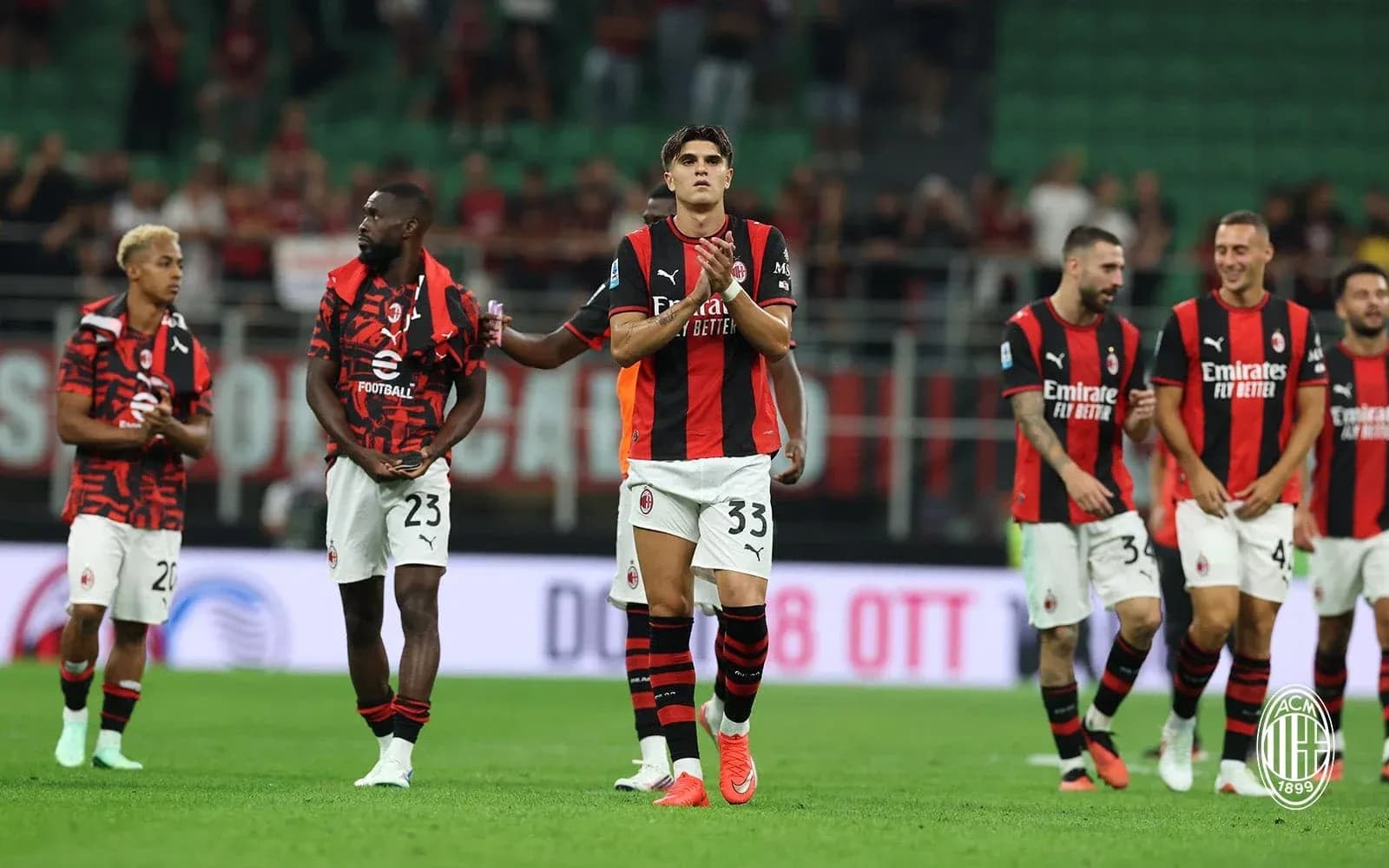
Milan’s 3-4-2-1, by contrast, was aggressively modern. M. Gila, K. De Winter and S. Pavlovic formed a progressive back three in front of M. Maignan. The wide “midfielders” S. Chukwueze and P. Estupinan were really wing-backs with winger instincts, tasked with stretching the pitch. Inside them, Y. Musah and A. Jashari formed a dynamic central pair, while R. Loftus-Cheek and A. Cisse floated behind striker G. Ramos.
Heading into this game, the numbers were a blank canvas; following this result, the early statistical sketch is clear. Torino have played 1 match in total, losing their only home fixture 1–2, with home averages of 1.0 goal scored and 2.0 conceded. Milan, on their travels, have 1 away game, 1 away win, scoring 2 and conceding 1, for an away average of 2.0 goals for and 1.0 against. The goal differences are simple but telling: Torino’s overall goal difference is -1 (1 scored, 2 conceded), Milan’s is +1 (2 scored, 1 conceded).
II. Tactical Voids: Absences and Discipline
Both squads arrived with significant absentees that shaped their profiles.
Torino were without F. Anjorin (hip injury), E. Comert (suspended after a red card), F. Israel (shoulder injury) and P. Pellegri (knee injury). The absence of Comert in particular removed an experienced presence from the back line, forcing Abate to lean fully into the Coco–Ismajli–Comuzzo trio. Without Pellegri, Torino’s bench leaned heavily on versatile forwards like C. Adams, Z. Aboukhlal and D. Zapata to change the game late.
Milan’s missing list read like an alternate attacking unit: Y. Fofana, S. Gimenez, R. Leao, C. Nkunku and F. Tomori were all unavailable. The lack of Leao and Nkunku stripped Amorim of his most explosive one‑v‑one threats, and without Tomori, the back three had to be rebuilt around De Winter’s authority.
Disciplinary trends were already visible in the data. Torino’s season card distribution is still a clean slate, with no yellow or red cards recorded in any time band. Milan, however, have already registered a sharp spike: 100.00% of their yellow cards this Serie A campaign have arrived in the 46–60 minute window. That lone caution belongs to Loftus-Cheek, whose combative style – 6 duels contested, 1 foul committed – underlines the risk-reward balance in Amorim’s pressing scheme. There are no red cards recorded for Milan in league play so far, and neither side has conceded or missed a penalty; every penalty entry for both clubs shows 0 taken, 0 scored, 0 missed.
III. Key Matchups: Hunters and Shields
The “Hunter vs Shield” duel is already emerging on both sides of the ball.
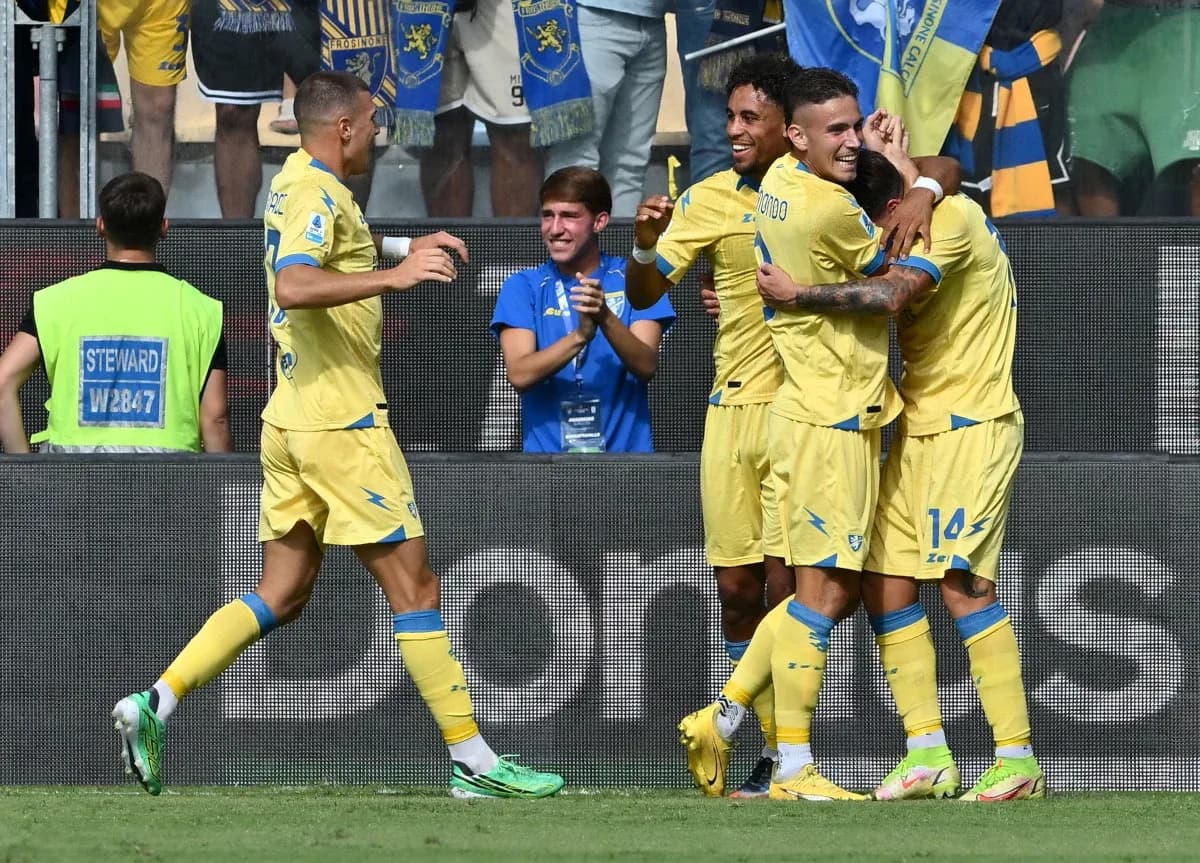
For Torino, the hunter is C. Adams. Off the bench, he delivered 1 goal from 1 shot on target in 20 minutes, earning a rating of 7.2. He is already among the league’s top scorers and features again in the top assists table thanks to his all‑round impact: 11 passes at 72% accuracy and 3 duels contested, 1 won. As a late-game striker option, Adams offers precisely the kind of penalty-box presence Torino’s starting shape sometimes lacks. His goal came with Gineitis as the quiet architect; the Lithuanian midfielder’s 30 passes at 86% accuracy, 1 key pass and 1 successful block underline his role as the metronome and shield in front of the back three.
On the Milan side, the attacking trident has already left a statistical imprint. A. Cisse, starting as one of the two “tens”, scored 1 goal, attempted 3 shots (1 on target), and won 6 of 10 duels. He is both finisher and first presser, a teenager playing with the fearlessness of a veteran. R. Loftus-Cheek, despite a modest 6.2 rating and a yellow card, still attempted 3 dribbles, produced 3 key passes and took 3 shots, often driving into the right half-space to link with Chukwueze.
But the true conductor was S. Chukwueze. Over the full 90 minutes, he produced 2 shots (1 on target), 4 key passes and 1 successful dribble, finishing with an assist and a 7.7 rating. He appears among the league’s top assist providers already, and his touch map would have painted the right flank in red. Against Torino’s left side, where C. Casadei and A. Cacciamani had to shuttle back to help C. Biraghi or Coco when Torino adjusted, Chukwueze repeatedly isolated his man and forced the back three to tilt.
Deeper in Milan’s engine room, A. Rabiot emerged from the bench as the late-game stabiliser and creator. In 34 minutes he scored 1 goal, delivered 1 assist, and completed 12 passes with 1 key pass, earning a 7.5 rating. He is simultaneously in the league’s top scorers and top assist lists after a single appearance. When Rabiot entered, Musah could press higher and Jashari could focus on screening, turning Milan’s 3-4-2-1 into a suffocating 3-2-4-1 in possession.
Defensively, Torino’s “shield” remains a work in progress. Ismajli and Comuzzo had to cope with Ramos’s movement and Cisse’s drops, while Gineitis and Pedersen were often stretched horizontally by Milan’s wing-backs. Gineitis’s perfect 3 out of 3 duels won and his blocked shot show his willingness to step in, but the structure around him still concedes too many central carries, reflected in Torino’s overall average of 2.0 goals conceded at home.
For Milan, the shield is more collective. De Winter anchored the back three, while the wing-backs’ recovery runs kept Torino’s wide players from turning counters into clear chances. The fact that Milan have yet to keep a clean sheet – 1 goal conceded on their travels, with an away average of 1.0 – suggests there is still vulnerability, particularly when the wing-backs are caught high and the half-spaces behind them are attacked by runners like Vlasic or Adams.
IV. Statistical Prognosis: Trajectories and Adjustments
Following this result, the early-season data sketches two contrasting trajectories.
Torino’s overall record reads 1 match played, 0 wins, 0 draws, 1 defeat, with 1 goal scored and 2 conceded. They have yet to keep a clean sheet and have failed to prevent their opponent scoring in their only home outing. Yet within that, there are green shoots: the 3-4-2-1 has already been used once and produced a goal, and the combination of Gineitis’s control and Adams’s impact hints at a route to a more vertical, direct Torino when chasing games.
Milan, with 1 total match played, 1 total win and 2 total goals scored against 1 conceded, have started as a ruthlessly efficient away side. Their away averages – 2.0 goals scored, 1.0 conceded – mirror Amorim’s philosophy: accept some risk, but overwhelm the opposition with structured aggression and layered attacking threats. They have not yet kept a clean sheet, and Loftus-Cheek’s early yellow card points to a potential accumulation issue if his role remains so physically demanding, but the balance between Cisse’s pressing, Chukwueze’s creativity and Rabiot’s late-game control looks sustainable.
In pure xG-style terms – even without the explicit metric – Milan’s shot volume and chance creation through Cisse, Loftus-Cheek and Chukwueze suggest they will consistently generate high-quality opportunities. Torino, by contrast, are currently living on thinner margins: a single goal from a substitute striker, crafted by a hard-working but still-maturing midfield.
If Abate can integrate Adams earlier, lean on Gineitis as a deeper playmaker and tighten the distances between his back three and midfield, Torino’s 3-4-2-1 can become a platform rather than a cage. For Amorim, the challenge will be to maintain this away sharpness once opponents adjust to Chukwueze’s flank and Rabiot’s late surges – and to turn that narrow 2–1 away win in Turin into a habit rather than an isolated opening-night statement.