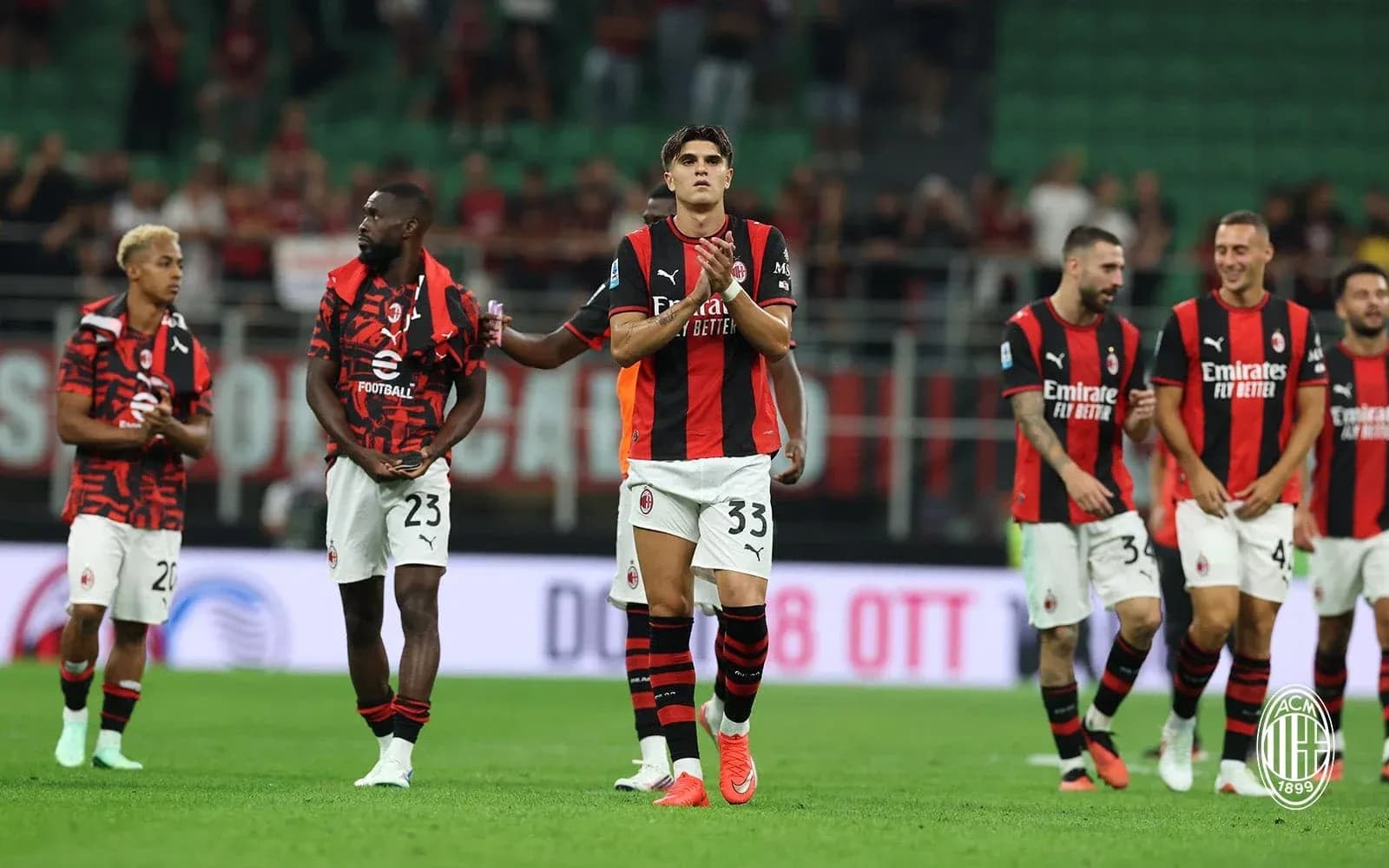
AC Milan Dominates Lecce 3-0: Tactical Insights and Season Trajectories
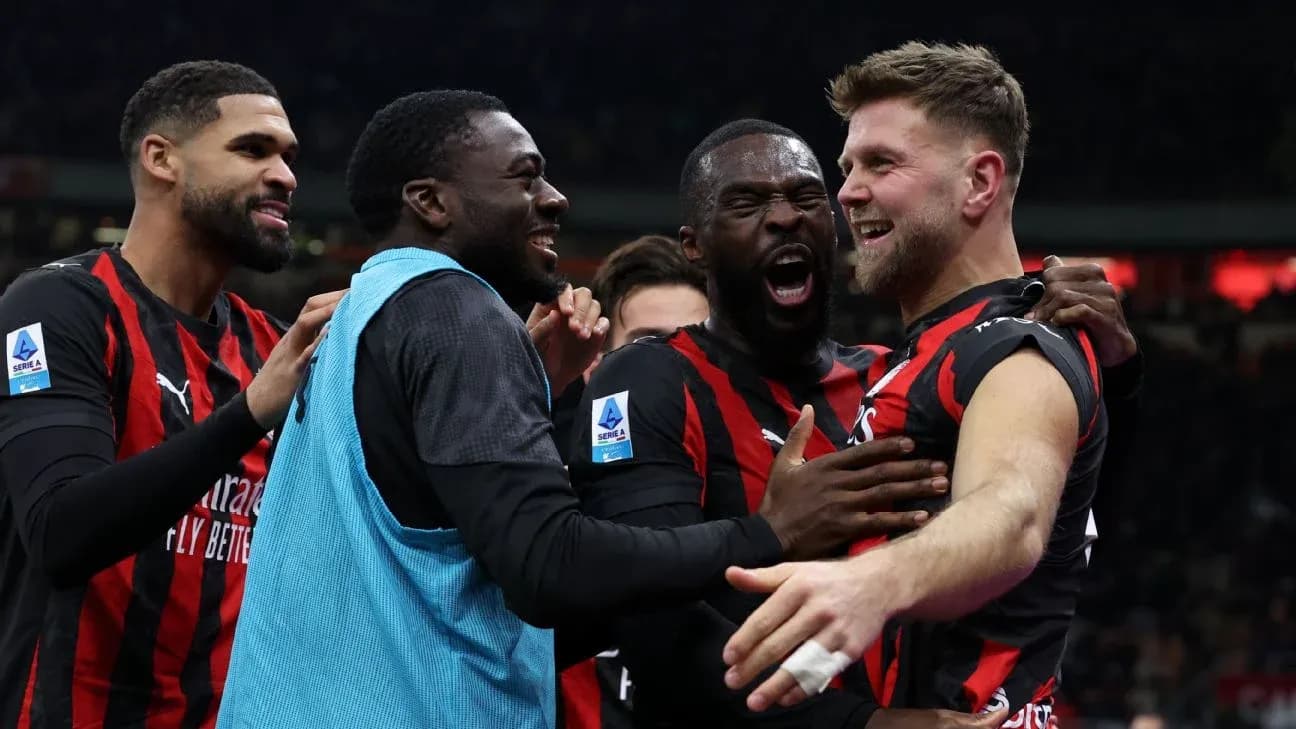
Under the San Siro lights, this was a night that revealed two teams moving in opposite tactical directions. AC Milan’s 3-4-2-1 under Ruben Amorim is no longer an experiment; it is fast becoming the club’s new identity. Lecce, by contrast, arrived with a 4-3-3 that looked brave on paper but was slowly dismantled over 90 minutes as Milan ran out 3-0 winners.
I. The Big Picture – Milan’s evolving DNA vs Lecce’s fragile balance
Following this result in Serie A’s Regular Season - 5, the standings snapshot underlines the contrast. Milan sit 5th with 11 points from 5 matches, unbeaten with 3 wins and 2 draws. Overall they have scored 10 and conceded 4, giving them a goal difference of +6 (10 minus 4). At home, they are perfect: 2 wins from 2, 5 goals scored and 0 conceded. The season statistics mirror that dominance: at San Siro they average 2.5 goals scored and 0.0 conceded per game, with 2 home clean sheets in 2 fixtures.
Lecce, 12th with 6 points from 5 matches, are a study in volatility. Overall they have 2 wins and 3 defeats, with 5 goals scored and 10 conceded – a goal difference of -5 (5 minus 10). On their travels they have 1 win and 2 defeats, scoring 2 and conceding 4. Their averages tell the story of imbalance: in total this campaign they score 1.0 goals per game and concede 2.0. Away, they manage only 0.7 goals per match while allowing 1.3.
Against that statistical backdrop, the 3-0 scoreline feels less like a surprise and more like the logical extension of both teams’ seasonal trajectories.
II. Tactical Voids – Absences and discipline
Lecce arrived in Milano already stretched. M. Berisha was out, lacking match fitness; O. Gandelman was listed as inactive; W. Geubbels missed out with an ankle injury; Tiago Gabriel was sidelined by injury. None of these names appeared in the matchday squad, thinning Eusebio Di Francesco’s options, especially in the attacking and rotational zones. For a side already struggling to score regularly and protect its back line, those absences narrowed the tactical palette to essentially one idea: defend deep in a 4-3-3 and hope transitions through L. Coulibaly and the front three could bite.
Disciplinary trends added another layer. Lecce’s season card profile shows a spread of yellow cards across almost every phase, with 10.00% of their yellows coming between 0-15 minutes, then spikes of 20.00% in each of 31-45, 46-60, 76-90 and 91-105 minutes. It paints a picture of a side that fouls both early to break rhythm and late as fatigue and desperation set in. Danilo Veiga is emblematic: across the season he has collected 3 yellow cards, and also appears among the top red card profiles in the league data, underlining how close he operates to the disciplinary edge.
Milan, by contrast, show a very specific yellow-card pattern: 25.00% of their yellows in each of the 46-60, 61-75, 76-90 and 91-105 minute windows. They manage the early phases cleanly and only start to pick up cautions when the game stretches. It is the behaviour of a side that controls tempo early and then defends aggressively once in front.
III. Key Matchups – Hunter vs Shield, Engine Room battles
The most intriguing attacking subplot for Milan actually sat on the bench at kick-off: Diego Moreira, already on 3 league goals from just 127 minutes, with a ruthless shot profile of 4 attempts and 3 on target. His presence as an impact option meant Lecce’s back four could never relax, even if they found a way to contain the starting front line of C. Pulisic, A. Saelemaekers and G. Ramos.
The “Hunter vs Shield” duel on the pitch, though, revolved around Milan’s creative band and Lecce’s back line. Pulisic and Saelemaekers operated between the lines, constantly asking questions of J. Siebert and K. Gaspar. Behind them, Adrien Rabiot and Luka Modric orchestrated the tempo. Rabiot’s season numbers – 2 goals, 2 assists, 209 passes at 88% accuracy – mark him as both a carrier and a final-third threat. His late surges from midfield exploited exactly the kind of structural gaps that Lecce’s 4-3-3 can leave when the wide forwards fail to track back.
On Lecce’s side, the standout “Hunter” is L. Coulibaly. Officially listed as a forward here but functionally a powerful hybrid midfielder, he has 2 goals and 1 assist this season, with 5 shots (3 on target) and 50 duels contested, winning 27. He is their chaos agent, the man tasked with turning broken play into chances. Yet against a Milan back three anchored by S. Pavlovic, his influence was inevitably diluted. Pavlovic’s season to date – 374 passes at 92% accuracy, 13 tackles, 2 successful blocks and 34 duels won from 47 – underpins a defensive unit that is both aggressive and technically secure. When Coulibaly tried to drive into central channels, he found Pavlovic stepping in early, supported by K. De Winter and M. Gila.
The “Engine Room” confrontation pitted Rabiot and Modric against I. Ilic and Y. Maleh. Ilic, with 2 assists, 141 passes at 89% accuracy and a respectable 7.03 average rating, is Lecce’s main distributor. But with Milan’s 3-4-2-1, the double pivot of Rabiot and Modric, flanked by the wing-backs S. Chukwueze and P. Estupinan, created a box around him. Chukwueze’s season line – 2 assists, 10 key passes, 14 dribble attempts with 8 successful – meant Lecce’s midfield could never simply collapse centrally; they had to respect the width, stretching Ilic and Maleh and isolating Coulibaly from his supply line.
IV. Statistical Prognosis – Why 3-0 felt inevitable
Milan’s season metrics made a strong home performance likely. Overall they average 2.0 goals scored and only 0.8 conceded per match. Lecce, in total this campaign, concede 2.0 goals per game and score just 1.0. When you overlay Milan’s perfect home defensive record – 0 goals conceded in 2 home fixtures – with Lecce’s blunt away attack of 0.7 goals per game, the probability of a clean sheet for M. Maignan was always high.
Tactically, the key intersection lay in the wide corridors. Milan’s wing-backs, especially Chukwueze, are among the league’s top creative outlets, while Lecce’s full-backs, Veiga and A. Gallo, are overloaded both defensively and in build-up. Veiga’s 15 tackles, 2 successful blocks and 4 interceptions show volume, but his 8 fouls committed and heavy card record indicate how often he is forced into last-ditch defending. Against Milan’s rotations between Chukwueze, Pulisic and the overlapping Estupinan, those margins were always going to be thin.
With neither side relying on penalties this season – both clubs have taken 0 penalties in Serie A so far, with no goals and no misses from the spot – open play and structured attacks were always going to decide the contest. Milan’s superior structure, depth (with options like Diego Moreira and Y. Musah in reserve) and defensive solidity combined with Lecce’s absences and fragile balance to produce exactly the kind of one-sided narrative the numbers foretold.
Following this result, Milan look every inch a Europa League contender with Champions League ambitions, their 3-4-2-1 sharpening by the week. Lecce leave San Siro reminded that in this league, courage in a 4-3-3 must be matched by control – or nights like this will keep repeating.