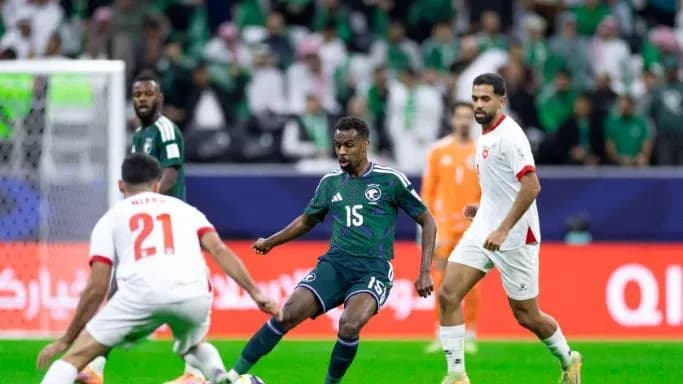
Saudi Arabia Faces Al-Juwair Crisis Ahead of Gulf Cup 27
Saudi Arabia walk into Gulf Cup 27 with a ball at their feet and a storm at their backs.
The absence of Al-Juwair is not just a missing name on Georgios Donis’ team sheet. It rips out one of the few players capable of dictating the rhythm in midfield, stitching together the lines and stepping into the build-up with authority. He was the metronome. Now the tune has to change.
Mukhtar Ali has been called in to fill the gap in numbers, but not in profile. The two midfielders offer different tools, which forces Donis to redraw parts of his tactical map. Certain duties must be reassigned, some patterns adjusted, and the coach will have to find new ways to control games without the natural link Al-Juwair provided between defence and attack.
The real threat, though, sits away from the white lines.
This is no longer just about how the team compensates for one player on the pitch. The crisis around Al-Juwair is echoing loudly off it. Players hear everything: the constant discussion of their excluded teammate, the public statements from officials, the responses and counter-responses. All of it risks dragging attention away from the only thing that should matter in a short tournament – the next match.
And this tournament is brutally short. There is barely any room for corrections once the whistle blows.
For Donis and the federation staff, managing the ball is only half the job now. Managing the noise is the other half. A successful camp is not built solely on fitness levels and well-rehearsed tactics. It needs calm. It needs clarity. Every player must feel that his primary responsibility is to train, to prepare, to play – not to track every headline or social media post about a disciplinary dispute.
Saudi Arabia arrive at Gulf Cup 27 with something to repair. Recent performances have dented the team’s image, and this competition offers a chance to rebuild confidence and reset the direction of the project, not just chase a trophy for the cabinet. That mission becomes far more complicated when the conversation before a ball is kicked shifts from “how to improve the national team” to “who mishandled the Al-Juwair affair” and “who leaked what to whom.”
The danger grows with every fresh comment.
Hazazi has already criticised how the situation has been dealt with, calling it “a distraction” for the national team. Al-Mefreg, by contrast, has underlined that regulations must apply to everyone and warned that stepping back from them could invite chaos inside the camp. Between those two firm positions sits a squad trying to prepare for a tournament while a disciplinary issue swells to a size far greater than its footballing weight.
This is how a small internal matter can turn into a genuine problem.
If the file is closed inside the dressing room, the decision respected and the discussion redirected to the pitch, the episode can shrink quickly into a footnote: something that happened before Gulf Cup 27 and stayed there. The scale of the crisis is no longer the decisive factor. The way it is handled over the next few hours and days will determine whether it fades or festers.
The calendar offers no mercy. Saudi Arabia open against Kuwait on 23 September, meet Oman on 26 September and finish the group stage against Iraq on 29 September. Three games in six days. No time to breathe, let alone indulge in side battles.
These matches will not just test the team’s tactics. They will test its nerve.
A convincing start could drown out much of the surrounding noise and restore a sense of purpose. A stumble would do the opposite. It would drag every old argument back into the spotlight and risk turning the Al-Juwair dispute into a broader indictment of the team’s mentality and its ability to cope under pressure.
The most convincing answer will not come through microphones or written statements. It will come with the way Saudi Arabia play.
To say the team have “lost their ticket” at Gulf Cup 27 because of this crisis would be false. The tournament has not started. Every route remains open. What is clear, though, is that Saudi Arabia cannot allow this issue to grow a little larger every day while they claim their objective is to fight for the title.
If the players succeed in drawing a hard line between what happened and what lies ahead, the storm might blow over quietly. If the controversy continues to seep into the camp and the outside debate refuses to die down, the national team may find themselves waging a mental battle long before they face Kuwait, Oman and Iraq on the field.